


TL;DR
- Cross-Industry Value: Strong communication is the essential foundation for success, driving effective execution, strengthening trust, and ensuring alignment across diverse professional fields from healthcare to technology.
- Critical Contexts: Professional competence is tested and defined in key workplace scenarios, including persuasive interviewing, collaborative group settings, and inspiring team motivation as a leader.
- Eight Core Components: Effective workplace dialogue hinges on mastering nonverbal cues, active listening, leveraging contextual vocabulary, recognising cultural barriers, and establishing clear feedback mechanisms.
- Strategic Improvement: To elevate your proficiency, always anchor messages in a clear purpose, prioritise concise and simple language, and commit to continuous reflection and adaptation to your audience and medium.
Ever felt like your colleagues don’t really get what you’re saying, or you’re missing out on important information at work? Well, a big part of this struggle boils down to how we talk to each other. In the professional world, being able to communicate clearly and effectively is like the secret sauce. It’s what brings people on the same page, helps things run smoothly, and makes everyone work together better.
Think of it as the glue that holds a team together – when everyone understands each other, cool ideas start popping up, and companies do awesome stuff. So, if you want to see a company rock it, good communication is where the magic begins.

What Is The Impact Of Strong Communication Skills In The Workplace?
In every corner of our world, from businesses to art studios, communication skills shape outcomes and define success. Let’s see how:
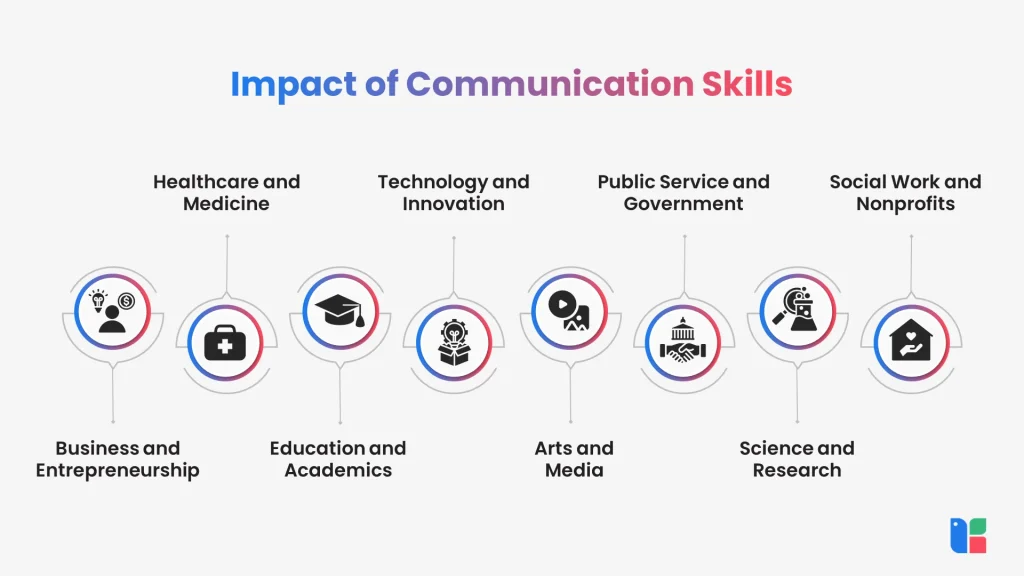
In Business And Entrepreneurship
Entrepreneurs need clear and passionate communication skills to persuade investors and clients, secure deals, and navigate disputes. This fosters trust, strengthens long-term partnerships, and ensures teams align for effective project execution.
The founder of the Virgin Group exudes a bold and adventurous communication style. He often combines humour with motivational messages to inspire his employees and followers, promoting a positive and dynamic work culture.
In Healthcare and Medicine
Clear discussions ensure that diagnoses are understood and treatment plans are adhered to, improving health outcomes. Efficient communication skills among healthcare professionals ensure patient safety and cohesive care. This ensures that patients follow medical advice correctly. By understanding and validating patient concerns, caregivers provide holistic care.
In Education And Academics
Engaging lessons captivate students and enhance comprehension. Personalised feedback and recognising individual needs accelerate learning. Collaborative strategies and shared resources provide a cohesive educational framework. Frequent communication bridges the gap between educators and parents, jointly fostering student potential.
In Technology And Innovation
Effective communication skills in teamwork accelerate software development and troubleshooting. Transparent communication helps stakeholders grasp and endorse tech initiatives. Pitching innovative ideas with clarity attracts vital backing. Comprehensive user instructions enhance product usability and user experience.
In the Arts and Media
Compelling stories captivate and resonate with audiences. Accurate journalism enlightens the public and checks authority. Through art, profound sentiments and insights are conveyed. Content creators foster connection by presenting relatable, lucid narratives.
In Public Service and Government
In public service, transparent communication establishes trust between the government and its citizens. Diplomatic conversations help in building peaceful ties with other nations. Prompt and clear warnings during crises can be life-saving. At the same time, consistent dialogues ensure the public’s voice is heard, and their issues are addressed.
In Science and Research
Making intricate research understandable broadens its influence and appeal. Collaborative sharing of insights accelerates scientific progress. Effective presentations draw interest from fellow researchers and open doors for collaboration. Simplifying complex topics not only makes science relatable but also boosts public understanding.
In Social Work and Nonprofits
Listening skills intently help grasp personal struggles, enabling customised support. Engaging stories can galvanise support for essential causes. Convincing, heartfelt communication propels positive societal shifts. Collaborative dialogue bridges differences, aligning diverse groups towards shared objectives.
As a media mogul and philanthropist, Oprah’s communication style is empathetic and relatable. She skillfully connects with people through her talk shows and interviews, creating a comfortable and open environment for conversations about personal life experiences and essential topics.
Now that we know how important good communication skills are in different professional fields , let’s look at different workplace situations where these skills come into play.

Which Communication Scenarios Are Most Common in Professional Settings?
Let’s start by understanding how we can enhance our communication skills in the workplace in different professional life:

In Interview
Clear and confident communication skills in job interviews can leave a stronger impression than just your résumé. This allows you to highlight your qualifications and experiences effectively while understanding the job description through insightful questions, giving yourself a distinct edge.
In Business Conversation
In business conversations, clear communication skills help you seal deals by ensuring everyone’s on the same page regarding terms and expectations. Regular and transparent chats foster trust, building stronger relationships with clients and partners. Additionally, addressing concerns promptly through open dialogue can stave off potential conflicts and misunderstandings.
In Group Discussion
Strong communication skills promote collaborative decision-making in teamwork by valuing each member’s perspective and ensuring comprehensive solutions. When varied opinions emerge, skilled communication transforms potential disputes into constructive dialogues. Moreover, through consistent group interactions, team members align, providing a shared understanding of objectives and plans.
In Leadership Motivation
Over 40% employees state that miscommunication leads to loss of trust in leadership.
Influential leaders leverage communication skills to motivate and inspire their teams. Leaders ensure that their vision is understood and embraced by delivering clear directions, setting expectations, and providing constructive feedback. Open communication fosters trust and collaboration, empowering teams to work cohesively towards shared goals.
Steve Jobs was known for his direct and sometimes confrontational style. He believed in candid feedback. Though this style was controversial and not always well-received, it fostered a culture of excellence and constant iteration at Apple. Jobs held regular “town hall” meetings where he updated employees on company direction, ensuring everyone was aligned with the company’s vision.
In Public Speaking
In public speaking, workplace communication skills are essential for conveying ideas persuasively to various audiences. Whether addressing colleagues, clients, or larger gatherings, the ability to capture attention, articulate messages, and engage listeners reflects one’s professionalism and expertise. Effective public speaking empowers individuals to share insights, influence opinions, and make a lasting impact.
Let us now understand the different elements you must work on to build effective communication skills.
What Are The Elements Of Effective Workplace Communication Skills?
Grasping the essential aspects of workplace communication can significantly enhance collaboration, understanding, and overall improved productivity. Let’s delve into each essential part:
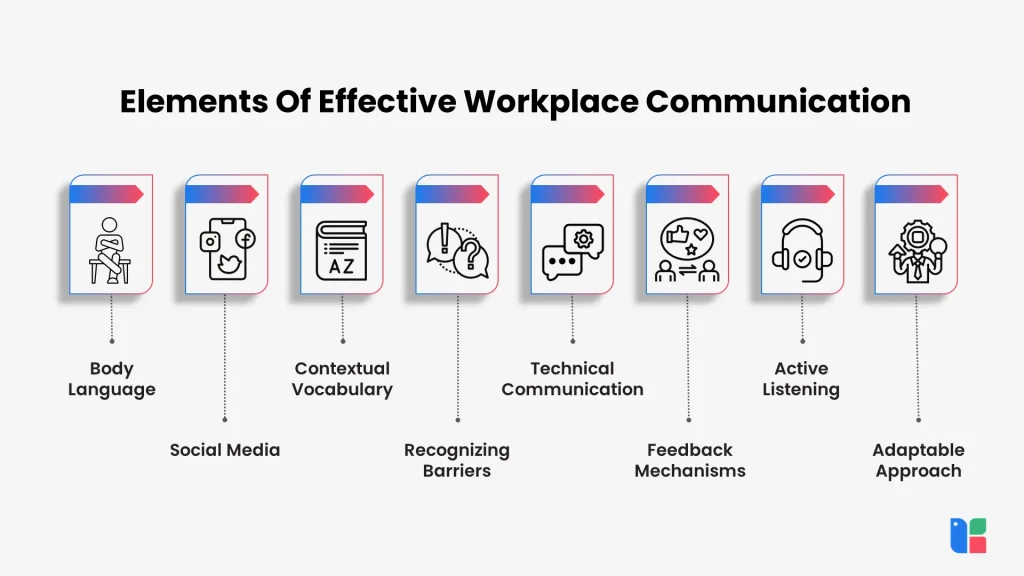
Body Language
Much of our communication is nonverbal communication, with body language often reinforcing or amplifying verbal cues. During presentations, standing tall with direct eye contact bolsters authority and persuasiveness. It’s essential to practise conscious nonverbal communication skills like body language, aligning eye contact, open postures, and facial expressions with the intended message.
Social Media
In today’s digital era, adept online communication is vital, especially in the workplace. A prompt, respectful, and informative response to a client’s tweet exemplifies a brand’s commitment to customer service. It’s essential to be genuine and value brevity. While emojis and GIFs can add nuance, they should be used judiciously.
Contextual Vocabulary
Contextual vocabulary is crucial for clarity in professional communication. For instance, “synergy” in a business meeting can convey collaborative efforts more effectively than just saying “working together.” By choosing context-appropriate words, employees promote understanding, enhance their professional image, and ensure smoother collaborations.
Recognise Barriers
Recognising communication barriers, such as time zone differences in multinational companies or language and cultural nuances, is crucial for preventing misunderstandings and ensuring clear dialogue. By identifying these challenges and strategising effectively, one can navigate them and maintain open communication channels.
Technical Communication
In technical workplaces, translating complex terms into relatable concepts is vital. For instance, rather than stating, “The server experienced a DDoS attack,” one could liken it to a “traffic jam on a highway.” To promote understanding, it’s beneficial to simplify jargon, utilise visual aids, and encourage inquiries.
Feedback Mechanism
Maintaining open feedback channels, like monthly team reviews or anonymous suggestion boxes, ensures message clarity and identifies areas of improvement. By offering regular avenues for feedback, workplaces can foster a culture of continuous improvement and empower employees to have their voices heard.
Active Listening
Good communication skills hinge on both speaking and active listening. Refraining from interrupting and taking notes during a colleague’s speech can yield richer discussions in team settings. Cultivating the habit of practising active listening skills without instantly crafting a reply ensures messages are comprehended thoroughly before responding.
Adaptable Approach
Various scenarios and audiences necessitate distinct communication styles. A formal email might suit a corporate partner, while a relaxed tone would suit a close team member. It’s essential to gauge the situation and tailor one’s communication skills to fit the audience and context.
Having explored the fundamental elements of effective workplace communication, let’s now get into some practical tips that can significantly enhance how communication flows within your professional setting.
“My journey with Kapable has been truly valuable. The sessions helped me gain confidence and handle impromptu speaking and assertiveness. I successfully led high-level meetings, which I used to avoid, and received positive feedback from my director. I now feel confident and empowered.”
– Ruchika Bagga (Senior Manager At Mankind Pharma)
Those evaluating whether this type of structured leadership learning environment aligns with their career trajectory can assess their suitability and expectations through Kapable before enrolling.
How To Enhance Workplace Communication Skills?
To help you foster better collaboration, understanding, and productivity among your team members, here are some invaluable tips that can help you improve your communication skills to new heights:

Purpose-Driven Message
Before diving into any form of communication, always start by identifying the core purpose. This ensures you’re not just speaking or writing for the sake of it but conveying a targeted message. Ask yourself:
- What’s the key message I’m trying to say?
- Who am I addressing?
- What outcome do I desire?
- How do I want the receiver to feel?
- Which medium suits this message best?
Craft With Care
Crafting a message is similar to sculpting: each word and each sentence should be chosen and positioned carefully. Like an artist takes the time to perfect his craft, you should approach written communication skills like messages with the intent to draft, reflect, and refine, ensuring every word serves its purpose.
Get To The Point
Time is very precious. Make sure your key message is clear and upfront. Whether it’s the first line of an email or the introduction in a meeting, state your primary objective early to set the tone for the rest of the communication.
Focus On Clarity
The true art of communication skills is making complex ideas simple. Aim for clear, concise, and straightforward language, no matter how intricate the topic is. Use clear, relatable language, and incorporate analogies or stories that can make your spoken words more vivid and memorable.
Adapt And Adjust
Communication isn’t a static skill; it’s fluid and needs to adjust based on situations, audiences, and mediums. By being flexible and open to change, you’ll be prepared to handle diverse scenarios and effectively convey your message in any context. One week, focus on improving your digital communication; the next, concentrate on face-to-face interactions. By continually adjusting, you’ll be prepared for diverse scenarios.
Analyse And Grow
Every communication is an opportunity to learn. Reflect on your in-person interactions after significant communications or at the end of each week. Reflect on the outcomes, understand the nuances of what went right or wrong, and use these insights to continuously refine your approach.
Holistic Presentation
Strong communication skills go beyond the words you choose; it encompasses the nuances of gestures, tone, expressions, and pauses. Nonverbal communication cues like posture, gestures, facial expressions, and tone are pivotal in enhancing your message. Seek colleague feedback to ensure alignment between your nonverbal communication cues and your words, thus lending authenticity and impact to your communication.
Be Open To Insight
The improvement stems from awareness, and what better way to gain insights than from those you communicate with daily? Embrace honest feedback, both positive and constructive criticism, from colleagues, mentors, or even subordinates to build better relationships. It provides a fresh perspective and illuminates areas for enhancement. Ask them:
- In which situations do I communicate most effectively?
- Are there instances where my message could be more transparent or more understood?
- What’s one thing I could change to enhance my communication?
Conclusion
Effective workplace communication isn’t merely about exchanging information; it’s about fostering understanding, building relationships, and propelling growth. By mastering these pivotal elements, we enhance our individual proficiency and elevate the collective efficacy of our teams and organisations. Clarity is the bridge to successful communication in the digital age and global collaboration.
Professionals who want to turn communication skills into a lasting leadership capability can explore how Kapable helps participants strengthen thinking, communication clarity, and leadership effectiveness.


