


TL;DR
- Negotiation Game Plans: Negotiation strategies are essential roadmaps for navigating disagreements, aiming to find mutually agreeable outcomes in both personal and professional contexts.
- Mutual Gain Frameworks: Strategies like Collaboration and Problem-Solving centre on a win-win approach, using open communication and techniques like Harvard’s IOLA to build trust and find creative, comprehensive solutions.
- Assertive and Tactical Moves: Tactics such as Competition and Power Play emphasise maximising individual gains using strategic concessions or influence, while Avoidance focuses on timing to mitigate conflict and costs.
- Balancing Interests: Compromise and Accommodation prioritise finding a middle ground or yielding gracefully with trade-offs and generous concessions, ensuring a fair, amicable resolution and preserving the relationship.
Have you ever had to sort out a disagreement or make a deal where everyone seemed to want something
different? It happens to all of us. That’s where negotiation becomes crucial. Whether it’s deciding where to go for dinner with friends or striking a business deal, negotiation is at play.
Think about it: every time you want something, and someone else wants something else, there’s a negotiation waiting to happen. From getting your way in a group project to figuring out who does the dishes, negotiation is a part of our everyday lives.
You’re in the right place if you’ve ever wondered how some people seem to smooth out conflicts or seal the deal effortlessly. Let’s explore the world of negotiation strategies together, discovering the tools to help you turn those challenging moments into successful outcomes. Ready to dive into the art of negotiation? Let’s get started!
“Kapable has elevated my self-awareness to a degree I couldn’t have imagined. Some of the intrinsic aspects they touched upon impacted me emotionally, physically, and psychologically. It was a holistic approach, not just to how you operate at work, but also in your interactions with family and friends. The benefits of joining Kapable have been immense, and the learnings I’ve gained will stay with me for a long time.”
– Sreemoyee Banerjee (Service Delivery Leader At American Express)
What Are Negotiation Strategies?
Okay, let’s break down the idea of negotiation strategies. Think of them as game plans, the strategies you use to work things out with someone. These strategies are essential for making negotiations either smooth or challenging.
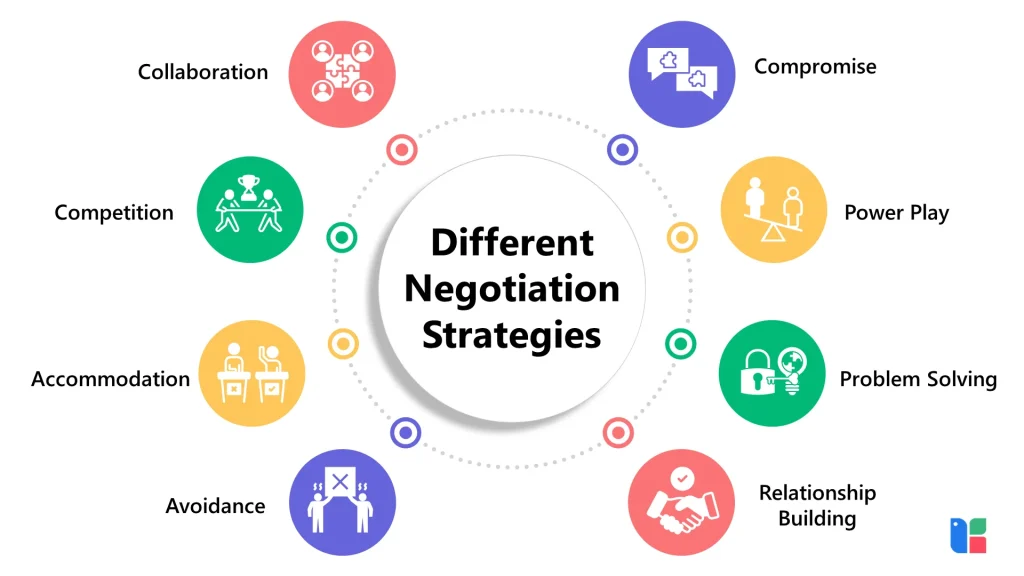
Negotiation strategies are the smart moves you make to get what you want while ensuring the other person is happy, too. Think of it as a process where every move is carefully planned to ensure a positive outcome for everyone, not just yourself.
Negotiation strategies are your roadmaps for reaching agreements, settling disputes, and building connections. They guide you through the twists and turns of discussions, helping you find the sweet spot where everyone feels like they’ve come out on top.
Collaboration
Let’s talk about collaboration, a strategy for working together and ensuring everyone walks away happy.
In negotiations, collaboration is like saying, “Hey, let’s figure this out together.” It’s a win-win approach focusing on finding solutions that satisfy everyone’s interests. This strategy is about open communication, listening to each other, and creating something positive for all parties involved.
Why choose collaboration? Because it builds trust and strengthens relationships. It’s not just about getting what you want; it’s about ensuring everyone leaves the negotiation table feeling like they’ve gained something valuable. Here’s a key framework you can use within the collaboration strategy:
Harvard’s Principled Negotiation Approach
This framework, developed by the Harvard Negotiation Project, revolves around four key principles: Interests, Options, Legitimacy, and Alternatives (IOLA).
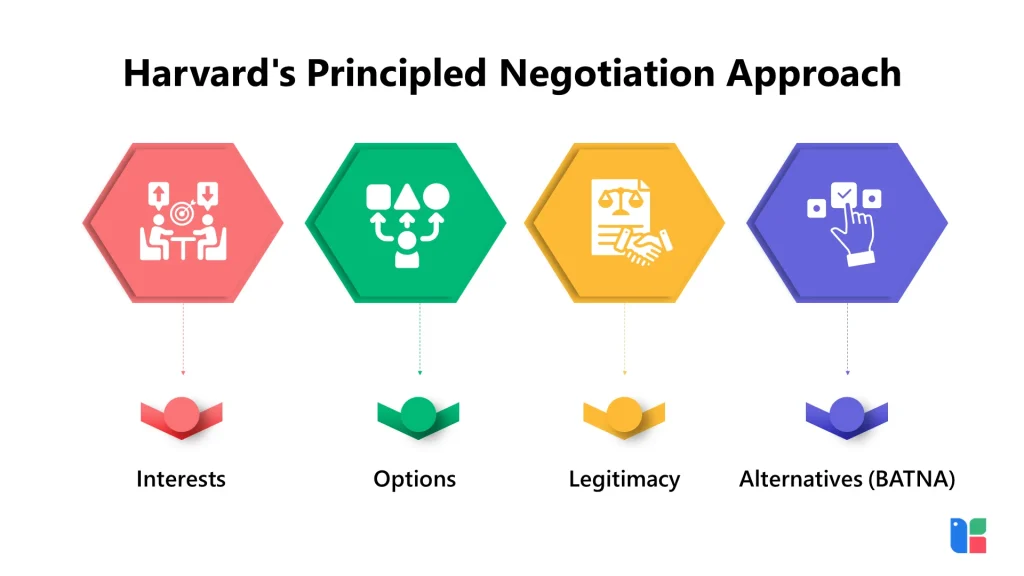
- Interests: Focus on the underlying interests rather than fixed positions. What do you and the other party truly need or want?
- Options: Brainstorm various solutions that could meet both parties’ interests. Be creative and open to alternatives.
- Legitimacy: Ensure the proposed solutions are fair and justifiable. Legitimate agreements are more likely to be accepted.
- Alternatives (BATNA): Know your Best Alternative to a Negotiated Agreement (BATNA). This helps you assess the value of the current negotiation.
Competition
Now, let’s shift our focus to the competition strategy, a tactic where negotiations can resemble a bit of a win-lose game. Picture a scenario where you and someone else have conflicting interests, and there’s a limited resource that you both desire. In a competitive negotiation, the aim is clear: you want to come out on top, securing the lion’s share.
In this strategy, assertiveness takes the lead. It’s about being firm, strategic, and sometimes, a bit strategic with your moves. It might involve holding your cards close to your chest, revealing information selectively, and using your position of strength to gain an advantage.
Think of it as a poker game where players try to outsmart each other. The competition strategy acknowledges that only some negotiations can end with everyone getting exactly what they want. Instead, it’s about maximising your gains, even if the other party might have to give up a bit. Here’s a technique often employed within the competition strategy:
Strategic Concessions
In this competitive game, making smart concessions is like making a clever trade. You’re willing to give up something that’s not important to you but matters to the other person. It’s not about giving in too much but just enough to get what you want. Here’s how to do it:
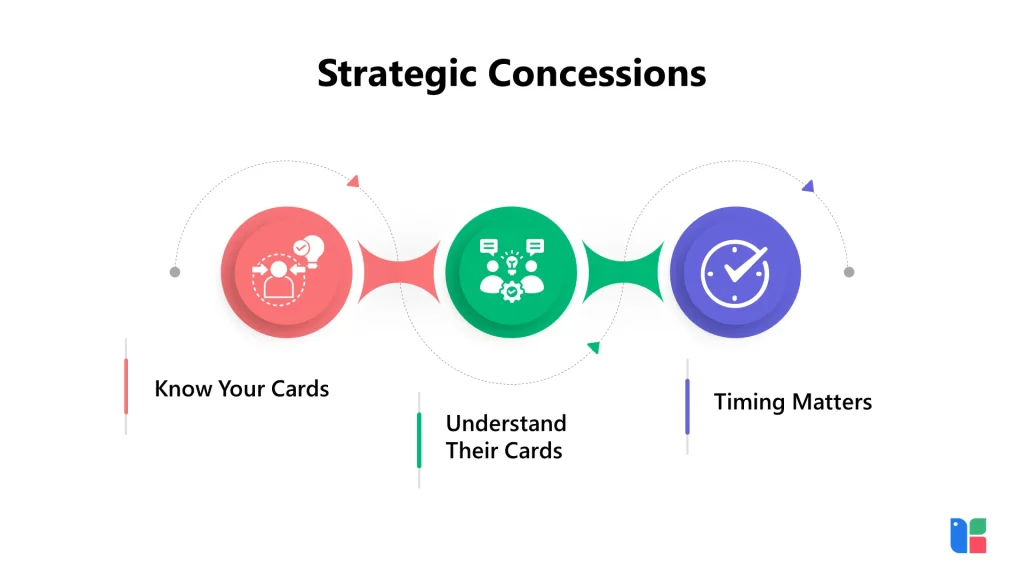
- Know Your Cards: Understand what’s important to you and not a big deal. This way, you can determine what you want to let go of.
- Understand Their Cards: Pay attention to what the other person wants. This helps you pick the right thing to offer in exchange.
- Timing Matters: Don’t just give away things for free. Make your move at the right time to get the best deal.
Remember, while being a bit competitive can be useful, it’s essential not to make things too tense. You want to win, but you also want to keep things friendly.

Accommodation
Let’s explore the accommodation strategy, a diplomatic approach where cooperation takes centre stage. Imagine a situation where your friend wants something, and you decide to prioritise their needs over yours. That’s the essence of accommodation, where making concessions and showing goodwill become key to finding a resolution.
In negotiations, accommodation is like saying, “Your needs matter, and I’m willing to adjust to make things work.” It’s a strategy that emphasises building and maintaining positive relationships. While it may involve giving up some of your preferences, the long-term benefits often outweigh the immediate sacrifices.
Consider it similar to taking a step back in a dance, allowing your partner to shine. This might mean yielding on certain points to strengthen the overall relationship in negotiation. However, it’s important to strike a balance;too much accommodation could lead to being taken advantage of. Here’s a practical technique within the accommodation strategy:
Generous Concessions
In accommodation negotiations, making generous concessions is like being extra kind to find common ground. It involves giving up something that might not be a big deal to you but means a lot to the other person. It’s not about giving away too much but showing goodwill and making the other person feel valued. Here’s how to do it:
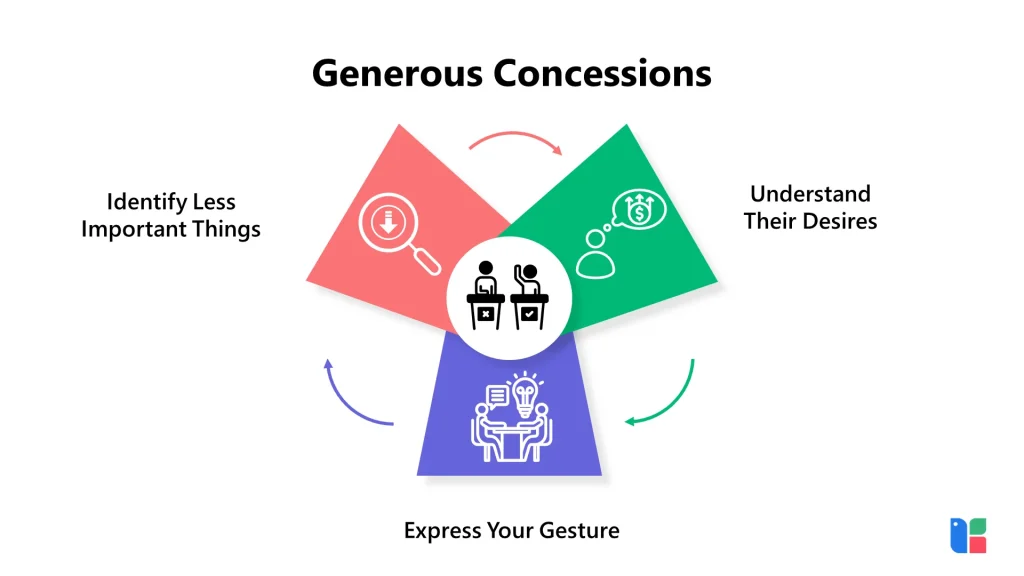
- Identify Less Important Things: Figure out what’s not super important to you in the negotiation. These are the things you can be more flexible about.
- Understand Their Desires: Know what the other person wants. This helps you make a concession that truly matters to them.
- Express Your Gesture: Do it generously when you’re ready to make a concession. Show that you genuinely care about finding a solution that works for everyone.
Remember, accommodation is about building positive relationships. Being generous with your concessions is a way to show that you’re not just about winning; you’re about creating an environment where everyone feels respected and heard.
Every negotiation strategy requires careful preparation, active listening, and the confidence to adjust when circumstances change. These are among the core capabilities developed through Kapable.
Avoidance
Moving on, let’s navigate towards the avoidance strategy; a method employed when steering clear of the negotiation table seems like the most reasonable choice. Picture a scenario where the potential costs of negotiation outweigh the benefits, or the timing isn’t right. In such cases, the avoidance strategy suggests temporarily taking a step back and opting out of the negotiation process.
In negotiation, avoidance is similar to saying, “Let’s press pause for now.” It might be utilised when emotions run high, and a hasty negotiation could lead to unfavourable outcomes. However, while avoidance can be a short-term solution, it doesn’t address the root issues and may allow problems to linger.
Consider it similar to postponing a difficult conversation until a more opportune moment arises. This could involve delaying discussions until both parties are better prepared, emotions have cooled, or external circumstances become more favourable. Here’s a practical approach to the avoidance strategy:
Strategic Timing
In avoidance negotiations, strategic timing is like choosing when to hit the pause button. It’s about waiting for the right moment when emotions have cooled down, you’re better prepared, or external circumstances are more favourable. It’s not about avoiding forever but finding the best time to have the conversation. Here’s how to use strategic timing:
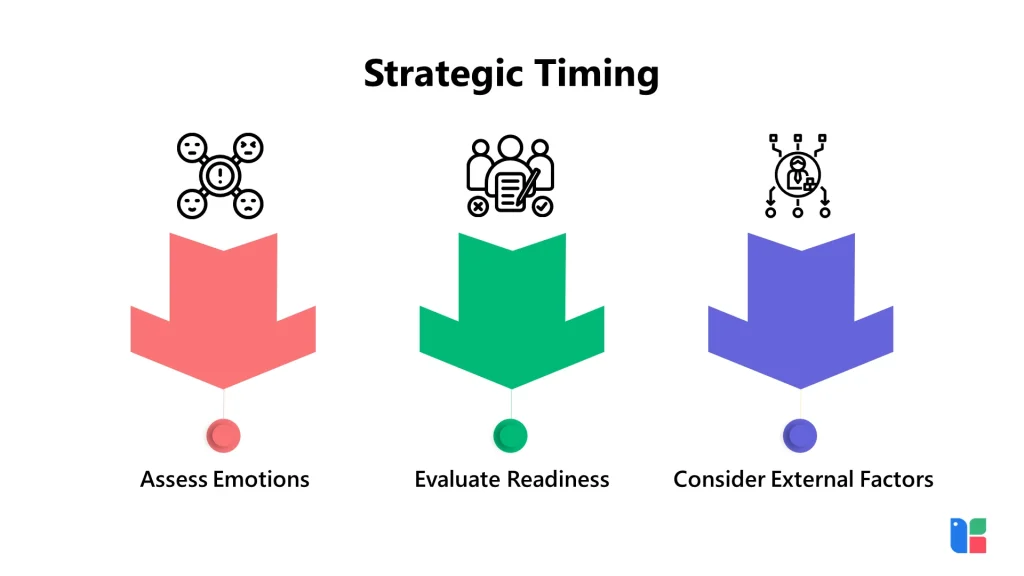
- Assess Emotions: If things are heated and emotions are running high, stepping back might be a good idea. Wait until everyone is in a calmer state of mind.
- Evaluate Readiness: Make sure both parties are prepared for a productive conversation. If one or both aren’t ready, it’s okay to delay.
- Consider External Factors: Things happening outside the negotiation room can impact the discussion. Be mindful of external circumstances that might affect the outcome.
Strategic timing in avoidance is about being smart about when to engage. It’s not about avoiding the problem; it’s about making sure you address it at a time when you can have a more constructive conversation. So, when you feel that hitting pause is the right move, remember to consider the timing carefully.

Compromise
Let’s spotlight the compromise strategy, a middle-ground approach where both parties give a little to meet in the centre. Picture a scenario where you and a colleague have conflicting preferences, and neither can fully get what you want. In compromise, the goal is to find a solution that satisfies each party.
In negotiation, compromise is like saying, “Let’s find a balance that works for both of us.” It’s a strategy acknowledging that only some negotiations can end with everyone getting exactly what they desire. Instead, it’s about identifying common ground and making concessions to reach a mutually acceptable outcome.
Think of it as sharing a pizza with different toppings. You might not get your favourite topping exclusively, but the combination satisfies both parties. Compromise is about being flexible and understanding that finding a middle ground often leads to stronger and more sustainable agreements. Here’s a practical technique within the compromise strategy:
Trade-Offs
Using trade-offs is like finding a fair exchange to meet in the middle. It involves giving up something you want in exchange for gaining something else. It’s not about losing; it’s about creating a solution that leaves both parties content. Here’s how to navigate trade-offs in compromise:
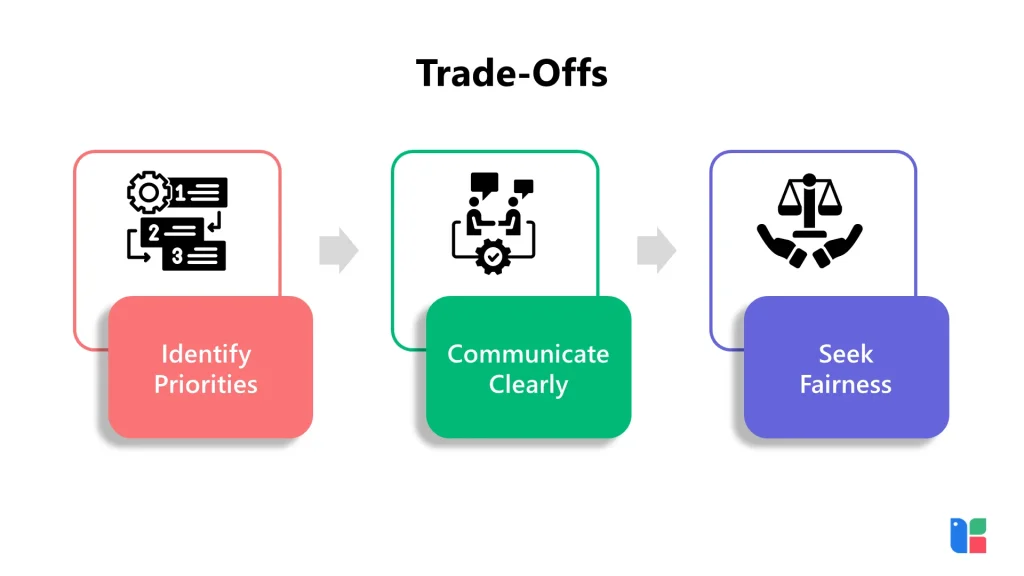
- Identify Priorities: Understand what’s most important to you and the other person. This helps you know where you can be flexible.
- Communicate Clearly: Clearly express what you’re willing to give up and what you hope to gain in return. Open communication is key.
- Seek Fairness: Ensure that the trade-offs are fair and balanced. The goal is to create a solution that feels equitable to both parties.
Trade-offs in compromise are about finding that sweet spot where both sides feel like they’ve gained something. It’s a give-and-take process that requires communication, understanding, and a willingness to make concessions for the sake of a harmonious agreement.
Power Play
Next, let’s dive deeper into the power play strategy, a method that involves leveraging influence, authority, or resources to tip the negotiation scales in your favour. Picture a scenario where one side has access to crucial information or holds a significant position of authority. In negotiations, the power play is about using those advantages strategically to secure a favourable outcome.
In negotiation terms, power play is like saying, “Let’s use our strengths wisely to shape the negotiation in our favour.” It’s a deliberate effort to establish an advantageous position, but it requires finesse to avoid creating an environment of confrontation.
Consider it like a chess game where each piece has a different power level. Effective power play involves knowing when to showcase your strongest pieces and when to keep them in reserve. The goal is to win the current negotiation and set the stage for future collaborations.
Strategic Influence
Within the power play strategy, strategic influence is the key technique. Strategic influence is like using your strengths smartly to shape the negotiation in your favour. It involves showcasing your advantages, whether it’s expertise, connections, or access to resources, to steer the discussion. But remember, it’s not about overpowering; it’s about influencing wisely. Here’s how to exert strategic influence:
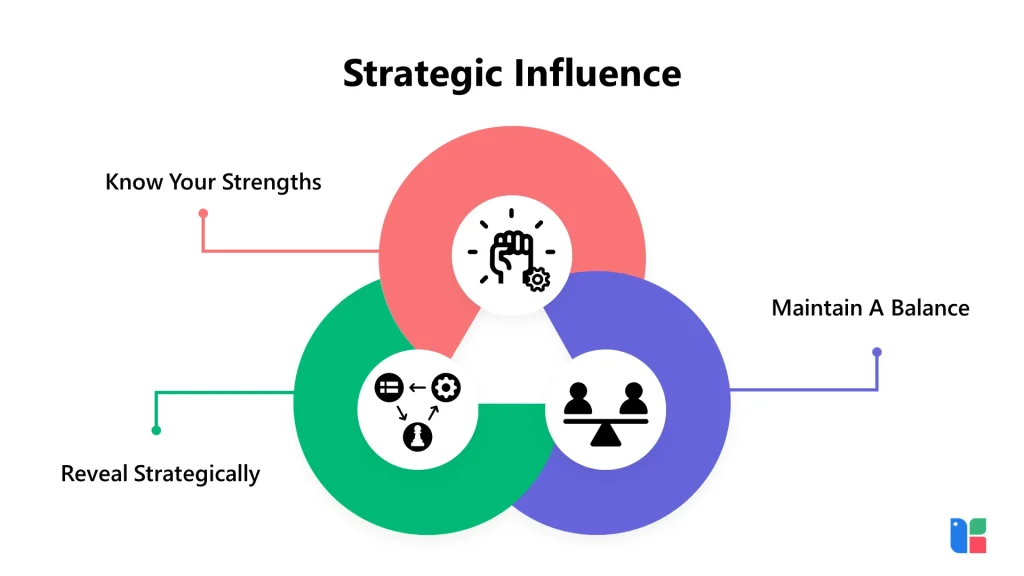
- Know Your Strengths: Understand what makes you powerful in this negotiation. Is it your knowledge, your connections, or something else?
- Reveal Strategically: Don’t lay all your cards on the table at once. Reveal your strengths strategically at moments where they can have the most impact.
- Maintain A Balance: Use your influence judiciously. It’s about being strong without making the other party feel overpowered. Balance is key.
Strategic influence in power play negotiations is about playing your cards wisely. It’s not just about having the upper hand; it’s about using that advantage to create an environment where the other party is more likely to agree with your terms.
Problem-Solving
Next, let’s dive deeper into the problem-solving strategy, a collaborative and proactive approach that involves addressing the root causes of a conflict. Consider a situation where both parties are facing challenges, and instead of focusing on competing interests, they join forces to understand the underlying issues and devise creative solutions.
In negotiation terms, problem-solving is similar to saying, “Let’s roll up our sleeves and figure out the real problem here.” It requires a cooperative mindset, active listening, and a commitment to finding comprehensive solutions that go beyond mere compromises.
Think of it as fixing a leaky roof collaboratively. Rather than just addressing the visible symptoms, problem-solving negotiations involve exploring the source of the issue, sharing insights, and jointly crafting solutions. It’s about creating outcomes that not only resolve the immediate concerns but also prevent similar issues from arising in the future.
Brainstorming Solutions
Within the problem-solving strategy, a key technique is to encourage brainstorming sessions. It involves a cooperative mindset, active listening, and a commitment to finding creative solutions that go beyond simple compromises. Here’s how to make the most of brainstorming solutions:
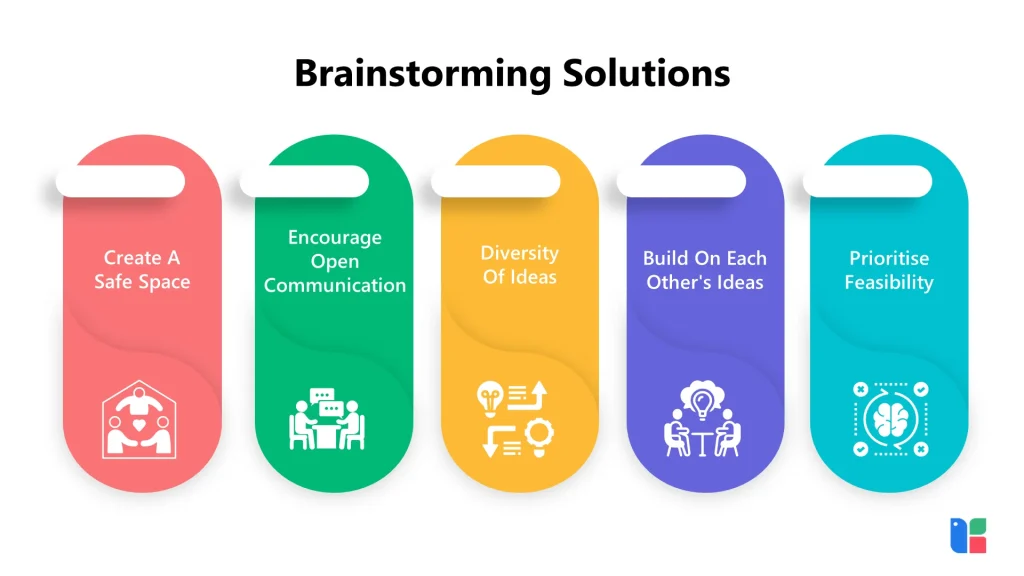
- Create A Safe Space: Ensure everyone feels comfortable sharing ideas without judgment. This creates an environment where creativity can flourish.
- Encourage Open Communication: Foster a culture of open communication. Everyone should feel free to express their thoughts and suggestions without hesitation.
- Diversity Of Ideas: Welcome a diverse range of ideas. Different perspectives can lead to innovative solutions that might not have been considered otherwise.
- Build On Each Other’s Ideas: Encourage participants to build on each other’s suggestions. This collaborative approach can lead to comprehensive solutions that address multiple aspects of the problem.
- Prioritise Feasibility: Once the ideas are on the table, assess their feasibility. Focus on solutions that are not only creative but also practical and implementable.
Relationship Building
Finally, let’s focus on relationship-building strategy, a method that prioritises the creation and enhancement of positive and constructive connections between parties involved in negotiations. Imagine a scenario where the long-term relationship between you and another party holds significant importance, and both parties are invested in nurturing trust and collaboration.
In negotiation terms, relationship building is like saying, “Let’s not just focus on this deal; let’s focus on building a foundation for future collaboration.” It involves actions and attitudes that contribute to fostering mutual understanding, trust, and goodwill.
Think of it as planting seeds for a garden. Relationship-building negotiations involve cultivating an environment where positive interactions and collaboration can flourish over time. While the primary focus is on the current negotiation, the strategy recognises the value of establishing a rapport that extends beyond the immediate transaction. Here’s a practical approach to the relationship-building strategy:
Open Communication
Open communication is like keeping the channels of conversation wide open. It involves actively listening, expressing thoughts clearly, and fostering an environment where everyone feels heard and understood. Here’s how to incorporate open communication into relationship building:
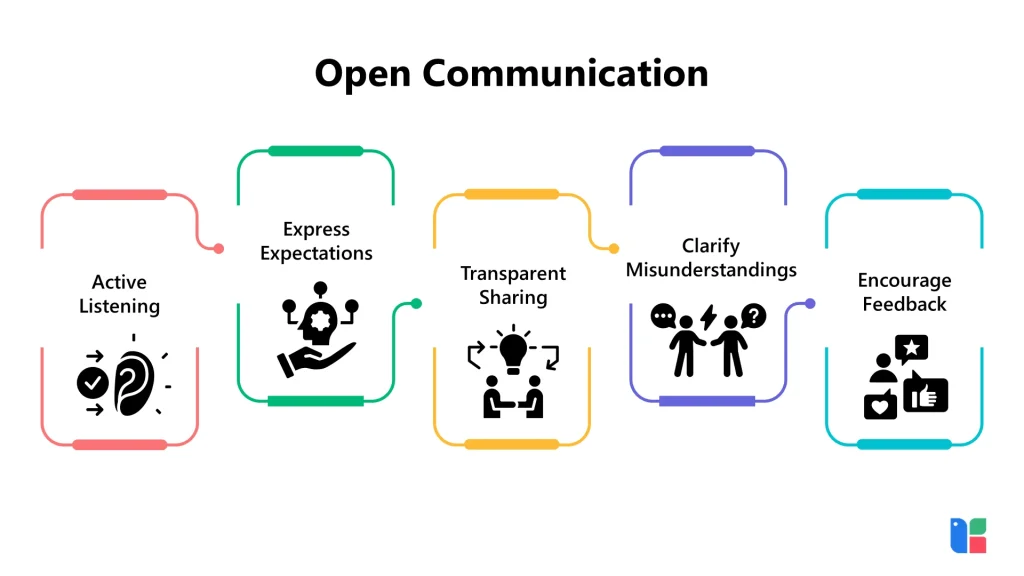
- Active Listening: Pay close attention to what others are saying. Show that you value their input by actively engaging with their ideas and concerns.
- Express Expectations: Clearly articulate your expectations and, equally important, ask others about their expectations. This helps in aligning goals and avoiding misunderstandings.
- Transparent Sharing: Be transparent about your thoughts and feelings. Transparency builds trust and contributes to the authenticity of the relationship.
- Clarify Misunderstandings: If there’s any confusion, address it promptly. Clarifying misunderstandings prevents the escalation of issues and reinforces a sense of mutual understanding.
- Encourage Feedback: Foster an environment where feedback is encouraged. Constructive feedback helps in continuous improvement and strengthens the foundation of the relationship.
Open communication in relationship building is about creating a space where everyone feels comfortable expressing themselves. It’s not just about talking; it’s about actively engaging with each other’s perspectives and working towards a shared understanding.
Conclusion
In the diverse world of negotiations, each strategy, from collaboration to power play, offers a unique lens on how to navigate challenges. Remember, there’s no one-size-fits-all solution. Success lies in adapting these approaches to your specific situation, goals, and relationships.
Whether crafting solutions, making strategic moves, or prioritising relationships, the strategies explored here provide a diverse toolkit. Negotiations are about more than deals; they’re about building lasting connections and creating outcomes that endure. Apply these strategies wisely, and may your negotiations not only succeed but also lay the groundwork for enduring collaborations.
Choosing the right negotiation strategy starts with understanding your own strengths and areas for improvement. Kapable can help you assess whether its learning experience supports those goals.


