


TL;DR
- Persistent Roadblocks: Despite increasing representation, women continue to face systemic barriers such as gender bias, work-life balance pressures, and the unyielding glass ceiling that slows their career ascent.
- Enhanced Business Performance: The inclusion of female leaders is a strategic necessity, as their diverse perspectives and higher emotional intelligence drive greater innovation, stronger team collaboration, and a more inclusive workplace culture.
- Intentional Career Acceleration: Advancing women requires actionable commitment, including setting specific diversity targets, ensuring pay equity and project access, and implementing programs for grooming female talent for senior roles.
A decade ago, women held just 17% of C-suite roles. Today, that number has risen to 29%. Progress? Yes. Equality? Not yet. Despite breaking barriers, female leaders still face roadblocks that their male counterparts rarely encounter. So, what’s holding women back from reaching the very top, and what will it take to close the gap for good?
What Is The Current State Of Women In Leadership Positions?
The proportion of women in leadership roles has steadily increased. In 2021, women made up 26% of all CEOs and managing directors, a significant leap from 15% just two years earlier. Companies like those in the Fortune Global 500 reported an all-time high of 23 female CEOs, including six women of color. The numbers reflect progress, but women are still underrepresented, especially in roles like CEO, Chief Financial Officer (CFO), and Chief Information Officer (CIO), highlighting the continued need for leadership training for women.
A report from Catalyst found that while women are more likely to lead in HR roles, they are making headway into other leadership positions, signaling a shift in workplace dynamics. And while women now hold 32% of senior management roles globally, they still face barriers to top positions, which remain disproportionately male.
Despite the challenges across industries, the number of women in leadership continues to be on the rise, shaping diversity and progress. In corporate India, more women are breaking barriers in the workplace, driving innovation and gender equality. The rise of women in the corporate world is paving the way for a more inclusive workforce.
“As I advanced to working with C-suite leaders, I often felt nervous and struggled to structure my thoughts. Kapable’s hands-on approach, with practical exercises and personalised techniques, helped me build clarity and balance assertiveness with empathy. I can now confidently influence and engage leaders and teams, and both my growth and confidence are clear to those around me.”
– Marwa Mahgoub (Senior HR Business Partner At Al Tayar Insignia)
What Challenges Do Women Face In Corporate Leadership?
While women are making progress in leadership roles, they still face several barriers that can slow their career growth and impact their leadership potential.
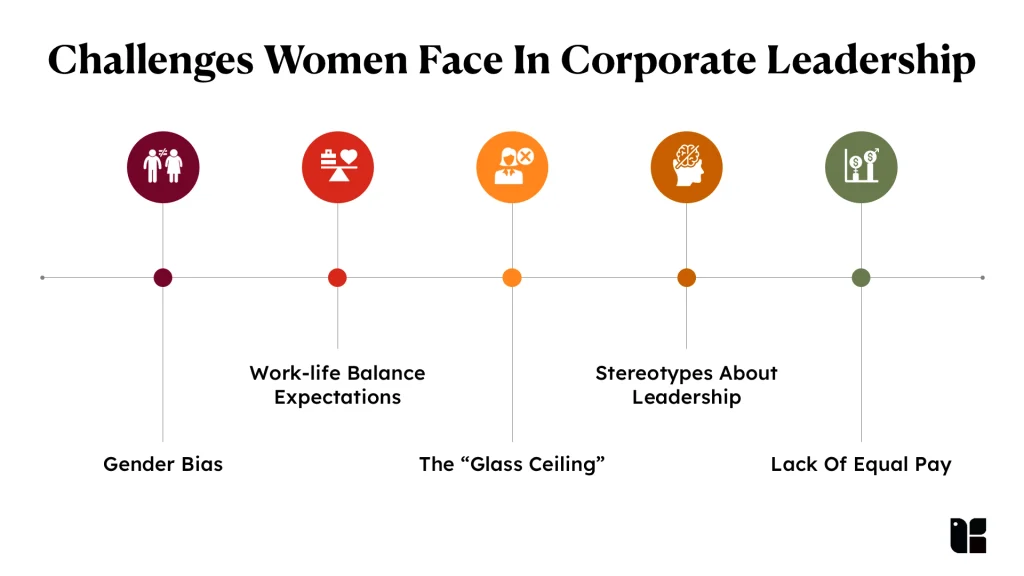
Gender Bias
Women often encounter subtle or overt gender bias that questions their abilities and leadership qualities. This bias can result in women being overlooked for promotions or high-level assignments, even if they are equally or more qualified than their male counterparts. The result? Slower career advancement and frustration.
Work-Life Balance Expectations
Women are often expected to manage both their careers and family life, with little support or flexibility from their employers. The pressure to juggle work and home responsibilities can lead to burnout, reduced productivity, and a lack of focus on career advancement.
Stereotypes About Leadership
Corporate leadership qualities are still often associated with traditional masculine traits such as assertiveness and decisiveness. As a result, women in leadership positions may face skepticism or doubt about their authority and decision-making abilities. This can undermine their confidence and hinder their leadership effectiveness.
The “Glass Ceiling”
Even with demonstrated skills, many women face an invisible barrier that restricts their access to top executive positions. The “glass ceiling” often prevents them from reaching the highest levels of leadership, leaving them with fewer opportunities to influence company strategy and decision-making at the top.
Lack of Equal Pay
Despite holding similar leadership roles, women often face pay disparities compared to their male colleagues. This inequality not only devalues their contributions but also impacts their long-term financial security and job satisfaction.
Overcoming these challenges is crucial for building workplaces where women can lead, grow, and make a real impact.
Why Does The Lack Of Female Leadership Limit Organisational Potential?
Female leadership brings distinct strengths that can transform teams, cultures, and even industries. Here’s why female leadership is essential:
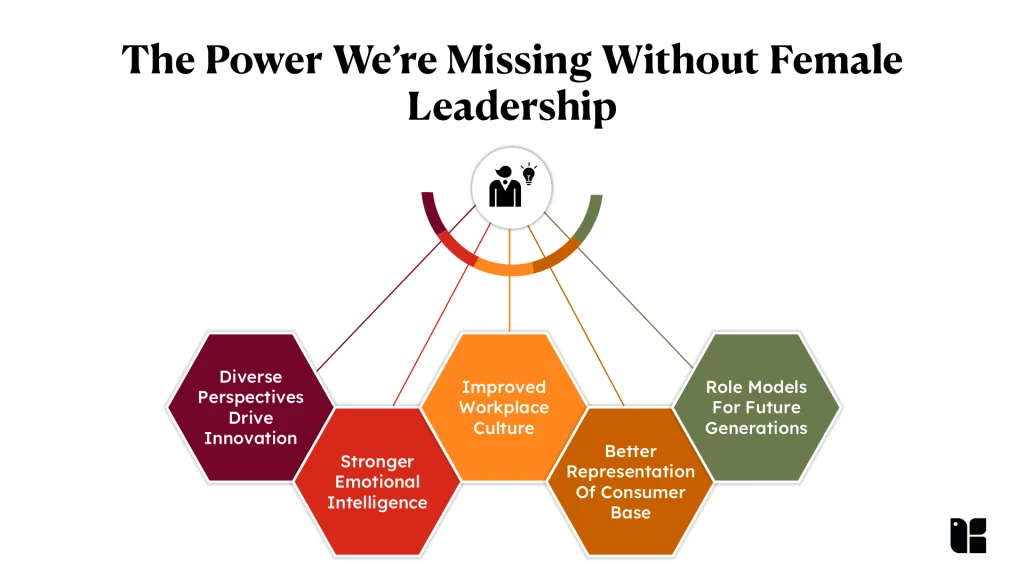
Diverse Perspectives Drive Innovation
Women leaders bring fresh, diverse viewpoints that lead to more creative solutions and better problem-solving. Their different life experiences often result in new ideas that can give businesses a competitive edge, especially in industries that rely on constant innovation.
Stronger Emotional Intelligence
Women often excel in emotional intelligence, fostering environments where employees feel heard, supported, and valued. This leads to better team collaboration, higher morale, and lower turnover rates, which directly impact company performance and productivity.
Improved Workplace Culture
Female leaders tend to create more inclusive, supportive, and transparent workplace cultures. This contributes to higher employee satisfaction, increased loyalty, and a greater sense of belonging, which boosts overall company performance.
Better Representation Of Consumer Base
Women represent a large portion of global consumers. Having women in leadership roles ensures that a company’s strategies and products are more in tune with the needs and desires of their female customer base, leading to stronger customer relationships and market growth.
Role Models For Future Generations
Female leaders serve as role models, inspiring young women to pursue leadership roles themselves. By breaking down barriers and proving that leadership is not limited by gender, they pave the way for the next generation of female leaders, ensuring a future of diverse leadership at the top.
Without women in leadership, we miss these essential qualities that can push organisations forward and create more inclusive, successful workplaces.
Limited female representation can reduce the diversity of perspectives shaping organisational decisions. Explore Kapable’s approach to see how inclusive leadership capabilities are developed.
What Strategies Can Help Advance Women In Corporate Leadership?
Creating lasting change for women in leadership requires intentional, measurable actions that go beyond surface-level commitments. Here are strategies that can actually move the needle.
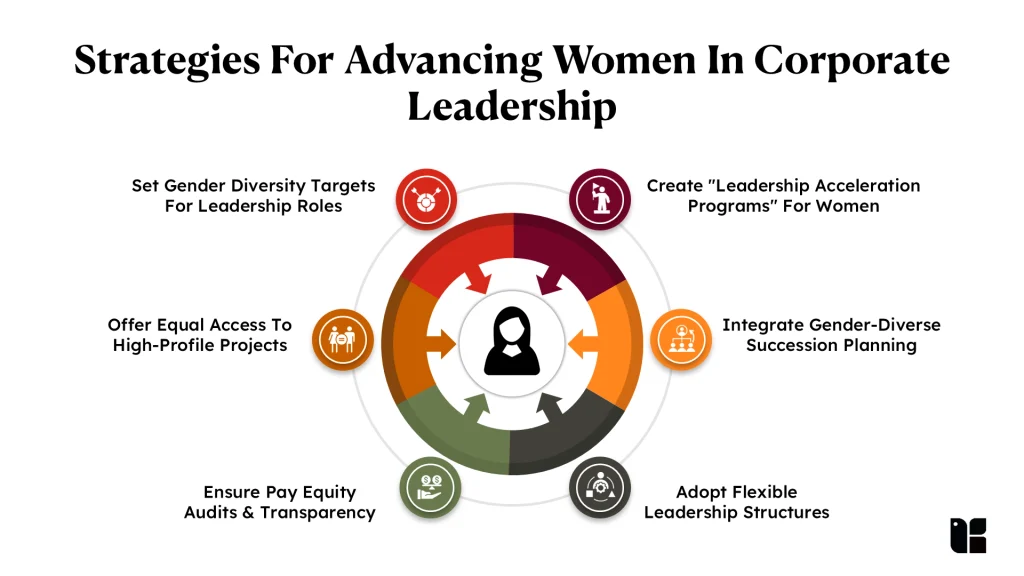
Set Gender Diversity Targets For Leadership Roles
Commit to specific, measurable targets for women in leadership positions. Without clear goals, progress is often slow. Set a timeline for increasing female representation in key decision-making roles, and hold leadership accountable for meeting those targets.
Offer Equal Access To High-Profile Projects
Women often miss out on the high-visibility projects that lead to promotions. Ensure that women are consistently given opportunities to lead or contribute to strategic, high-impact initiatives. This helps build their portfolio and prepares them for senior leadership roles.
Ensure Pay Equity Audits And Transparency
Conduct regular pay audits to ensure that women are compensated equally for equal work. If there’s a pay gap, take immediate action to address it. Make salary structures transparent so that everyone understands what it takes to achieve higher compensation, reducing the risk of gender-based disparities.
Create “Leadership Acceleration Programs” For Women
Instead of just offering leadership training, create specific programs designed to accelerate women into leadership. These programs should focus on breaking down the barriers women face in senior roles, such as negotiating, decision-making, and handling organisational politics. The programs should also provide visibility with senior leaders and stretch assignments.
Adopt Flexible Leadership Structures
Rethink traditional leadership models and create flexible structures where women can balance leadership roles with personal commitments. This could involve offering job-sharing options for leadership roles, allowing leaders to work across different departments or flexible hours that help women stay in leadership roles long-term.
Integrate Gender-Diverse Succession Planning
Ensure that leadership succession planning includes women at all levels. Rather than waiting until a vacancy arises, identify and groom female talent for future leadership opportunities. This proactive approach ensures a continuous pipeline of women ready to step into key leadership roles.
These strategies require commitment and real follow-through, but when implemented, they can create a tangible difference in advancing women to leadership positions and supporting them once they’re there.
Conclusion
Advancing female leadership is not just a social imperative but also a strategic advantage. By addressing barriers and fostering an inclusive culture, with sustained efforts and leadership commitment, the future of corporate leadership can be diverse, equitable, and immensely successful.
If you’re looking to strengthen leadership capabilities and contribute to more inclusive organisations, Kapable’s program fit can help you decide whether it’s the right fit.


