


TL;DR
- Foundational Psychology: Persuasive writing is an influential art rooted in the psychology of Aristotle’s ethos, pathos, and logos, using credibility, emotion, and logic to shape decisions.
- Professional Utility and Craft: Techniques are vital in professional roles like marketing, sales, and PR, and crafting a message involves a clear thesis, logical structure, counterargument addressal, and emotional engagement.
- Skill Mastery Path: Developing strong persuasive skills requires a deep understanding of the target audience, leveraging compelling storytelling, and concluding every message with a strong, specific call to action.
- Real-World Influence: The writing’s impact extends to shaping public opinion, influencing policy, and serving as an indispensable tool for effective leadership and mobilising significant social and personal action.
In a world brimming with information, persuasion is a valuable skill. Whether you’re a marketer aiming to sway consumers, a politician seeking votes, or a writer hoping to engage and inform, persuasive writing is your secret weapon. It’s the art of crafting words and arguments that convince, influence, and inspire action.
Have you ever wondered what sets persuasive writing apart from the rest? How does it work, and why is it so powerful? In this blog, we’ll delve deep into the world of writing persuasive essays, exploring its techniques, psychology, and real-world applications. By the time you finish reading, you’ll understand the fundamentals and have the tools to apply persuasive writing in your own endeavours.
So, let’s embark on a journey into the realm of words and ideas, where the power of persuasion awaits. Join us as we uncover the strategies and secrets behind compelling narratives and convincing arguments and learn how to master the art of persuasive writing.
“This journey transformed my confidence and communication skills, enabling me to deliver impactful presentations, including a town hall for 500 people and a compelling business pitch to a senior stakeholder. Kapable has been a game-changer in my professional growth.”
– Ajay Deshmukh (Director At JPMorgan Chase)
How Does Persuasive Writing Work?
Persuasive writing is an art that shapes our decisions, beliefs, and actions daily. Whether convincing a friend to try a new restaurant, supporting a political candidate, or buying a product, persuasive elements are ever-present. To become a master of persuasive writing, it’s crucial to comprehend the underlying psychology that drives it.
At its core, persuasive writing is rooted in the psychology of persuasion. To be effective, writers must understand how people think and make choices. One of the key foundations of writing persuasive essays is Aristotle’s three modes of persuasion: ethos, pathos, and logos. These principles are the building blocks of effective communication.
Ethos involves establishing the credibility and authority of the speaker or writer. It’s about showcasing your expertise, trustworthiness, and authority on the subject matter. An audience is more likely to be persuaded by someone they perceive as a credible source.
Pathos taps into emotions. It’s about crafting your writing to resonate with your audience’s feelings, values, and desires. Emotional appeal can be a potent tool in persuasion, as it forges a connection with readers on a personal level.
Logos employs logic and reasoning. It involves using evidence, data, and well-structured arguments to support your claims. A logically sound argument can bolster your persuasive efforts, especially when dealing with a rational or analytical audience.
In addition to these three principles, it’s important to recognise the role of cognitive biases in persuasion. Human brains often take cognitive shortcuts, resulting in biases that influence decision-making. By understanding these biases, such as confirmation bias, anchoring, and the bandwagon effect, writers can strategically shape their persuasive content to work with, rather than against, these cognitive tendencies.
Furthermore, the power of storytelling should not be underestimated. People are naturally drawn to narratives. A well-told story can captivate, resonate, and persuade better than a dry recitation of facts. By weaving persuasive elements into a compelling narrative, writers can engage their audience on a deep, emotional level.

How Is Persuasive Writing Used In Professional Life?
Effective persuasive writing is a versatile tool that holds immense significance in numerous professional scenarios. Whether you are in a corporate setting or working as a freelancer, knowing how to wield the power of words can greatly enhance your career prospects and bring about desired outcomes. Here are five situations where persuasive writing is particularly effective:
1. Marketing and Advertising Campaigns

Writing persuasive essays lies at the core of marketing and advertising efforts. Crafting compelling and engaging copy that resonates with the target audience can persuade consumers to purchase products, subscribe to services, or take specific actions. Successful marketers use persuasive language, storytelling, and emotion-evoking content to connect strongly with potential customers.
2. Business Proposals and Reports
When presenting business proposals, reports, or recommendations, persuasive essay can make a substantial difference. Convincing stakeholders or decision-makers to endorse your ideas, allocate resources, or support your strategies often hinges on how effectively you can articulate the benefits and potential returns on investment.
3. Sales Emails and Correspondence

Sales professionals and account managers frequently employ persuasive writing techniques in their emails and communication with clients. Skillful use of persuasive language, personalised content, and the presentation of unique selling points can win over potential clients, retain existing customers, and close deals.
4. Job Applications And Resumes
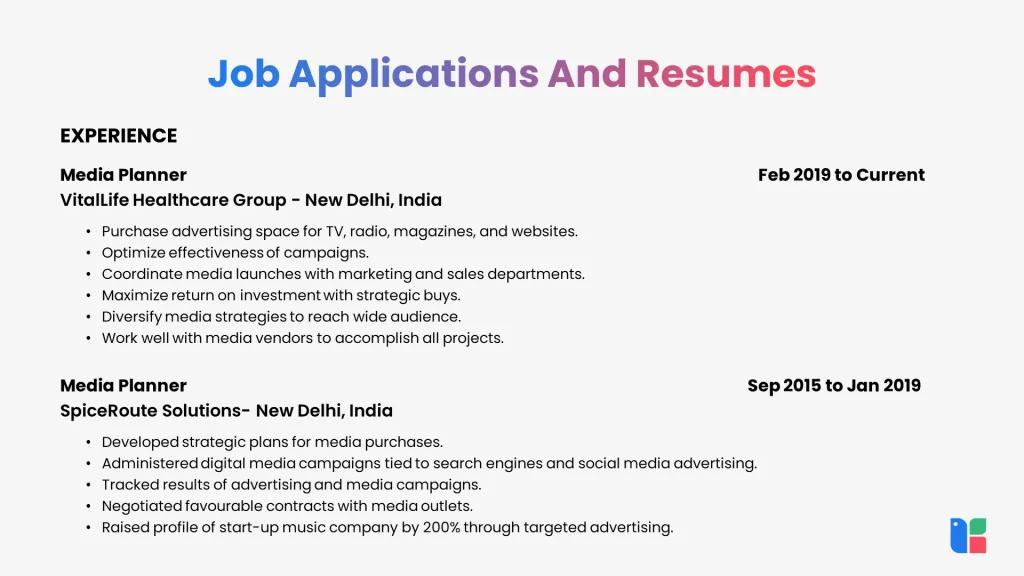
In the competitive job market, persuasive essay is vital for crafting attention-grabbing resumes and compelling cover letters. The ability to present your skills, experiences, and qualifications persuasively can help you stand out among a sea of applicants, ultimately securing interviews and job offers.
5. Public Relations And Crisis Management
Persuasive writing plays a crucial role in managing public relations and handling crises. Communicating effectively during challenging situations requires the use of language that can restore trust, mitigate damage, and convey a sense of responsibility and accountability.
As we’ve explored the power of persuasive writing in professional life, let’s now delve into the art of crafting a persuasive message for specific scenarios.
How To Craft A Persuasive Message?
Creating a persuasive message is an art that combines the mastery of language, psychology, and strategy. To write a great persuasive message, you need to consider various elements and techniques that can captivate and influence your audience effectively. Here’s how:
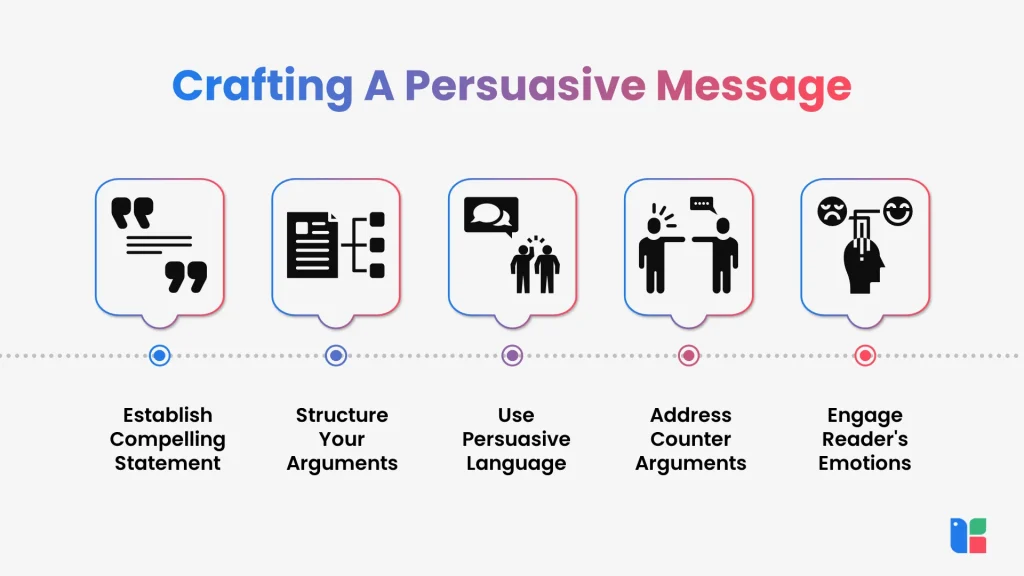
Establish Compelling Statement
Your persuasive message should begin with a concise and powerful thesis statement. This statement serves as the core idea that you want to convey to your audience. It should be clear, specific, and easily understood. For example, if you’re writing a persuasive essay on the importance of recycling, your thesis statement might be: “Recycling reduces waste and conserves resources, making it an essential practice for a sustainable future.”
Structure Your Arguments
The structure of your message plays a crucial role in how persuasive it is. Arrange your arguments logically, beginning with the strongest points and gradually leading to the supporting details. This structure not only reinforces your main thesis but also ensures your audience remains engaged. An effective structure guides the reader from their initial scepticism to a point of agreement or action.
Use Persuasive Language
Employ persuasive language and rhetorical devices to make your message more convincing. These include metaphors, analogies, vivid imagery, and emotionally charged words. For example, in a persuasive speech advocating for better healthcare access, you could use the metaphor, “Healthcare is the cornerstone of a strong, healthy society,” to evoke a powerful image.
Address Counterarguments
Acknowledging and addressing potential counterarguments in your message demonstrates that you’ve thoroughly considered the issue. Anticipating and refuting opposing viewpoints adds credibility to your argument and reassures your audience. For instance, if you’re advocating for a particular environmental policy, address common objections and provide compelling counterarguments to debunk them.
Engage Reader’s Emotions
One of the most powerful tools in persuasive writing is emotional appeal. Engage your audience’s emotions by telling relatable stories, sharing personal anecdotes, or using emotional language. If you’re writing a persuasive message to encourage donations to a charitable cause, a heartwarming story about a beneficiary can resonate deeply with your readers and inspire them to take action.
Having discussed the art of crafting a persuasive message, let’s now shift our focus to the broader skill of developing persuasive writing for various professional contexts.
To strengthen how you structure, refine, and apply persuasive writing techniques, explore how Kapable supports your learning journey through practice and feedback.
Developing Persuasive Writing
Mastering the art of persuasive writing requires practice, dedication, and a deep understanding of the key principles and techniques. Here are essential steps to help you develop persuasive writing skills:
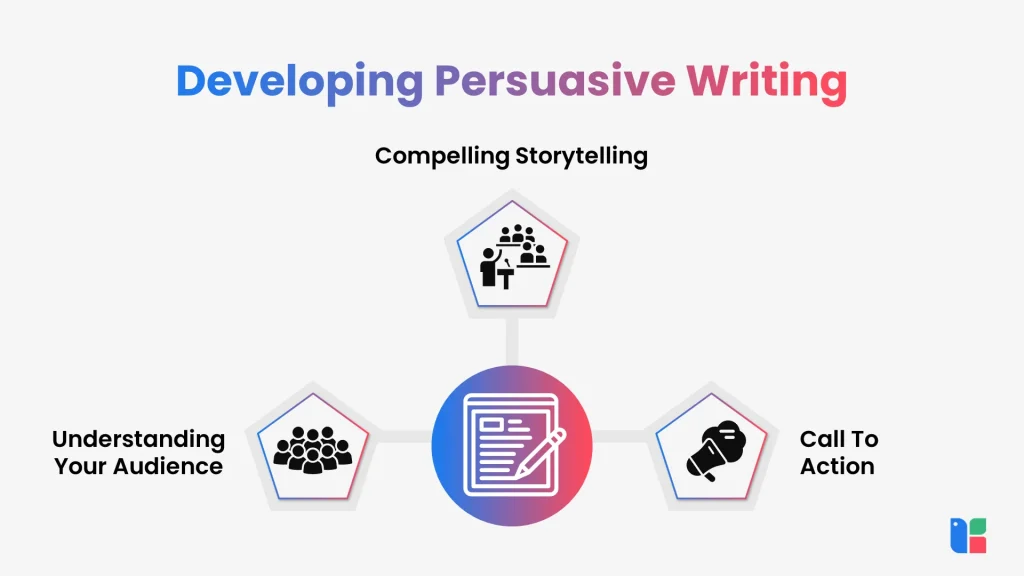
Understanding Your Audience
Start by researching your target audience. Understand their demographics, interests, and concerns. Engage with your readers or listeners to gain insights into what motivates them and what matters most to them. Use surveys, social media, and other feedback mechanisms to gather information. Once you have a clear understanding of your audience, tailor your writing to address their specific needs and desires. Speak directly to their concerns, values, and goals. Use language and examples that resonate with them, demonstrating empathy and a deep connection.
Compelling Storytelling
Study the art of storytelling. Read books, articles, and listen to speakers known for their storytelling skills. Practice storytelling in various contexts, from personal anecdotes to fictional narratives. Weave stories into your writing to illustrate key points and connect with your readers emotionally. Craft narratives that evoke feelings and provide relatable examples. A well-told story enhances the impact of your message.
Call To Action
Study successful calls to action in various contexts, from marketing campaigns to political speeches. Understand the elements that make a call to action compelling and actionable. Practice creating calls to action in different scenarios. Conclude your piece with a strong and specific call to action. Clearly state what you want your readers to do, believe, or think after reading your content. Make it actionable and inspiring, motivating your audience to engage or take the desired steps.

Impact Of Persuasive Writing
The impact of persuasive essays extends far beyond the written words on a page or screen. It has the potential to effect significant change, influence decisions, and shape opinions in a variety of domains. Here’s a closer look at the profound impact of persuasive writing:
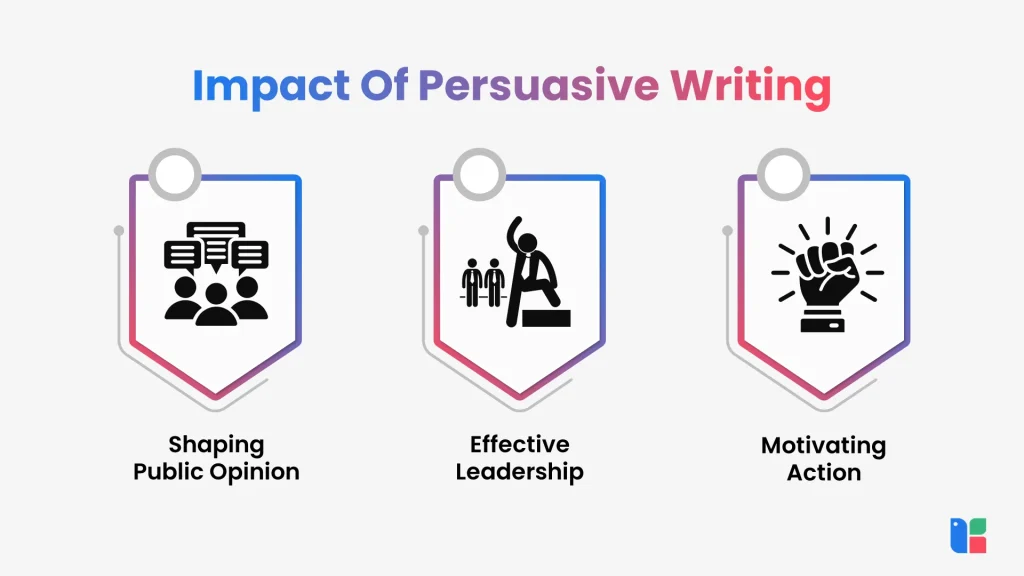
Shaping Public Opinion
Persuasive writing is a formidable force in shaping public opinion and influencing policy. Op-eds, research papers, and advocacy campaigns can sway lawmakers, prompting them to adopt new laws or regulations in alignment with the writer’s perspective. Additionally, persuasive essay has a significant impact on how the public perceives issues, organisations, or individuals. Media outlets, public relations campaigns, and persuasive speeches play a vital role in generating both positive and negative public perceptions, which, in turn, can affect public behaviour, from supporting a cause to boycotting a product.
Greta Thunberg’s Climate Change Speech (2019)
Greta Thunberg’s speeches on climate change have ignited a global movement. Her speeches are characterised by their passionate and urgent pleas for environmental action (pathos). Thunberg’s use of moral and ethical arguments, reinforced by her ethos as a young environmental activist, has spurred climate strikes and rallies worldwide, leading to increased awareness and calls for policy changes.
Effective Leadership
Persuasive writing is an indispensable tool for effective leadership. Leaders across various domains use persuasive communication to motivate their teams. Whether through an inspirational email, a compelling speech, or a well-structured persuasive essay, compelling writing fosters a shared sense of purpose, drives high performance, and encourages team members to embrace a common vision. Additionally, leadership’s persuasive writing plays a fundamental role in shaping an organisation’s culture. By effectively communicating core values, vision, and expectations through written messages, leaders contribute to a cohesive and thriving workplace culture, positively impacting team dynamics and overall success.
Barack Obama’s 2008 Inaugural Address
In his inaugural address, President Barack Obama used eloquent language and a message of hope and unity to inspire the nation. He appealed to the audience’s emotions (pathos) by emphasising common values and dreams, fostering a sense of national purpose and unity (ethos).
Motivating Action
Persuasive writing is a catalyst for motivating action on multiple fronts. It is a driving force behind social change, as activists, NGOs, and grassroots organisations use persuasive content to mobilise individuals to take action, whether it’s signing petitions, participating in rallies, or making donations to causes they believe in. Additionally, persuasive essays are instrumental in personal growth and development. Self-help books, motivational articles, and life coaching resources harness persuasive language to inspire people to adopt positive behaviours, set and achieve goals, and lead healthier, more fulfilling lives.
Emma Gonzalez’s “We Call B.S.” Speech (2018)
Emma Gonzalez, a survivor of the Marjory Stoneman Douglas High School shooting, delivered a passionate speech advocating for gun control. Her speech combined personal anecdotes and data-driven arguments (logos) to emphasise the need for policy changes. The emotional impact of her speech (pathos) resonated with many and fueled the gun control movement, contributing to legislative reforms and activism.
Empower Yourself With Persuasion
In an era defined by information overload and constant communication, the ability to wield persuasive communication is a powerful tool that can transform both your personal and professional life, so, empower yourself with persuasion. Acquire the skills to express your ideas effectively, build authentic connections, and drive positive change. With the art of persuasion in your toolkit, you hold the key to leaving a lasting mark on the world and shaping your own unique history.
If you’re evaluating how your writing skills align with your goals and what you need to improve next, this quick check from Kapable will help you decide your fit.


