


TL;DR
- The Executive Mandate: Senior leaders are tasked with defining the organisation’s long-term strategy, managing critical decisions and risk, and are defined by extensive experience, financial acumen, and a commitment to ethical leadership.
- Vision and Influence are Pivotal: Effective executives possess the ability to formulate a clear, forward-looking strategic vision, negotiate outcomes with resilience, navigate global markets with cross-cultural competence, and guide organisations through periods of significant change.
- Empowerment Drives Success: Successful leaders focus on building trust by empowering their teams to operate autonomously with clear expectations, while also committing to continuous personal and professional development through curiosity and self-reflection.
- Advancing Execution with Digital Flow: Driving modern success requires strong digital fluency combined with effective C-Suite communication to articulate strategic messaging, manage crises, and align stakeholders at all levels.
A study grouped top executive leadership skills into five major themes, highlighting key priorities for leaders and their development. Notably, the study found that “high ethical and moral standards” and “communicating clear expectations” were among the most important attributes, with 67% and 56% of participants selecting them, respectively. These critical skills, along with many others that executives worldwide strive to master, are the key elements that differentiate great leaders from good leaders or those who merely manage. True executive leadership extends beyond authority and integrates a commitment to nurturing and empowering your team.
As we explore the essential skills of effective leaders, we will discover what sets exceptional executives apart. Beyond titles and authority, strong leadership is grounded in empowering teams, authenticity, and having a clear vision for the future. Let’s learn the qualities that empower leaders, from aspiring CEOs to seasoned executives, to nurture organisations and a culture of innovation and collaboration.
What Is Executive Leadership?
Executive leadership is the role and responsibility of senior-level managers within an organisation who oversee the strategic direction and overall success. These leaders are tasked with making crucial decisions that impact the company’s goals, growth, and operations. They provide guidance, set priorities, and ensure resources are effectively managed to achieve long-term objectives.
Executives typically include roles such as CEOs, CFOs, COOs, and other C-suite positions. They are accountable for driving innovation, managing risks, and fostering a productive work environment. Executive leaders play a pivotal role in steering the organisation through challenges, adapting to market changes, and capitalising on opportunities for growth.
Effective executive leadership involves clear communication, sound judgment, and the ability to inspire and motivate teams. It requires a deep understanding of industry trends, competitive landscapes, and stakeholder expectations. By setting a clear vision and aligning the organisation’s efforts, executive leaders guide their teams towards sustainable success.

What Is The Crucial Role Of Executive Leadership?
Executives define the organisation’s long-term goals and create strategies to achieve them. They set the course for the entire company, ensuring it moves forward with purpose and clarity. They are responsible for making tough decisions that impact the organisation’s future. This includes choices about investments, partnerships, and resource allocation. This involves balancing potential challenges with opportunities for growth. Executives also manage relationships with stakeholders such as investors, customers, and regulatory bodies. They ensure these relationships are positive and supportive of the organisation’s goals. These roles are crucial in shaping the organisation’s path forward and ensuring its continued growth.
Executive roles demand more than experience alone because every new level of leadership brings greater complexity and responsibility. Kapable supports leaders as they prepare for these challenges.
Which Qualifications Define Executive Leadership?
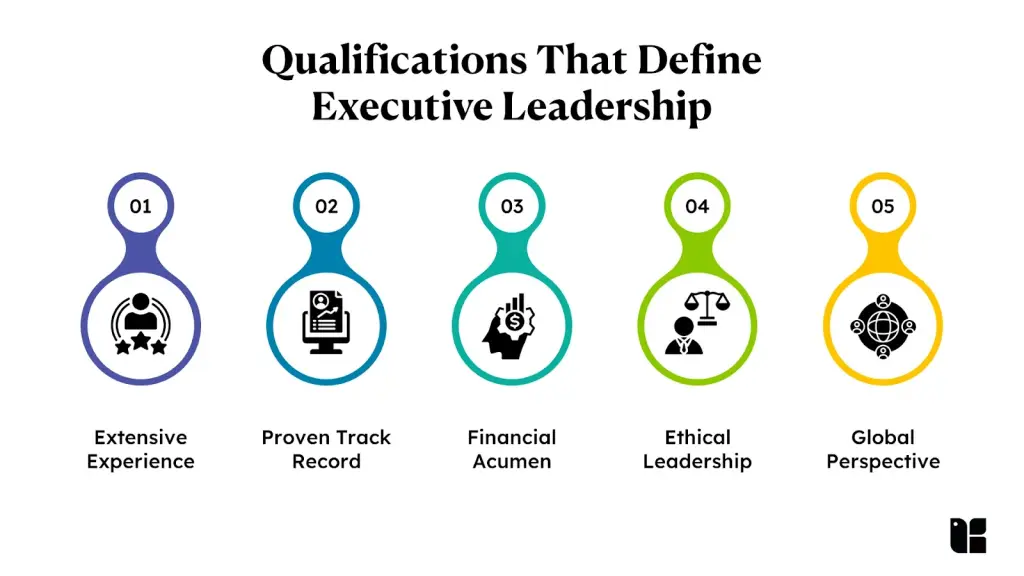
Executive leadership is defined by a unique set of qualifications and experiences that set senior directors or managers apart from their peers. They typically exhibit the following key qualifications:
Extensive Experience
Executives usually bring 15-20 years of industry experience, including several years in leadership positions. This extensive background equips them with a deep understanding of market dynamics, operational challenges, and effective strategies. Their experience enables them to anticipate industry trends and navigate complex situations with confidence.
Proven Track Record
Successful executives have a history of achieving notable milestones, such as leading successful mergers and acquisitions, driving significant revenue growth, or implementing successful organisational changes. They are recognised for their ability to deliver results that positively impact the bottom line and demonstrate a strong capability in managing large-scale projects or initiatives.
Financial Acumen
Executives must possess a strong grasp of financial principles, including budgeting, forecasting, and financial analysis. They are skilled in interpreting financial statements, managing corporate finances, and making data-driven decisions. Key financial skills include understanding key performance indicators (KPIs), profitability analysis, and capital allocation strategies.
Ethical Leadership
Ethical leadership involves more than just adhering to moral standards; it requires active efforts to promote a culture of integrity and accountability. Executives lead by example, implementing ethical guidelines, and ensuring compliance with legal and regulatory standards. They are often involved in developing and enforcing codes of conduct, addressing ethical dilemmas transparently, and fostering an environment where ethical behaviour is rewarded.
Global Perspective
In a globalised business environment, executives need to have experience or a mindset that covers international markets. This includes understanding global market trends, cultural differences, and international regulations. Executives with a global perspective are skilled at managing cross-border teams, negotiating international partnerships, and adapting strategies to diverse market conditions.
Aspiring executives can aspire to develop these qualifications through continuous growth, learning, and practical experience in their careers.
“Kapable has played a crucial role in my growth. I joined to overcome challenges with public speaking and impromptu situations, especially in larger settings. The sessions helped me structure my ideas better and shift from reacting impulsively to responding thoughtfully, improving my workplace interactions. The tools and techniques I’ve learned have greatly boosted my confidence and clarity.”
– Jainil Vadhan (Programmatic Solutions Consultant At Amazon)
What Traits Make Executive Leadership Effective?
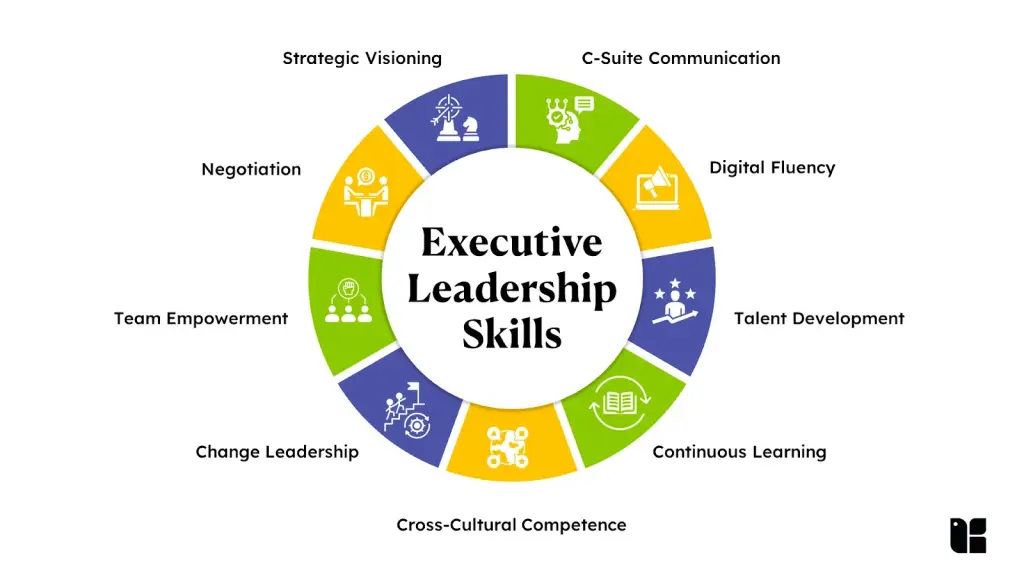
Mastering essential skills and competencies is crucial for driving organisational success. Let’s look into some exceptional qualities in executives:
Strategic Visioning
Strategic visioning is the ability to formulate and articulate a clear, inspiring, and future-oriented direction for an organisation. It involves setting ambitious goals and outlining the path to achieve them. Executives with strong strategic vision can align the organisation towards a common purpose, anticipate market trends, and proactively position the company for long-term success. Key elements include:
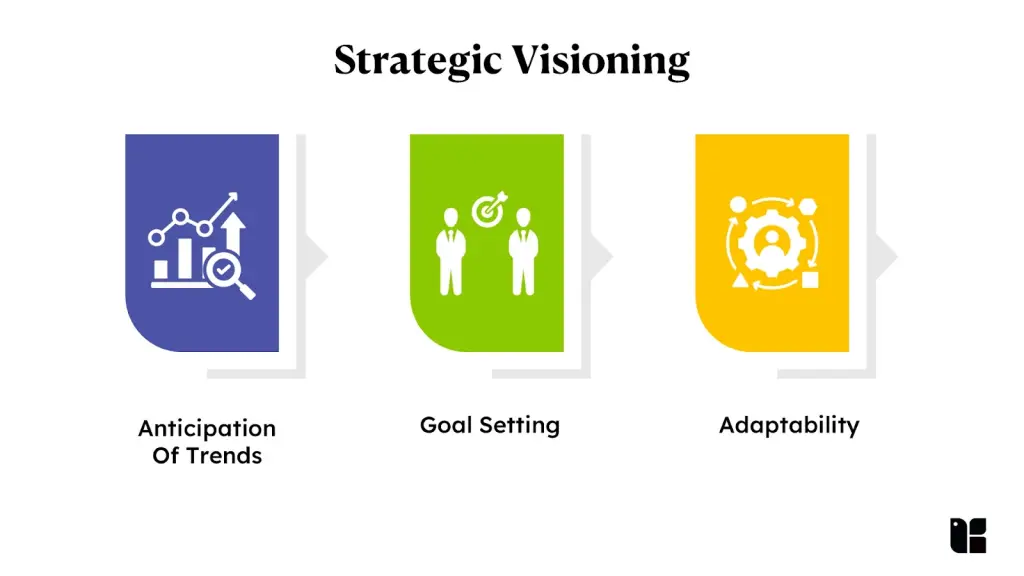
- Anticipation of trends: Understanding industry shifts and emerging opportunities to stay ahead of the competition. Executives use market research, competitive analysis, and scenario planning to identify potential disruptions and opportunities, allowing them to pivot and capitalise on new trends.
- Goal setting: Establishing ambitious yet achievable objectives that drive organisational progress. Executives set clear, measurable goals and develop detailed action plans to achieve them. They regularly review and adjust these goals based on performance metrics and feedback.
- Adaptability: Flexibly adjusting strategies in response to changes in the external environment while maintaining focus on the overarching vision. Executives embrace change and encourage innovation, fostering a culture of agility and continuous improvement within their organisations.
For example, Amazon’s Jeff Bezos is renowned for his long-term strategic vision. He foresaw the potential of e-commerce and expanded Amazon from an online bookstore into a global marketplace offering diverse products and services. His focus on customer experience and innovation has propelled Amazon’s growth and market dominance.
Negotiation
Negotiation and influence refer to the ability to effectively persuade and negotiate with others to achieve desired outcomes. It involves understanding motivations, building relationships, and finding mutually beneficial solutions. Executives skilled in negotiation and influence can forge alliances, resolve conflicts, and secure advantageous deals. Key elements include:
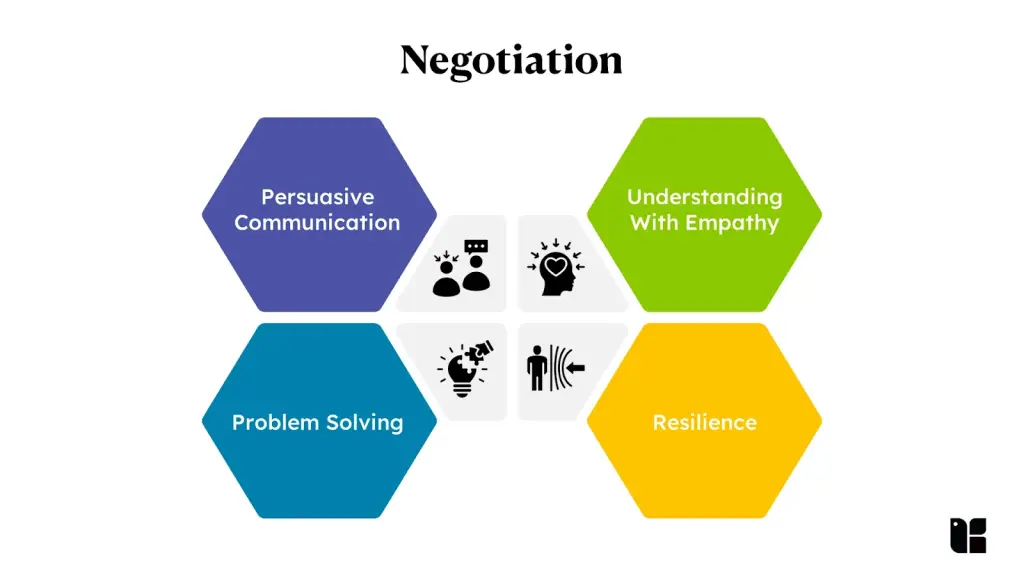
- Persuasive communication: Articulating compelling arguments and persuading others to support your ideas or proposals. They use data-driven insights and clear, concise messaging to present their case convincingly.
- Understanding with empathy: Recognising and empathising with others’ perspectives and interests to build trust and rapport. Executives often use active listening techniques and ask open-ended questions to understand the underlying concerns and motivations of stakeholders.
- Problem-solving: Collaboratively finding solutions that satisfy both parties’ needs and objectives. Executives employ creative problem-solving strategies, such as brainstorming sessions and scenario planning, to identify and evaluate multiple solutions.
- Resilience: Maintaining composure and adaptability during challenging negotiations to achieve positive outcomes. Executives remain patient and composed under pressure, using conflict resolution techniques to address disagreements and keep negotiations on track.
For example, Warren Buffett, known for his exceptional negotiation skills, has successfully acquired and invested in numerous companies. His ability to negotiate favourable terms while maintaining integrity and long-term relationships has contributed to Berkshire Hathaway’s success.
Cross-Cultural Competence
Cross-cultural competence refers to the ability to understand, communicate effectively, and work with people from diverse cultural backgrounds. In today’s globalised world, executives with cross-cultural competence can navigate cultural nuances, build international partnerships, and lead diverse teams more effectively. This skill enhances organisational adaptability and market competitiveness. Key elements include:
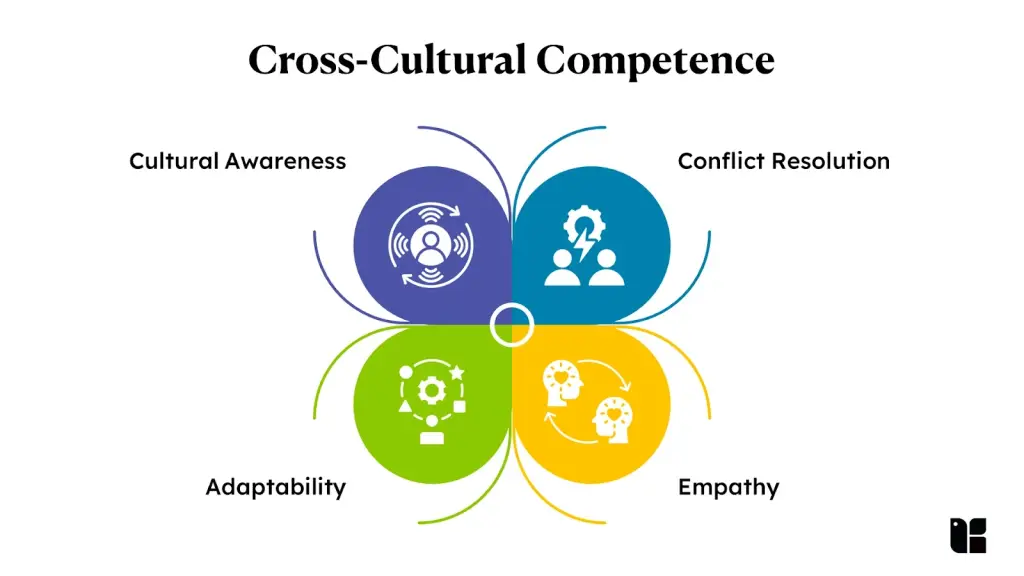
- Cultural awareness: Understanding cultural values, norms, and communication styles of different countries or regions. Executives often invest time in cultural training programs and seek insights from local experts to ensure culturally sensitive communication and decision-making.
- Adaptability: Flexibility in adjusting behaviours and approaches to accommodate cultural diversity and promote inclusive environments. Executives encourage open dialogue and feedback to continuously refine their approaches and create an inclusive atmosphere.
- Empathy: Showing sensitivity and understanding towards cultural differences, perspectives, and challenges. They ensure diverse viewpoints are considered and valued in decision-making processes.
- Conflict resolution: Resolving cultural conflicts and misunderstandings constructively, fostering collaboration and mutual respect. Executives use mediation techniques and cross-cultural negotiation skills to address and resolve conflicts, promoting harmony and collaboration within the team.
McDonald’s successful localisation strategies in different countries exemplify cross-cultural competence. The company adapts its menu, marketing strategies, and operations to fit local cultural preferences while maintaining its global brand identity. This is a great example which fosters a global mindset within organisations.
“Jiro Dreams of Sushi” offers insights into Japanese culture and work ethic through the story of Jiro Ono, a renowned sushi chef. It illustrates the importance of respecting cultural traditions and values in achieving excellence.
Change Leadership
Change leadership involves guiding an organisation through periods of transition and transformation. It is essential when guiding teams through major transitions, such as mergers, acquisitions, or shifts in company strategy. Executives must navigate constant change, whether due to technological advancements, market shifts, or organisational restructuring. Change management ensures that teams adapt successfully and achieve strategic goals amidst uncertainty. Key elements include:
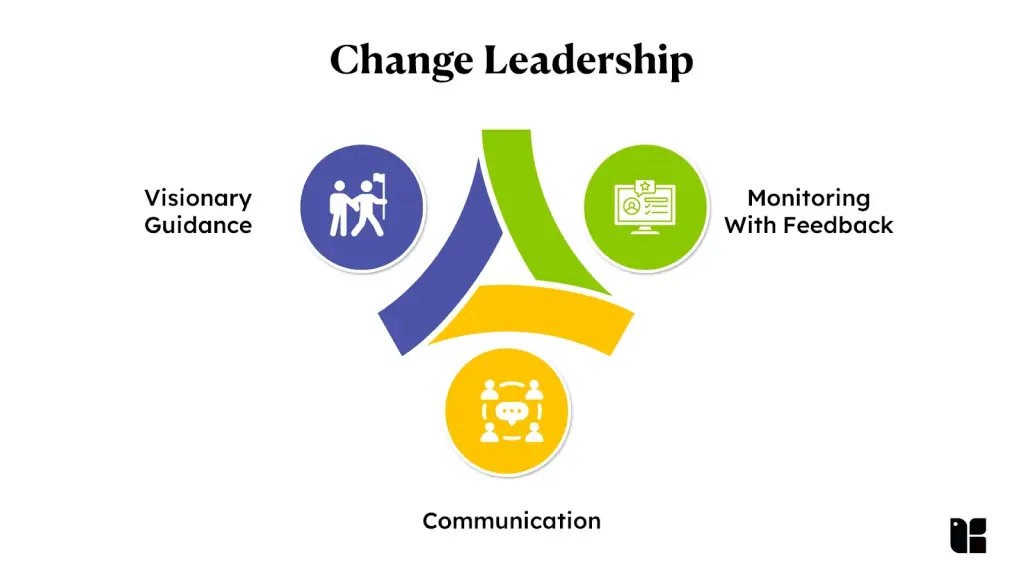
- Visionary guidance: Articulating a compelling vision for change and inspiring others to support and contribute to the process. Executives often use storytelling and real-life examples to illustrate the benefits of change, making the vision relatable and motivating for the team.
- Communication: Transparently communicating the reasons for change, its benefits, and the roadmap for implementation to foster understanding and alignment. They hold regular town hall meetings and use various communication channels to ensure that everyone is informed, heard, and on the same page regarding the change process.
- Monitoring with feedback: Continuously monitoring progress, soliciting feedback, and making adjustments to ensure the change efforts stay on course and deliver desired outcomes. Executives implement feedback loops and performance metrics to track the impact of changes and remain agile, making necessary adjustments based on real-time data and team input.
For example, IBM’s transformation under CEO Ginni Rometty illustrates change leadership in action. Rometty led IBM’s shift towards cloud computing and artificial intelligence, restructuring the company’s operations to adapt to evolving market demands and technological advancements.
Team Empowerment
Team empowerment refers to the ability of executives to inspire and enable their teams to take initiative, make decisions, and achieve collective goals autonomously. This leadership approach enhances employee engagement, retention, and overall organisational effectiveness. Key elements include:
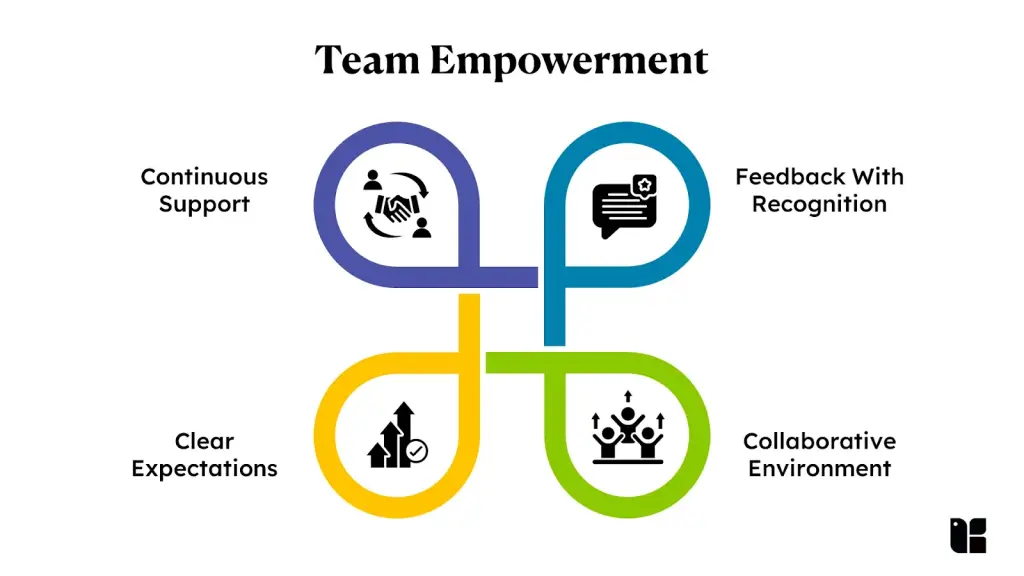
- Continuous support: Building trust by delegating authority and providing support to team members to make decisions and take calculated risks. Executives implement decision-making frameworks that outline boundaries within which team members can operate autonomously, fostering a sense of ownership and accountability.
- Clear expectations: Setting clear goals, expectations, and parameters to empower teams to work towards common objectives independently. They use SMART (Specific, Measurable, Achievable, Relevant, Time-bound) goals to provide clarity and direction, ensuring everyone understands their roles and responsibilities.
- Feedback with recognition: Providing regular feedback and recognising achievements to reinforce empowerment and motivate teams. Executives establish formal recognition programs and regular performance reviews to celebrate successes and provide constructive feedback, encouraging continuous improvement.
- Collaborative environment: Promoting collaboration, open communication, and knowledge sharing to leverage diverse perspectives and collective strengths. They create cross-functional teams and use collaborative tools and platforms to facilitate seamless communication and idea exchange, enhancing team synergy and innovation.
For example, Google’s former CEO, Eric Schmidt, is known for empowering teams through a flat organisational structure and building an environment where engineers are encouraged to innovate and experiment. His leadership style contributed to Google’s success in developing amazing products and services.
Continuous Learning
Inquisitiveness and continuous learning refer to the curiosity, openness to new ideas, and commitment to ongoing personal and professional development. Executives who develop a mindset of inquisitiveness and continuous learning stay ahead of the curve, adapt to change, and drive innovation within their organisations. Key elements include:
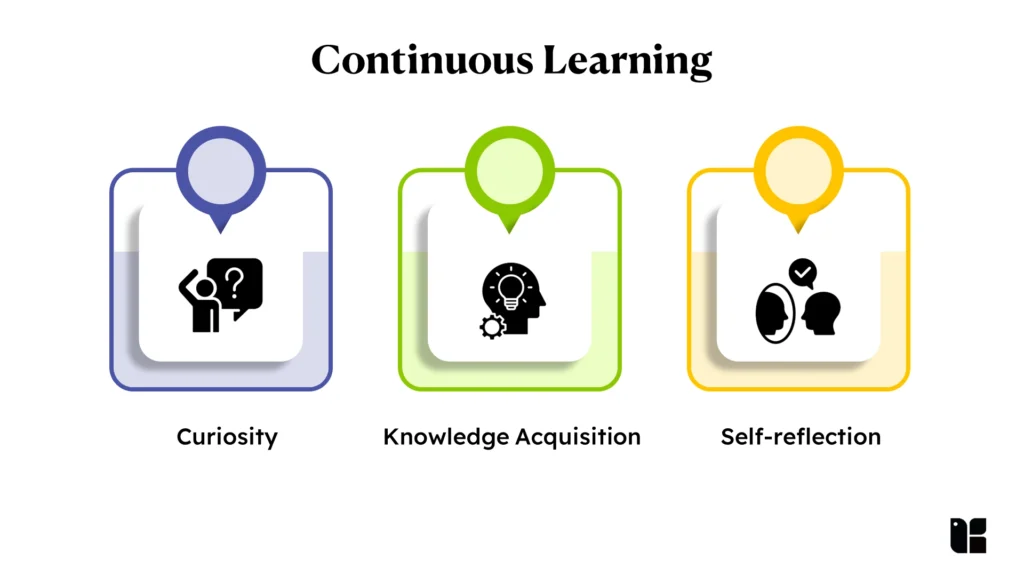
- Curiosity: Maintaining a curious mindset to explore new concepts, ask insightful questions, and challenge conventional thinking. Executives allocate time for regular reading, attend industry conferences, and participate in think tanks to stay updated on emerging trends and ideas.
- Knowledge acquisition: Actively seeking information, staying informed about industry developments, and expanding expertise in relevant areas. They enrol in executive education programs and engage in professional networks to gain new insights and share best practices with peers.
- Self-reflection: Engaging in self-reflection to assess strengths, weaknesses, and areas for improvement, and seeking feedback to grow personally and professionally. Executives use tools like 360-degree feedback and personal development plans to identify growth opportunities and track progress toward personal and professional goals.
Bill Gates, co-founder of Microsoft, is known for his lifelong commitment to learning and innovation. Beyond technology, Gates expanded his knowledge into global health through the Bill & Melinda Gates Foundation, addressing critical global challenges with data-driven solutions.
Digital Fluency
Digital fluency refers to the ability to effectively utilise digital technologies and tools to achieve business goals, enhance productivity, and drive innovation. It involves understanding digital trends, leveraging data insights, and embracing technology to stay competitive in a digital economy. This skill is crucial for optimising operations, improving customer experiences. Key elements include:
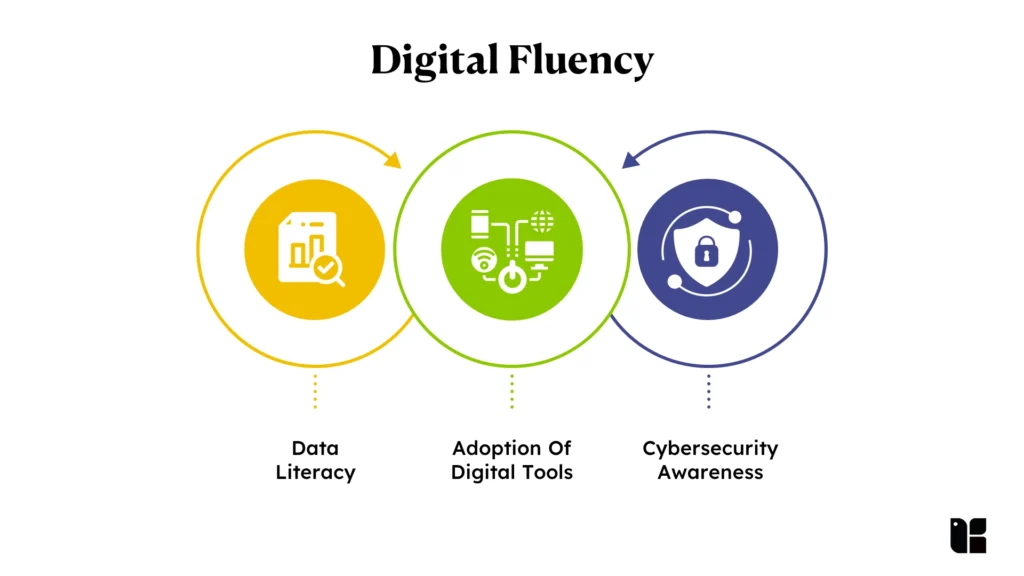
- Data literacy: Understanding how to interpret and use data analytics to inform strategic decisions, enhance performance, and drive business growth. Executives often use tools like Tableau and Google Analytics to analyse data trends, identify opportunities, and make evidence-based decisions.
- Adoption of digital tools: Embracing and integrating digital tools and platforms to streamline processes, improve efficiency, and enable remote collaboration. They implement project management software such as Asana and communication platforms like Slack to enhance team coordination and productivity.
- Cybersecurity awareness: Prioritising cybersecurity measures to protect sensitive data and ensure safe digital operations. Executives work with cybersecurity experts to establish robust security protocols and regularly update systems to guard against cyber threats.
“The Social Network” explores the rise of Facebook under the leadership of Mark Zuckerberg, highlighting the transformative impact of digital technologies and social media on global connectivity and business innovation.
Talent Development
Talent development involves the strategic nurturing of employees’ skills, knowledge, and capabilities to maximise their potential and contribute effectively to organisational success. It involves activities such as training, mentoring, coaching, and succession planning. Executives who prioritise talent development build a skilled and motivated workforce, enhance employee engagement and retention, and ensure continuity of leadership and expertise within the organisation. Key elements include:
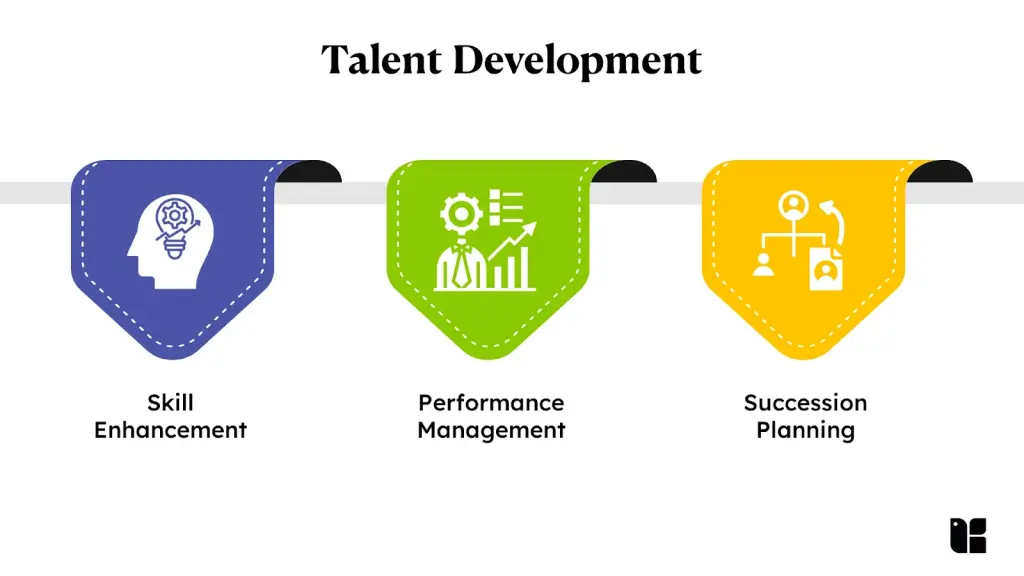
- Skill enhancement: Providing opportunities for employees to acquire new skills, expand their knowledge, and develop competencies relevant to their roles and career aspirations. Executives often implement training programs and workshops, partnering with platforms like LinkedIn Learning or Coursera to offer diverse learning opportunities.
- Performance management: Establishing clear performance goals, providing constructive feedback, and recognising achievements to support continuous improvement and career progression. They utilise performance management systems like SAP SuccessFactors to set objectives, track progress, and provide regular feedback.
- Succession planning: Anticipating future talent needs and developing plans to ensure smooth transitions in leadership positions and critical roles. Executives create mentorship programs and leadership development initiatives to prepare high-potential employees for future leadership roles.
A documentary, “American Factory,” explores workforce development and cultural integration challenges in a global manufacturing setting. The documentary underscores the importance of investing in talent development and fostering a supportive workplace culture to achieve operational excellence and employee satisfaction.
C-Suite Communication
Effective C-Suite communication skills involve the ability of executives to communicate clearly, persuasively, and strategically with stakeholders at all levels within the organisation and externally. It includes conveying vision, goals, strategies, and decisions to inspire confidence, alignment, and engagement. This skill is critical for articulating strategic priorities, managing crises, influencing key stakeholders, and rallying support for initiatives that advance the organisation’s mission and objectives. Key elements include:
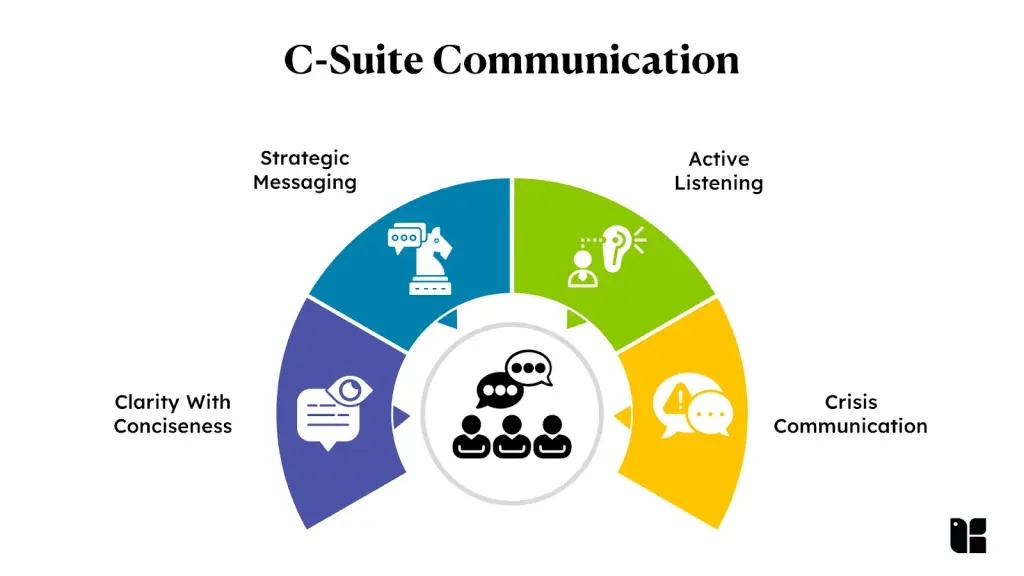
- Clarity with conciseness: Communicating complex ideas and information clearly and succinctly to ensure understanding and alignment among diverse audiences. Executives often use tools like PowerPoint for visual aids and employ techniques such as the “elevator pitch” to distil key messages into brief, impactful statements.
- Strategic messaging: Crafting messages that align with organisational goals and resonate with stakeholders’ interests and concerns. They use strategic communication plans and tools like HubSpot to tailor messages for different audiences, ensuring consistency and relevance.
- Active listening: Listening attentively to stakeholders’ feedback, concerns, and perspectives to inform decision-making and enhance communication effectiveness. Executives may implement regular feedback sessions and use platforms like SurveyMonkey to gather and analyse stakeholder input.
- Crisis communication: Effectively managing communication during crises or challenging situations to mitigate risks, maintain reputation, and uphold trust. They utilise crisis management frameworks and tools like Everbridge for real-time communication and response coordination during emergencies.
Elon Musk, CEO of Tesla and SpaceX, demonstrates effective C-Suite communication through his strategic use of social media to share company updates, technological advancements, and vision for the future. His direct and transparent communication style engages stakeholders and shapes public perception.
“The Final Year” offers insights into diplomatic communication and leadership during the final year of President Barack Obama’s administration. The documentary showcases effective communication strategies in navigating global challenges and advancing policy agendas.
Developing these senior leadership skills enhances your ability to tackle complex challenges and steer your organisation towards success. Investing in these executive skills not only drives personal growth but also strengthens your team’s performance and positions your organisation for sustained success.
Conclusion
Stay curious to discover new opportunities, lead with honesty to earn trust, and communicate effectively to inspire others. By focusing on developing your team, embracing digital tools, and guiding change with resilience, you can steer your organisation towards lasting success in a rapidly changing world. Keep learning, remain open to new ideas, and empower those around you to excel. Consider integrating a leadership development plan into your routine to stay ahead and effectively guide your team towards success.
Every executive role brings new expectations, making continuous leadership development just as important as professional experience. Kapable offers an opportunity to evaluate whether its approach matches your aspirations.


