


TL;DR
- Interconnected Skills: Negotiation, a structured process for reaching mutual agreements, requires persuasion to convince the other party of a proposal’s benefit, while negotiation provides the leverage for persuasive efforts.
- Distinct Roles: Negotiation’s core purpose is a formal, two-way compromise leading to a documented deal, contrasted with persuasion’s one-sided goal of changing minds or actions without necessarily leading to an agreement.
- Strategies for Success: Effective negotiation relies on preparation (BATNA, SMART goals) and trust, which are amplified by advanced persuasion techniques like storytelling, social proof, and Neuro-Linguistic Programming (NLP).
- Ethical Foundation and Real-World Impact: Upholding honesty and integrity is vital for avoiding manipulation, as demonstrated by successful applications in complex global politics (Iran Nuclear Deal) and social activism (Greta Thunberg).
In the complex web of human interactions, two potent skills emerge as game-changers: negotiation and persuasion. Whether you’re closing a business deal, rallying a team, or convincing a friend, understanding how these skills are intrinsically connected can be a key to success.
This post explores the art of mastering these intertwined skills, delving into fundamentals, techniques, real-life examples, and strategies to navigate challenges. Together, we’ll unlock the secrets of negotiation and persuasion, transforming the way you influence people around you.
Let’s embark on this journey to become more persuasive and effective influencers.
What Is Negotiation?
Negotiation is like a structured conversation that happens when people with different interests want to agree on something. It’s a bit like finding a compromise solution in a friendly discussion. Negotiation is used in many aspects of life, from making business deals to deciding on family matters. Both sides give in a little to meet in the middle of the negotiation. Good communication, which means listening as well as talking, is super important to establish mutual trust.
Negotiating involves preparing beforehand. That means doing careful research on the other party, understanding what you need, and planning how to talk to them. There’s also something called BATNA (Best Alternative to a Negotiated Agreement), which is like a backup plan if the negotiation doesn’t work out. Using information or advantages (leverage) to strengthen your negotiation is important.
Understanding Persuasion
Persuasion is the art of getting people to see things your way or take certain actions, even without formal agreements. It’s about influencing thoughts and behaviours. Effective persuasion relies on clear and convincing communication. When trying to persuade someone, you aim to motivate them to change their mind or do something specific. Building mutual trust is also a significant aspect of persuasion; people are likelier to listen to those they trust.
Understanding how people make decisions is crucial for effective persuasion. This means recognising what might sway them, their biases, and their emotional triggers. Moreover, ethical considerations play a significant role. Using persuasion ethically means being honest and respecting others’ choices.
In various areas of life, persuasion is a valuable skill, from convincing someone to buy a product to inspiring your team at work. It complements negotiation and can be a powerful tool in making your ideas more appealing and convincing others to join your cause.

How Does Persuasion Work?
Negotiation and persuasion are intertwined for influence and decision-making, working together to lead to more favourable outcomes when skillfully combined. Understanding the deep connection between these two skills is fundamental to mastering both.
The Symbiotic Relationship
Negotiation Requires Persuasion: In every negotiation involving a significant business deal or personal agenda, persuasion is the linchpin for achieving a favourable agreement. You need to convince the other party that your proposal is reasonable and beneficial. In this context, persuasion brings parties to the negotiation table, keeps the conversation going, and ultimately leads to a mutually acceptable agreement.
Persuasion Benefits from Negotiation: Conversely, when you possess strong negotiation skills, you are better positioned to create opportunities for persuasion. Effective negotiation can secure advantageous terms, resources, or agreements that provide a compelling foundation for persuasive efforts. This leverage gives your persuasive endeavours more weight and credibility.
How Is Persuasion Different From Negotiation?
While negotiation and persuasion share common ground in the art of influence, they have distinct roles and characteristics:
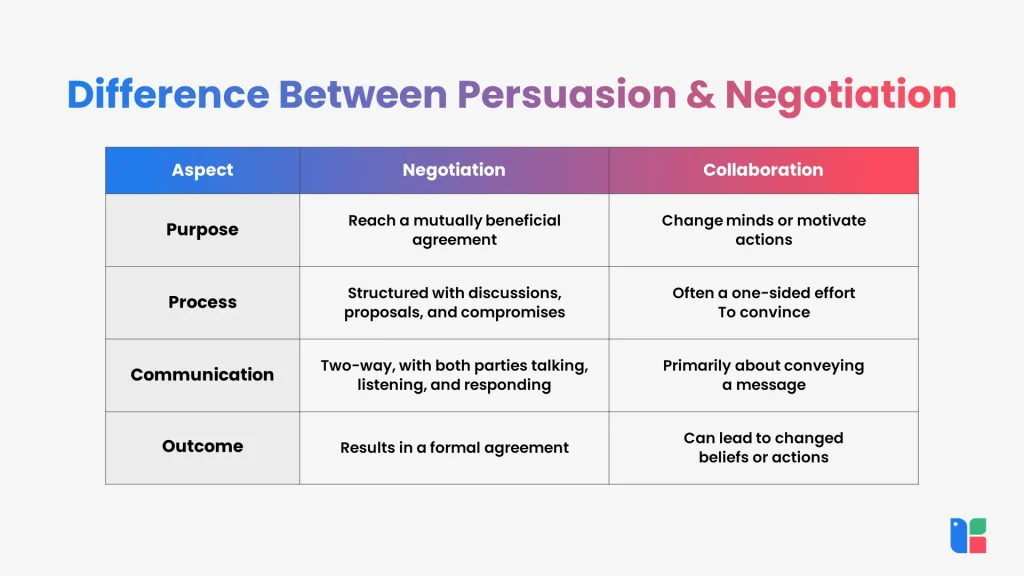
Purpose: Negotiation is primarily about reaching a mutually beneficial agreement. It involves give-and-take to meet the interests of all parties involved. In contrast, persuasion aims to change minds or motivate people to take a specific action. It might not always lead to a structured agreement.
Process: Negotiation is a structured process, often involving multiple rounds of discussion, proposal, and counterproposal. It’s about finding a compromise. Persuasion, on the other hand, is often a one-sided effort where you’re trying to convince someone to see things from your perspective.
Communication: In negotiation, communication is key, but it’s a two-way street. Both parties talk, listen, and respond. In persuasion, it’s more about effectively conveying your message and convincing the other party without them necessarily having the same level of involvement.
Outcome: The outcome of a negotiation is an agreement or a deal, often documented in some form. Persuasion can result in changed beliefs or actions but may not lead to a formal agreement.
Understanding these differences helps you apply the right approach in various situations, whether you need to negotiate a business deal or persuade someone to embrace a new idea.
How Do Core Negotiation Strategies Drive Success?
By incorporating these strategies into your negotiation approach, you’ll be better equipped to reach favourable final agreements and confidently navigate complex situations.
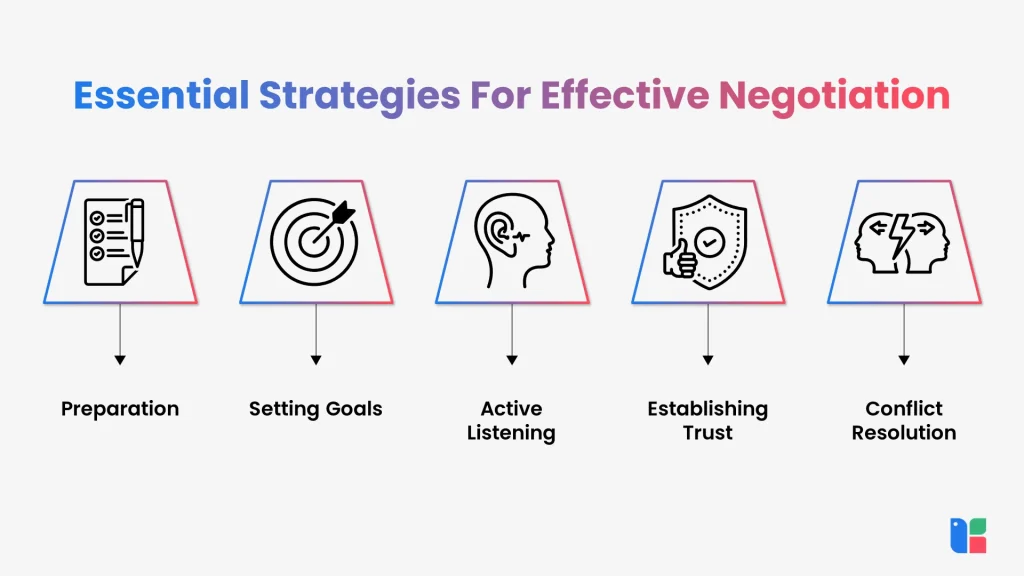
Preparation
Effective negotiation starts with thorough preparation, which involves understanding the other party’s needs and goals. You’ll also assess your Best Alternative to a Negotiated Agreement (BATNA) and identify areas of common ground to facilitate a mutually beneficial outcome.
Setting Goals
Having clear objectives directs your efforts in negotiations while setting boundaries ensures you don’t compromise beyond your limits, maintaining your best interests throughout the process. Use the SMART technique to set clear goals.
Listening Actively
Effective communication is at the heart of negotiation. Active listening lets you genuinely understand the other’s perspective, while clear and concise communication minimises misunderstandings.
Establishing Trust
Trust is the foundation of successful negotiations. Building rapport through genuine, honest communication and actively empathising with the other party’s viewpoint fosters trust and strengthens the overall negotiation relationship. This trust not only enhances the chances of reaching mutually beneficial agreements but also lays the groundwork for future successful interactions.
Conflict Resolution
In negotiations, challenges are common. Diffusing tension, staying composed, and employing conflict resolution techniques are essential skills that help navigate obstacles and reach productive resolutions.
These skills are not only essential in business and professional settings but can also prove invaluable when you are trying to build relationships.
“This 3-month journey has been enlightening, as I transitioned from an ambitious manager to an inspiring leader. Applying Kapable’s techniques, I confidently delivered a 30-minute speech at our Annual Planning Session, receiving positive feedback from my team. Kapable has been instrumental in helping me reach my full potential.”
– Sailesh Gadalay (Sr Account Director – Enterprise Sales At Linkedin)
How Can Advanced Persuasion Techniques Be Applied?
In the art of persuasion, advanced techniques go beyond basic communication skills to influence decisions effectively.

Storytelling As A Persuasive Tool
Storytelling is a powerful persuasive technique. By weaving a compelling narrative, you can capture your audience’s attention, engage their emotions, and effectively convey your message. Stories resonate with people on a personal level, making your persuasion efforts more relatable and impactful.
Neuro-Linguistic Programming (NLP) Techniques
Neuro-Linguistic Programming (NLP) techniques tap into the connections between language, behaviour, and the mind. These techniques allow you to better understand and influence the thought processes and behaviours of others. For instance, you can build rapport with someone by mirroring their body language and tone of voice, which is an NLP technique. By doing this, you establish a stronger connection and increase the chances of effective communication and persuasion.
Utilising Social Proof
Social proof involves demonstrating that others have found value or benefit in your offering. It’s a persuasive technique based on the principle that people often look to the behaviour and opinions of others to guide their own decisions. Testimonials, reviews, or endorsements from satisfied customers or credible sources can bolster your persuasive efforts.
Creating A Sense Of Urgency
Creating a sense of urgency and scarcity is often used in marketing and sales. By emphasising that an opportunity is limited or time-sensitive, you can encourage people to take immediate action. This persuasive technique capitalises on the fear of missing out (FOMO) and can drive people to make decisions more quickly.
Overcoming Objections
In persuasion, objections and resistance from your audience are common. Effective persuasion involves addressing these objections thoughtfully and empathetically. Acknowledging concerns and providing well-reasoned responses can alleviate doubts and increase the likelihood of your audience accepting your message or proposal. This technique is crucial for navigating complex and nuanced persuasive situations.
A strong grasp of advanced persuasion techniques is most effective when balanced with ethical principles, ensuring influence is responsible and trustworthy.
To understand how you can build negotiation and persuasion skills through a structured program of practice, feedback, and real-world application, explore how Kapable supports your learning journey.
What Are The Ethical Considerations In Negotiation And Persuasion?
This section delves into the critical ethical aspects that negotiators and persuaders must uphold.
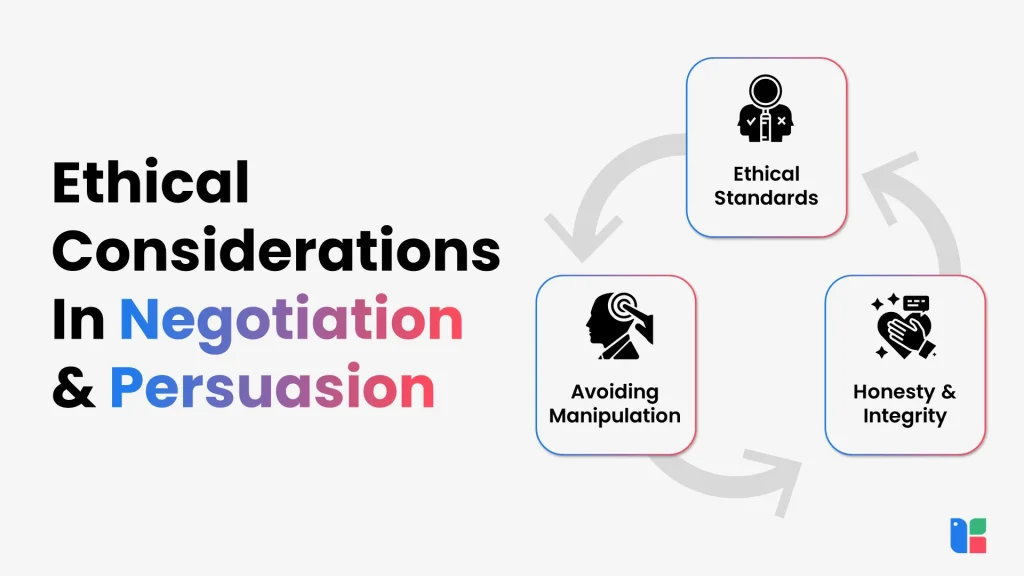
Ethical Standards
Effective persuasion isn’t solely about achieving your goals; it’s also about doing so ethically. This subsection explores balancing persuasive efforts and maintaining ethical integrity in your interactions.
Avoiding Manipulation
Manipulation and unethical tactics can compromise the integrity of both negotiation and persuasion. Understanding what these tactics entail and how to avoid them is vital for conducting ethical and principled interactions.
Honesty And Integrity
Honesty and integrity are the cornerstones of ethical negotiation and persuasion. This part emphasises the significance of transparent, truthful communication and unwavering ethical standards in all your persuasive and negotiating endeavours.
Understanding ethical considerations lays the foundation for examining how negotiation and persuasion have been applied successfully in real-world situations.

How Have Negotiation And Persuasion Been Successfully Applied?
Learning from real-life examples can provide invaluable insights into how negotiation and persuasion skills can lead to successful outcomes. In this section, we’ll explore concrete examples of individuals and organisations that have excelled in the art of influence.

The Iran Nuclear Deal (2015): Negotiations led by the P5+1 countries (the United States, United Kingdom, France, Germany, Russia, and China) resulted in the Iran Nuclear Deal, formally known as the Joint Comprehensive Plan of Action (JCPOA). This complex negotiation aimed to limit Iran’s nuclear program in exchange for sanctions relief. It demonstrates the importance of international diplomacy and negotiation in addressing global security concerns.
Brexit Negotiations (2016-2021): The United Kingdom’s decision to leave the European Union (Brexit) involved intricate negotiations between the UK and the EU. These negotiations covered trade agreements, border arrangements, and various political and economic aspects. The process highlighted the complexities of negotiating the separation of a long-standing member state from a powerful union.
Elon Musk’s Promotion of SpaceX and Mars Colonisation: Elon Musk has used persuasive techniques in promoting his vision of space exploration, including colonising Mars. His passionate presentations and ambitious goals have garnered widespread support, inspiring a new era of space exploration and investment in his company, SpaceX.
Greta Thunberg’s Climate Activism: Greta Thunberg, a Swedish climate activist, has employed persuasive methods to mobilise a global movement for climate action. Through her influencing skills, speeches and advocacy, she has persuaded millions of young people and adults to participate in climate strikes and demand environmental policy changes, significantly influencing public discourse on climate change.
Conclusion
Mastering negotiation and persuasion skills is an ongoing journey that requires dedication and a commitment to growth. You can become a more persuasive and effective influencer by continually investing in your skillset and staying updated with the latest insights and techniques.
If you’re evaluating whether your current negotiation style, skill level, and readiness to improve align with the program, this quick check from Kapable will help you decide your fit.


