


TL;DR
- Unified Purpose: The core function of a Senior Leadership Team (SLT) is to steer the company’s long-term direction, converting high-level vision into concrete, measurable outcomes across all departments.
- Cost of Misalignment: When leadership fails, organisational trust breaks down, leading to high employee turnover, pervasive internal conflict, and a cycle of low accountability and disengagement.
- Hallmarks of Excellence: High-performing SLTs are characterised by a clear, shared vision, ethical and courageous decision-making, and strong emotional intelligence that fosters open communication and productive collaboration.
- Building a Capable Team: Sustainable leadership strength is built through disciplined processes, including SMART goals for clarity, the 9-Box model for talent assessment, and the 5 Ps framework for continuous, adaptive growth.
“A leader must inspire or his team will expire.” – Orrin Woodward
This quote perfectly captures the essence of a senior leadership team. When leaders inspire and align their teams, organisations flourish. When leaders aren’t inspiring, even strong teams can lose direction. A senior leadership team helps turn plans into action and ensures goals become real results. Without a shared vision, teams work separately, making it harder for leaders to guide and support them. In this blog, we’ll explore what makes a senior leadership team effective, the key traits they need, and the frameworks to build a team that inspires confidence and delivers long-term results.
How Do You Define A Senior Leadership Team And Its Purpose?
A senior leadership team (SLT) is a group of top executives, including CXOs, VPs, and department heads, responsible for guiding the organisation’s strategy and ensuring its long-term success. They make key decisions, solve business challenges, and align daily operations with the company’s vision. They also make sure departments and teams work together smoothly.
An effective senior leadership team is not limited to managing departments. They also shape company policies, assess performance, and ensure teams stay focused on business priorities. Strong leadership promotes teamwork, innovation, and accountability at all levels. When leadership teams work well together, they create trust and clarity, helping the organisation grow. But if they lack alignment, it can lead to confusion, delays, and missed opportunities. Let’s take a closer look at what happens when leadership teams go off track.
What Happens When Senior Leadership Teams Go Wrong?
Even the most talented leadership teams can fall short when essential qualities are missing. Here’s what can happen when senior leadership teams lose their way:
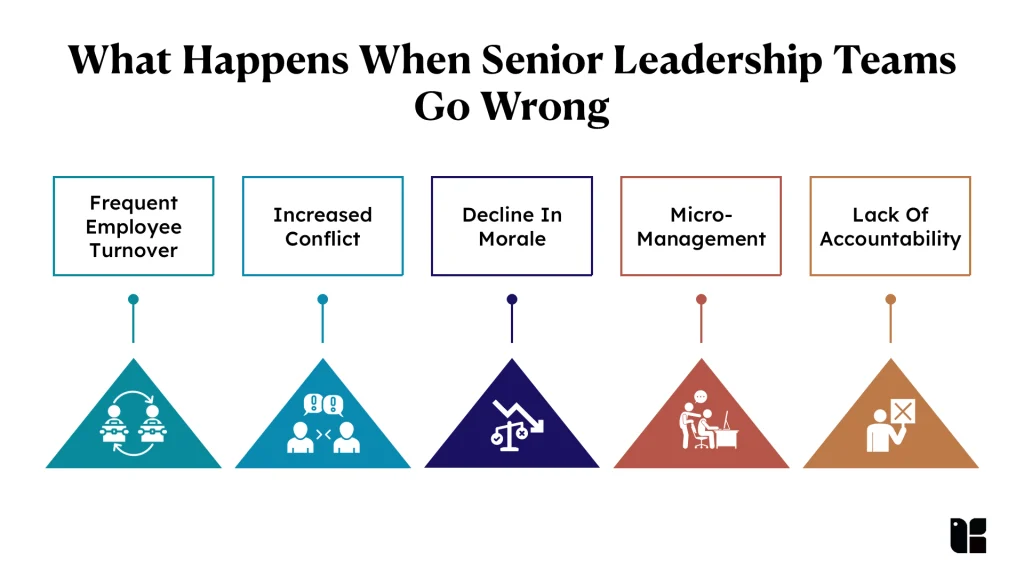
Frequent Employee Turnover
Poor leadership can make employees feel disconnected and unsupported, prompting them to seek better opportunities elsewhere. High turnover not only disrupts team dynamics but also increases recruitment costs and affects overall morale. Additionally, a lack of effective leadership can lead to disorganisation and missed deadlines, which slows down progress and affects overall productivity. Over time, this creates a cycle where poor leadership continues to weaken the organisation’s ability to grow and succeed.
Increased Conflict
When trust is broken and communication is weak, problems often get ignored. Misalignment between departments, unclear roles, and competing priorities create tension, leading to an unproductive and hostile environment. Without strong leadership to step in and fix these issues, conflicts can grow bigger and make it harder for teams to work well together. This slows down progress and keeps the company from moving forward.
Decline In Morale
Leaders who ignore their employees’ opinions create an environment where people feel unheard and unimportant. When employees feel that their ideas don’t matter, morale drops and motivation fades. As a result, productivity declines, and talented individuals often start seeking better opportunities elsewhere. This loss of engagement can leave teams feeling disconnected and less committed to their work.
Micromanagement
As the saying goes, “Trust is good, but control is better.” But too much control can lead to micromanagement, where leaders get involved in every small task. This limits creativity, takes away employees’ independence, and makes them feel unappreciated. Micromanagement also slows down decisions and weakens trust within the team. When leaders don’t give their teams enough freedom, employees lose interest, and new ideas stop coming.
Lack Of Accountability
Strong leadership means setting clear expectations and making sure everyone takes responsibility for their actions and results. When leaders fail to do this, a culture of mediocrity develops, where missed deadlines and poor performance become common. Inconsistent behaviour from leaders adds to the confusion, making it harder for employees to trust them or stay motivated.
When leadership goes wrong, it causes serious problems. But with the right qualities, a senior leadership team can prevent these issues. Let’s look at what makes a good leadership team.
Poor leadership can create conflict, disengagement, and unclear ownership across an organisation. Learn about Kapable’s coaching process and how it develops stronger leadership behaviours.
What Makes A Good Senior Leadership Team?
A strong senior leadership team (SLT) is a unified unit that blends diverse strengths and makes courageous decisions. Here are the key characteristics that define a high-performing SLT:
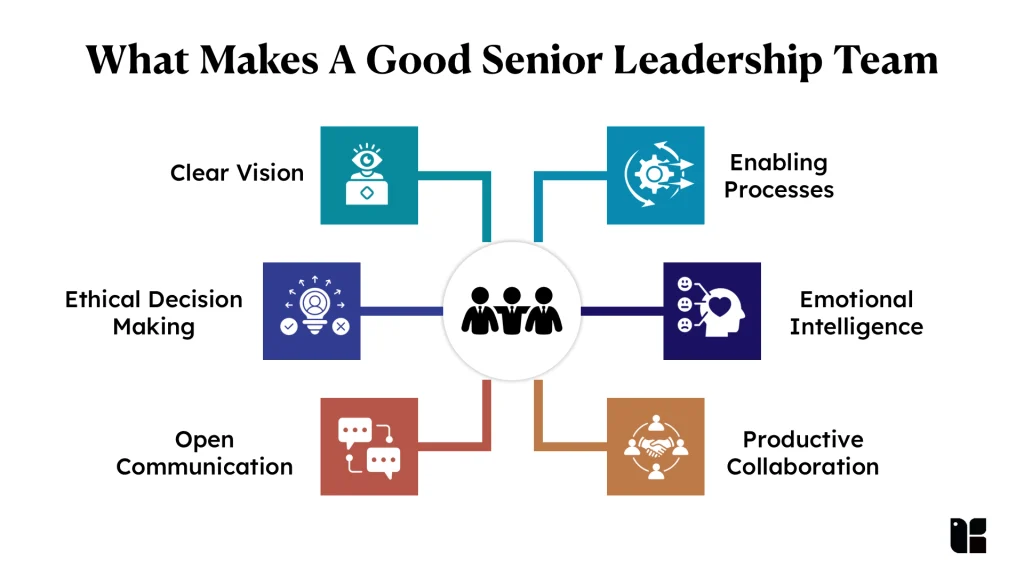
Clear Vision
A strong senior leadership team shares a common and unified sense of purpose where every leader understands what the team is working to achieve. They align their efforts toward a shared vision and ensure that goals, objectives, and values are clearly communicated across the organisation. When these goals are communicated to their team, it reduces misunderstandings, builds trust, and keeps everyone focused on shared goals. This alignment enables teams to work efficiently and stay connected to the organisation’s long-term vision.
Ethical Decision-Making
Strong leadership teams make bold and well-considered decisions that benefit the organisation, even when the stakes are high. They are willing to step out of their comfort zones, challenge existing practices, and take calculated risks. At the same time, they prioritise ethical principles to ensure that every decision aligns with the company’s values. Courage combined with ethical decision-making builds trust, maintains integrity, and strengthens the organisation’s reputation.
Open Communication
Senior leadership teams promote open and honest communication, where everyone feels safe sharing ideas and feedback. Leaders encourage candid conversations and model vulnerability by admitting mistakes and learning from them. They also listen actively and ensure that communication is two-way, allowing employees to express their thoughts without fear of judgment. Open communication prevents misunderstandings and promotes collaboration across teams.
Productive Collaboration
High-performing leadership teams bring together diverse skills, knowledge, and experiences that complement each other. This diversity allows them to approach problems from multiple angles, leading to solving comprehensive problems. Alongside this, they excel in productive collaboration, where team members respect different perspectives and work toward shared goals. Complementary strengths with effective teamwork make the team more innovative, efficient, and capable of overcoming complex challenges.
Emotional Intelligence
Good leadership teams possess emotional intelligence (EQ), allowing them to understand and manage their emotions and those of others. They are open to feedback, willing to learn from mistakes and view change as an opportunity for growth. Leaders with high EQ can manage conflicts, handle stress, and build strong relationships. They are also self-aware, recognising their strengths and areas for improvement. Leaders who are emotionally intelligent create a positive, respectful work environment where people feel valued and heard.
Enabling Processes
Well-defined processes and systems allow senior leadership teams to operate smoothly and efficiently. Senior leadership teams stay focused on achieving goals while holding themselves and others accountable. They set high standards, meet deadlines, and maintain a “no excuses” mindset. These leaders also encourage problem-solving and decision-making at all levels, allowing their teams to take responsibility for tasks. At the same time, they focus on smooth execution to turn strategic plans into real results. This keeps the team aligned and focused on achieving long-term goals.
A senior leadership team with these qualities creates a culture where trust, accountability, and teamwork lead to long-term success. A senior leadership program can help strengthen these qualities further. Now, let’s look at how to build a strong leadership team.
How To Build A Good Senior Leadership Team?
To create an effective senior leadership team, focus on key aspects like setting clear goals and encouraging accountability. Here’s how to build a team that ensures long-term success.
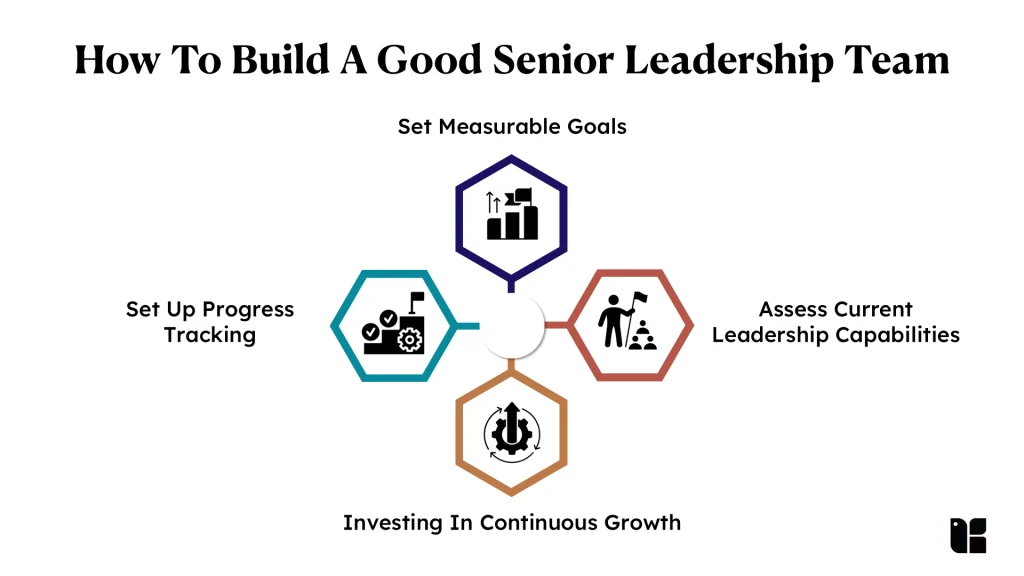
Set Measurable Goals
The senior leadership team starts with a compelling vision that aligns with the company’s mission and future direction. Leaders must also translate this vision into measurable goals to ensure clarity and accountability across all levels. This process helps avoid confusion, track progress effectively, and ensure that every team member contributes to achieving the company’s long-term vision. You can use the following framework to set measurable goals and align the leadership team with the company’s vision.
SMART Goals Framework
Set Specific, Measurable, Achievable, Relevant, and Time-bound goals to ensure all senior leaders share a common understanding of the company’s direction. By breaking down larger goals into smaller, actionable steps, leaders can effectively track progress and make necessary adjustments along the way. Here is how to apply it:
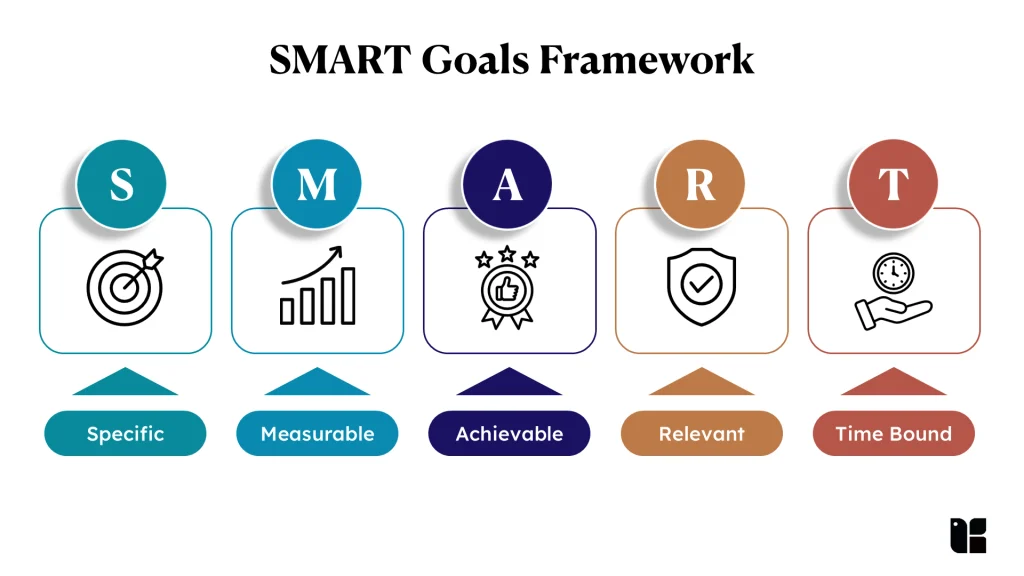
- Specific: Define what needs to be achieved clearly. Example: Increase customer retention by 10%.
- Measurable: Establish criteria to track progress. Example: Measure retention through quarterly surveys.
- Achievable: Set realistic goals that the team can meet within available resources.
- Relevant: Align goals with the broader company strategy.
- Time-bound: Assign deadlines to maintain momentum and accountability.
This alignment not only enhances decision-making but also builds a strong leadership team that stays focused on shared objectives and maintains accountability at all levels.
Pro tip: If you want to go beyond SMART goals, consider applying the Balanced Scorecard (BSC). It’s a performance management system that links vision and strategy to measurable objectives across different perspectives.
Assess Current Leadership Capabilities
To build an effective SLT, it’s critical to assess the strengths and weaknesses of current leaders and identify areas where the team may need additional expertise. Recognising leadership gaps allows organisations to make targeted improvements in skills, knowledge, and diversity of thought. Here is how to access them.
9-Box Leadership Model
The 9-Box Leadership Model assesses leaders by plotting their performance and potential across nine categories. Here’s how to apply it effectively:
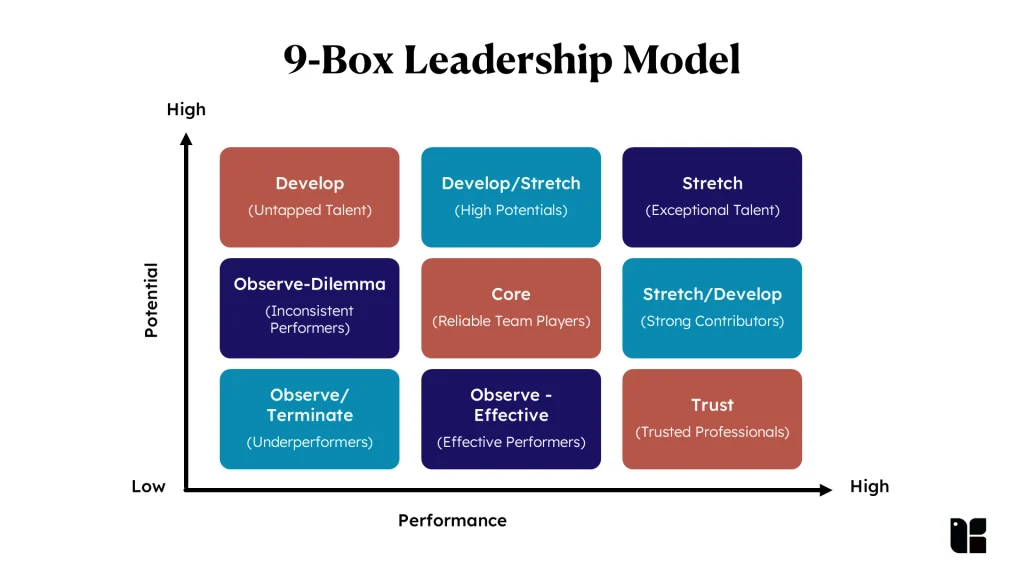
- Define performance and potential criteria: Establish clear metrics for evaluating performance (past results, achievements) and potential (leadership qualities, learning agility).
- Gather data: Use performance reviews, 360-degree feedback, and peer assessments to collect objective data.
- Plot leaders on the grid: Place leaders into one of the nine boxes that categorise them as high, moderate, or low in both performance and potential.
- Develop targeted action plans: Based on the assessment, create individualised development plans to address gaps and nurture high-potential leaders.
By applying this framework, organisations can assess leadership strengths and weaknesses, identify areas for improvement, and take actionable steps to build a more capable and aligned senior leadership team.
Investing In Continuous Growth
A leadership team doesn’t stay the same; it evolves. An effective senior leadership team stays prepared by continuously investing in growth through executive coaching, leadership training, and mentorship programs. These efforts equip leaders to handle new challenges and make better decisions as the business grows. Here’s how you can build a leadership team that grows and adapts over time:
The 5 Ps Model
The 5 Ps Model helps build a well-rounded leadership team by enhancing these five key dimensions:
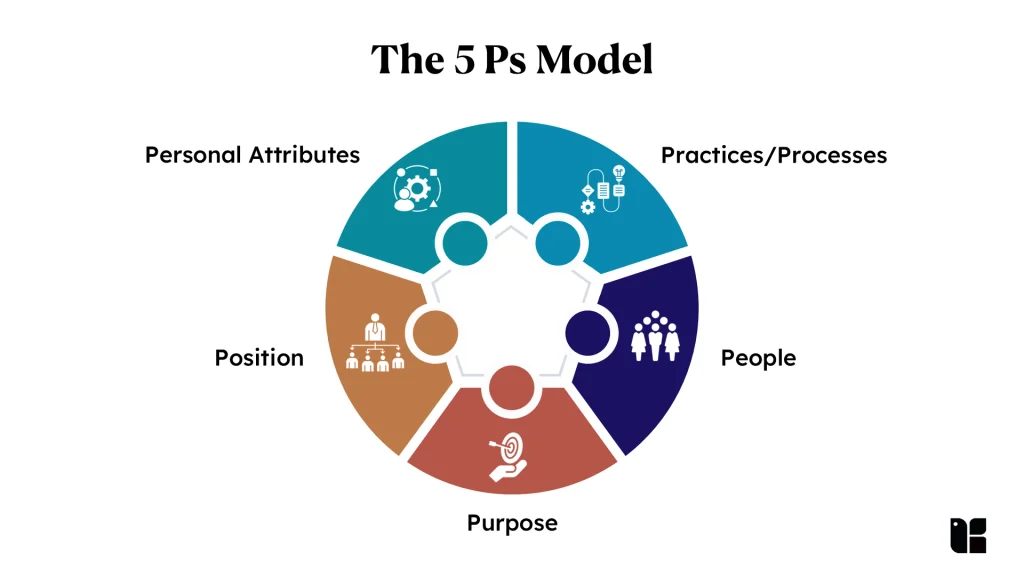
- Personal attributes: Develop core qualities like emotional intelligence and adaptability through coaching and self-awareness.
- Position: Clarify roles and responsibilities to ensure leaders align with the organisation’s vision.
- Purpose: Keep leaders connected to the mission by regularly reinforcing long-term goals.
- Practices/Processes: Strengthen performance reviews, goal-setting, and feedback to promote continuous learning.
- People: Create a culture where leaders develop their teams, fostering collaboration and growth.
This model equips leaders to inspire, guide, and build future-ready teams.
Pro tip: Encourage leadership growth by combining 70% experiential learning, 20% coaching/mentoring, and 10% formal training.
Set Up Progress Tracking
Building a strong senior leadership team requires regular evaluation and accountability. Without clear ways to track progress, it’s hard to know if the team is moving in the right direction. Regular check-ins help keep everyone aligned, improve performance, and support ongoing growth.
One way to maintain consistency is by using a Performance Management System (PMS). This structured approach helps assess performance, set goals, and provide feedback, ensuring leaders stay focused and accountable. Another useful tool is the RACI framework (Responsible, Accountable, Consulted, and Informed), which defines team roles and responsibilities. By clearly assigning tasks, RACI helps avoid confusion and keeps everyone on the same page. Leaders should also review progress against key objectives and adjust strategies when needed. Creating a culture of continuous feedback ensures the team stays adaptable and committed to long-term success.
When used well, these frameworks keep leaders focused, aligned, and accountable. Evaluating skills, setting clear goals, and supporting growth help build a strong leadership team for long-term success.
“Kapable has helped me transform my communication skills, enabling me to speak with clarity and assertiveness. I can now handle team dynamics effectively and confidently team members which is a significant improvement from where I started.”
– Shyam Sundar AM (Team Lead At TCS)
Conclusion
A senior leadership team sets the tone for the entire organisation. By building trust, encouraging diverse contributions, and aligning efforts with a shared vision, the team creates a culture where people feel valued, ideas are nurtured, and goals are achieved. This strong foundation enables the organisation to stay resilient and consistently perform at its best.
If you want to build a more aligned, accountable, and collaborative leadership team, Kapable’s program fit can help you decide whether the program is relevant to your needs.


