


TL;DR
- Clear Purpose: One-on-one meetings with senior leadership are crucial for encouraging professional growth, providing mentorship, ensuring strategic alignment, and enhancing employee engagement across the organisation.
- Core Success Factors: Effective sessions require a focus on clear agendas, mutual respect, active listening, and the establishment of concrete, actionable takeaways that drive measurable progress.
- Overcoming Obstacles: Preparation is key to mitigating common issues like feeling intimidated or having unstructured conversations, demanding a clear purpose and organised thoughts before the meeting.
- Sustained Impact: Maximising the long-term value involves setting a solution-oriented tone, professionally handling disagreements, and diligent post-meeting follow-up to implement feedback and build lasting relationships.
77% of organisations are falling behind due to leadership gaps at all levels, yet they continue to overlook one of the simplest solutions. Regular one-on-one interactions with senior leaders is a great way to enhance your career growth, engagement, and alignment with organisational goals, but these meetings remain underutilised. This blog explores how one-on-one meetings with senior leadership can foster professional development, refine decision-making, and strengthen organisational culture.
What Are One-On-One Meetings?
One-on-one meetings are personalised conversations between an employee and a senior leader, designed to encourage open dialogue, professional development, and alignment with organisational goals. Unlike group discussions, these meetings provide a dedicated space for direct interaction, allowing employees to seek advice, share challenges, and receive leadership insights.
These sessions can serve various purposes, such as mentorship, career planning, performance feedback, or strategic discussions, depending on the goals set by both parties. When structured well, one-on-one meetings help strengthen workplace relationships, increase leadership accessibility, and contribute to long-term business success.
To ensure one-on-one meetings are effective and valuable, it’s important to explore the key elements that contribute to their success.
What Are The Key Elements Of A Successful One-On-One Meeting?
A well-structured one-on-one meeting is more than just a routine check-in, it’s an opportunity to strengthen collaboration, enhance productivity, and align on key priorities. The key elements of one-on-one meetings are as follows:
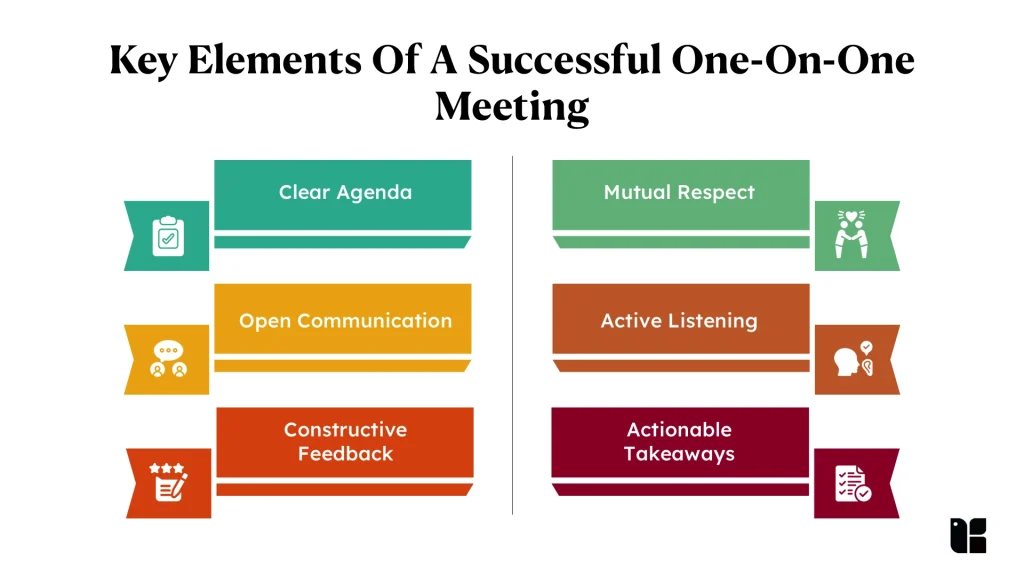
- Clear agenda: Outlining discussion points ahead of time helps keep the conversation on track and ensures that essential topics are covered. This is important because it prevents meetings from becoming unstructured or unproductive, ensuring that both parties focus on what truly matters.
- Open communication: Fostering an environment of honesty and transparency builds trust and encourages meaningful discussions. This is important because open conversations help address concerns early, reducing misunderstandings and strengthening professional relationships.
- Mutual respect: Recognising and valuing each other’s viewpoints contributes to a more effective and professional exchange. This is important because respect creates a positive atmosphere where individuals feel valued and motivated to contribute their best ideas.
- Active listening: Paying close attention and responding thoughtfully shows engagement and helps create a supportive atmosphere. This is important because it ensures that both parties feel heard, leading to stronger connections and better problem-solving.
- Constructive feedback: Sharing observations and insights in a productive manner supports ongoing development and problem-solving. This is important because feedback drives personal and professional growth, helping individuals improve and achieve their goals.
- Actionable takeaways: Establishing clear next steps and accountability ensures that discussions translate into measurable progress. The importance of actionable takeaways is that they transform conversations into tangible results, keeping individuals aligned and accountable.
With a clear understanding of the essential elements that make one-on-one meetings successful, let’s now explore their specific purpose when held with senior leadership.

Why Are One-On-One Meetings With Senior Leadership Important?
These meetings create a space for meaningful discussions that drive both individual and organisational success. Here’s why they matter:
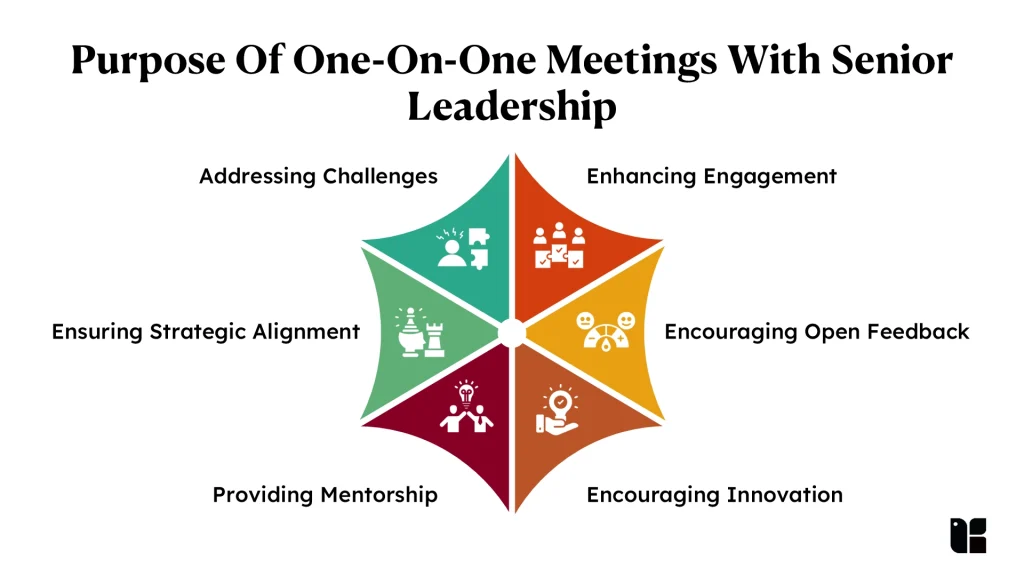
- Addressing challenges: Whether it’s operational hurdles, strategic dilemmas, or team dynamics, senior leaders can offer their expertise to help employees navigate challenges effectively and make informed decisions.
- Ensuring strategic alignment: These meetings help individuals and teams stay in sync with the organisation’s long-term vision and objectives. Senior leaders can clarify expectations, reinforce company priorities, and ensure that efforts at every level contribute to overarching goals.
- Providing mentorship: Employees gain direct access to executive-level insights, allowing them to refine their leadership skills, explore career development paths, and receive guidance tailored to their professional aspirations.
- Encouraging open feedback: One-on-one discussions with a senior leader create a confidential space for honest dialogue. Employees can voice concerns, share workplace experiences, and receive direct, actionable feedback on their contributions and areas for improvement.
- Enhancing engagement: Personal interactions with senior leadership reinforce employees’ value within the organisation. Feeling heard and acknowledged by top executives fosters motivation, job satisfaction, and a deeper sense of belonging.
- Encouraging innovation: These meetings provide a platform for employees to present fresh ideas, propose efficiency improvements, and contribute to organisational growth. Senior leaders can offer guidance on how to turn ideas into actionable initiatives.
While one-on-one meetings with senior leadership serve a vital purpose, they can also come with their own set of challenges that need to be addressed for maximum effectiveness.
What Challenges Commonly Arise During One-On-One Meetings?
Whether it’s the pressure of speaking up or navigating difficult conversations, these meetings are not without their obstacles. Here are some common challenges that can arise during one-on-one meetings:
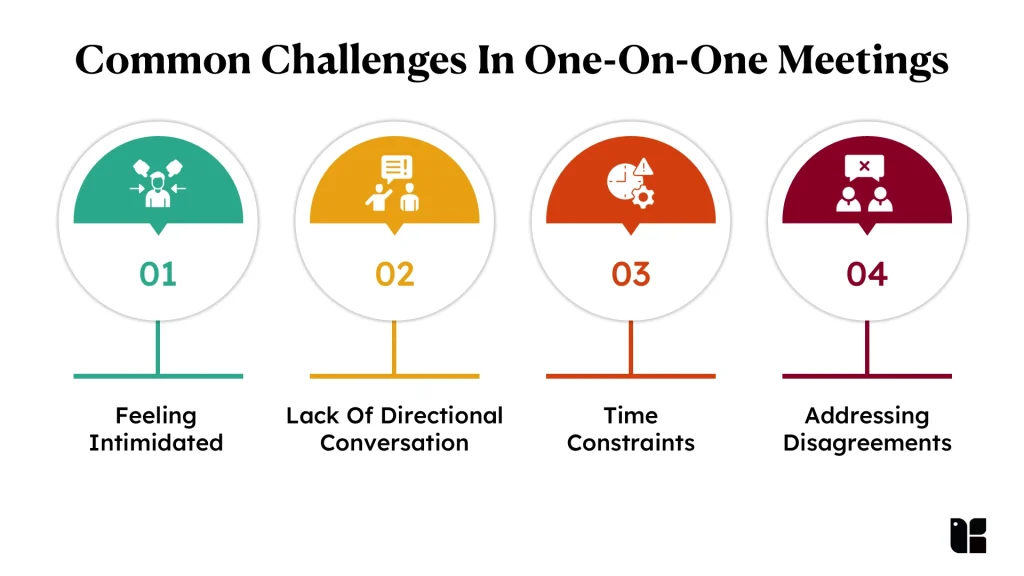
- Feeling intimidated: One-on-one meetings can be stressful, especially when there’s a power dynamic involved. Employees might worry about saying the wrong thing or fear being judged, which can prevent honest communication.
- Lack of directional conversation: When meetings don’t have a clear structure, discussions can drift aimlessly. Without a defined focus, important topics may be overlooked, and both participants might leave without tangible takeaways.
- Time constraints: With tight schedules, one-on-one meetings may feel rushed or even get postponed repeatedly. This can lead to surface-level conversations where deeper concerns or strategic discussions don’t get the attention they deserve.
- Addressing disagreements: Navigating opposing viewpoints can be tricky, particularly if either person avoids confrontation or if emotions overshadow the conversation. Without a constructive approach, disagreements can stall progress instead of fostering solutions.
By understanding the common challenges in one-on-one meetings, you can better prepare for a successful interaction, especially when meeting with senior leadership.
“Kapable has elevated my self-awareness to a degree I couldn’t have imagined. Some of the intrinsic aspects they touched upon impacted me emotionally, physically, and psychologically. It was a holistic approach, not just to how you operate at work, but also in your interactions with family and friends. The benefits of joining Kapable have been immense, and the learnings I’ve gained will stay with me for a long time.”
– Sreemoyee Banerjee (Service Delivery Leader At American Express)
How Should Leaders Prepare For A One-On-One Meeting With Senior Executives?
Meeting with senior leadership is a valuable opportunity to learn, seek guidance, and highlight your contributions. Proper preparation ensures a productive and meaningful conversation, which can be done in the following ways:
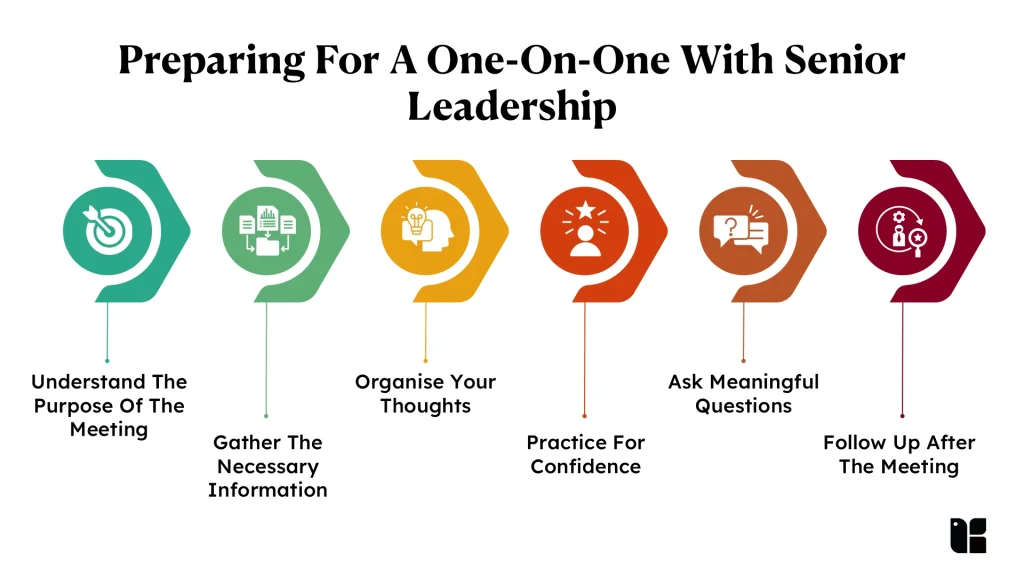
Understand The Purpose Of The Meeting
Know why the meeting is happening. Is it for feedback, updates on a project, career advice, or problem-solving? Understanding the purpose helps you stay focused and make the most of the discussion. For example, if the meeting is about career growth and development, be ready to discuss your skills, achievements, and future goals.
Gather The Necessary Information
Review any previous meetings or emails to understand past discussions. Research the leader’s current priorities and company updates to show you are informed. Prepare key points and questions related to your role and goals. For instance, if your company recently launched a new initiative, understanding how your work connects to it can help you contribute more effectively.
Organise Your Thoughts
Plan what you want to say. List the most important topics in order of priority to keep the conversation structured. Think about possible questions the leader might ask to prepare for clear responses. If you are discussing a project update, be ready with key highlights, challenges faced, and potential solutions.
Practice For Confidence
Go over your key points beforehand to make sure you can explain them clearly. Speak with confidence, maintain eye contact, and be professional. At the same time, be yourself, leaders value authenticity. For example, practising in front of a mirror or with a colleague can help refine your delivery and boost confidence.
Ask Meaningful Questions
Show your interest by asking thoughtful questions that add value to the conversation. Some examples:
- What are the company’s main goals for the next few months?
- What skills should I develop to grow in my career?
- How can I contribute more effectively to my team?
If your role involves cross-team collaboration, you could ask, How do you see different departments working together more effectively in the future?
Follow Up After The Meeting
After the meeting, reflect on the key points discussed and any action items assigned to you. If a suggestion was made, take proactive steps to implement it. If a decision was reached, ensure you follow through on your responsibilities. For example, if your leader advised learning a new skill, start exploring relevant training options and update them on your progress when appropriate.
Once you’re well-prepared for a one-on-one with senior leadership, the next step is to ensure that the meeting itself is conducted effectively to make the most of the opportunity.
Learn how Kapable’s leadership approach prepares professionals for high-stakes conversations with senior executives through practical communication and executive presence training.
How Can Leaders Conduct One-On-One Meetings More Effectively?
A well-executed one-on-one meeting can be a game-changer in building strong relationships, enhancing communication, and aligning goals between leaders and their teams. It can be conducted in the following ways:
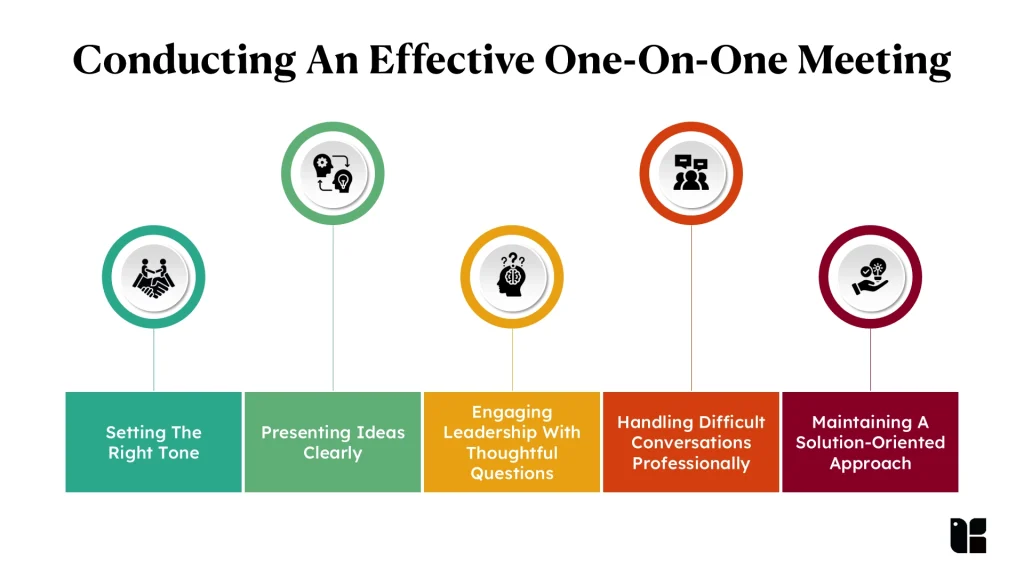
Setting The Right Tone
Beginning with a professional and positive approach, start a meeting by greeting the other person warmly, making them feel comfortable. Setting a positive tone creates a foundation for open communication, whether you’re discussing routine updates or more serious matters. It’s essential to acknowledge any recent successes or milestones before diving into the agenda, reinforcing a sense of mutual respect and positivity. To set the right tone, start by greeting the other person warmly and using positive body language. Maintain eye contact and a calm tone to establish a comfortable atmosphere, which encourages open dialogue and collaboration throughout a meeting.
Presenting Ideas Clearly
When presenting your ideas or addressing concerns, be clear and direct. Use simple, straightforward language to avoid misunderstandings. This ensures your message is easily understood, reducing the chances of confusion. Be mindful of the other person’s time by keeping your points concise, which shows respect for both their time and the focus of the meeting. A concise approach helps keep the conversation productive and to the point, promoting efficiency in communication. Use pauses to check for understanding, and emphasise key points by repeating them in different ways to ensure clarity and engagement. This method ensures your ideas are communicated effectively and without confusion.
Engaging Leadership With Thoughtful Questions
Encourage deeper reflection by asking probing questions that prompt leadership to think critically about possible outcomes. This not only leads to richer discussions but also demonstrates that you value their input and are looking for collaborative solutions. Additionally, follow up with clarifying questions if needed to ensure understanding, allowing the conversation to evolve and addressing any areas of uncertainty that may arise. To do this, consider using the “5 Whys” technique to peel back the layers of the issue and get to the heart of the matter.
Handling Difficult Conversations Professionally
It’s also important to maintain emotional neutrality during difficult conversations. Stay focused on the facts and avoid letting emotions cloud judgment. In challenging discussions, offer possible solutions or alternatives to show that you’re committed to resolving the issue at hand. This approach helps maintain a constructive tone and promotes a resolution-oriented mindset, which can lead to more productive outcomes. To do this, introduce a “what if” scenario to reframe the conversation into a problem-solving mode rather than a blame-oriented one.
Maintaining A Solution-Oriented Approach
To further encourage a solution-oriented mindset, acknowledge the strengths and resources available within the team or organisation that can aid in resolving the issue. Highlighting these resources reinforces a sense of capability and teamwork. Additionally, expresses openness to feedback and suggestions, demonstrating flexibility in finding the best way forward and creating a collaborative environment for problem-solving. This can be done by conducting brainstorming sessions, encouraging open dialogue, and fostering an environment where team members feel comfortable sharing their ideas and solutions.
After conducting an effective one-on-one meeting, it’s crucial to focus on the post-meeting actions that can maximise its impact and ensure long-term success.
What Actions Should Follow To Maximise The Impact Of A One-On-One Meeting?
Post-meeting actions are critical for ensuring that the conversation translates into meaningful results. These steps not only help in maintaining momentum but also demonstrate your commitment to the process and the team. Here’s how to maximise the impact of your one-on-one meetings:
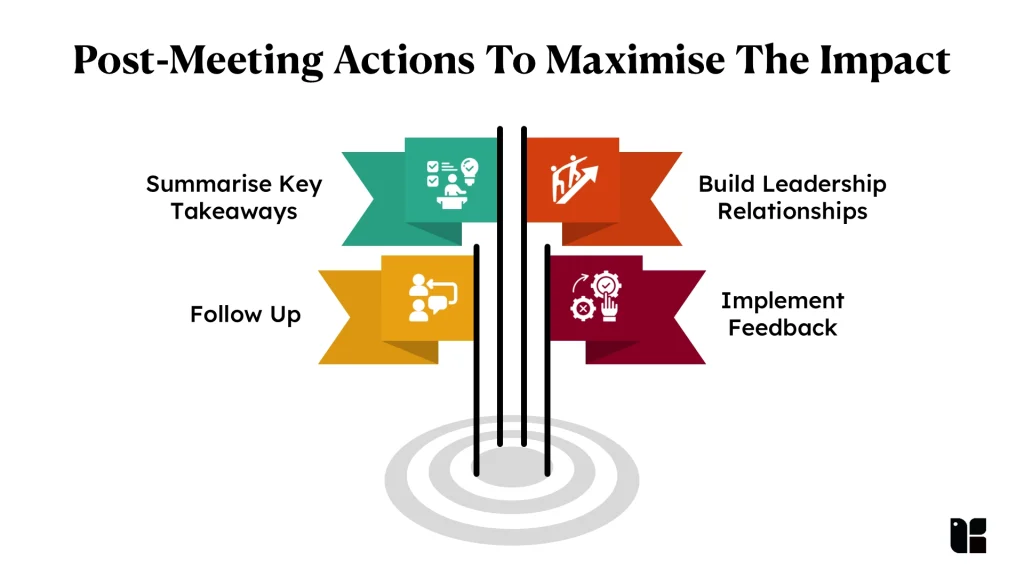
Summarise Key Takeaways
Shortly after the meeting, create a simple action plan that highlights the main points and next steps. To create an action plan, break down each task into clear, manageable steps with deadlines and assign responsibilities. Share it with everyone involved to make sure everyone is clear on what needs to be done and by when.
Follow Up
Don’t wait for the next meeting. Reach out to the relevant people within a day or two, and check on the progress of the tasks. A great follow-up technique is the “5-minute check-in.” Set a brief, scheduled meeting or send a quick email to confirm progress and address any roadblocks. This helps keep things moving and shows that you’re committed to getting results.
Implement Feedback
After the meeting, pick a few key areas where you can improve based on the feedback you received. To implement feedback, use the “Plan-Do-Check-Act” technique: first plan the changes you’ll make, try them out (do), evaluate the results (check), and make adjustments (act). Share your results with your team or manager to show you’re making improvements.
Build Leadership Relationships
Take the initiative to stay connected with senior leaders. Look for opportunities to offer solutions or help with challenges they’re facing. A technique for strengthening these relationships is the “Value-Add Approach”, identify ways you can contribute to senior current projects or goals, making sure your involvement adds meaningful value. This shows you’re thinking ahead and willing to take on more responsibility.
Once you’ve taken the right post-meeting actions, examining case studies on effective one-on-one leadership can provide valuable insights into how these strategies are successfully implemented in practice.
If your goal is to maximise the impact of every leadership interaction, Kapable’s program fit can help you evaluate your next step.
Which Case Studies Highlight The Impact Of Effective One-On-One Leadership?
Effective one-on-one leadership is a powerful tool for fostering trust, collaboration, and innovation within teams. Below are two examples of leaders who successfully implemented this strategy to drive organisational success:
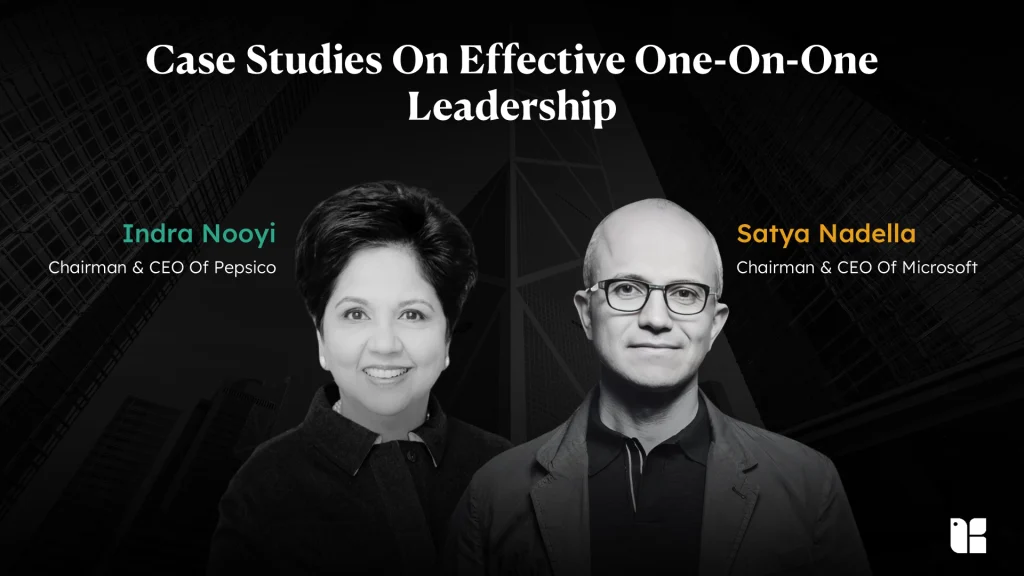
Indra Nooyi
Indra Nooyi’s leadership style was deeply personal and empathetic. She held regular one-on-one meetings with her senior executives, allowing for open conversations about both work and personal challenges. This approach fostered trust, loyalty, and alignment with the company’s goals, ensuring each team member felt valued and supported. Nooyi’s focus on active listening and personalised feedback helped build a strong, committed leadership team.
Satya Nadella
Satya Nadella made one-on-one meetings a cornerstone of his leadership at Microsoft. These personal interactions helped create a culture of openness, where employees could share ideas and concerns directly with leadership. This transparent communication fostered collaboration and innovation throughout the company. Nadella’s one-on-one interactions promoted trust and inclusivity, driving a culture of innovation at Microsoft.
Conclusion
One-on-one meetings with senior leadership are not just routine check-ins; they are pivotal moments for meaningful dialogue, strategic alignment, and professional development. These interactions create a space where employees can voice ideas, seek guidance, and gain deeper insights into the organisation’s vision. For leadership development, it is an opportunity to provide mentorship, recognise potential, and address concerns proactively. When approached with preparation and openness, these conversations can strengthen trust, bridge communication gaps, and foster a culture of collaboration.


