


TL;DR
- Diverse Leadership Toolkit: Corporate success is driven by leaders who master a range of seven fundamental styles, understanding which approach best aligns with a team’s current context and the business goals.
- Culture as a Direct Outcome: A leader’s primary style establishes the critical workplace dynamics, shaping everything from employee confidence and morale to the organisation’s ability to communicate openly and embrace change.
- Adaptability and Personal Fit: Effective leadership demands situational agility, the continuous process of tailoring one’s core strengths and style to the team’s needs, company culture, and the demands of the current moment.
Could a company’s success depend more on its leadership than its products? According to research by Gallup, organisations with strong leadership are 12 times more likely to outperform competitors, highlighting the critical role leadership styles play in business growth. This blog will explore key leadership styles in business, their impact on growth, and how leaders can adapt to guide their teams effectively.
What Are Leadership Styles in Business?
Leadership styles in companies are always evolving. As organisations grow, face new challenges, and adjust to different markets, the way leaders guide their teams needs to shift too. These shifts are often influenced by the company’s culture, the industry it operates in, and the goals it aims to achieve. As business priorities change, leaders must adjust their approach to inspire innovation, motivate teams, and ensure everyone is working toward common objectives.
Leadership is shaped by more than just individual traits; it’s also influenced by the environment in which a leader works. A leader’s approach adapts to fit the unique culture of their organisation, the demands of their industry, and the goals the company is striving for.
Having explored what corporate leadership styles are, let’s now understand the key styles driving organisational success.
What Are The Key Leadership Styles Driving Organisational Success?
Leadership plays a vital role in the success of any organisation. The right leadership style can drive growth, innovation, and team performance. Let’s explore how different leadership styles shape organisational outcomes:

Authoritative Leadership
This leadership style revolves around a clear, centralised approach where leaders make the majority of decisions and provide a distinct vision for the company’s future. Leaders in this style set a clear direction, communicate their vision effectively, and make decisive moves, especially in high-stakes situations. They establish strong authority and ensure alignment by guiding their teams with a firm hand and clear expectations. The characteristics of autocratic leadership are as follows:
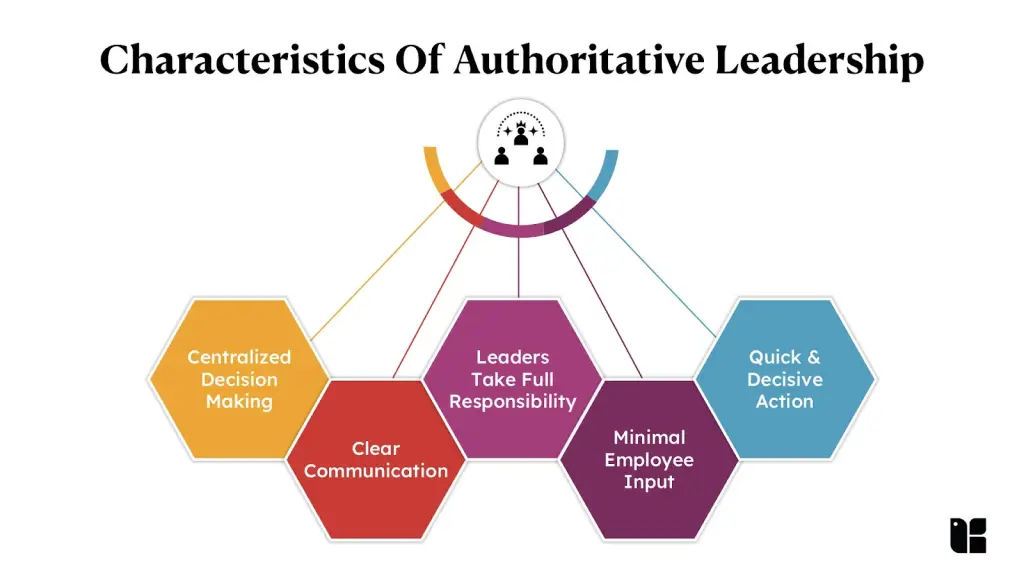
- Strong, centralised decision-making
- Clear communication of goals and expectations
- Leaders take full responsibility for outcomes
- Little to no employee input in major decisions
- Quick, decisive action, especially in crises
It offers clarity, stability, and direction, especially in high-stress situations. Employees benefit from knowing exactly what’s expected of them. It can lead to disengagement if team members feel excluded from decision-making. It also leaves little room for innovation or autonomy among employees. For instance, Margaret Thatcher, former Prime Minister of the United Kingdom. Known as the “Iron Lady,” Thatcher’s leadership was marked by her decisive and firm approach to government and policy. She made bold decisions on issues like the economy, the Falklands War, and privatisation, always maintaining a clear vision for the country’s future, even in the face of significant opposition.

Democratic Leadership
The democratic leadership style involves team members in decision-making, allowing diverse voices to shape strategies. This approach promotes ownership, transparency, and trust, ensuring decisions reflect the collective insights of the team while fostering a collaborative and inclusive environment. It also encourages creativity and innovation by valuing input from all levels of the organisation. The characteristics of democratic leadership are as follows:
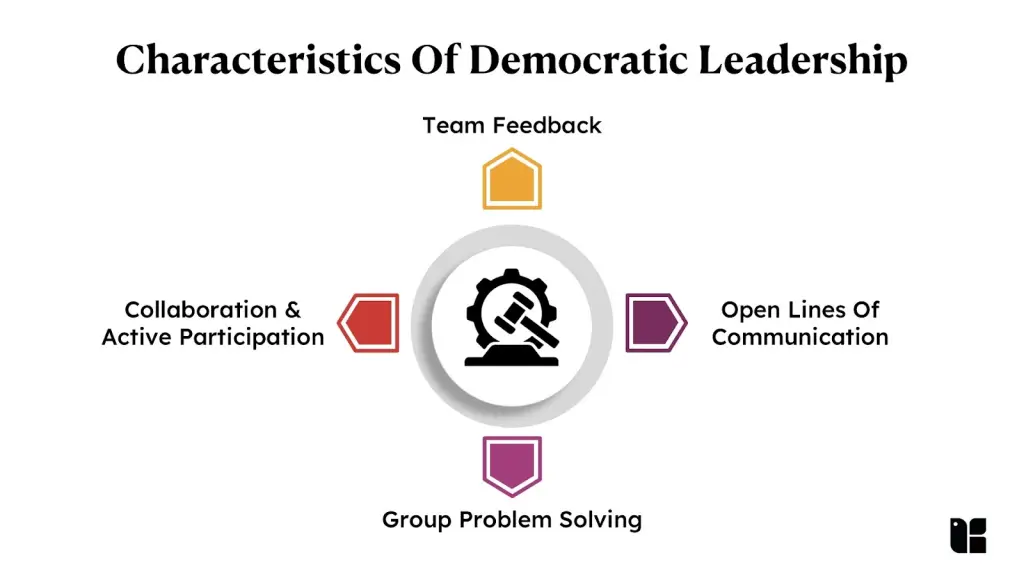
- Collaboration and active participation from the team
- Open lines of communication between leaders and employees
- Emphasis on team feedback
- Encouraging group problem-solving
This style promotes creativity, team cohesion, and job satisfaction by valuing individual contributions. Democratic leadership works well in situations that require team collaboration, diverse input, and decision-making from multiple perspectives. It is particularly effective in environments that require frequent innovation or brainstorming. For instance, Herb Kelleher, co-founder of Southwest Airlines, was known for his inclusive approach, prioritising employee feedback and collaboration. His leadership style fostered a strong sense of community within the company, which led to high levels of employee satisfaction and a culture of creativity and problem-solving.
Transformational Leadership
Transformational leaders focus on inspiring their teams and aligning the goals of the organisation with the personal ambitions of employees. They foster innovation, creativity, and personal growth, encouraging employees to exceed their expectations. This leadership style creates a sense of purpose, driving long-term success through motivated and engaged teams. The common characteristics seen in this type of leadership are as follows:
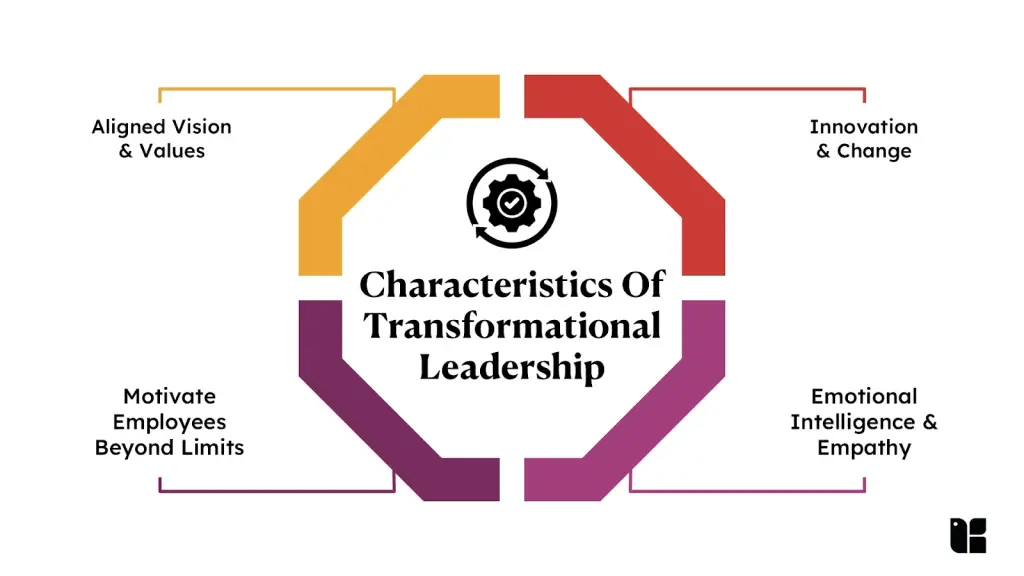
- Inspirational vision that aligns with employees’ personal values
- Encouraging innovation and change
- High emotional intelligence and empathy
- Motivates employees to reach beyond their personal limits
Transformational leadership works well in situations where innovation, change, and long-term vision are essential. Leaders who embrace this style cultivate a culture of continuous development and adaptability. By empowering employees, they encourage creative problem-solving and help the organisation stay ahead of market changes. For instance, Tim Cook (Apple) employs transformational strategies, motivating his teams with clear, inspiring visions and creating thriving, innovative work environments. He also emphasises collaboration, continuous learning, and a strong sense of purpose to drive both personal and organisational growth.
Transactional Leadership
Transactional leaders focus on clear structures, using rewards and penalties to drive performance. They emphasise achieving immediate, measurable results. This approach works well in environments where tasks are routine, and efficiency is critical. It also ensures that expectations are clearly defined, leading to consistent outcomes. The common characteristics seen in this type of leadership are as follows:
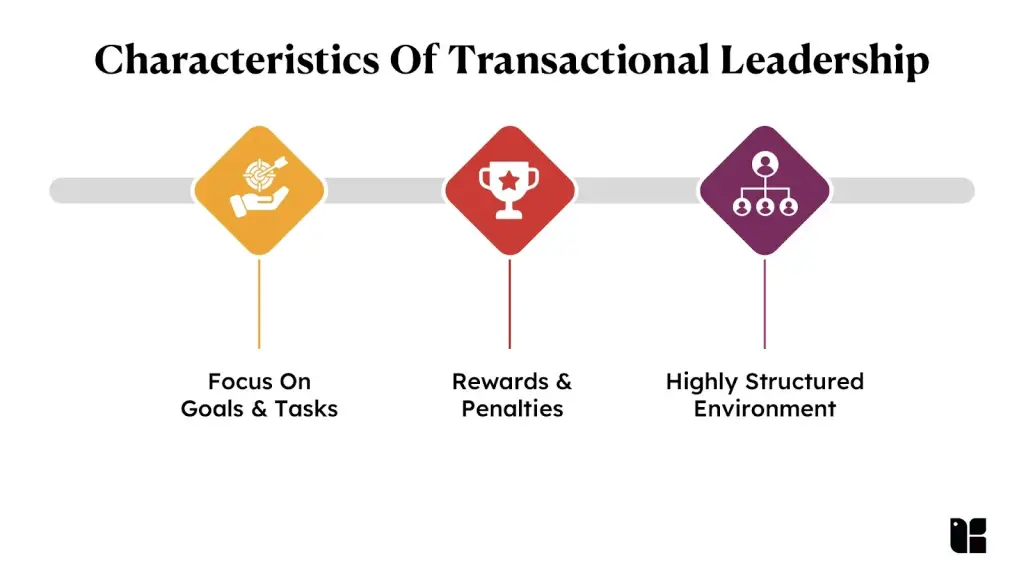
- Focus on set goals, tasks, and processes
- Rewards for meeting objectives and penalties for failure
- Highly structured environment with defined roles and expectations
This style is effective in roles that require strict adherence to standards, such as manufacturing, retail, or customer service. It ensures operational efficiency but may stifle creativity. While it ensures consistent performance, transactional leadership can lead to burnout and disengagement if employees feel they are merely working for rewards rather than pursuing personal growth or meaning in their roles. Jeff Bezos is a good example of a transactional leader. He used clear performance metrics and rewards to drive productivity, helping Amazon scale quickly by focusing on efficiency and measurable results.
Laissez-Faire Leadership
Leaders who practice laissez-faire leadership style give their teams significant autonomy to make decisions without much interference. This approach fosters creativity and accountability, particularly in skilled, self-motivated teams. However, it requires trust and can lead to a lack of direction if not properly managed. The characteristics of the same are as follows:
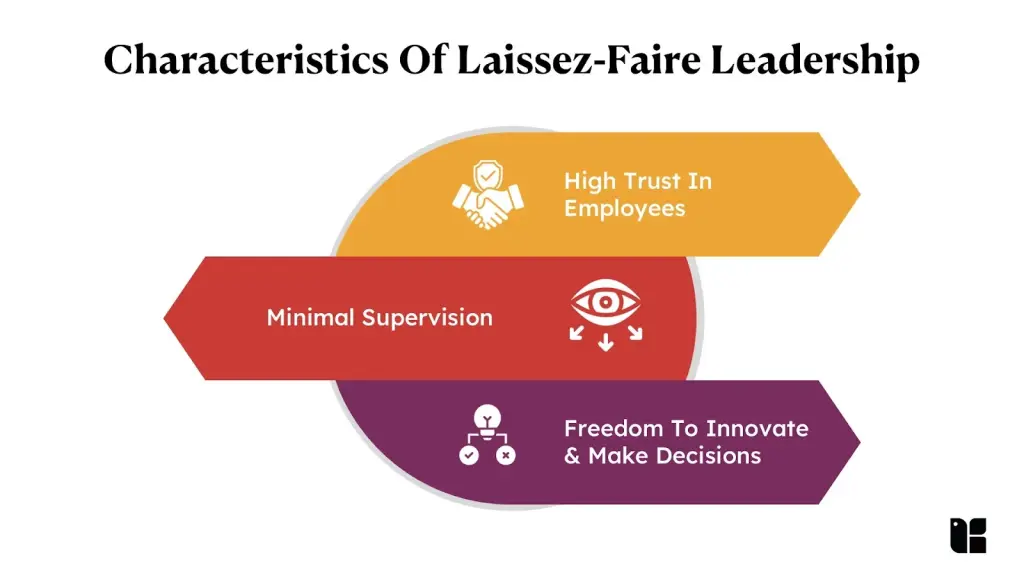
- High trust in employees’ ability to work independently
- Minimal direct supervision or involvement in daily tasks
- Freedom for employees to innovate and make decisions on their own
This leadership style works best in teams of skilled professionals, such as researchers, creative teams, or senior managers, where autonomy and innovation are essential to success. Laissez-faire leadership is also promoting independence and accountability, but can lead to a lack of guidance or direction if team members require more structure. Without proper communication, it can result in inefficiencies or confusion.”A laissez-faire leader often adopts a hands-off approach, trusting their team to work independently and make decisions with minimal guidance. For instance, Richard Branson, founder of Virgin Group, exemplifies the laissez-faire leadership style. He empowers his team with the freedom to innovate and make decisions, fostering a culture of creativity and entrepreneurship that has contributed to Virgin’s success.
Servant Leadership
Servant leadership is a style where the leader focuses on the needs of their team, aiming to empower each team member and prioritise their well-being. The leader is not in the position of commanding, but rather serving, ensuring that their employees are supported to succeed and grow. This approach fosters a culture of trust and collaboration, where everyone’s contributions are valued. The key traits are as follows:
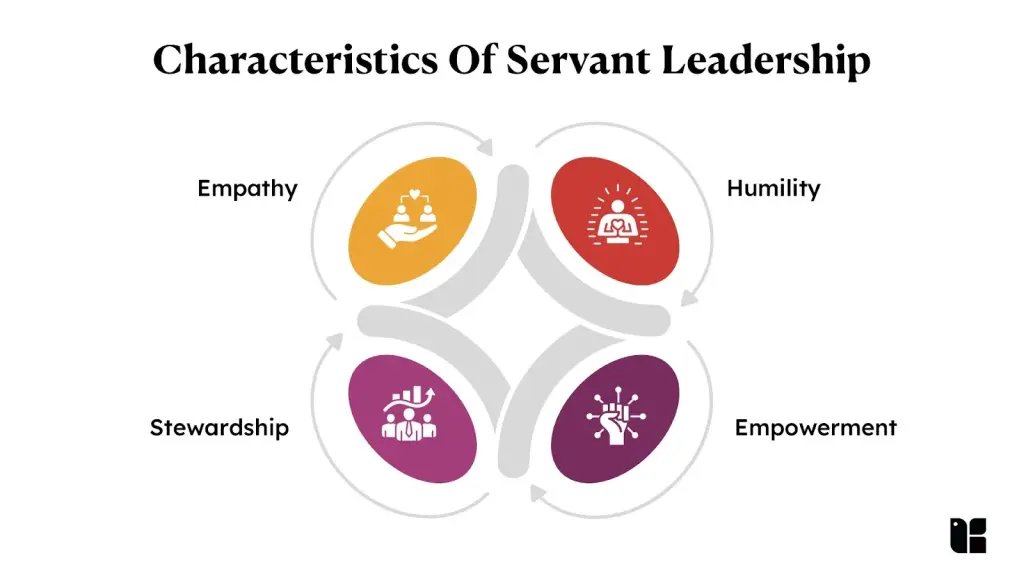
- Empathy is listening to and understanding the needs of employees.
- Empowerment involves giving resources and autonomy to each team member.
- Stewardship is taking responsibility for the team’s growth.
- Humility is prioritising the team’s needs over the leader’s own.
Servant leadership works best in environments where collaboration and mutual respect are central. Howard Schultz, former CEO of Starbucks, exemplifies this style. By prioritising the well-being of his employees, he fostered a culture of loyalty and commitment, leading to Starbucks’ success. His approach created a positive work environment, which in turn led to improved customer satisfaction and business growth. Schultz’s leadership also inspired others to follow his example, creating a lasting legacy within the company.
Coaching Leadership
Coaching leaders are focused on guiding individuals through their personal and professional development by providing feedback and support. This leadership style not only enhances individual growth but also drives organisational success. By fostering a continuous learning environment, coaching leadership helps employees thrive and reach their full potential. Through active mentoring and personalised guidance, leaders build trust and empower their teams to excel. The characteristics of leadership coaching are as follows:
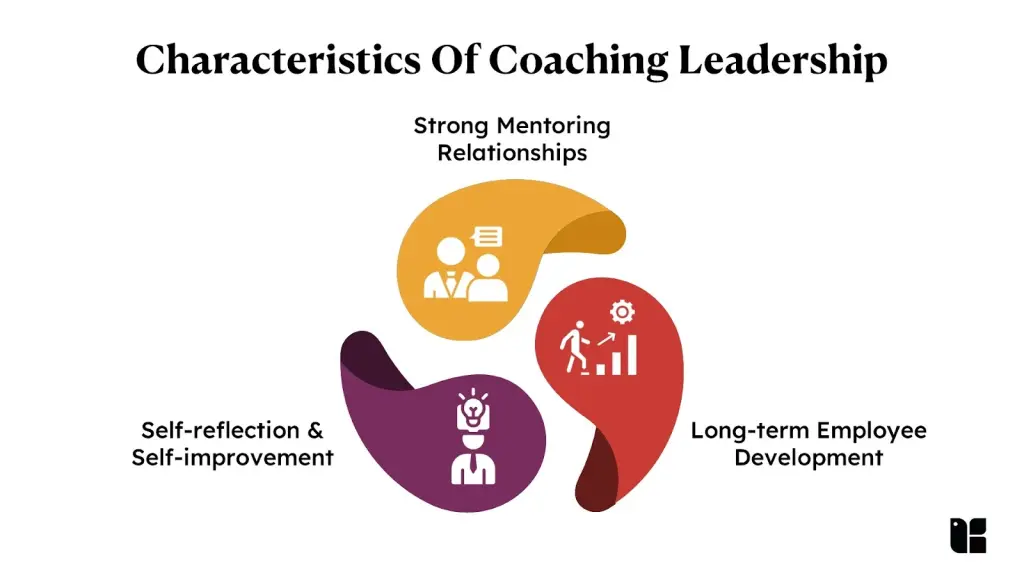
- Emphasis on long-term employee development
- Strong mentoring relationships
- Encourages self-reflection and self-improvement
This style cultivates engagement and builds a culture of growth. Employees are empowered to take ownership of their development, which enhances overall performance and retention. A real-life example of a leader who embodies coaching leadership is Satya Nadella, CEO of Microsoft. Under his leadership, Microsoft shifted toward a growth mindset culture, where employees are encouraged to learn, evolve, and work collaboratively. Nadella’s focus on mentoring and development has helped reshape Microsoft into a more innovative and agile company.
Learn how Kapable’s leadership approach helps professionals identify, adapt, and apply different leadership styles to improve team performance and organisational success.
Now that we’ve explored the key leadership styles driving success, let’s look at how these styles impact corporate culture.
“As I advanced to working with C-suite leaders, I often felt nervous and struggled to structure my thoughts. Kapable’s hands-on approach, with practical exercises and personalised techniques, helped me build clarity and balance assertiveness with empathy. I can now confidently influence and engage leaders and teams, and both my growth and confidence are clear to those around me.”
– Marwa Mahgoub (Senior HR Business Partner At Al Tayar Insignia)
How Do Leadership Styles Influence Corporate Culture?
Leadership styles are the guiding force behind the development of corporate culture, shaping how employees work together, share information, and contribute to the organisation’s vision. The impact can be seen in the following :

Shaping Workplace Dynamics
The way leaders interact with their teams sets the tone for the overall work environment. A leader who prioritises collaboration and inclusion creates a culture of mutual respect and teamwork. On the other hand, a controlling or overly directive approach may lead to an atmosphere of apprehension or rigidity.
Encouraging Open Communication
Leaders play a pivotal role in determining whether communication within the organisation is open and transparent or limited and hierarchical. A leadership style that values open dialogue fosters innovation and trust, whereas restrictive communication can discourage idea-sharing and lead to disengagement.
Boosting Employee Confidence
Leadership that focuses on empowering employees by recognising their contributions and allowing autonomy builds confidence and motivation. In contrast, micromanaging or dismissive behaviours can lead to frustration, low morale, and diminished enthusiasm.
Driving Change
An adaptable leader who champions creative problem-solving helps cultivate a culture that is resilient and forward-thinking. A resistance to new ideas or changes, however, can result in stagnation and hinder the organisation’s growth potential.
Balancing Results With People-Centric Leadership
Corporate cultures thrive when there’s a balance between achieving goals and valuing the people driving those results. Leaders who focus solely on outcomes risk creating an environment of burnout and high turnover, while those who prioritise their teams’ well-being contribute to a culture of loyalty and sustained performance.
Promoting Integrity With Ethics
The ethical standards upheld by leadership serve as a foundation for the organisation’s culture. When leaders model fairness and integrity, it encourages employees to adopt similar behaviours, resulting in a culture grounded in trust and accountability.
While leadership styles significantly shape corporate culture, they also bring about certain challenges that organisations must navigate.
What Are The Common Challenges Associated With Corporate Leadership Styles?
Leadership styles must evolve as companies grow and face new challenges. What worked at one point may not be effective in the future, especially if a leader’s style doesn’t match the organisation’s culture or the team’s needs. Here are some common challenges leaders face in adapting their leadership style:
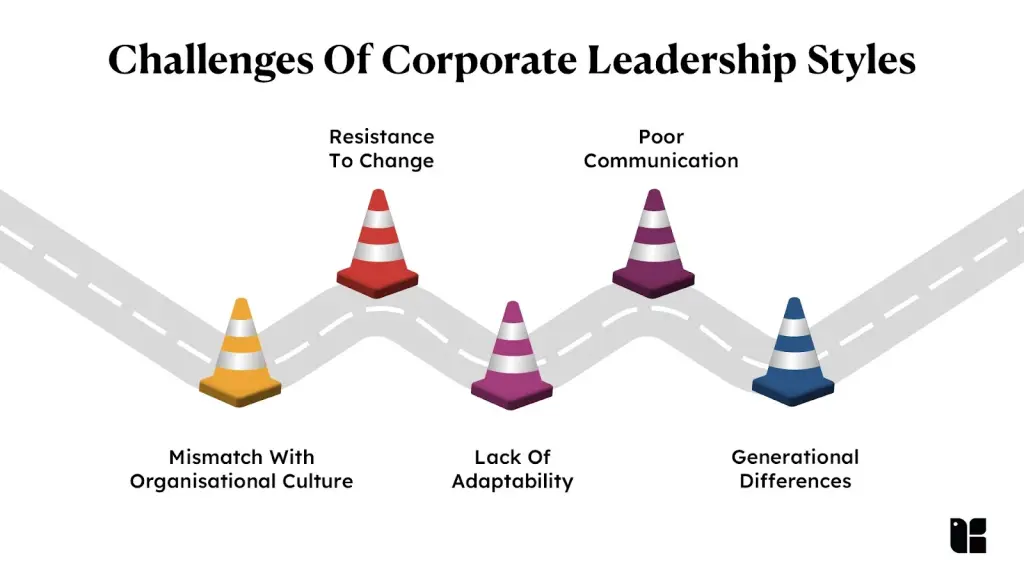
- Mismatch with organisational culture: A leader’s style may clash with their company’s culture. For example, an authoritative leader in a collaborative environment can cause frustration and disengagement. Alignment between leadership and culture is essential for motivation and a positive work atmosphere.
- Resistance to change: Leaders often hesitate to change their approach, especially if past success has reinforced their style. However, sticking with one approach can limit growth, making it important for leaders to stay open to evolving their methods.
- Lack of adaptability: It is crucial in a changing business environment. Leaders must stay open to feedback and adjust their approach to meet shifting demands, or they risk missing opportunities for innovation and growth.
- Poor communication: Ineffective communication can create confusion and reduce performance. Leaders must communicate expectations clearly and consistently to align their teams toward common goals.
- Generational differences: The workplace requires leaders to adapt their style to connect with different cultural and generational groups. Understanding these differences helps foster an inclusive and productive environment.
Despite the challenges, understanding how to identify the leadership style that works best for you can pave the way for more effective leadership and smoother organisational dynamics.
How To Select The Right Leadership Style For Yourself?
To be able to lead successfully, it’s essential to explore the most common leadership styles and adapt them to different situations. Hence, understanding the types of leadership styles can help you identify your own leadership approach and enhance your effectiveness as a leader. Here’s how to find a leadership approach that works best for you:

Know Your Strengths
Think about what you’re good at. Are you a good listener, or do you prefer making quick decisions? Your strengths will help guide the right leadership style for you.
For example, if you’re great at problem-solving and making decisions quickly, an authoritative leadership style could help you lead with clear direction.
Understand Your Team
Look at the people you lead. Are they experienced or new? Do they need guidance or freedom? If they need more direction, a style that gives clear instructions may work best. For instance, if you’re leading a new team, you might adopt a more directive style to provide clear guidance and structure until they gain confidence.
Look At Your Work Environment
The culture of your workplace matters. If your organisation prefers structure, a more commanding style could be helpful. But, if it’s more relaxed or creative, a collaborative style might be better. For example, in a startup environment where creativity thrives, a democratic style that encourages team input may be more effective.
Adapt To The situation
Sometimes, you need to change your approach depending on the situation. If the team is in a crisis, you may need to be more hands-on. When everything is running smoothly, a more supportive, empowering style may be needed. For instance, during a project deadline crunch, you might use a more directive style to keep things on track, but switch to a coaching style when the team is more confident.
Ask For Feedback
Get opinions from your team on your leadership style. Their feedback will help you improve and adjust as you go along. Continuously reflecting on this input ensures you’re growing as a leader and meeting your team’s evolving needs. For example, if your team suggests that you provide more opportunities for them to share ideas, you might shift to a more democratic style to promote collaboration.
Conclusion
Corporate Leadership is about adapting to your team’s needs and challenges. Successful leaders remain flexible, adjusting their approach to inspire growth and create a positive work environment. By focusing on collaboration and continuous improvement, they set the foundation for lasting success.
If you’re looking to become a more adaptable leader by mastering different leadership styles, Kapable’s program fit can help you decide whether it’s the right next step.


