


TL;DR
- Scope of Crisis: Healthcare leaders contend with a wide array of interconnected challenges, including managing scarce resources, mitigating significant cybersecurity threats, and addressing critical staff burnout and retention issues.
- Effective Strategy: Lasting change requires clear operational strategies, such as developing a robust, well-trained workforce, investing in scalable, energy-efficient infrastructure, and aligning care delivery with value-based outcomes.
- Current Innovations: The industry is being reshaped by advancements like leveraging AI and machine learning for better diagnostics, expanding access through telehealth, and proactively investing in advanced cybersecurity measures.
- Future Imperatives: Anticipated trends will drive a shift towards integrating personalised medicine and comprehensive mental health services, alongside a focus on policy adaptation and building strong community-focused partnerships.
In the past year, 55% of healthcare organisations were hit by a third-party data breach, raising the question: how secure is patient data in their hands? The scope of leadership challenges goes far beyond patient care. From cybersecurity threats to navigating changing regulations, leaders are facing complex issues that could reshape the entire healthcare sector. The question is – how will today’s healthcare leaders rise to meet these new challenges before it’s too late?
Which Major Challenges Of Healthcare Leadership?
From dealing with limited resources to keeping up with constant changes in technology, leaders face a lot of hurdles every day. Leadership in healthcare comes with its own set of unique and major challenges.
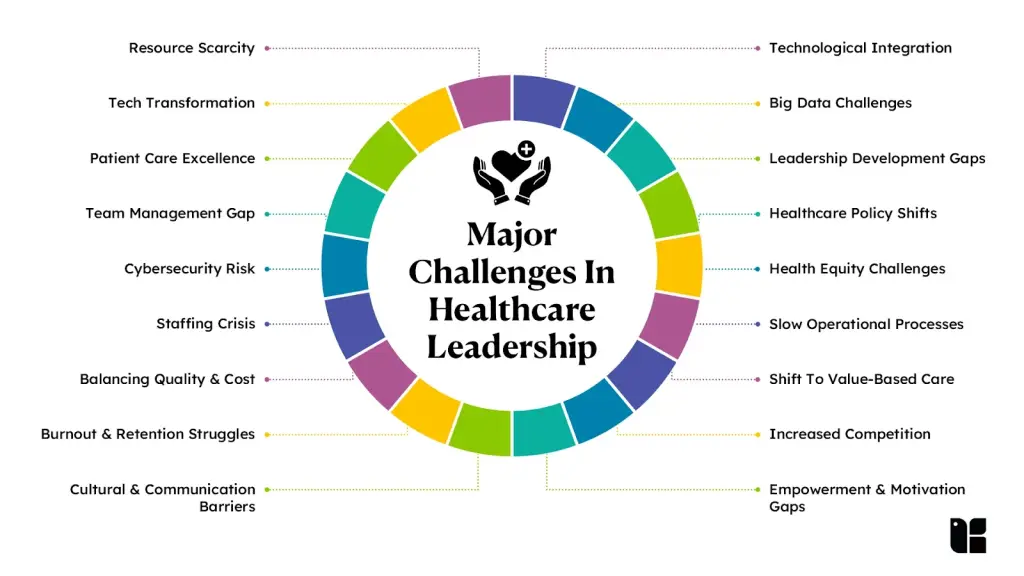
Resource Scarcity
Healthcare leaders are constantly facing budget constraints and limited resources, making it difficult to meet patient needs and support their teams. Leaders often have to make tough decisions on where to allocate funds and what services to prioritise. It’s a daily challenge to do more with less, without compromising care quality.
Tech Transformation
The rapid pace of technology adoption in healthcare can be overwhelming for leaders. While tech improvements can improve patient outcomes, integrating new tools and systems requires constant learning and adaptation. Healthcare leaders must ensure their teams are equipped to handle tech changes without disrupting care delivery.
Patient Care Excellence
Maintaining high standards of patient care is the backbone of healthcare leadership. However, leaders must manage growing patient expectations while addressing resource shortages and staff limitations. Striking the right balance between meeting these expectations and maintaining quality care is always a delicate challenge.
Team Management Gap
Healthcare teams are often diverse and multidisciplinary, which can make communication and collaboration tough. Leaders struggle with aligning everyone’s goals and maintaining smooth teamwork. Without clear direction and strong team management, critical issues can fall through the cracks, affecting patient care.
Cybersecurity Risk
As healthcare systems go digital, the risk of cyberattacks grows. Leaders are under constant pressure to protect patient data from breaches and safeguard sensitive health information. The threat of data leaks not only jeopardises patient privacy but also the organisation’s credibility and financial stability.
Staffing Crisis
The shortage of healthcare professionals continues to grow, making it difficult for leaders to staff their teams adequately. With fewer nurses, doctors, and specialists, burnout rates rise, and patient care may suffer. Leaders need to find ways to attract and retain talent in an increasingly competitive job market.
Balancing Quality And Cost
Leaders face the difficult task of providing the highest quality of care while keeping costs under control. Patients expect better treatments and services, but rising healthcare costs and budget constraints force leaders to make tough choices. Balancing these competing priorities is a constant struggle for leadership.
Burnout And Retention Struggles
Healthcare workers, especially those on the front lines, are often overworked, leading to high levels of burnout. This makes it hard for leaders to retain skilled professionals, and turnover becomes a costly issue. Leaders must find ways to support and engage their staff to prevent burnout and maintain a healthy work environment.
Technological Integration
Adopting new technology is essential for improving patient care and operational efficiency, but integration is not always seamless. Leaders must manage the costs and training involved in rolling out new systems. Ensuring that all staff members are up to speed with new tools while maintaining care quality is a continuous challenge.
Cultural And Communication Barriers
Healthcare organisations are made up of diverse staff and patients, making effective communication challenging. Leaders must bridge cultural differences and ensure that everyone is on the same page, from clinicians to administrators. Poor communication can lead to errors, misunderstandings, and dissatisfaction among patients and staff.
Empowerment And Motivation Gaps
Healthcare leaders often struggle with empowering their staff and keeping them motivated, especially in stressful environments. Many workers feel overburdened or underappreciated, leading to disengagement. Leaders must create an environment where employees feel valued and motivated to perform at their best.
Leadership Development Gaps
There’s often a lack of strong leadership pipelines in healthcare organisations, which makes it harder to groom the next generation of leaders. Many healthcare leaders are thrown into roles without enough leadership training. Effective leadership development programs are key to preparing future leaders to tackle the growing challenges in healthcare.
Healthcare Policy Shifts
Healthcare policies and regulations are constantly changing, and keeping up with these shifts is a significant challenge for leaders. New laws can affect everything from patient care protocols to funding. Leaders must stay informed about these changes and adjust strategies to stay compliant and effective.
Health Equity Challenges
Leaders face the ongoing challenge of addressing health disparities and ensuring equitable care for all patients, regardless of background. Systemic barriers can affect patient outcomes, and leaders must implement policies and practices that promote equality in healthcare access and treatment.
Slow Operational Processes
Healthcare systems often operate with outdated processes, which slow down patient care and create inefficiencies. Leaders must find ways to streamline operations, reduce wait times, and improve overall efficiency. Outdated systems or poor workflow management can lead to frustration for both staff and patients.
Shift To Value-Based Care
The move from fee-for-service to value-based care models means that leaders must focus on patient outcomes rather than the number of services provided. This shift requires major changes in how care is delivered and measured. Leaders must adjust their strategies, build new partnerships, and align their teams to ensure success under this model.
Increased Competition
As more healthcare providers enter the market, competition for patients and top talent is fierce. Leaders must differentiate their organisations by offering high-quality care, innovative services, and a positive patient experience. Staying ahead of the competition requires constant adaptation and innovation.
Big Data Challenges
Healthcare generates vast amounts of data, but managing and analysing it can be overwhelming for leaders. Properly leveraging big data can drive better decision-making and improve patient care. Leaders must invest in data management tools and ensure staff are trained to make data-driven decisions that benefit patients and operations.
While these challenges can feel overwhelming, facing them head-on is the only way to create a healthier, more effective healthcare system for everyone.

How Are Innovations Transforming Healthcare Leadership Today?
From groundbreaking technology to strategic collaborations, recent advancements are shaping the future of healthcare.
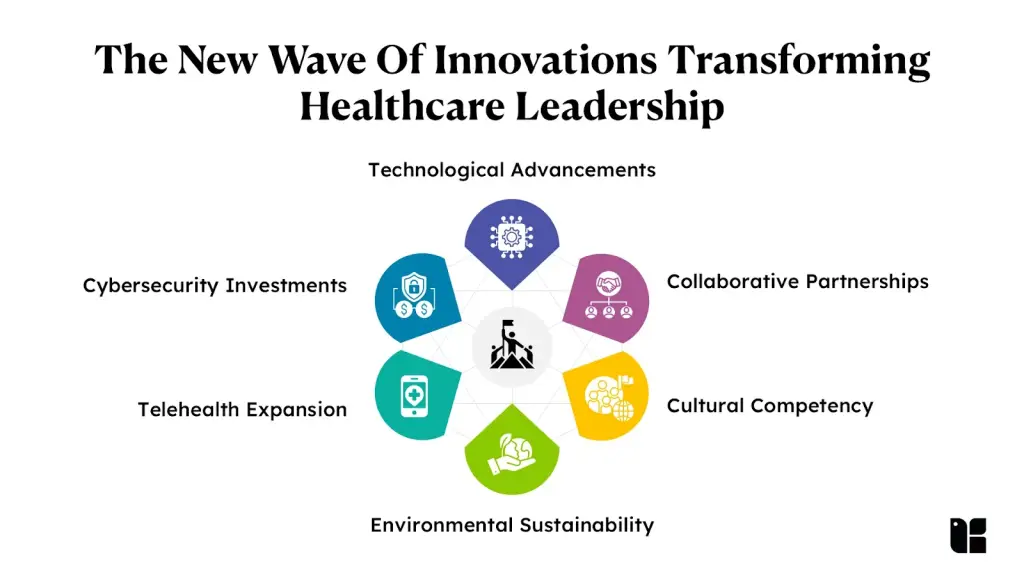
Technological Advancements
Leaders are utilising the power of AI and machine learning to not only improve diagnostics but also predict patient outcomes. With smarter tools at their fingertips, these leaders are finding ways to make faster, more informed decisions, giving their teams and patients a serious advantage. It’s already helping doctors and administrators work more efficiently, freeing up time for critical care.
Environmental Sustainability
By adopting energy-saving systems, reducing waste, and going paperless, leaders are making healthcare not only more cost-effective but also more planet-friendly. Some organisations are seeing sustainability initiatives boost their bottom line, all while doing good for the environment. Healthcare leaders aren’t just focusing on patient care; they’re also becoming environmental champions.
Cybersecurity Investments
With cyberattacks becoming more frequent, healthcare leaders are investing heavily in cybersecurity tools that not only protect patient data but also give them peace of mind. This shift isn’t just about prevention; it’s about creating trust with patients who are more concerned than ever about their privacy. Leaders are taking proactive steps, ensuring their systems are ahead of the curve before breaches happen.
Telehealth Expansion
What started as a quick fix during the pandemic is now becoming a mainstay in many healthcare settings. From virtual consultations to remote monitoring, these leaders are increasing accessibility while managing to reduce overhead costs. It’s making healthcare more flexible, and in many cases, more affordable.
Collaborative Partnerships
Instead of working in isolation, healthcare leaders are teaming up with tech firms, universities, and even non-profits to unlock new possibilities. These partnerships are driving breakthrough research and faster implementation of solutions that once took years. It’s a game-changer, leaders are now discovering that collaboration leads to faster innovation and more sustainable growth.
Cultural Competency
In response to our increasingly diverse population, leaders are prioritising cultural competency training within their teams. By investing in understanding different cultural backgrounds, healthcare leaders are improving communication and patient satisfaction. More effective care that resonates with patients on a deeper level, and teams that work better together.
As these innovations take hold, leaders who adapt will reshape patient care and drive real change in healthcare.
Innovation is transforming healthcare, but effective leadership remains the key to turning new ideas into better outcomes. Kapable helps professionals strengthen the skills needed to lead through change.
What Are The Best Strategies For Effective Leadership In Healthcare?
In the face of growing challenges and emerging innovations, healthcare leaders need clear strategies to drive lasting change while seizing new opportunities.

Energy-Efficient Healthcare Facilities
Begin by conducting an energy audit of your facilities to identify areas where energy is being wasted. Partner with experts to upgrade lighting, HVAC systems, and insulation. Implement smart building technology, like sensors for lighting and temperature control, to reduce energy consumption. Make sustainability a priority in future facility designs, and set measurable goals for energy use reduction to track your progress.
Ongoing Training For Healthcare Teams
Set up regular training sessions on emerging medical technologies, patient care techniques, and industry regulations. Encourage staff to attend webinars, conferences, and workshops by offering financial support or paid time off for learning. Establish mentorship programs where experienced staff can guide newer team members. Make learning a part of your organisation’s culture by recognising achievements and rewarding progress.
Scalable Healthcare Infrastructure
Assess the current infrastructure to identify potential bottlenecks and areas for future growth. Plan for the future by investing in flexible infrastructure solutions like modular buildings, scalable IT systems, and cloud-based platforms. Start with small, manageable upgrades and gradually expand as patient demand increases. Engage with architects, contractors, and technology partners to build a blueprint for future-proofing your facilities.
A Strong Healthcare Workforce
Start by reviewing your current recruitment and retention strategies. Offer competitive compensation packages and introduce clear career development paths for staff to grow in their roles. Foster diversity by implementing inclusive hiring practices. Provide ongoing training and leadership development programs to prepare staff for more senior roles. Conduct regular employee surveys to understand their needs and improve job satisfaction.
Distributing Leadership At All Levels
Identify key team members at all levels who show leadership potential and provide them with the resources and support to step into leadership roles. Create a culture of shared decision-making by encouraging team leaders to empower their staff with autonomy and responsibility. Use tools like regular team meetings and leadership workshops to improve communication and collaboration across departments.
Expanding Virtual Care Services
Invest in telemedicine platforms and ensure they are user-friendly for both patients and healthcare providers. Train staff on how to conduct virtual consultations effectively. Integrate telehealth into the regular patient care workflow by setting clear guidelines on when virtual visits are appropriate. Expand access to virtual care in underserved areas by partnering with local organisations or using mobile health units to reach remote populations.
Prioritising Value-Based Care
Shift focus from volume-based to outcome-based care by setting clear health outcome goals for your teams. Develop care coordination strategies to ensure patients receive the right care at the right time. Provide training on how to communicate more effectively with patients about their care plans, and use data analytics to monitor patient progress. Align your compensation models with patient outcomes, rewarding staff based on quality rather than quantity of services delivered.
Supporting Staff Mental And Emotional Health
Implement regular wellness programs, offering activities like yoga, mental health counselling, and flexible work schedules. Ensure that staff workloads are manageable and provide resources to help them cope with stress. Introduce a “check-in” system where leaders meet with team members regularly to discuss workload, emotional health, and career development. Create a supportive environment by building a culture of empathy and offering paid time off to recharge.
By implementing these strategies, healthcare leaders can not only overcome current hurdles but also build a sustainable future for patient care and staff well-being.
“As I advanced to working with C-suite leaders, I often felt nervous and struggled to structure my thoughts. Kapable’s hands-on approach, with practical exercises and personalised techniques, helped me build clarity and balance assertiveness with empathy. I can now confidently influence and engage leaders and teams, and both my growth and confidence are clear to those around me.”
– Marwa Mahgoub (Senior HR Business Partner At Al Tayar Insignia)
Which Future Trends Will Shape Healthcare Leadership?
The future of healthcare leadership with the following emerging trends, are redefining the way care is delivered and managed.

AI And Automation In Healthcare
AI and automation are not just futuristic ideas, they’re already making a big difference. From robot-assisted surgeries to automated administrative tasks, AI can save time, reduce errors, and improve patient care. Leaders need to start by learning about AI tools and exploring how to introduce them into their workflow. This could mean automating patient scheduling, using AI to predict health issues before they arise, or using machine learning to optimise treatments.
Adapting To Healthcare Policies
Healthcare policies are constantly changing, especially with the rise of new technologies and healthcare models like telemedicine. Leaders need to stay ahead by staying informed about these shifts. They should make it a priority to understand upcoming regulatory changes, such as shifts in reimbursement models or new privacy laws. This will help healthcare organisations remain compliant and avoid costly mistakes. Regularly attending webinars, reading policy updates, and connecting with regulatory bodies can keep leaders informed.
The Rise Of Personalised Medicine
Personalised medicine means tailoring treatments to individual patients. Rather than a one-size-fits-all approach, it adopts treatments that take into account each patient’s unique genetics, lifestyle, and environment. This means healthcare providers will need new tools and more data to make these personalised decisions. Leaders can help their teams stay ahead by investing in training for these new approaches, updating technologies to analyse patient data more accurately, and fostering partnerships with biotech companies.
Building Community Partnerships
In the future, healthcare leaders will be expected to focus more on the health of entire communities, not just individual patients. That means forming strong partnerships with local organisations, schools, and even businesses to improve public health. These partnerships can help address issues like access to care, health education, and prevention of chronic diseases. Leaders can make an impact by seeking out and nurturing these relationships, working with local leaders to understand community needs, and finding ways to support community health initiatives.
Mental Health Into Healthcare Systems
Mental health is finally getting the attention it deserves in the healthcare space. In the future, healthcare leaders will need to make sure that mental health services are integrated into primary care. Leaders can play a big role by making mental health a part of everyday care, providing training for staff on mental health issues, and offering more accessible options like telehealth for mental health services. By doing this, they can break down the stigma and ensure patients get the full care they need, mental and physical.
These trends show the exciting direction healthcare is heading, but they also bring new responsibilities for leaders. To stay ahead, healthcare leaders must be proactive and always ready to embrace the next big change.
Conclusion
As these changes take shape, healthcare leaders need to stay flexible and open to new ideas. By keeping an eye on these trends, they can lead their teams to better patient care and healthier communities. The future is full of possibilities, and the best leaders will be those who embrace what’s coming next with confidence and adaptability.
The demands of healthcare leadership continue to grow with every new challenge. Kapable helps you assess whether its learning approach matches your career aspirations.


