


TL;DR
- Strategic Resilience: A systematic leadership pipeline is vital for long-term organisational health, ensuring smooth transitions and building internal capacity to quickly adapt to market change.
- Future-Proof Talent: True high-potentials are identified by capacity for strategic thought and influence, emotional intelligence, and a deep commitment to continuous personal growth, not just current role performance.
- Intentional Nurturing: Talent growth is best accelerated through personalised development plans, psychological support, and building a variety of cross-functional and “stretch” assignments for holistic exposure.
- System Accountability: Pipeline health is maintained by defining clear success profiles, ensuring process transparency, and regularly measuring progress through internal promotion and retention rates.
Organisations are increasingly facing significant gaps in key skills, leading to operational challenges and a decline in competitive edge. As the demand for skilled leaders rises, many businesses find themselves struggling to fill crucial positions, resulting in missed opportunities. There is a need to take a proactive approach to talent management. This involves not just filling vacancies but also prioritising people development to nurture existing talent.
When an organisation is known for investing in its people, it sends a powerful message to potential candidates about its commitment to development and career progression. A strong leadership pipeline is essential for addressing talent gaps and ensuring long-term organisational success, which brings us to the importance of developing this critical asset.
Why Is It Important To Develop A Leadership Pipeline?
A leadership pipeline is a systematic approach to identifying, developing, and promoting talent within an organisation to ensure a steady flow of skilled leaders ready to take on key roles as needed.
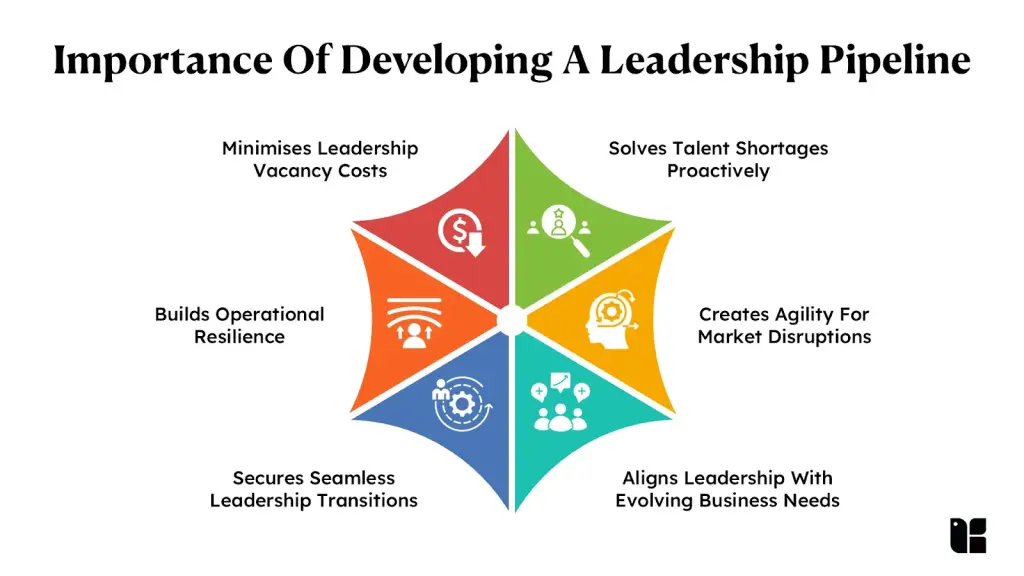
A strong leadership pipeline is more than a safeguard against sudden leadership gaps, it’s a strategic asset that enhances long-term resilience and agility. It also:
Minimises Leadership Vacancy Costs
External hiring for leadership positions can be both expensive and disruptive. However, grooming leaders internally offers more than just cost savings. Internal leaders are already aligned with the company’s values, reducing the lengthy onboarding periods that come with external hires. This leads to quicker integration, faster decision-making, and smoother transitions, making internal promotions a cost-efficient and effective strategy.
Creates Agility For Market Disruptions
A well-prepared leadership pipeline future-proofs the organisation. As markets shift and new technologies disrupt industries, businesses need leaders who can adapt quickly and guide their teams through uncertainty. By continuously developing leadership talent, organisations can stay ahead of market changes and proactively respond to emerging trends. This adaptability becomes a competitive advantage.
Secures Seamless Leadership Transitions
Natural attrition, retirements, or promotions can create leadership gaps that, if not handled properly, can stall progress. Developing a leadership pipeline ensures that critical roles are always filled by competent individuals who understand the organisation’s goals and challenges. This avoids operational slowdowns, allowing teams to stay focused on long-term objectives during leadership transitions.
Solves Talent Shortages Proactively
In this tight talent market, finding qualified external candidates is increasingly difficult, particularly for leadership roles. Developing a leadership pipeline allows companies to identify and nurture talent internally, ensuring there’s always a pool of qualified individuals ready to step up. This proactive approach mitigates the risk of talent shortages that can stifle growth or delay strategic initiatives.
Builds Operational Resilience
Having a solid pipeline of leaders guarantees continuity in operations, even in times of disruption. Whether due to unexpected exits, rapid scaling, or new market opportunities, companies need capable leaders to keep operations running smoothly. A leadership pipeline strengthens operational resilience by ensuring that no gaps appear in key areas of the business.
Aligns Leadership With Evolving Business Needs
As business needs change, so must the skills and perspectives of its leaders. A robust leadership pipeline adapts to these changes by continuously developing leadership talent in line with the organisation’s strategic goals. Whether it’s innovation, global expansion, or digital transformation, a well-managed pipeline ensures that future leaders have the competencies to meet these evolving demands.
As businesses navigate evolving markets and increasing competition, having a ready pool of future leaders ensures that the organisation not only survives but thrives.

How To Identify High-Potential Employees (HiPos)?
While strong performance in current roles is important, it’s not enough to predict future leadership success. Here are key elements to consider when identifying true HiPos:
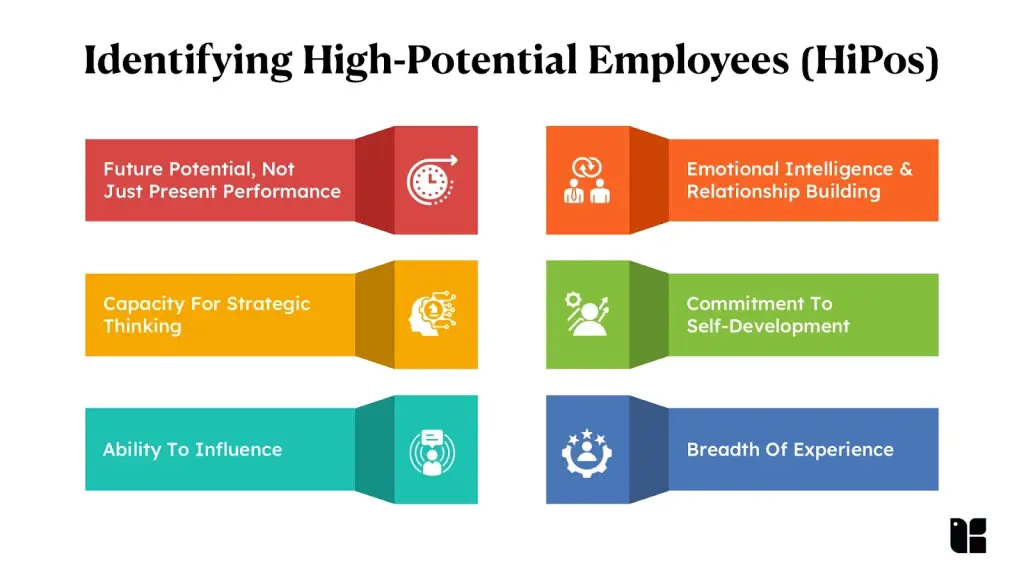
Future Potential, Not Just Present Performance
A critical shift in thinking is recognising that today’s star employee may not necessarily thrive in leadership roles. HiPos are those who demonstrate a set of leadership skills that will enable them to navigate larger challenges and lead others effectively. This is where organisations often make mistakes: equating current success with future leadership potential.
Capacity For Strategic Thinking
Strategic thinking means they have a vision beyond their current responsibilities and can align their actions with the larger organisational goals. They understand how different parts of the business interconnect and are proactive in considering the long-term impact of decisions. This foresight makes them critical in leadership roles.
Emotional Intelligence And Relationship Building
Leadership is about displaying high emotional intelligence, meaning they are skilled in managing relationships and influencing others, an essential skill for future leaders who will need to manage diverse teams, stakeholders, and even conflicts. A high-performing employee may be excellent in technical tasks, but without emotional intelligence, their leadership potential remains limited.
Commitment To Self-Development
HiPos consistently show a desire for self-improvement and development. They actively seek feedback and are willing to step out of their comfort zones to learn and grow. These employees often pursue stretch assignments, take the lead on new initiatives, and are open to mentorship and coaching.
Breadth Of Experience
HiPos are often those who have accumulated a wide range of experiences across different functions or industries. They are not confined to a narrow expertise; instead, they bring a holistic understanding of the business, which is essential when navigating complex organisational challenges.
Ability To Influence
A key leadership trait is the ability to inspire and influence others, even without formal authority. HiPos naturally earn trust and respect from peers, making them effective at leading by example. They can build a following through influence rather than command. This capacity to inspire is a clear marker of leadership potential, far beyond simple task execution.
By focusing on these traits, companies can ensure they are developing individuals who not only excel in their current roles but are equipped to lead the organisation into the future.
What Are The Best Ways To Nurture High-Potential Talent?
Once you’ve identified your high-potential employees, the next critical step is nurturing their growth to ensure they are prepared for future leadership roles. Here’s how organisations can effectively nurture their talent:

Tailored Development Opportunities
One-size-fits-all training programs do not suffice for developing future leaders. Instead, organisations should provide personalised development plans that align with individual strengths, career aspirations, and organisational needs. This could include targeted training, mentorship programs, and challenging assignments that push talent out of their comfort zones.
Psychological Support Structures
Nurturing talent involves creating an environment where employees feel safe to express themselves, take risks, and seek help when needed. Organisations should foster an atmosphere that encourages open dialogue and promotes mental well-being. When employees feel supported, they are more likely to take on challenges and engage fully in their development.
Inclusive Leadership Exposure
Providing high-potential talent with exposure to diverse leadership styles and perspectives is crucial for their development. This can be achieved through shadowing opportunities, cross-functional projects, or participation in leadership meetings. Exposure to different leaders gives a well-rounded understanding of various approaches to problem-solving and decision-making.
Providing Transparent Communication
Open and honest communication about expectations, performance, and growth opportunities is essential. Organisations should create clear pathways for feedback, ensuring that employees understand how they are progressing toward their leadership goals. Regular check-ins and performance discussions can help employees feel more engaged and invested in their development.
Fostering Diverse Experiences
Encouraging employees to take on roles in different departments or even geographical locations can significantly enhance their skills and perspectives. Diverse experiences expose talent to various challenges and scenarios, broadening their understanding of the business and equipping them to handle complex leadership situations. Organisations that promote cross-functional collaboration and job rotations can build well-rounded leaders who understand multiple facets of the organisation.
Visible Career Acknowledgment
Public acknowledgement of contributions boosts morale and motivates employees to continue performing at high levels. This recognition can take many forms, such as awards, shout-outs in team meetings, or feature stories in internal newsletters. Visibility not only enhances employee confidence but also reinforces the value the organisation places on their growth and contributions.
Nurturing high-potential talent is a continuous process that involves tailored development, support, and recognition while also encouraging diverse experiences.
“Kapable transformed my ability to communicate clearly and confidently, helping me transition from a technical role to a leadership position. I can now present ideas and build rapport effectively, enabling me to take on a role with significantly greater responsibility.”
– Satrajit Sengupta (Principal Business Manager At SAP)
Which Strategies Build An Effective Talent Pipeline?
Creating a robust talent pipeline requires intentional strategies that align with organisational goals while fostering individual growth.
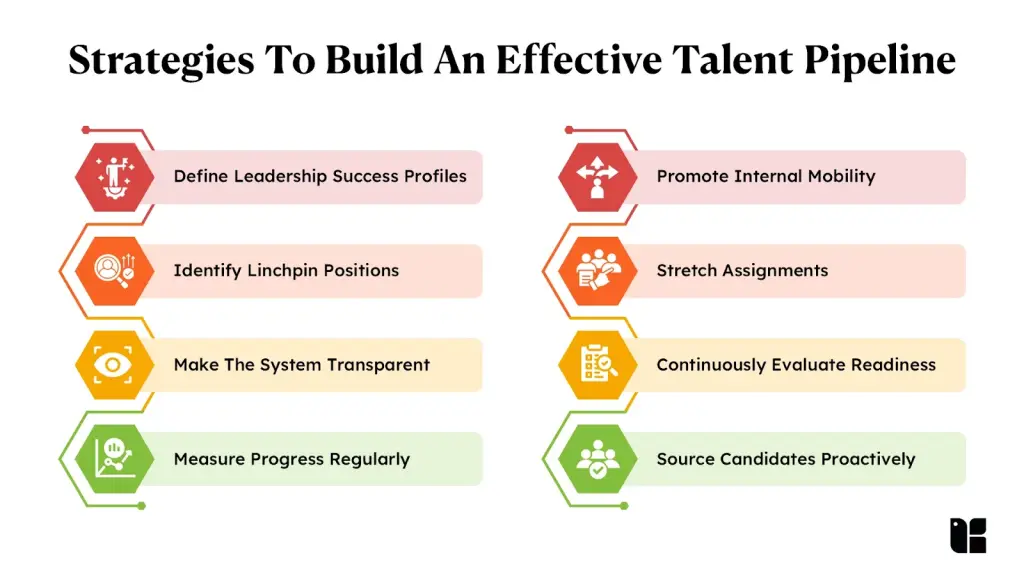
Define Leadership Success Profiles
Start by outlining the competencies, skills, and attributes that define effective leaders within your organisation. Leadership success profiles provide a clear framework for what you are looking for in potential leaders, guiding recruitment, development, and evaluation processes. This ensures that everyone involved in talent management understands the expectations and can align their efforts accordingly.
Identify Linchpin Positions
Recognise critical roles that significantly impact the organisation’s success, often referred to as linchpin positions. Understanding these roles helps prioritise talent development efforts and ensures that high-potential employees are prepared to step into these essential positions when needed. By identifying and nurturing talent for these roles, organisations can ensure seamless transitions and continuity in leadership.
Make The System Transparent
Transparency in the talent pipeline process builds trust and encourages engagement. Employees should have clear visibility into how the talent management system works, including criteria for advancement and available development opportunities. Open communication about talent development initiatives fosters a culture of accountability and encourages employees to take ownership of their career paths.
Measure Progress Regularly
Implement regular assessments to track the development of talent within the pipeline. Metrics could include skill assessments, performance reviews, and feedback from mentors or peers. Regularly measuring progress allows organisations to identify areas for improvement and adjust development plans accordingly, ensuring that high-potential employees are on track for future leadership roles.
Promote Internal Mobility
Encourage employees to explore different roles within the organisation. Internal mobility not only aids in talent retention but also allows individuals to gain diverse experiences that prepare them for leadership. Creating a culture that supports lateral movements and cross-departmental collaborations helps broaden skill sets and fosters a deeper understanding of the organisation as a whole.
Stretch Assignments
Assigning challenging projects or roles that stretch an employee’s capabilities is essential for their development. Stretch assignments push individuals beyond their comfort zones, helping them acquire new skills and gain confidence. These opportunities prepare talent for future leadership responsibilities while demonstrating the organisation’s commitment to their growth.
Continuously Evaluate Readiness
Assess the readiness of talent in the pipeline regularly. This evaluation should consider not only current performance but also potential for future leadership roles. Use a combination of self-assessments, peer feedback, and manager evaluations to gauge readiness. This ongoing assessment ensures that the right talent is being developed and positioned for advancement when opportunities arise.
Source Candidates Proactively
Take a proactive approach to talent sourcing by identifying potential leaders even before roles become available. This can involve scouting talent during performance reviews, networking events, or through employee referrals. By actively seeking out high-potential candidates, organisations can maintain a robust pipeline ready to step into leadership roles as needed.
By implementing these strategies, organisations can effectively build and manage a talent pipeline that prepares high-potential employees for leadership roles.
The strongest leadership pipelines are built through continuous investment in people. Kapable helps professionals develop the mindset and capabilities needed for long-term leadership success.
What Challenges Arise In Talent Management?
Here are key challenges that organisations often face in talent pipeline management and how to address them:
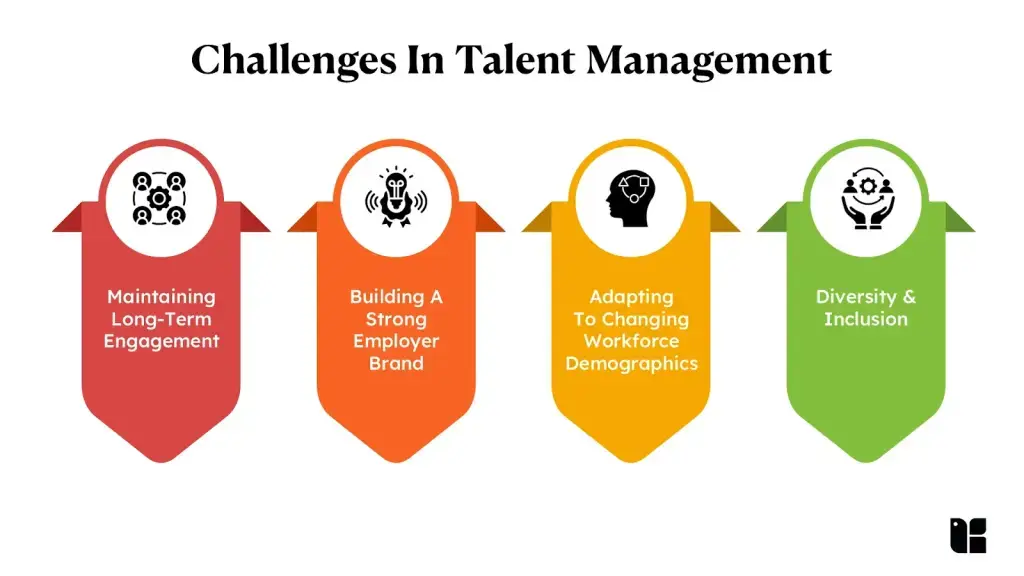
Maintaining Long-Term Engagement
Sustaining employee engagement over the long term can be difficult, especially as individuals seek growth and development opportunities. Regular check-ins, feedback mechanisms, and opportunities for advancement can help keep talent motivated and committed to their development path. Engaging employees in meaningful projects and recognising their contributions also fosters a sense of belonging and purpose.
Building A Strong Employer Brand
A compelling employer brand is essential for attracting and retaining top talent. This includes showcasing success stories of internal mobility, leadership development initiatives, and the overall employee experience. Engaging with potential candidates through social media and employer branding campaigns can significantly enhance the organisation’s appeal, making it a desirable place for high-potential talent.
Adapting To Changing Workforce Demographics
As the workforce becomes more diverse in terms of age, background, and experiences, organisations must adapt their talent management strategies accordingly. This requires understanding their unique needs and tailoring development programs to suit those needs. Flexible learning opportunities, diverse leadership roles, and mentorship programs can help ensure that all employees feel valued and supported.
Diversity And Inclusion
Organisations must be intentional about fostering an inclusive culture that supports individuals from all backgrounds. This involves not only attracting diverse talent but also ensuring equitable development opportunities and support structures are in place. Implementing diversity training, mentorship programs, and inclusive leadership practices can help cultivate an environment where everyone feels empowered to contribute and thrive.
Addressing these challenges is vital for maintaining a healthy talent pipeline that supports organisational growth and leadership continuity.
How To Evaluate Talent Pipeline Success?
To ensure that your talent pipeline is effective and aligned with organisational goals, here are key metrics for assessing its effectiveness:
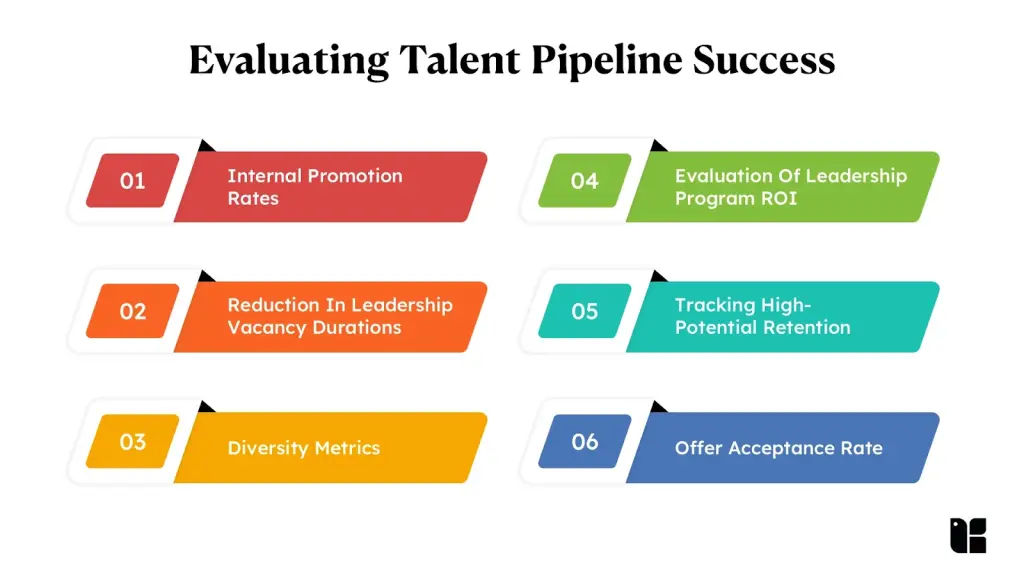
Internal Promotion Rates
Monitoring the rate at which internal candidates are promoted into leadership roles provides valuable insight into the effectiveness of your talent development efforts. A high internal promotion rate indicates that your pipeline is successfully preparing employees for advancement. Tracking this metric over time can help identify trends and inform adjustments to development programs, ensuring they remain effective in nurturing future leaders.
Reduction In Leadership Vacancy Durations
Evaluating how quickly leadership vacancies are filled is crucial for understanding the efficiency of your talent pipeline. A shorter vacancy duration suggests a strong pipeline ready to step in when needed, minimising disruption to operations. By analysing the time taken to fill critical roles, organisations can identify bottlenecks in the recruitment or development process and implement strategies to address these delays.
Diversity Metrics
Assessing diversity within the leadership pipeline is essential for ensuring inclusivity and representation. Monitoring diversity metrics, such as the percentage of diverse candidates in leadership positions and their progression through the pipeline, can help organisations evaluate their commitment to equitable development opportunities. This data can guide efforts to enhance diversity initiatives and create a more inclusive leadership culture.
Evaluation Of Leadership Program ROI
Measuring the return on investment (ROI) of leadership development programs is critical for assessing their impact on organisational performance. This can involve analysing key performance indicators (KPIs) such as employee engagement scores, team productivity, and overall business outcomes linked to leadership effectiveness. By evaluating the ROI, organisations can make informed decisions about program enhancements.
Tracking High-Potential Retention
Monitoring the retention rates of high-potential employees is crucial for understanding the effectiveness of your talent pipeline. High turnover among this group may indicate shortcomings in development opportunities or support structures. Implementing exit interviews and feedback mechanisms can provide insights into why talent leaves and help organisations address any underlying issues to improve retention rates.
Offer Acceptance Rate
The offer acceptance rate is an important metric that reflects the attractiveness of your organisation to high-potential talent. A high acceptance rate suggests that candidates view your organisation as a desirable place to work, while a low rate may indicate issues with the recruitment process or employer brand. Regularly evaluating this metric can help organisations identify areas for improvement in their recruitment strategies and enhance their overall talent pipeline.
Regularly measuring success through these metrics enables continuous improvement and ensures that the pipeline remains robust and aligned with organisational needs.
Conclusion
Many organisations may not realise the extent of this issue until they face leadership gaps or performance declines. To combat this, leaders need to check invisible leakage, which refers to the unrecognised and unaddressed loss of talent within an organisation. This often manifests as high turnover rates among high-potential employees who feel undervalued or unsupported in their development journey. Proactively addressing potential sources of leakage, such as inadequate development opportunities, lack of career advancement paths, or insufficient feedback, can help retain valuable talent and ensure a strong leadership pipeline. By prioritising talent retention strategies and fostering a culture of open communication and recognition, organisations can effectively mitigate invisible leakage and secure their future leadership needs.
Every leadership journey begins before the title changes. See whether Kapable is the right fit for developing the capabilities you’ll need next.


