

TL;DR
- Foundational Competency: Critical thinking is an objective, fact-based evaluation process composed of analysis and inference, that 81% of employers value as a crucial differentiator for effective job performance.
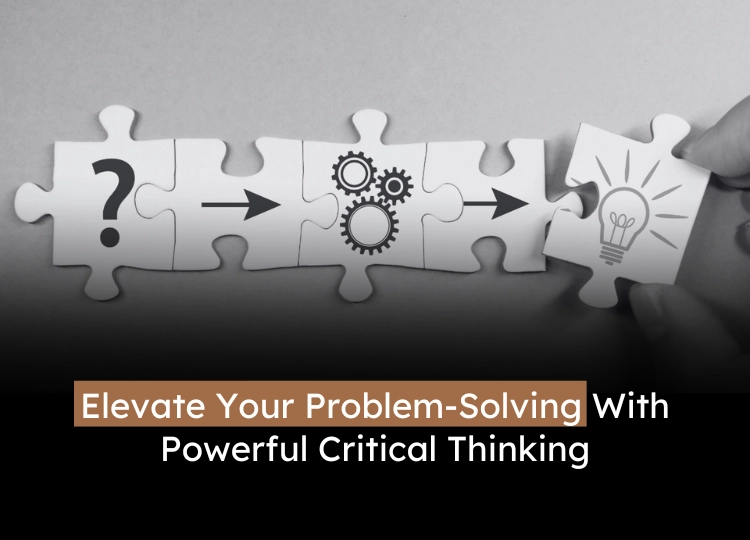
- Mindset to Action: Critical thinking provides the analytical mindset for understanding any situation, which then drives the six practical steps of problem-solving, from defining the root issue to implementing and reviewing the solution.
- Real-World Utility: The synergy between these skills is what allows success in complex scenarios, including urgent medical decisions, navigating team conflicts, designing innovative engineering systems, and making sound investment choices.
- Skill Cultivation: Development is a continuous process achieved through strategic routines such as reflective self-review, employing the “5 Whys” technique to find root causes, seeking feedback, and engaging in collaborative problem-solving.
81% of employers consider critical thinking a crucial skill when hiring new graduates, even ranking it higher than communication. It’s not just about landing a job once you’re in; critical thinking is strongly linked to better overall performance. Picture yourself as the person everyone turns to for clear, practical answers when things get tricky. It’s more than just getting your foot in the door; it’s about making a real impact and setting yourself apart in any job. Your ability to think critically will help you tackle challenges head-on and make a meaningful difference every day.
What Are Critical Thinking Skills?
Have you ever questioned a headline in the news or compared reviews before making a big purchase? That’s critical thinking in action. It’s the ability to step back, look at things objectively, and figure out what makes the most sense based on the facts. It’s about cutting through the noise, finding what really matters, and making informed decisions.
For most people, critical thinking is about avoiding snap judgments and taking time to evaluate a situation from all sides before responding. It’s not about being overly cautious, it’s about being smart with the information you have. You’re not just reacting, you’re making sure you fully understand the situation before moving forward, and then coming to a solid conclusion.
So, what is critical thinking really? It’s your ability to:
- Question what you’re told, rather than accepting it at face value.
- Analyse the details of a situation to understand it better.
- Weigh options carefully, considering different perspectives and outcomes.
- Make decisions based on facts and logic rather than emotion or bias.
Now, let’s break down what makes up critical thinking. These are the building blocks that help you approach problems to make informed decisions with critical thinking:

- Analysis: This is the ability to break down complex situations or information into smaller parts so you can understand them better. Think of it as zooming in on details to see the full picture.
- Inference: This is where you make educated guesses based on the information you have. For example, if someone is acting out of character, you might infer that something is going on in their personal life.
- Evaluation: Here, you’re assessing the credibility and usefulness of information. Is this data reliable? Does this solution make sense? Should I trust this source? Evaluation helps you sort through what’s valuable and what’s not.
- Open-mindedness: Being open to different ideas and perspectives is crucial. Critical thinkers don’t cling to their own views; they stay curious and willing to adjust based on new information.
- Communication: Once you’ve thought something through, you need to be able to explain it to others. Clear communication allows you to present your ideas and reasoning in a way that others can understand and engage with.
- Problem-solving: After you’ve considered all angles, the final piece is actually solving the issue. This is where critical thinking becomes practical, allowing you to find solutions to the challenges you’re facing.
In short, critical thinking is like having a filter in your mind that helps you sort through information, find what’s important, and make the best decisions based on the facts you have. Problem-solving is often considered the ultimate goal of critical thinking, it’s what all the other skills lead up to.
Critical Thinking Promotes Problem-Solving
Critical thinking is a mode of thinking, a way to approach any situation by questioning, analysing, and considering all perspectives. It’s how you reason through information and make sense of things. Problem-solving, on the other hand, is a set of solution-oriented strategies. It’s focused on finding practical answers to specific challenges. It’s the final action part of critical thinking, where you take everything you’ve thought about and use it to create a solution.
Critical thinking strengthens your reasoning, which means it also makes it easier to develop new skills, including problem-solving. When you’re good at thinking critically, you’re able to approach a problem with a clear, objective mindset. You understand the situation, consider different outcomes, and evaluate the best possible path forward. So, let’s understand in detail how exactly these two skills work together to tackle complex problems and create impactful solutions. Let’s explore their synergy in the next section.

How Do Critical Thinking And Problem-Solving Work Together?
Let’s see step-by-step how breaking down complex issues and evaluating options can transform into effective problem-solving. Here’s how it works:

- Identify the problem clearly: Problem-solving starts with defining the problem in clear terms. Is it a workflow issue at work? A personal challenge in decision-making? Identifying the issue is key to resolving it.
- Gather relevant information: This is where critical thinking comes in, asking questions, researching, and getting the full picture. You can’t solve a problem if you don’t fully understand it.
- Brainstorm possible solutions: With a clear understanding of the problem, you can now think of potential solutions. What are all the possible ways you can tackle this issue? Make sure to consider different approaches, even ones that seem unconventional.
- Evaluate and choose the best solution: Now that you have options, it’s time to weigh them. Which solution is most practical? What has the highest likelihood of success? Think about the long-term impact and whether the solution addresses the root cause of the problem.
- Implement the solution: Once you’ve chosen the best approach, put it into action. This is the practical side of problem-solving. Take the steps needed to execute your plan, whether it involves delegating tasks, adjusting processes, or making personal changes.
- Review and reflect: After you’ve solved the problem, take a step back and evaluate the outcome. Did your solution work as expected? Could something have been done better? Reflecting on the process helps you improve your problem-solving skills for next time.
This is how thoughtful analysis can seamlessly lead to practical solutions. By using critical thinking to frame the issue and then applying these practical steps, you can break down any problem and come up with a logical, effective solution.
Critical thinking helps professionals analyse a problem, while problem-solving focuses on applying the best solution, and Kapable helps strengthen both skills through practical workplace learning.
What Are The Key Examples Of Critical Thinking And Problem-Solving?
Let’s look into some practical examples that showcase how these skills come into play in various real-world scenarios. Here’s how these combined skills can be applied across different contexts:

- Urgent medical decisions
In an emergency room, doctors often face high-pressure situations where they need to make quick decisions about patient care. Critical thinking is used to rapidly assess symptoms, medical history, and available resources. For example, during a major accident with multiple casualties, a doctor must evaluate which patients need immediate attention based on their injuries and the severity of their condition. Problem-solving comes into play as the medical team prioritises treatments and coordinates with limited resources to provide the best possible care under time constraints.
- Resolving team conflicts
When a team faces a disagreement over project directions, problem-solving skills are essential to finding common ground. For instance, if team members have conflicting opinions on project priorities, a project manager uses critical thinking to analyse each perspective, consider the project’s goals, and evaluate potential impacts. The manager then facilitates a discussion to address concerns and find a compromise that aligns with the project’s objectives. This approach ensures that the team moves forward with a unified plan, leveraging different viewpoints to reach a solution.
- Innovative engineering
Engineers often encounter complex problems that require creative solutions. For example, when designing a new water filtration system, an engineer uses problem-solving skills to overcome challenges such as improving efficiency or reducing costs. They analyse existing filtration methods, research new materials, and experiment with design modifications. Critical thinking helps the engineer assess the effectiveness of various solutions, predict potential issues, and refine the design to meet specific needs while considering practical constraints.
- Effective training
Developing a training program involves both critical thinking and problem-solving. For example, a training coordinator tasked with improving employee skills first analyses the current skill gaps and training needs. They use critical thinking to evaluate existing training materials, gather feedback from employees, and identify areas for improvement. Problem-solving skills are then applied to design a program that addresses these needs, incorporating new methods and resources to enhance learning and development effectively.
- Sustainable solutions
Addressing social issues like plastic waste requires practical problem-solving. For instance, a non-profit aiming to reduce plastic pollution might use critical thinking to analyse the problem’s scope, gather data on plastic usage, and assess existing waste management practices. Problem-solving skills are then used to create and implement a plan that includes recycling programs, public education campaigns, and partnerships with local businesses. This approach involves developing innovative solutions to reduce waste and promote sustainable practices within the community.
- Investment choices
When evaluating potential investments, investors rely on critical thinking to analyse market trends, financial statements, and business models. For example, an investor considering a startup must assess its growth potential, competitive landscape, and financial health. Critical thinking helps the investor identify key risks and opportunities, while problem-solving skills are used to develop strategies for managing those risks and making informed investment decisions that align with their financial goals.
These examples illustrate how critical thinking and problem-solving are applied in various real-world scenarios, showcasing their practical utility in making informed decisions and solving complex issues.
“I needed to enhance my personal brand and overcome my discomfort with public speaking and networking events. Kapable’s personalised sessions gave me the tools and confidence to handle these situations. Recently, I confidently participated in a panel discussion and a networking event, applying the skills I learned. My presentations are now more engaging, and public speaking feels natural, empowering my professional journey.”
– Shreyas Tonse (Founder At Zwayam)
How To Develop Critical Thinking And Problem-Solving Skills?
Building strong critical thinking and problem-solving skills involves integrating practical strategies into your daily routine and work processes. Here’s how to develop these essential skills effectively:

Practise Reflective Thinking
Take time regularly to reflect on your experiences and decision-making processes. After tackling a problem or completing a project, review what went well and what could be improved. Ask yourself questions like “What did I learn from this?” and “How can I apply this knowledge to future situations?” Reflective thinking helps you understand your own thought processes, refine your problem-solving strategies, and continuously improve your critical thinking skills.
Work On Collaborative Problem-Solving
Get involved in team projects or groups that tackle complex issues. This could be at work, in a community organisation, or even a hobby group. Encourage input from team members with different expertise and backgrounds to explore a range of solutions. By working with a diverse group, you’ll gain multiple perspectives on issues, which enhances your ability to evaluate different solutions. Track the decisions made and reflect on the group dynamics to understand how different viewpoints shaped the final solution.
Develop A Habit of Asking Probing Questions
Make it a practice to ask probing questions whenever you encounter new information or face a problem. Start by asking basic questions like “What?” and “Why?” and then dig deeper with questions such as “How did this happen?” and “What are the implications?” This habit helps you uncover underlying causes and gain a thorough understanding of the situation, leading to better-informed decisions and solutions.
Seek Constructive Feedback
Regularly seek constructive feedback from colleagues, mentors, or supervisors on your work and problem-solving approach. Ask for specific input on areas where you can improve, and use this feedback to refine your skills. Analyse the feedback to identify patterns and areas for improvement. Apply the suggestions and follow up to see if the changes have addressed the feedback, enhancing your ability to think critically and solve problems effectively.
Apply The “5 Whys” Technique
When faced with a problem, start with the initial problem and ask “Why?” to determine the cause. For each answer, ask “Why?” again, repeating this process until you reach the root cause. Evaluate the root cause to develop targeted solutions then address the identified root cause with practical steps to solve the problem effectively. This method helps you understand the fundamental cause of problems and develop targeted solutions to address them effectively.
Adopt A Growth Mindset
Begin by identifying a specific challenge you faced or a goal you achieved. Reflect on what strategies or approaches helped you succeed, even if only partially. Document the lessons you learned from both the challenges and successes you encountered. Finally, develop actionable steps based on these reflections to improve your future performance. By regularly analysing and recording your “Challenge-Success Reflection” experiences, you create a tangible record of your progress and learning, which helps you adapt and grow continuously.
Simulate Real-World Scenarios
Develop or participate in simulations that mimic real-world problems or decision-making situations. Create or participate in exercises that replicate actual problems or decision-making situations to practise your responses and reflect on the outcomes to understand what worked and what didn’t. This hands-on approach provides practical experience and helps you apply critical thinking and problem-solving skills in a controlled setting, enhancing your preparedness for real-world situations.
Engage In Diverse Learning Experiences
Expand your knowledge and problem-solving skills by engaging in diverse learning experiences. Explore new topics through books, courses, or workshops, and attend events that cover various disciplines. Networking with experts from different fields can also provide new insights. Applying this broad range of knowledge broadens your knowledge base and exposes you to different problem-solving approaches, enhancing both critical thinking and creativity.
Developing these skills goes beyond just improving how you handle tasks at work, it’s about embracing a mindset that helps you tackle challenges and seize opportunities in every part of your life.
Conclusion
As you work on developing your own critical thinking and problem-solving abilities, remember that these are not just isolated skills but integral parts of effective leadership. They enable you to lead with insight, make informed decisions, and inspire others to do the same. Embracing and applying these skills can transform challenges into opportunities and turn visionary ideas into reality, ultimately paving the way for more impactful and successful leadership.
If you want to approach problems with greater clarity and confidence, Kapable helps you evaluate whether its approach fits your professional development priorities.


