


TL;DR
- Leadership Structure as an Ecosystem: The Senior Leadership Team (SLT) guides the company’s overall direction and extends beyond the C-suite to include D-suite directors and V-suite vice presidents for aligned strategy and execution across all levels.
- Driving Clarity and Consistency: The primary function of senior leadership is to establish organisational accountability, ensuring goals are met, conflicts are resolved, and employees are developed across the entire business.
- Hiring for Culture and Pressure: Successful SLT recruitment requires assessing cultural alignment and leadership under stress through simulations, moving past mere technical expertise on a resume.
- Sustaining Performance Through Vision: Core leadership skills centre on establishing a clear strategic vision, fostering a culture of innovation, and proactively building resilience to manage continuous change effectively.
Imagine a company that stays calm in chaos, moves quickly when things change, and keeps growing while others struggle. What makes that possible isn’t luck. It’s a strong leadership team. Companies with strong senior leadership are 2.3 times more likely to outperform their competitors in profits. These teams set the vision, shape the culture, and make key decisions that push the whole business forward. In this blog, we’ll explore what makes a senior leadership team work well, how to structure it, and the real impact it has across the organisation.
What Is A Senior Leadership Team?
A senior leadership team is a group of high-ranking executives with strong influence who guide the overall direction of a company. They are responsible for laying out the organisation’s purpose, setting long-term goals, and ensuring these objectives are achieved. This team shapes business strategy and leads its execution, working together to keep all departments aligned and make decisions that impact the whole business. Their effectiveness depends on their ability to collaborate, communicate clearly, and stay aligned on strategy and execution. By promoting innovation and defining the company’s culture, they help drive sustainable growth and overall performance.
At the core of any organisation’s success is a well-structured senior leadership team. This team isn’t limited to just the C-suite; it also includes senior directors (D-suite) and vice presidents (V-suite), all of whom play essential roles in shaping and executing the company’s strategy. Together, they drive performance, ensure alignment across departments, and guide the organisation through change and growth.
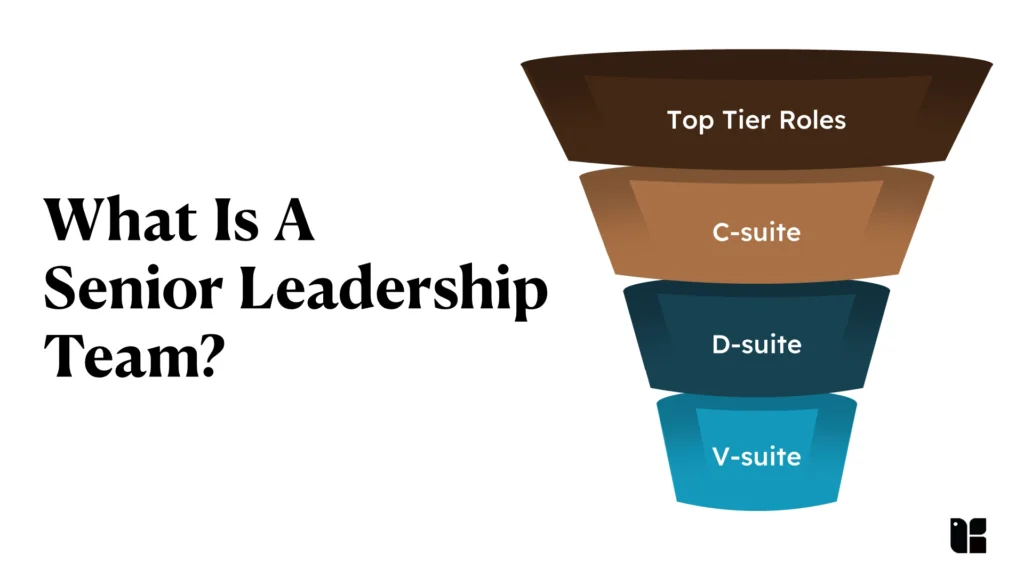
- Top tier roles: At the top tier sit the Board of Directors, which provides oversight, governance, and long-term strategic direction. Within this group, the Chairperson or Executive Chairman often plays a critical role in aligning the board and executive team. In some organisations, a President may serve either as a standalone role or as part of the C-suite, depending on the structure. These roles help ensure that the company remains aligned with shareholder expectations, legal responsibilities, and ethical standards.
- C-suite: This consists of the highest-ranking executives in the organisation, typically holding titles that begin with “Chief.” Their primary responsibility is to set the overall strategic direction, make high-level decisions, and ensure alignment across the business. Common roles in the C-suite include Chief Executive Officer (CEO), Chief Operating Officer (COO), Chief Financial Officer (CFO), Chief Technology Officer (CTO), and Chief Human Resources Officer (CHRO).
- D-suite: This consists of senior-level directors who oversee key departments or strategic initiatives. They are responsible for implementing executive-level strategies within their specific functions, managing departmental goals, and driving operational performance. Directors often serve as the bridge between the vision of the C-suite and the execution by operational teams.
- V-suite: This consists of Vice Presidents who usually lead major business units, geographic regions, or functional areas. They are accountable for delivering results, managing teams, and aligning their domain with company-wide objectives. The V-suite plays a critical role in translating strategy into action and ensuring consistency across levels of the organisation.
With the structure in place, it’s equally important to examine the purpose behind it. Let’s now explore how the senior leadership team contributes to driving clarity and sustained organisational performance.
A strong senior leadership team is built through continuous development. Explore Kapable’s learning process to see how these capabilities are developed.
What Is The Purpose Of A Senior Leader Team?
Senior leaders play an essential role in steering the organisation toward success by ensuring clarity, alignment, and accountability across all levels. Their responsibilities include:
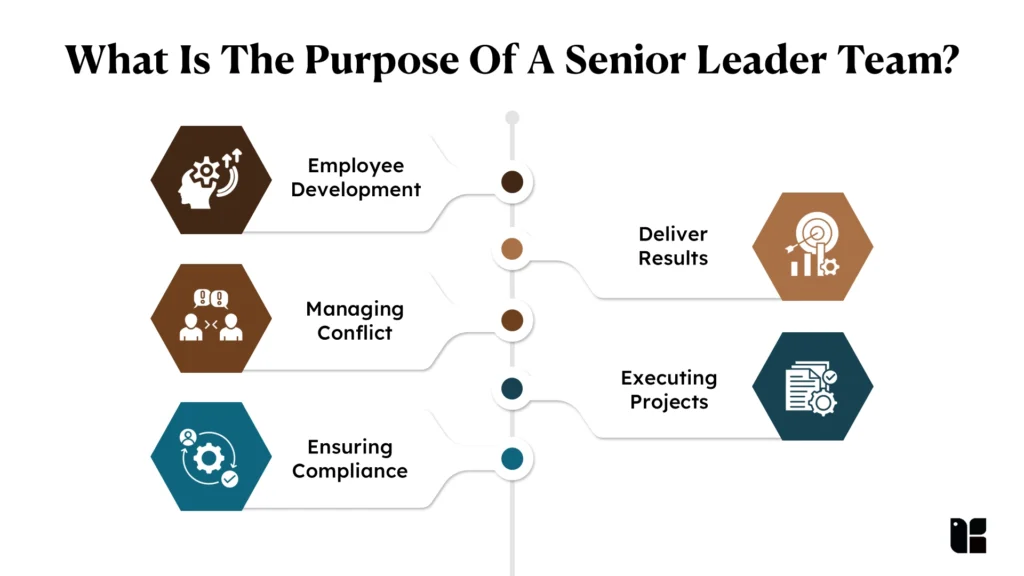
- Employee development: Senior leaders play a key role in setting clear goals, defining responsibilities, and supporting continuous learning across all career stages. This focus on development builds stronger teams and allows leaders to delegate more effectively while driving long-term performance.
- Deliver results: Leaders are responsible for managing outcomes within their teams, functions, or regions, ensuring goals are achieved and standards are met. Consistent performance not only builds trust but also strengthens alignment with the company’s overall strategy.
- Managing conflict: When disputes arise, senior leaders step in to mediate and resolve issues fairly. Doing so fosters trust, promotes teamwork, and helps maintain a productive work environment focused on progress rather than friction.
- Executing projects: By actively collaborating with project teams, senior leaders help define priorities, manage dependencies, and keep initiatives moving forward. Strong execution builds credibility, enhances delivery, and strengthens the leader’s influence across the organisation.
- Ensuring compliance: Senior leaders are accountable for meeting internal, regulatory, and external audit requirements in their areas of responsibility. Their oversight protects the business’s integrity and reduces the risk of operational or legal issues.
Understanding the purpose of a senior leadership team sets the foundation. Now let’s look at how organisations identify, evaluate, and hire the right leaders to fill these critical roles.
“I needed to enhance my personal brand and overcome my discomfort with public speaking and networking events. Kapable’s personalised sessions gave me the tools and confidence to handle these situations. Recently, I confidently participated in a panel discussion and a networking event, applying the skills I learned. My presentations are now more engaging, and public speaking feels natural, empowering my professional journey.”
– Shreyas Tonse (Founder at Zwayam)
How Senior Leadership Teams Are Hired?
Building a senior leadership team is about selecting individuals who can shape strategy, inspire people, and drive long-term success.
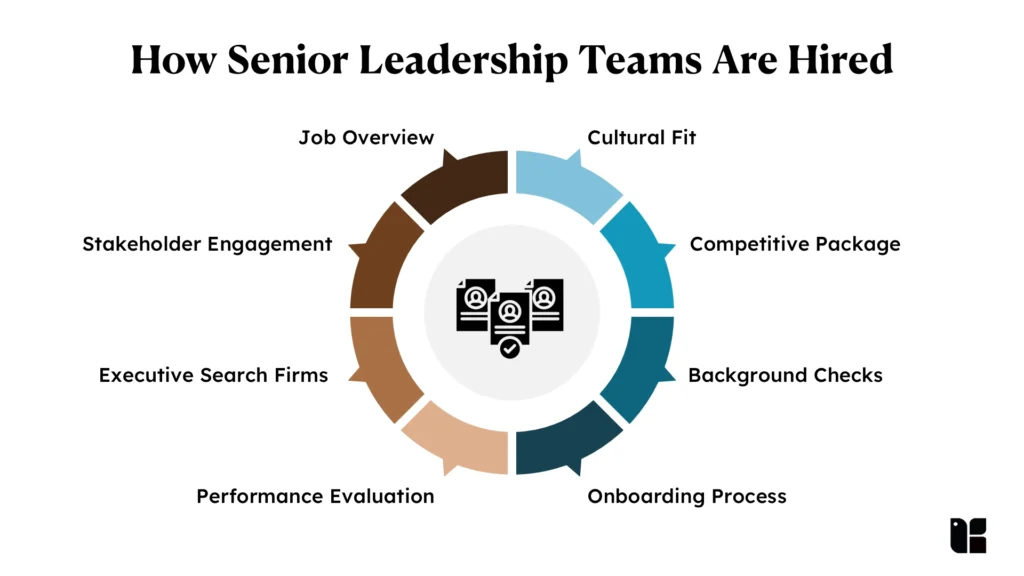
Job Overview
Before initiating any search, the organisation must clearly define what it needs from its senior leadership team. This includes identifying strategic priorities, cultural goals, business challenges, and the leadership qualities required to meet them. Mention the roles and responsibilities of the job, and detail the skills and experience your senior hire must possess to be recruited. For example, a company undergoing digital transformation may prioritise leaders with tech-savvy, change management experience, and stakeholder influence.
Stakeholder Engagement
The hiring process for senior leaders involves collaboration across the board. Board members, the CEO, and often external consultants work together to identify and set the role’s must-haves, nice-to-haves, and potential red flags. This collective approach ensures that the selected candidate aligns with current organisational needs and long-term goals. Including key decision-makers from different functions, geographies, and backgrounds brings diverse perspectives into the process, helping discover early blind spots and making the final decision stronger, more inclusive, and future-ready.
Executive Search Firms
For senior roles, companies often partner with executive search firms that specialise in high-level placements. These firms offer access to global talent networks, passive candidates, and deep industry insights that help refine the candidate profile. They also handle confidential outreach and thorough screening, ensuring a focused, high-quality talent pool. In some cases, strong internal talent acquisition teams lead the process, particularly when promoting from within is a real possibility, ensuring continuity and alignment with company culture and values.
Performance Evaluation
At this level, technical qualifications are only part of the equation. Organisations use structured interviews, psychometric assessments, business case studies, and leadership simulations to evaluate how they think, lead, and make decisions under pressure. While a CV offers insight into the background of the candidates, these applications put them in real-time situations to observe actual performance. They also help the recruiters assess if there is a parity between what they’ve mentioned on paper and their actual skills and capabilities. Informal conversations with peers, subordinates, and external stakeholders also offer useful perspectives.
Cultural Fit
Skills and experience matter, but for senior leaders, alignment with the organisation’s culture and strategic direction is just as important. A mismatch in values leadership approach, or communication style, can create friction, slow down decision-making, and result in a loss of trust. Companies look for leaders who bring expertise and reflect the mindset and behaviours that support the organisation’s mission. They must inspire confidence, influence across all levels, and consistently lead in a way that strengthens the organisation’s identity, and vision, and drives long-term success.
Competitive Package
Attracting top senior leadership talent means offering more than just a high salary. Total compensation packages must reflect the scope, complexity, and impact of the job position. This often includes performance-based incentives, long-term equity, flexible benefits, and executive perks tailored to individual needs. However, compensation also signals value and expectations, so it should align with market benchmarks and internal parity. In today’s corporate world, top candidates also weigh non-financial factors like autonomy, work culture, learning, and growth opportunities. Companies that structure their offers holistically, not just financially, stand out.
Background Checks
Due diligence at the senior level extends well moves outside the scope of standard HR practices. In addition to speaking with former employers, companies may speak with industry peers, members of the board, and former direct reports to understand how the candidate leads under pressure, handles conflict, and builds long-term trust. Background checks are more detailed, often including regulatory compliance, financial history, and reputation risks. Patterns of behaviour and ethical decision-making are also examined. This thorough process helps protect the organisation’s integrity and ensures consistency and alignment with leadership expectations.
Onboarding Process
Once hired, senior leaders should be onboarded through a tailored and thoughtful program that integrates them into the business quickly. This often includes stakeholder introductions, learning the company’s top priorities, culture familiarity, and support from senior executive leadership programs or mentorship. A strong onboarding plan helps new leaders understand the team dynamics, align quickly with strategy, and establish early wins. It also signals that the organisation is invested in their success. The faster they build trust and credibility, the sooner they can lead effectively and drive results.
Now that you’ve understood how the senior leadership team is hired, it’s important to focus on the key competencies that drive leadership success.
What Are The Core Competencies Of A Senior Leadership Team?
Core competencies are the critical skills and behaviours that define how senior leadership teams drive performance, align strategy, and lead effectively across the organisation. They are:

Defining Strategic Vision
Senior leaders are responsible for setting the course of the organisation with clarity and foresight. They define long-term goals that reflect the company’s values and operating context, then turn those into focused strategies that teams can execute. Their role is to shape the vision and embed it into day-to-day priorities and decisions, helping people at all levels understand how their work contributes to the larger direction. This clarity ensures teams stay aligned, especially during growth or change. A strong strategic vision also allows the business to prioritise effectively, invest wisely, and adapt its approach as the market shifts.
Leading With Responsibility
At the senior level, decisions have wide-reaching consequences. Leaders must weigh risks, think long-term, and make calls that support both performance and culture. Equally important is owning those decisions. Senior leaders cultivate a culture of accountability by standing by their choices and holding others to clear standards. This transparency builds trust within teams and across departments. It also helps eliminate ambiguity and confusion around roles, expectations, and performance outcomes. A workplace environment of strong decision-making and accountability drives consistency, speed, and integrity in execution.
Investing In Talent
Strong leadership means building future leaders. Senior executives invest in identifying potential, mentoring high-performers, and giving people the tools to succeed. By developing others, they strengthen the leadership approach and ensure continuity in performance. Team building at this level involves shaping the company’s values, aligning strengths, and creating an environment where teams are motivated and equipped to deliver. When senior leaders prioritise talent, it sends a clear message: growth is supported, leadership is earned, and high standards will be met at every level. They also create space for honest feedback, encourage autonomy, promote peer learning, and ensure that development efforts are visible, ongoing, and strategic.
Developing Innovation-Focused Culture
Lasting success depends on a leadership team that can grow and change over time. Senior leaders help teams try new ideas, explore better tools, and let go of outdated ways of working. They make innovation a part of daily work, not something separate. This means setting aside time and budget for new ideas while staying focused on what the business needs. Being adaptable also means knowing when things aren’t working and being willing to change direction. Leaders who support fresh thinking and stay flexible help the organisation stay strong and move ahead.
Building Organisational Resilience
Senior leaders are responsible for protecting the business from both expected and unexpected disruptions. They identify potential risks early, assess their impact, and create response strategies to safeguard core operations. However, managing risk requires resilience-building. This involves equipping teams to handle pressure, bounce back quickly, and maintain progress during times of change. Leaders who build this resilience give their organisations a distinct advantage, enabling them to navigate uncertainty without losing focus or confidence, ensuring the business stays on track and continues to thrive even in challenging circumstances. Additionally, they develop a proactive mindset, encouraging teams to anticipate challenges before they arise.
While these core competencies shape strong leadership, even the best teams face challenges that test their alignment and resilience. Let’s look at how these can be effectively addressed.

How Can Senior Leadership Teams Overcome Common Challenges?
Senior leadership teams face a unique set of challenges, but with the right strategies in place, these obstacles can be turned into opportunities for stronger execution and long-term success.
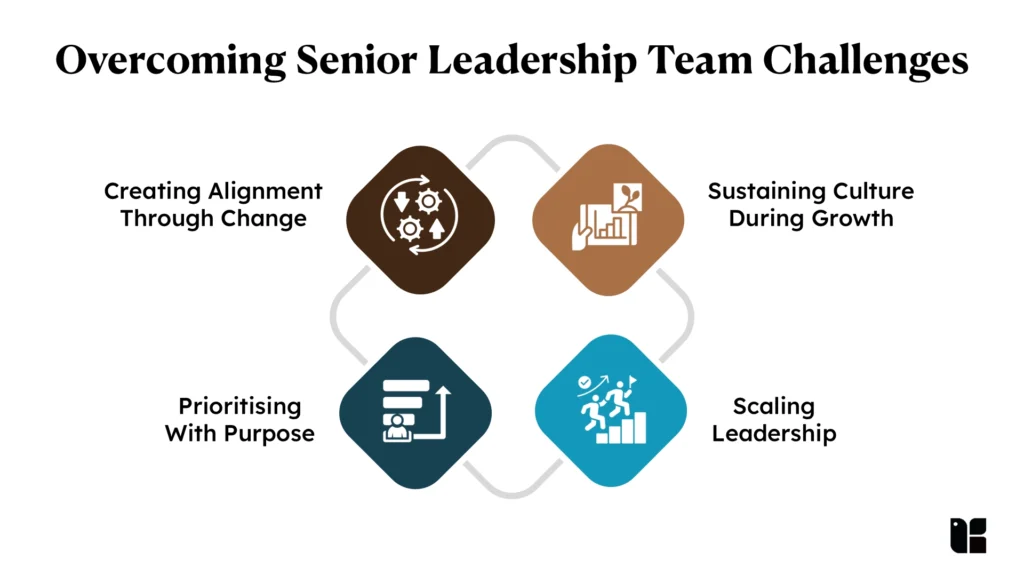
Creating Alignment Through Change
Changes at the upper levels can create instability and misalignment. Fast-moving markets, evolving technologies, and leadership transitions often test continuity, creating uncertainty across teams. Leaders should invest in scenario planning and clearly communicate during transitions. Creating a shared roadmap, revisiting strategic goals regularly, and reinforcing team rituals (like check-ins or planning cycles) help maintain cohesion. Encourage adaptability at every level by modelling calm decision-making and preparing teams for uncertainty through regular alignment conversations and strategic foresight exercises.
Sustaining Culture During Growth
As organisations scale or evolve, their culture can get diluted. Misaligned behaviours, inconsistent values, or disconnected teams often surface during mergers, accelerated hiring, or strategic shifts. Leaders must define and document cultural values early and live them visibly. During growth, weave culture into hiring, onboarding, and performance systems. Encourage cross-functional collaboration and open feedback loops. When senior leadership models shared behaviours and rewards alignment, it keeps the culture alive and scalable. Regular culture audits and storytelling also reinforce consistency.
Prioritising With Purpose
Senior leaders must balance short-term performance with long-term goals, often amid unclear or conflicting data. Quick decisions may backfire, while indecision delays progress. Use decision frameworks (like RACI or Eisenhower Matrix) to clarify ownership and urgency. Create cross-functional input loops to gather insight before acting, and define non-negotiables based on core business priorities. Keep both short-term sprints and long-term milestones visible to all stakeholders. Regularly revisit priorities in leadership meetings to remain responsive without losing direction.
Scaling Leadership
As organisations grow, accountability often becomes diffuse, and leadership development is deprioritised. This weakens execution and limits succession readiness. Define roles and success metrics clearly across leadership levels. Institutionalise leadership development through coaching, succession planning, and mentoring programs. Encourage senior leaders to lead through others, not deliver results themselves. Equip future leaders by delegating real responsibility and recognising progress. Invest in leadership development programs as a long-term strategy, not a one-time event.
Recognising these challenges is the first step in how organisations respond to them and determine their long-term success.
Choosing the right leadership program can make overcoming these challenges easier. Explore Kapable’s program fit to see whether it suits your goals.
Conclusion
A senior leadership team holds the organisation’s strategic heartbeat through smooth and rough times. They steer direction, build alignment, and drive execution at the highest level. The real measure of their success lies in how well they guide the organisation through change while maintaining its core identity and goals. Their decisions ripple across the company, impacting talent, growth, and resilience. To build one, companies need precision in hiring and investment in development through leadership programs. Their ability to remain unified and visionary ensures that they not only meet current challenges but also set the stage for sustained success in the future.


