


TL;DR
- Core Psychological Force: Self-confidence is a non-uniform belief in one’s own judgment and capability, acting as a crucial internal resource for navigating and overcoming life’s diverse challenges.
- Personal History and Self-Perception: Five internal elements, including self-esteem, growth mindset, and reframed childhood experiences, are fundamental to shaping the core self-perception that either builds up or diminishes self-confidence.
- Environmental and Societal Influences: External forces like toxic work environments, unrealistic media standards, financial stability, and prevailing cultural norms significantly impact how an individual views and asserts their self-assuredness.
- A Continuous Journey of Growth: Enhancing self-confidence is a path that starts with recognising and actively addressing these contributing factors through tools like self-reflection, seeking positive support, and committing to personal growth.
Self-confidence is a psychological force that quietly orchestrates the symphony of our lives. To truly grasp its essence, we need to explore its intricacies. At its core, self-confidence is our belief in our abilities, judgment, and capacity to navigate life’s challenges. However, what’s fascinating is that self-confidence is not a uniform concept; it’s as varied as the people who possess it. In this article, we will delve into the intricacies of self-confidence, exploring why it differs among individuals and what factors affect self-confidence.
“Kapable has played a crucial role in my growth. I joined to overcome challenges with public speaking and impromptu situations, especially in larger settings. The sessions helped me structure my ideas better and shift from reacting impulsively to responding thoughtfully, improving my workplace interactions. The tools and techniques I’ve learned have greatly boosted my confidence and clarity.”
– Jainil Vadhan (Programmatic Solutions Consultant At Amazon)
What Are The Internal Factors That Affect Self-Confidence?
Your self-confidence is subject to the many internal factors you experience throughout your lifetime. These internal factors shape who you are as a person and thus affect how you think about yourself. The 5 internal factors that affect self-confidence the most are as follows:
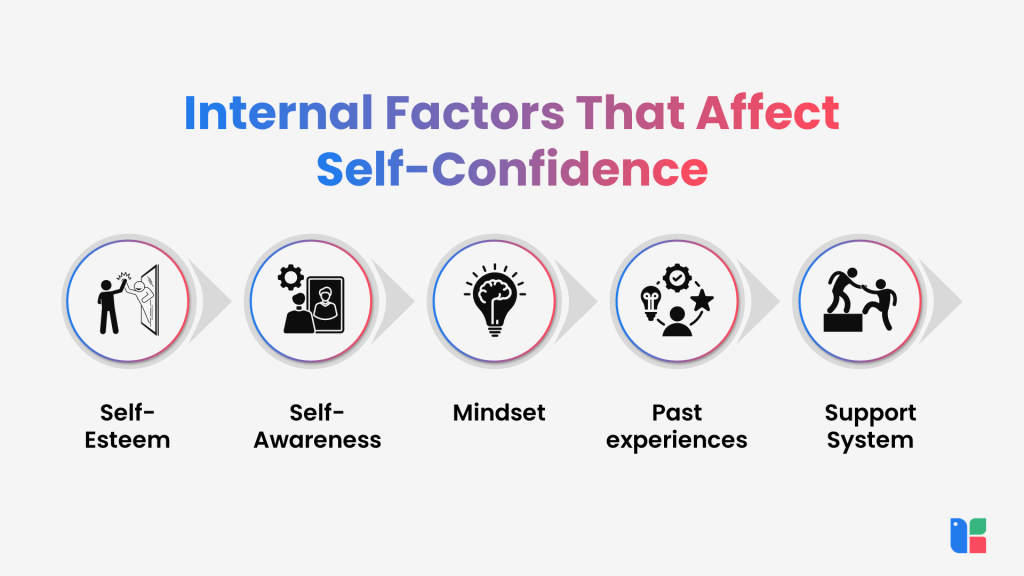
Self-esteem
Your self-esteem is the foundation of self-confidence, representing an individual’s self-worth and belief in their abilities. High self-esteem fosters self-confidence, empowering individuals to tackle challenges with confidence. Conversely, low self-esteem can lead to self-doubt and the need for external validation.
Self-awareness
Self-awareness involves recognising one’s strengths and weaknesses. High self-awareness allows individuals to leverage their strengths, boosting self-confidence. In contrast, low self-awareness can result in distorted self-perception, lowering your self-confidence.
Mindset
Mindset plays a crucial role in how challenges and setbacks are perceived. A growth mindset, focused on learning and improvement, enhances self-confidence by seeing challenges as opportunities for growth. In contrast, a fixed mindset can hinder your self-confidence by viewing your abilities as static.
Past Experiences
Past childhood experiences are one of the key factors that shape your self-confidence. Positive experiences showcasing competence and resilience can boost self-confidence. Negative experiences, such as repeated failures or harsh criticism, can lead to self-doubt. Reframing setbacks as opportunities for growth is key to rebuilding self-confidence.
Support System
The people around us can either bolster or diminish self-confidence. A supportive network of friends and family provides encouragement and constructive feedback, enhancing self-confidence. Negative relationships or a lack of support can erode self-confidence through constant criticism or a lack of validation.
However, these aren’t the only factors influencing and shaping a person’s self-confidence. Continue reading to know more!
Many factors influence self-confidence, but lasting improvement comes from consistently practising new behaviours. Kapable helps leaders develop confidence through personalised coaching, guided reflection, and real workplace experiences.

What Are The External Factors That Affect Self-Confidence?
Various factors within our social and personal environments significantly influence our self-confidence. Here are five key factors and their impact on self-confidence:

Social Environment
The people we interact with, such as family, friends, colleagues, and acquaintances, play a crucial role in shaping our self-confidence. Supportive relationships that offer belief in one’s abilities and constructive feedback can boost self-confidence. Conversely, negative relationships marked by criticism and belittlement can erode self-esteem.
Media Influence
The media shapes our self-perception by presenting idealised standards of beauty and success. Those who can distinguish between media portrayals and reality maintain higher self-confidence. However, internalising these unrealistic ideals can lead to low self-confidence as individuals constantly compare themselves to media depictions.
Economic Status
Financial stability or instability has a significant impact on self-confidence. Economic security provides a sense of control and empowerment, enhancing self-confidence. Conversely, economic instability and worries about financial security can create stress and anxiety, undermining self-confidence.
Work Environment
The workplace, where people spend a significant part of their day, can influence self-confidence. A nurturing work environment that values employees and provides support can boost self-confidence. In contrast, toxic work environments with bullying, criticism, or lack of support can diminish self-confidence.
Cultural Norms
Cultural values and expectations affect how individuals view themselves and their self-assuredness. Cultures emphasising self-expression and individualism tend to encourage self-confidence. Conversely, in cultures that prioritise modesty and conformity, individuals may feel pressured to downplay their self-confidence and may struggle to assert themselves.
Conclusion
Understanding what are the factors that affect self-confidence is the first step toward improvement. Whether it’s building self-esteem, surrounding yourself with positive influences, or challenging societal norms, there are strategies to enhance self-confidence. Self-reflection, seeking support, and personal growth can be powerful tools in this journey. By recognising these factors and addressing them, individuals can embark on a path to greater self-confidence and a more empowered life. Remember, self-confidence is not a destination; it’s a journey, and everyone’s path is unique.
Since confidence develops differently for every individual, Kapable can help you determine whether its coaching-led leadership programme aligns with your development needs and career goals.


