


TL;DR
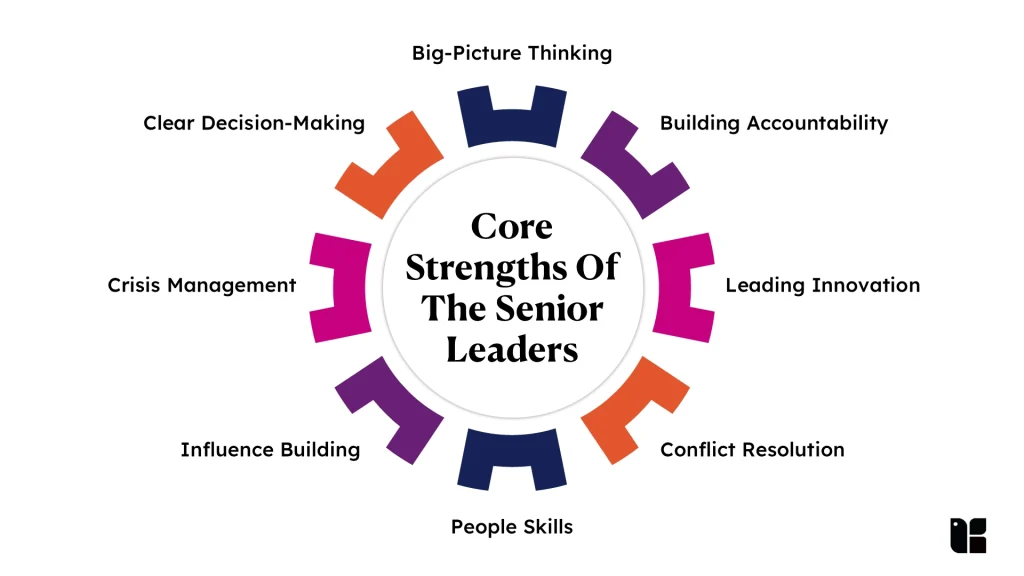
- Core Leadership Competencies: Senior-level effectiveness is built on a foundation of eight critical strengths, including the ability to think strategically, execute clear decisions under pressure, and drive outcomes through influence and accountability.
- Self-Imposed Barriers: Growth is often hampered by a leader’s own limiting habits, such as over-involvement in daily operations, resisting change, and the ego-driven need to avoid admitting error or facing conflict.
- Systemic Skill-Building: The path to stronger leadership involves implementing intentional systems, like running low-risk ‘What If’ experiments and actively seeking to ‘disprove yourself’ to improve decision-making and build organisational agility.
- A Journey of Continuous Mastery: Leadership is not a fixed destination but a process of constant refinement and self-awareness, where successful leaders actively tackle blind spots and seek expert guidance to push past their current limits.
Plenty of people hold senior positions but still struggle to lead. Some get stuck in daily tasks, some avoid difficult conversations, and others resist change, without realising these are the very things keeping them from being stronger leaders. The biggest roadblocks are often their own habits and fears. Let’s look at the core strengths of senior leaders, the challenges that hold them back, and practical ways to strengthen leadership where it matters most.
What Is The Definition Of A Strong Senior Leader?
Senior leaders carry the weight of major decisions that shape teams, departments, and the entire company. Their actions influence business growth, workplace culture, and long-term success. Every choice they make has real consequences, and there is little room for uncertainty.
A strong senior leader isn’t just someone with years of experience or a high-ranking title. Here’s what defines a great senior leader:
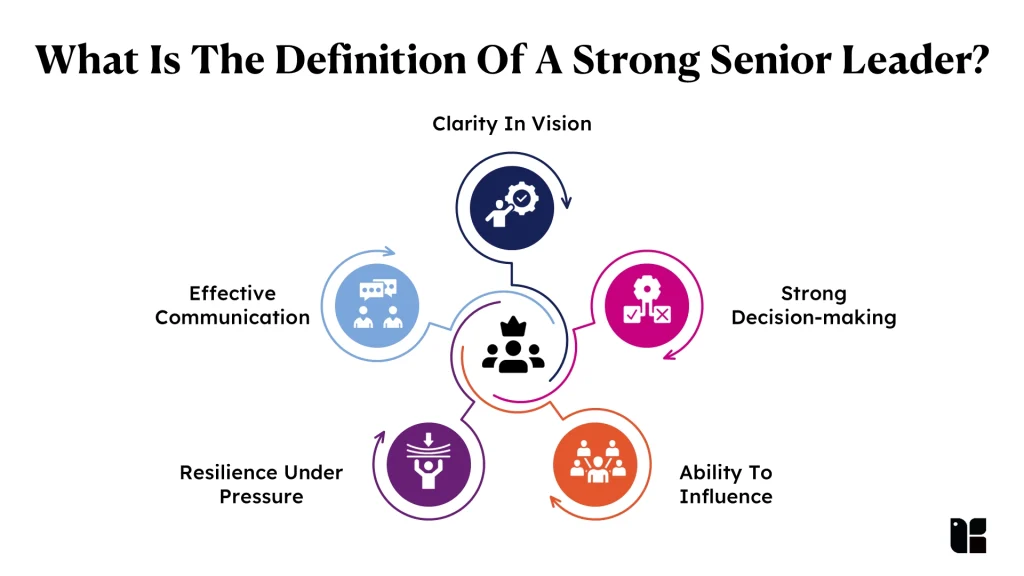
- Clarity in vision: They know where the company needs to go and how to get there. Their long-term perspective helps them make decisions that align with business goals.
- Strong decision-making: They don’t get stuck in uncertainty. They weigh risks, analyse data, and make firm choices that move the company forward.
- Effective communication: Their words shape company culture, set expectations, and ensure alignment across all levels of your organisation.
- Ability to influence: They don’t just direct people; they gain trust and motivate teams to perform at their best.
- Resilience under pressure: They handle crises, setbacks, and challenges without losing focus or confidence.
Every major decision, from business strategy to company culture, rests on their ability to lead with confidence and clarity.

What Are The Core Strengths Of Senior Leaders?
Leaders who truly excel at the senior level have trained themselves to think, decide, and interact in ways that elevate the entire organisation. To do this effectively, they rely on a set of core strengths that define the leadership they possess.
Big-Picture Thinking
A senior leader’s mind works differently from others. While most people focus on their immediate responsibilities, senior leaders process everything through a wider lens. They connect everyday actions to long-term goals and anticipate how decisions today will impact the future.
The ability to think big comes from a deep understanding of patterns. Experience teaches them that business cycles repeat, that industries evolve in certain ways, and that internal changes ripple outward. They stop reacting to short-term problems and start designing strategies that will prevent problems before they arise.
Without this mindset, a leader gets stuck managing rather than leading. Teams end up confused, moving in different directions, and opportunities get missed. Big-picture thinking creates clarity. It aligns departments, keeps the company moving forward, and ensures every decision serves a larger purpose.
Clear Decision-Making
At a senior level, hesitation costs time, and bad decisions cost money. Leaders who make clear decisions know how to get rid of the noise to be able to focus on what matters.
This skill isn’t about being naturally decisive, it comes from training the brain to recognise which details are important and which can be ignored. Senior leaders develop mental shortcuts, recognising patterns from past experiences that help them assess risks and benefits quickly. They don’t get stuck overanalysing because they’ve built a system in their mind for evaluating options fast.
A weak decision-maker causes uncertainty. Teams waste time waiting for direction, and problems escalate while leaders go back and forth. Strong decision-making gives people confidence. It moves things forward, prevents bottlenecks, and keeps the company operating smoothly even under pressure.
Crisis Management
Pressure affects people in predictable ways; some freeze, some panic, and some make reckless choices. Senior leaders develop a mindset where urgency sharpens their thinking rather than clouds it.
This happens because experience rewires their response to stress. Instead of reacting emotionally, they develop a habit of stepping back, assessing the facts, and acting methodically. They know that in a crisis, their response sets the tone for everyone else. If they stay composed, the team stays functional. If they lose control, the organisation follows.
The difference between a strong and weak leader shows most clearly in a crisis. A strong leader keeps the company moving forward when everything seems uncertain. They make hard decisions without hesitation, communicate clearly, and ensure that people focus on solutions rather than problems.
Influence Building
Titles don’t make people listen. Influence does. Senior leaders get things done not by forcing compliance but by shaping how others think and act.
Real influence comes from understanding what drives people. As a leader, you need to know that success depends on building skills and strategies that empower others. Leaders who master this know how to frame ideas in ways that connect with others’ goals and concerns. They listen, they observe, and they use the right words at the right time to gain support.
Without influence, a leader struggles to get buy-in. Employees follow instructions mechanically rather than with real commitment. Departments push back against change. The organisation moves slowly because everything requires force rather than persuasion. Leaders who know how to influence don’t face these issues; they guide people effortlessly because others trust their vision and want to be part of it.
Conflict Resolution
People bring emotions, biases, and personal stakes into disagreements. Senior leaders don’t let conflicts drag down productivity or morale. They step in early, separate emotion from fact, and make sure issues get resolved in a way that strengthens relationships rather than damages them.
What makes them good at this? They understand human behaviour. They know that most conflicts aren’t about the surface issue but deeper frustrations, feeling unheard, misunderstood, or undervalued. They address those underlying problems instead of just patching over symptoms.
Weak leaders avoid conflicts or let them escalate. This creates tension that spreads through teams and damages trust. Strong leaders tackle issues head-on, ensuring that people leave conflicts feeling respected and clear on the way forward. This keeps the workplace functional and focused.
Building Accountability
When senior leaders build accountability, they don’t just enforce rules, they create a culture where people take responsibility on their own.
They do this by making expectations crystal clear. People know exactly what is expected, what success looks like, and what happens if things aren’t delivered. More importantly, they see their leader holding themselves to the same standards.
Without accountability, companies become chaotic. Deadlines slip, work quality drops, and blame replaces problem-solving. Strong accountability keeps everything running efficiently. It makes people take ownership of their work, and it ensures that progress never depends on one or two people carrying the weight of an entire team.
Leading Innovation
Innovation isn’t just about generating ideas, it’s about creating an environment where people feel safe enough to challenge the status quo. Senior leaders set the tone for this.
They recognise that employees won’t take risks if they fear that failure will result in punishment. So, they create a culture where trying new things is encouraged, even if some ideas don’t work out. They don’t shut down unconventional thinking. Instead, they ask, “How could this work?” before dismissing ideas too quickly.
When innovation isn’t prioritised, companies become stagnant. Competitors move ahead, and employees disengage because they feel like their input doesn’t matter. Leaders who drive innovation keep their organisations evolving. They make sure fresh ideas don’t get buried under bureaucracy, and they push the company toward what’s next rather than just maintaining what exists.
People Skills
At a senior level, technical skills matter less than people skills. Leadership is a key skill for senior professionals who aim to develop their team. Leaders who lack emotional intelligence struggle to build trust, communicate effectively, or keep teams motivated.
Emotional intelligence isn’t just about being kind, it’s about being aware. Leaders who have it recognise their own emotional triggers and control them rather than reacting impulsively. They also read other people well. They sense when someone is disengaged, frustrated, or struggling before it turns into a bigger problem.
A leader without emotional intelligence causes unnecessary tension. They misinterpret people’s reactions, struggle with feedback, and fail to motivate their teams. Leaders with this skill create stronger relationships, handle difficult conversations smoothly, and make their employees feel valued.
These strengths don’t come from titles or experience alone. They develop through self-awareness, observation, and learning from mistakes, which allows them to become more effective.
Developing the core strengths of senior leaders requires continuous practice, and Kapable’s development process supports capability building through real workplace experiences.
How Can Leaders Overcome Challenges At The Senior Level?
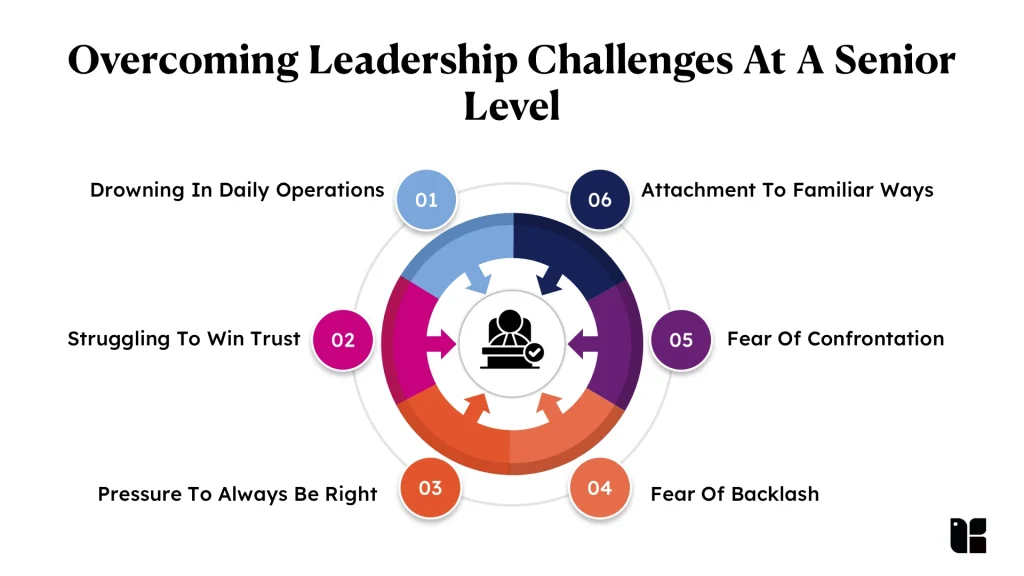
Even the most experienced leaders face challenges that hold them back from growing stronger. Understanding these barriers is one of the first steps toward breaking them.
Drowning In Daily Operations
Senior leaders get stuck in daily tasks and lose focus on bigger goals. They feel responsible for every detail, making it hard to plan long-term. This creates stress and slows down important decisions. They need to delegate and trust their teams. Without this, they stay trapped in short-term problems.
Fear Of Backlash
Leaders worry about upsetting people, so they avoid tough decisions. They fear losing respect or facing criticism. This makes them hesitant to make bold moves. Over time, they become reactive instead of leading with confidence. Strong leadership means making the right choice, even if it’s unpopular.
Pressure To Always Be Right
Leaders feel they must always have the right answers. Admitting mistakes feels like a weakness. This makes them ignore feedback and resist change. It also stops teams from speaking up. When leaders focus on being right, they stop learning and improving. Growth comes from listening, adapting, and letting go of ego. To achieve lasting impact, leaders need to be adaptable, fostering growth with the right mindset.
Attachment To Familiar Ways
46% of employers cite resistance to change as their main barrier to transformation. Many leaders stick to what worked in the past. They fear new ideas might fail. This mindset blocks innovation and progress. Teams feel frustrated when they can’t try new approaches. Leaders need to embrace change or risk falling behind.
Fear Of Confrontation
Some leaders are non-confrontational and avoid difficult conversations to keep the peace. They let issues build up instead of addressing them early. This weakens team trust and leads to bigger problems later. Avoiding conflict doesn’t make it go away, it makes it worse. Strong leaders handle problems directly and fairly.
Struggling To Win Trust
Inconsistent decisions, lack of transparency, or poor communication create doubt. Strong leadership is defined by the type of influence it creates for the people as well as the business. When people don’t trust their leader, they hold back ideas and effort. Building trust takes time, but losing it happens fast. Clear communication, fairness, and follow-through make all the difference.
These challenges don’t mean a leader is failing; they mean there’s room to grow. Recognising these patterns and working through them is what separates great leaders from those who stay stuck.
What Are The Practical Ways To Strengthen Leadership Skills?
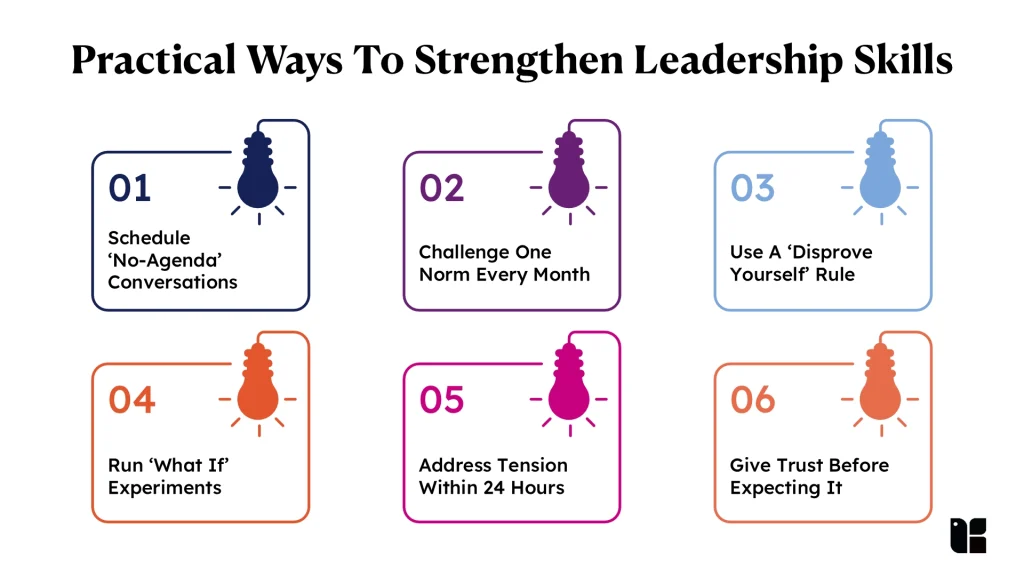
Many senior leaders struggle not because they lack skills but because old habits and daily pressures hold them back. Here’s how you can actively work on strengthening your leadership skills.
Schedule ‘No-Agenda’ Conversations
Don’t wait for structured meetings to connect with your team. Set aside time each week to talk with key people, no fixed agenda, just a check-in. Ask open-ended questions like, “What’s on your mind?” or “What’s frustrating you?” This makes you more approachable and gives you unfiltered insights into what’s really happening in your team. Leaders who do this consistently build stronger relationships and catch issues before they turn into major problems.
Challenge One Norm Every Month
Pick one process, belief, or habit that your team follows without questioning. Ask, “Why do we do it this way?” If the answer is “That’s how it’s always been,” it’s time to rethink. Try small adjustments, measure the impact, and see if it leads to better results. Over time, this builds an environment where change feels normal, not risky. What makes a good leader is his ability to not only guide through change but also empower future leaders to do the same. Teams that embrace this mindset become more innovative and adaptable in the long run.
Use A ‘Disprove Yourself’ Rule
Before making a big decision, list down why you think it’s the right choice. Then, argue against yourself, look for flaws, risks, or alternative perspectives. Ask a trusted colleague to poke holes in your reasoning. If your decision still holds up, move forward with confidence. If not, refine it before acting. This habit prevents overconfidence and ensures more well-rounded decision-making.
Run ‘What If’ Experiments
Instead of waiting for a crisis to test new ideas, run small experiments in low-risk areas. Try a new meeting format, change how feedback is given, or test a different way of handling client requests. If it works, expand it. If it fails, learn from it and adjust. This builds agility in leadership. Leaders who experiment regularly develop a team that’s more open to change and quicker to adapt to new challenges.
Address Tension Within 24 Hours
Whenever you sense unresolved tension, whether it’s between team members or with yourself, commit to addressing it within a day. Have a direct but calm conversation, focusing on facts and possible solutions. Letting things linger makes problems grow bigger than they are. Quick action keeps relationships strong and work flowing smoothly. Leaders who handle tension early prevent resentment and create a culture of honesty and accountability.
Give Trust Before Expecting It
If you want your team to be accountable, take the first step by trusting them. Delegate an important task without micromanaging. Share critical information early instead of waiting for them to prove themselves. When people feel trusted, they take ownership, and accountability follows naturally. Teams that feel trusted perform better, take initiative, and solve problems more independently.
These strategies help you break old habits, make better decisions, and create a culture where people feel engaged and empowered. Start with one and build from there; leadership grows with practice.
Practical leadership development starts with the right learning experience, and Kapable’s fit check helps you see whether the program matches your goals.
“This 3-month journey has been enlightening, as I transitioned from an ambitious manager to an inspiring leader. Applying Kapable’s techniques, I confidently delivered a 30-minute speech at our Annual Planning Session, receiving positive feedback from my team. Kapable has been instrumental in helping me reach my full potential.”
– Sailesh Gadalay (Sr Account Director – Enterprise Sales At Linkedin)
Conclusion
Leadership isn’t about reaching a point where you know it all, it’s about constantly refining how you think, act, and lead. The strongest leaders don’t just rely on experience; they actively work on their strengths and tackle their blind spots. But doing this alone is difficult. Even the most accomplished leaders have mentors guiding them, pushing them to think differently, and helping them grow.
If you want to truly strengthen your leadership, a leadership development program is the best way forward. It gives you the right challenges, insights, and expert guidance to move beyond your current limits. Investing in your leadership isn’t just for your success, it shapes the success of everyone you lead.


