


TL;DR
- Value Creation: Sustainable leadership fundamentally redefines long-term value by balancing economic growth with social and environmental stewardship across the company’s vision and operations.
- Strategic Implementation: The blueprint for success requires transforming the vision into action through strategic integration, incorporating sustainable practices operationally, and driving continuous innovation with stakeholder collaboration.
- Defining Attributes: Effective sustainable leaders are characterised by their ethical foundation, visionary thinking, and strategic, long-term decision-making that drives both innovation and meaningful stakeholder engagement.
- Actionable Framework: Building a sustainability framework involves overcoming common challenges like resistance and resource limits by defining a shared vision, cultivating a focused culture, and tracking measurable goals for accountability.
A recent survey shows that 55% of consumers prioritise environmental responsibility when choosing brands, highlighting the growing demand for businesses to act on sustainability as a competitive advantage. As sustainability becomes a major factor in consumer decisions, corporate leaders must adapt to stay relevant and drive long-term success. This blog will outline key strategies for corporate leaders to integrate sustainability into their operations and make it a core part of their business identity.
What Is Corporate Sustainability Leadership?
Corporate Sustainability Leadership is the ability of business leaders to create long-term value by addressing environmental, social, and economic impacts. A leader’s development relies on collaboration within the supply chain to foster effective growth. It goes beyond an operational strategy, integrating sustainability into a company’s vision, mission, and operations. This leadership approach focuses on balancing business growth with the responsibility to the planet, people, and profits, ensuring success without compromising future generations.

Core Principles Of Sustainable Leadership
Sustainability leadership is rooted in key principles that guide business decisions to create long-term value for both the company and the world. These principles ensure that leaders address the interconnected challenges of profit, people, and the planet.
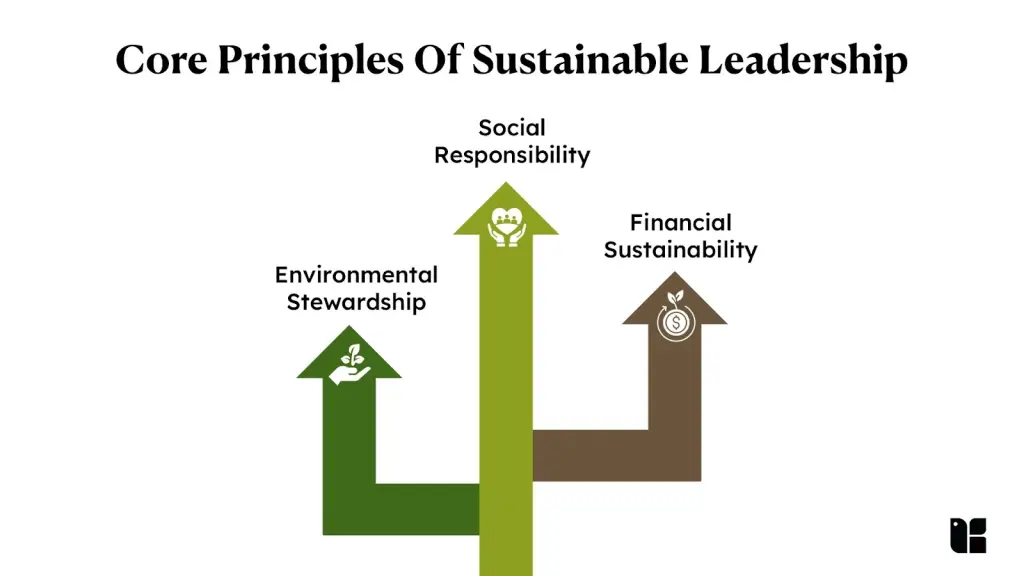
- Environmental stewardship: Leaders reduce their company’s environmental impact by adopting eco-friendly practices, conserving resources, and promoting sustainability in operations.
- Social responsibility: Leaders ensure fair treatment of employees, foster diversity, and contribute positively to their communities through ethical practices.
- Financial sustainability: A sustainable leader balances ethical and environmental goals with financial health, ensuring the company remains profitable while making a positive impact.
Importance Of Sustainable Leadership
Companies that prioritise sustainability are not only contributing to the greater good but are also positioning themselves for resilience and growth. Here’s why sustainability leadership matters:
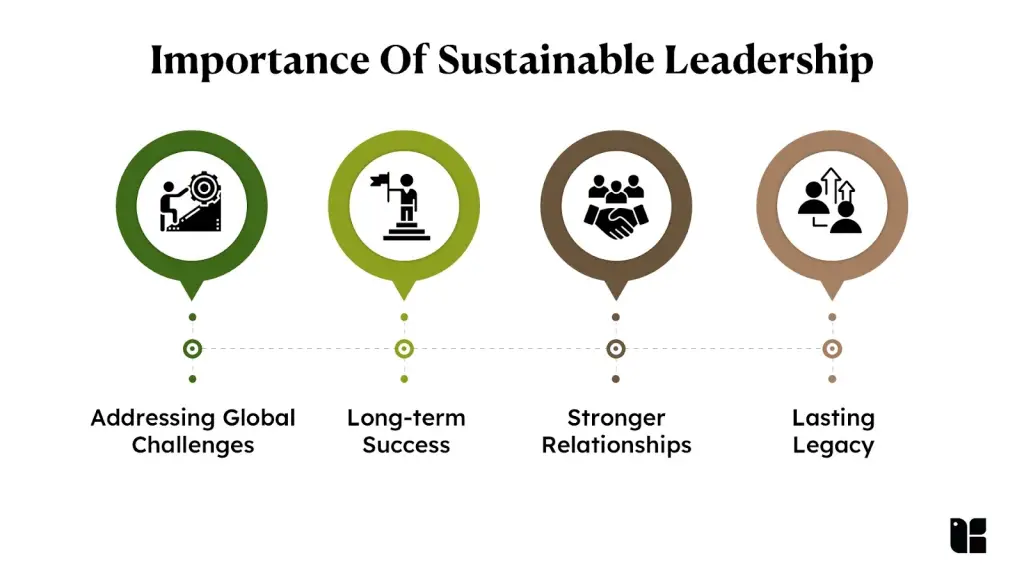
- Addressing global challenges: As climate change and inequality grow, sustainability leadership is crucial for tackling these issues while ensuring business success.
- Long-term success: Companies with sustainability-focused leaders are better positioned for long-term growth, as they build trust with customers, employees, and investors who value ethical practices.
- Stronger relationships: Sustainability leadership strengthens relationships with key stakeholders who prioritise environmental and social responsibility.
- Lasting legacy: By embracing sustainability, leaders create a lasting impact, ensuring that their company grows in ways that benefit both society and future generations.
Which Attributes Define Effective Sustainable Leaders?
Sustainability leaders drive a better future for businesses and the environment. They inspire, innovate, and make decisions that promote sustainability. Here are the key traits of an effective sustainability leader:
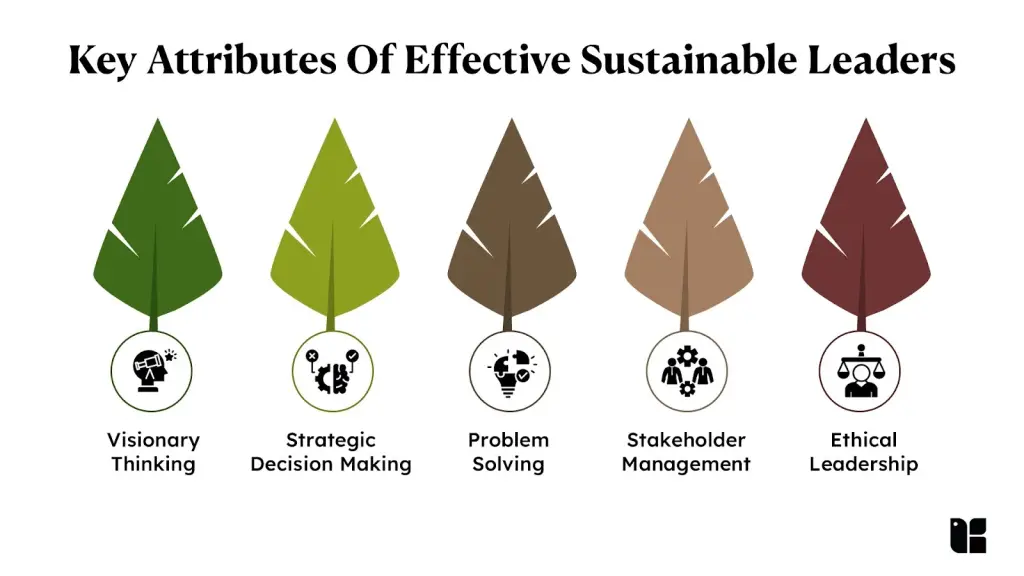
- Visionary thinking: Sustainability leaders might predict challenges and possibilities. They plan ahead of time to ensure that their firm is future-ready, ensuring that both the business and the environment prosper.
- Strategic decision-making: These leaders think in the long run. They make decisions that benefit both the business and the environment, ensuring that every step is in line with a larger, more sustainable purpose.
- Problem-solving: Excellent sustainability leaders are innovative thinkers. When difficulties occur, they create new solutions that cut waste and conserve energy.
- Stakeholder management: Sustainability is a team effort. These leaders bring together individuals from all walks of life like employees, consumers, and even competitors, to work towards a shared objective and make a meaningful impact.
- Ethical leadership: Sustainability leaders are fundamentally ethical. They make judgements with integrity, always putting the environment and society first, and they foster trust by being open and honest.
Building on the key attributes of effective sustainability leaders, the blueprint for corporate sustainability leadership provides a structured approach to implementing these qualities and driving long-term success.
Take a closer look at Kapable’s coaching model that strengthens the leadership skills required to implement sustainable initiatives across teams and organisations.
What Is The Blueprint For Corporate Sustainable Leadership?
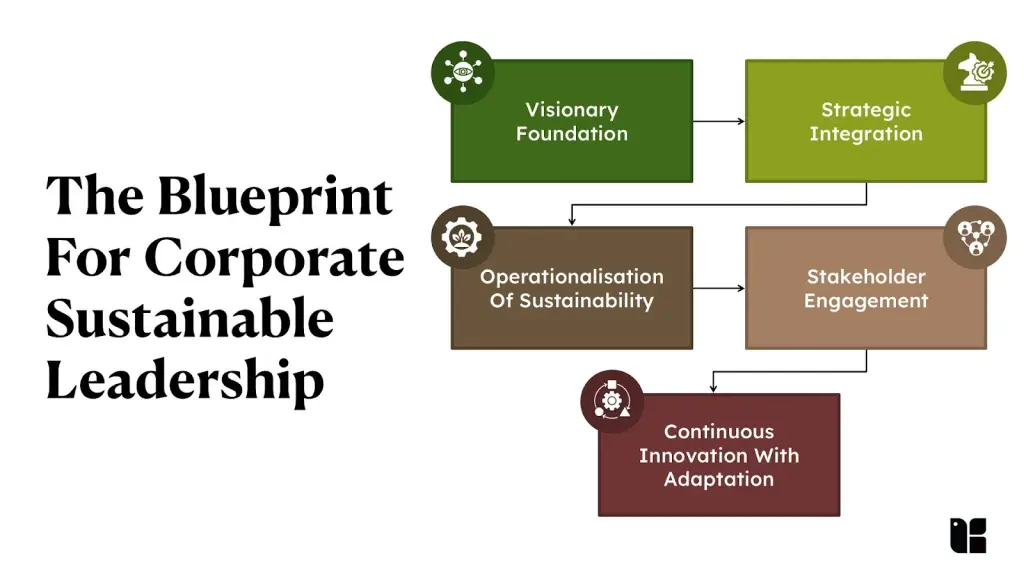
As environmental concerns rise, the blueprint for corporate sustainable leadership helps companies integrate sustainability into operations for lasting impact. The blueprint is as follows:
Visionary Foundation
Sustainability starts with a clear vision that reflects the company’s values and addresses the pressing global challenges we face. Leaders need to create a vision that’s not just a statement but a commitment to the future. Set an ambitious but achievable goal, like reducing your carbon footprint over the next decade. Make this goal visible to everyone in the company so that it drives daily decisions and actions.
Strategic Integration
Sustainability should be a core part of the business strategy, not a separate initiative. By integrating sustainability into operations, every decision considers long-term environmental and social impacts. Prioritise it in strategic discussions, such as new product launches or supplier selection, keeping environmental factors in mind.
Operationalisation Of Sustainability
Sustainability must be embedded in every aspect of the business, from product creation to office operations. To support its mission, leading efforts must take place within the organisation. Go beyond policies and act daily by targeting resource-heavy areas like energy, water, and materials. For instance, adopt energy-efficient lighting or reduce plastic in packaging to minimise waste.
Stakeholder Engagement
Effective communication is crucial for sustainability. Engage employees, customers, and communities through regular feedback sessions and surveys. Use social media to share progress and invite customer participation. Involvement from all stakeholders ensures shared ownership of sustainability goals.
Continuous Innovation With Adaptation
Sustainability evolves, requiring businesses to adapt and embrace new ideas. Attend industry events, engage with innovators, and explore internal initiatives for sustainable solutions. Experiment with sustainable materials or renewable energy sources to stay ahead and create a genuine impact.
Although the blueprint for corporate sustainability leadership outlines a clear path forward, leaders must also navigate the challenges that can arise when trying to implement these strategies in practice.
“Kapable has helped me transform my communication skills, enabling me to speak with clarity and assertiveness. I can now handle team dynamics effectively and confidently team members which is a significant improvement from where I started.”
– Shyam Sundar AM (Team Lead At TCS)
What Challenges Commonly Arise In Corporate Sustainable Leadership?
Managing sustainability in a company presents several difficult obstacles. Here are some typical ones that many leaders encounter, along with strategies for overcoming them:
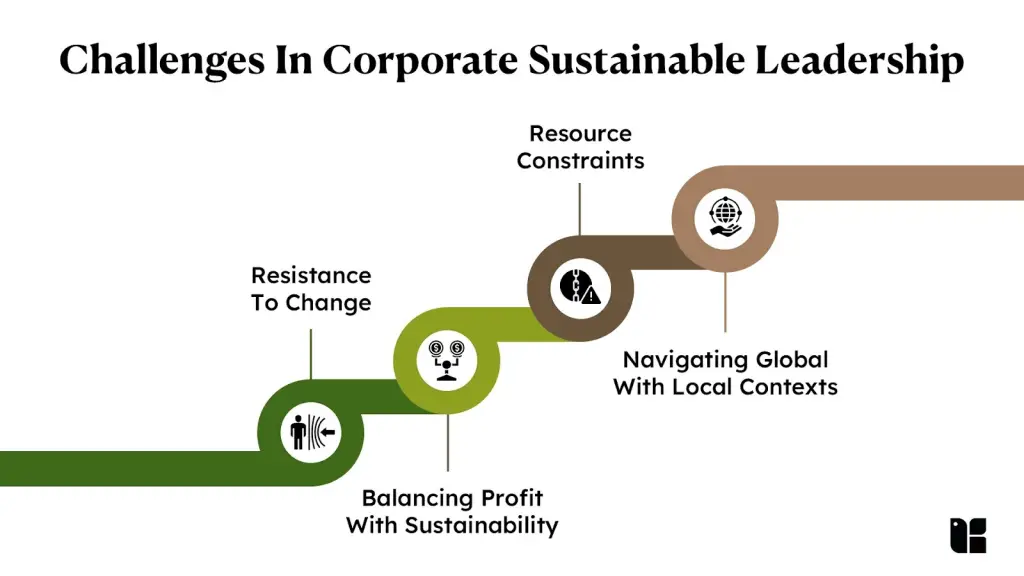
Resistance To Change
Shifting mindsets around sustainability can be challenging, with employees often viewing it as costly or unnecessary. Leaders must demonstrate how sustainability saves money, enhances reputation, and drives growth to gain buy-in and foster alignment.
Balancing Profit With Sustainability
Balancing sustainability goals with profitability can seem tough, but both can coexist. Simple changes, like reducing energy use or offering eco-friendly products, can boost environmental impact while benefiting the business.
Resource Constraints
Limited resources, especially for smaller businesses, can hinder sustainability efforts. Leaders can start with affordable steps like reducing waste or energy consumption and explore grants or partnerships to make initiatives more feasible.
Navigating Global With Local Contexts
Sustainability standards differ across regions, requiring tailored approaches. Leaders should adopt strategies to meet regional needs while staying aligned with global sustainability objectives.
Despite the challenges, corporate sustainability leadership offers a chance to innovate, starting with a clear sustainability framework.
How Can Organisations Build A Sustainability Leadership Framework?
Creating a sustainability leadership framework involves transforming ambitious goals into actionable practices. Here’s how to get started:
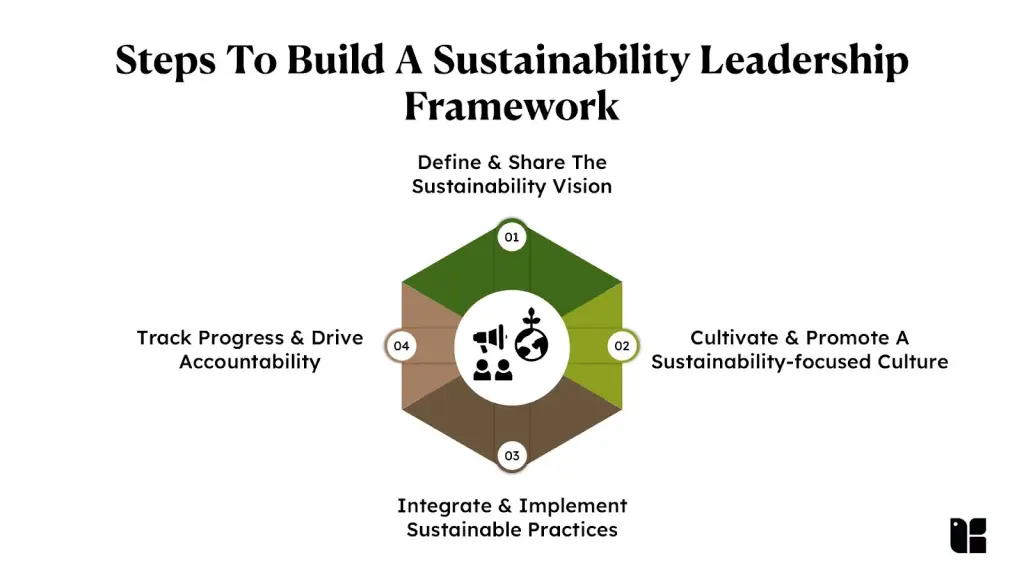
Define And Share The Sustainability Vision
Establish a clear vision for sustainability, such as reducing waste or transitioning to renewable energy. Communicate this vision effectively across the organisation, ensuring employees understand not just the goals but their importance. A shared vision inspires action and fosters alignment.
Cultivate And Promote a Sustainability-Focused Culture
Empower employees to see their role in sustainability by offering tailored training sessions and forming cross-departmental teams for green projects. For example, office staff can adopt paper-saving practices, while production teams focus on waste reduction. A unified culture drives collective efforts.
Integrate And Implement Sustainable Practices
Integrate sustainability into operations by working with eco-friendly suppliers, reducing packaging, or investing in energy-efficient systems. Initiatives like installing solar panels or using circular production models can drive impactful change. Even small steps, such as promoting reusable water bottles, add up over time.
Track Progress And Drive Accountability
Set measurable goals, such as cutting energy use by 20%, and track progress using reliable tools. Share results internally to motivate employees and externally to build stakeholder trust. Regular reporting ensures accountability and drives continuous improvement.
After exploring the key steps, let’s look at a real-life example that illustrates how these strategies can be successfully applied in practice.
Which Real-World Examples Highlight Successful Sustainable Leaders?
Here are two leaders who have made significant strides in integrating sustainability into their business practices:

Paul Polman
Paul Polman, former CEO of Unilever, changed the way the company operates by making sustainability a key focus. He introduced the Unilever Sustainable Living Plan, which aimed to reduce the company’s environmental impact while growing the business. This plan included using sustainable materials, reducing pollution, and improving workers’ conditions. Polman showed that companies can do well financially while also being kind to the environment.
Yvon Chouinard
Yvon Chouinard, the founder of Patagonia, made environmental care a top priority for the company. Under his leadership, Patagonia used eco-friendly materials like recycled polyester and organic cotton. The company also started the Worn Wear program, which encourages customers to repair and reuse their products. Chouinard proved that a business can thrive while being environmentally responsible.
Conclusion
A solid blueprint for corporate sustainability leadership is crucial for long-term success and positive societal impact. Leaders must integrate sustainability into their strategy, aligning it with organisational values. By embracing innovation, collaborating with stakeholders, and maintaining transparency, they can drive meaningful change. Sustainable leadership is about commitment, accountability, and navigating challenges with a clear vision, ensuring the business thrives while making a difference.
If your goal is to build leadership capabilities that create lasting environmental, social, and business impact, Kapable’s program fit can help you evaluate your next step.


