


TL;DR
- Shifting Global Imperative: Globalisation demands a complete shift from local management to steering international, cross-cultural teams, necessitating a culturally sensitive and flexible leadership style.
- Managing Cross-Cultural Hurdles: Leaders face significant hurdles like balancing varying work styles, navigating complex, culturally-influenced decision-making processes, and combating issues like time zone difficulties and cultural fatigue.
- Prioritising Strategic Focus: Effective global leadership prioritises key focus areas such as establishing clear, trusted virtual leadership structures and adopting transformative communication and inclusive decision-making across regions.
- Enhancing Team Cohesion: To enhance management, strategies include standardising communication protocols, implementing flexible work policies, promoting cultural richness, and encouraging local autonomy.
30% of U.S. companies admit they have missed out on international business opportunities due to a lack of internationally competent personnel. The reality is that without the necessary skills and awareness, you may find your business falling behind, missing out on valuable insights and innovations that a diverse team can provide. Understanding and adapting to these leadership challenges is crucial for achieving future success.

How Globalisation Is Shaping Leadership Practices?
Globalisation has drastically shifted how businesses operate. Companies are no longer confined to local markets; they’re reaching across borders, interacting with diverse cultures, navigating different laws, and managing operations in various time zones. Leaders today face challenges that go beyond the traditional scope of leadership. It’s no longer just about managing people in one office; it’s about steering teams that span countries.
This involves understanding local regulations, economic policies, and market trends. But perhaps more importantly, leaders now work with teams that come from various cultural backgrounds, each bringing different values, beliefs, and communication styles to the table. What works in one country may not work in another. For example, a direct communication style that might be appreciated in one region could be seen as too aggressive in another. Teams are often spread across multiple time zones, which makes communication and coordination even trickier.
With these new dynamics, leadership practices must adapt. Traditional leadership styles that worked well in a local setting may no longer be effective in a global context. Leaders now need to be culturally sensitive, adjusting their management style to suit different cultural norms. This might involve being more patient with indirect communication or adjusting meeting times to accommodate team members from different time zones.
Leadership used to be more about top-down decision-making. But with global teams, collaborative leadership becomes much more important. Leaders need to encourage a sense of inclusion so that team members from different cultures feel comfortable contributing. Empowering employees to take ownership of their roles is also essential when managing remote or international teams. Market conditions and regulations can change quickly from one region to another. Leaders must be able to shift their strategies and adjust plans as needed, demonstrating flexibility. This might mean modifying approaches for different markets or being ready to solve unexpected challenges that come with global operations.
Leaders who can adapt their style to this new reality will be better prepared to lead effectively on a global scale.
Globalisation is changing leadership by making adaptability and collaboration more important than ever. Kapable prepares professionals to thrive in this evolving landscape.
What Are The Main Challenges In Cross-Cultural Management?
Leading teams across borders introduces a new set of challenges that leaders must navigate carefully to ensure smooth operations and team cohesion.
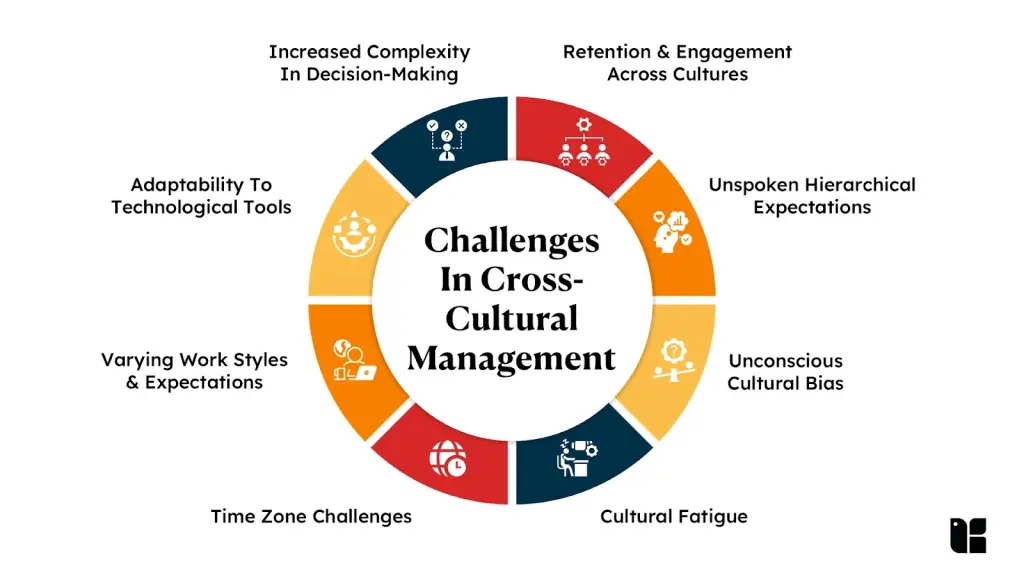
Increased Complexity In Decision-Making
In global teams, decision-making often becomes a longer process. Leaders have to weigh inputs from multiple perspectives, each influenced by different cultural norms. What might be a straightforward decision in one country can become a complicated discussion in another due to varying opinions on authority, risk-taking, or collaboration. This can lead to delays or confusion if not managed properly.
Varying Work Styles And Expectations
Not everyone approaches work the same way. In some cultures, employees might prefer detailed instructions and clear guidance, while in others, there’s a stronger expectation for autonomy. A leadership style that is too hands-on may feel micromanaging to some, whereas too much independence can leave others feeling unsupported. Balancing these different expectations is a constant challenge.
Unspoken Hierarchical Expectations
In some cultures, leadership is expected to be authoritative and directive, while in others, it’s more collaborative. These unspoken hierarchical norms can cause friction, especially if a leader is unaware of how their leadership style is being perceived. A leader who is too democratic may be seen as weak in some contexts, whereas an authoritative approach might alienate team members in others.
Adaptability To Technological Tools
Different regions may have varying levels of comfort and familiarity with technological tools. A platform that’s popular and easy to use in one country might be unfamiliar in another, leading to frustrations or slower adoption. There is a need to recognise and bridge these gaps without assuming that everyone is on the same page.
Time Zone Challenges
When teams are spread across continents, coordinating meetings or deadlines becomes a logistical puzzle. The challenge of finding a middle ground that works for everyone often means someone has to sacrifice their personal time. Beyond that, real-time communication can be impossible, leading to delays in decision-making or response times.
Unconscious Cultural Bias
Leaders may not realise it, but unconscious biases can sneak into decisions or interactions. For instance, favouring employees from similar cultural backgrounds or assuming that everyone shares the same professional norms can harm team dynamics. These biases can create an unfair work environment and damage trust, often without leaders even being aware.
Cultural Fatigue
Constantly adjusting to different cultures can be draining, not just for leaders but also for employees. Over time, this “cultural fatigue” can lead to misunderstandings, frustration, or even burnout. For leaders, managing their own energy while staying sensitive to the team’s emotional state becomes an extra layer of responsibility.
Retention And Engagement Across Cultures
Research shows that companies that actively implement diversity and inclusion (D&I) efforts can increase employee retention rates by 2.6 times. Leaders who fail to recognise this may struggle to retain top talent, particularly in global teams where one-size-fits-all solutions don’t work. Without tailored strategies, D&I initiatives may fall short, leaving leaders with high turnover and disengaged employees.
Leaders must be proactive, flexible, and continually aware of these dynamics to successfully navigate cross-cultural management.
“Kapable helped me overcome my fear of spontaneous speaking and taught me to balance diplomacy with assertiveness, ensuring my voice is heard. I now communicate with confidence and clarity, a transformation that has made a remarkable difference in my journey.”
– Anupam Bajaj (Design Head At SAMSUNG)
Which Areas Should Global Leaders Prioritise In Cross-Cultural Settings?
As global leadership evolves, certain areas demand immediate and practical action. Here are five crucial areas where global leaders need to focus to address the challenges effectively.
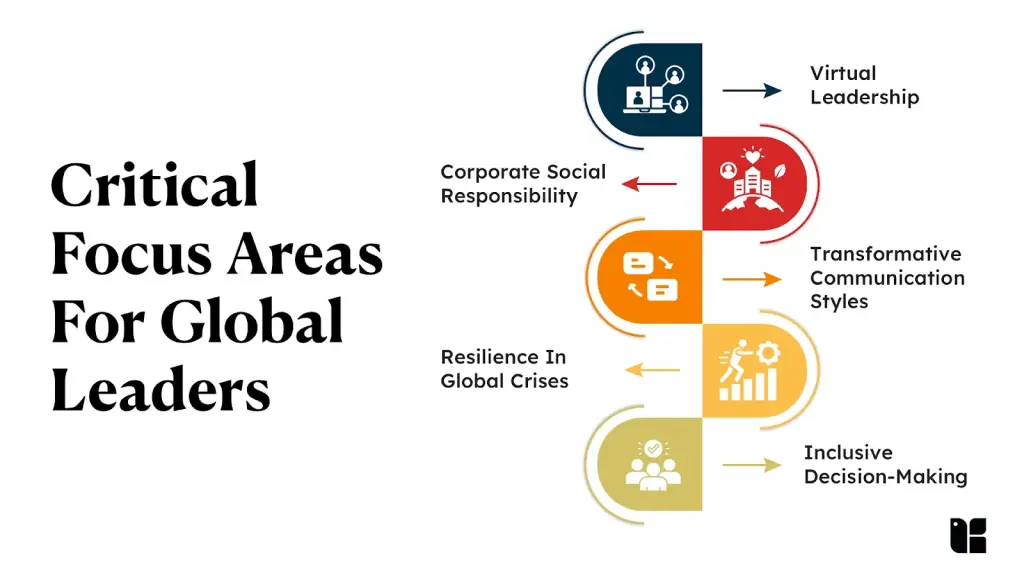
Virtual Leadership
To manage virtual teams effectively, leaders must adopt practices that prioritise clarity and trust. Leaders should set up clear goals and accountability structures that can be tracked globally. Use key performance indicators (KPIs) that apply across regions, ensuring that all team members, regardless of location, are working toward the same outcomes. Leaders can delegate regional heads to monitor progress and adjust plans based on local challenges, while still adhering to global standards.
Corporate Social Responsibility
Leaders must proactively integrate CSR into their global operations by setting clear, measurable goals for sustainability and ethical behaviour. This involves engaging with local communities to understand their needs and expectations, ensuring your company’s actions align with their values. Regular audits and transparent reporting of CSR initiatives help maintain accountability. Empowering employees to act as CSR ambassadors within their regions also ensures that the organisation remains committed to its social responsibility across borders.
Transformative Communication Styles
Global leaders need to actively adapt their communication strategies based on cultural differences. This means assessing the communication preferences of each region, whether direct or indirect, and tailoring messages accordingly. Leaders should also encourage feedback from team members about communication methods and make adjustments to ensure all voices are heard, regardless of location or cultural background.
Resilience In Global Crises
Leaders must build contingency plans that cover potential global disruptions, from political changes to economic shifts. This starts with regularly assessing global risks and scenario planning with regional leaders. Ensuring open channels of communication across regions helps circulate information quickly during crises. Training teams on crisis response and regularly updating them on evolving global risks can help them react quickly and effectively. Leaders should also establish emergency support systems, such as local crisis management teams, to handle issues swiftly in specific regions.
Inclusive Decision-Making
For global leaders, involving regional leaders and team members in the decision-making process is essential. This requires setting up structured feedback loops, such as surveys or regular team forums, to gather input from diverse groups. Make use of cross-functional and cross-regional committees to ensure decisions reflect global needs. Creating a culture where ideas are openly shared and respected, regardless of hierarchy, ensures that decisions are informed by diverse perspectives, leading to better outcomes.
By taking these concrete steps, global leaders must address the most pressing issues that can navigate the complexities of leading in this connected world.
What Strategies Can Enhance Cross-Cultural Management?
Effective cross-cultural management requires leaders to adopt specific strategies that address the unique challenges of global teams.
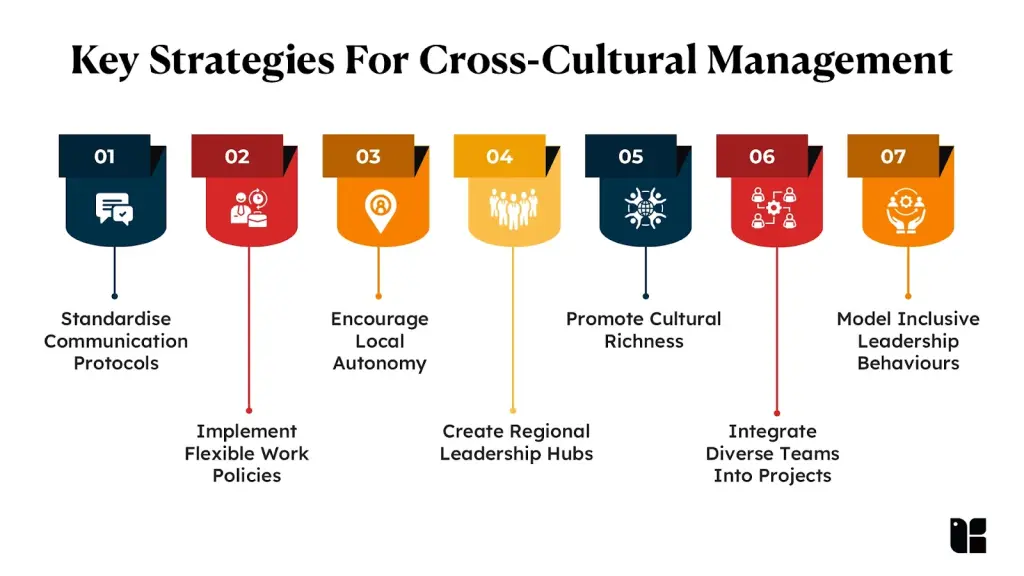
Standardise Communication Protocols
Establish clear communication protocols that are easy to follow and accessible to everyone on the team. This can include setting specific guidelines for email etiquette, virtual meeting practices, and response times. Leaders should also promote the use of simple, clear language to minimise confusion, especially in teams where English is not the first language.
Implement Flexible Work Policies
Recognise and accommodate different cultural attitudes toward work-life balance. Implement flexible work policies that allow team members to adjust their schedules according to their cultural norms or personal commitments. This may involve setting core hours where all team members are expected to be available, while still allowing flexibility outside those hours.
Encourage Local Autonomy
Allow regional teams to take charge of decisions that affect their markets. This means giving them the freedom to adapt global strategies to fit local contexts, which can lead to more effective solutions. Leaders must trust the local managers to understand their teams and customers best. By fostering a sense of ownership and accountability, they can motivate employees and drive better outcomes tailored to specific cultural needs.
Create Regional Leadership Hubs
Global leaders should invest in leadership development programs that equip regional managers with the skills needed to reflect and promote the company’s global values while addressing local needs. Training programs should focus on managing cross-cultural teams, promoting inclusivity, and ensuring the company culture is consistent worldwide.
Promote Cultural Richness
Take deliberate actions to promote and showcase the cultural diversity within the team. This not only builds a sense of community but also positions the organisation as a culturally inclusive workplace that attracts top talent. About 76% of job seekers and employees believe that a diverse workforce is important when evaluating job offers. Highlighting these initiatives on company platforms can enhance the employer brand.
Integrate Diverse Teams Into Projects
By integrating individuals from different cultural backgrounds into project teams, leaders organically encourage collaboration and relationship-building. This not only enhances the project outcomes through varied perspectives but also helps team members form strong connections as they work towards common goals.
Model Inclusive Leadership Behaviours
Research indicates that employees from organisations that fail to prioritise inclusion and diversity scored only 63 in satisfaction, while those from organisations that do scored 75. But employees are only more likely to engage when they see leaders exemplifying inclusive behaviours in their everyday interactions, such as actively listening to team members, recognising individual contributions, and ensuring everyone has a chance to speak during discussions.
By implementing these targeted strategies, global leaders can effectively manage cross-cultural teams, fostering collaboration, respect, and understanding across borders.
Conclusion
To truly respond to global shifts, leaders must focus on building a team that thrives on flexibility and proactive problem-solving. This means investing time in understanding team dynamics and individual strengths, allowing for roles to shift based on the demands of the moment. Encouraging team members to share insights from their unique cultural perspectives can uncover innovative solutions that might otherwise be overlooked. Furthermore, implementing regular feedback loops can help the team adjust its strategies quickly. By creating an atmosphere where adaptability is second nature, organisations position themselves not just to react to change, but to anticipate it, turning potential challenges into opportunities for growth and success.
Global leadership demands more than technical expertise; it requires strong people skills. Kapable helps professionals evaluate whether its approach supports that growth.


