


TL;DR
- Impact and Alignment: Effective leadership communication acts as the core driver for team action and morale, moving past simple instruction to create alignment and full commitment to the vision by explaining the crucial ‘why’ behind decisions.
- Pillars of Clarity: The basis of powerful communication rests on simplicity, ensuring messages are understood at all levels; consistency across all delivery channels; and active listening to address the genuine concerns of the audience.
- Influence of Trust: A leader’s message gains true weight not from their title, but from their credibility, which is constantly built through honest actions, demonstrated expertise, and a commitment to backing statements with evidence.
- Message Mastery: Creating a truly compelling message requires deep audience understanding, including their psychographics and preferred delivery, while mastering elements like matching tone, using selective transparency, and framing the message with actionable language.
A 25% boost in productivity can be achieved through effective communication when teams are connected and aligned, as revealed by a McKinsey study. Picture what that would mean for your organisation: fewer miscommunications, less time spent clearing up confusion, and more time focused on achieving goals. Communication often goes overlooked in many companies, particularly smaller ones. But just think about the impact a 25% increase in productivity could have on your business.
What Is The Impact Of Effective Leadership Communication?
Effective leadership communication goes beyond delivering instructions or sharing information; it directly shapes how a team thinks, feels, and acts. Communication is not just about saying the right words; it’s about understanding your audience, delivering the message in the simplest way possible, and ensuring that it inspires action.
Leaders who communicate clearly and with purpose can influence everything from employee morale to business outcomes. Your words, tone, and body language set the stage for how your team interprets challenges, embraces change, or rises to new opportunities. When leadership communication is strong, it creates alignment and drives focus toward shared goals.
One of the most tangible impacts of clear communication is its role in decision-making. Leaders who explain the “why” behind decisions help employees understand the bigger picture, making it easier for them to commit fully to the vision. This also reduces the chances of misunderstandings or resistance down the road. When communication lacks clarity, though, it often leads to confusion, wasted time, and missed opportunities.
Effective leadership communication rests on a solid foundation built from essential elements that leaders must master. Let’s break down the key elements that ensure your message resonates and creates real impact.

What Is The Foundation Of Clear Leadership Communication?
Clear leadership communication lies in these three pillars: simplicity, consistency, and active listening. Leaders who communicate clearly know that overly complex messages lead to confusion, not clarity. Getting to the point quickly and efficiently helps ensure that their message is understood at all levels of the organisation.
Whether you’re speaking to your executive team, middle managers, or frontline staff, the message should align across the board. Mixed signals or contradictory instructions can erode trust and create confusion. Leaders must ensure that their communication remains consistent in all formats, whether through emails, meetings, or even informal chats.
Equally important is active listening. Communication is a two-way street, and clear leadership communication involves understanding the needs and concerns of your audience. Leaders who take the time to listen, not just speak, are better equipped to address problems early and make decisions that have wide support.
As you develop your messages, consider these questions:
- Would someone outside the room understand this? If your message landed in the hands of someone who wasn’t in your meeting, would they grasp the key points without needing a translator?
- Could this message be misread? Have you left any room for interpretation that could lead to confusion or conflicting actions?
- Am I speaking to my team’s reality or just my own perspective? Are you addressing what matters most to them, or are you assuming they see things the same way you do?
- Will this inspire action or just check a box? Is your message pushing your team to think differently or act decisively, or is it simply an update that will be forgotten by lunchtime?
But no matter how clear your message is, without trust and expertise, it risks falling flat. Let’s see how credibility and expertise shape the impact of every communication you make.
The best leaders are often remembered for how clearly they communicate, not just what they achieve. At Kapable, professionals strengthen communication skills that inspire alignment and action.
How Do Credibility And Expertise Influence Leadership Communication?
When leaders speak, it’s not just the content of their message that matters; it’s how much their team believes in them. Credibility is built over time through consistent actions, reliable decisions, and demonstrated competence. People don’t follow leaders because of their title alone; they follow leaders they trust to know what they’re talking about and who can deliver results.
Leaders who are genuine, who admit when they don’t have all the answers, and who show they are committed to learning, earn more respect. Teams can sense when a leader is being transparent or when they’re trying to fake expertise. Pretending to know something often erodes trust faster than admitting a gap in knowledge. Genuine leaders strengthen credibility by being honest, which boosts confidence in their long-term vision.
A leader might have a brilliant strategy, but if their team doesn’t trust their judgement or see them as an authority, the message won’t stick. The most effective leaders build expertise through knowledge and credibility through action; together, they form a foundation that gives weight to every word spoken.
Here’s how you constantly build credibility and expertise with your communication:
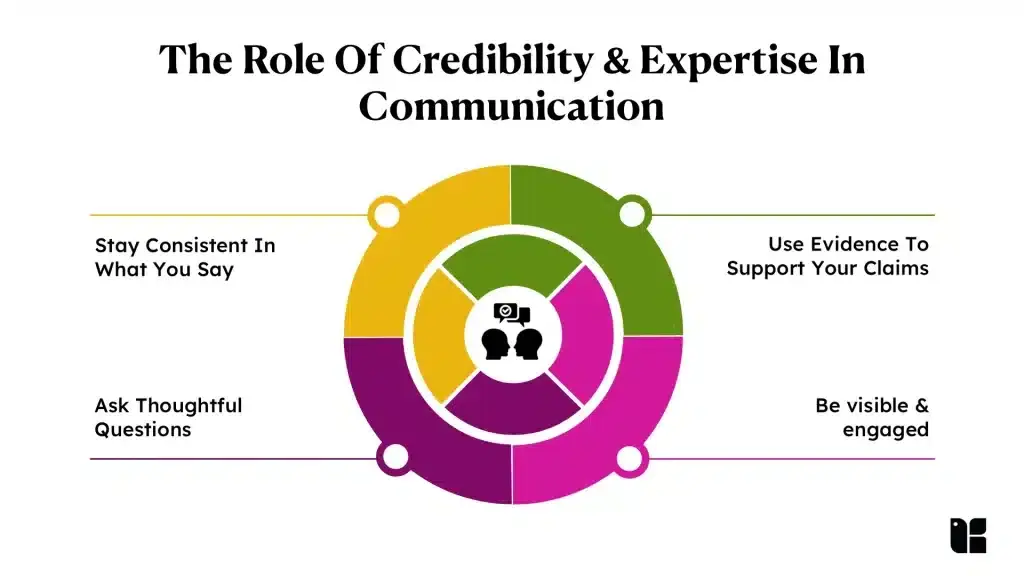
Stay Consistent In What You Say
Credibility is built through consistency. If you say you’ll follow up on something or lead a project a certain way, make sure you do it. Over time, these small acts of consistency build up into a reputation for reliability.
Use Evidence To Support Your Claims
Whenever possible, back your statements with data, facts, or relevant examples. This reinforces your message, showing that it’s not just opinion, but rooted in research and experience.
Ask Thoughtful Questions
Leaders who ask the right questions show that they are actively thinking and engaging with the topic at hand. Thoughtful questioning also demonstrates your interest in others’ viewpoints and helps to surface important insights that can guide better decision-making.
Be Visible And Engaged
Credibility grows when you’re actively involved in your team’s work. Regularly engage in meetings, offer insights, and show that you’re aware of what’s happening on the ground. This demonstrates you’re in tune with both the big picture and the day-to-day challenges.
This way, you not only strengthen your credibility but also solidify your reputation as a leader who is reliable, knowledgeable, and trustworthy. When your expertise and actions align with your words, your communication gains true influence, empowering your team to follow your lead with confidence and commitment.
What Are The Key Elements Of Leadership Communication?
Let’s explore the key factors that separate ordinary communication from leadership-level communication:
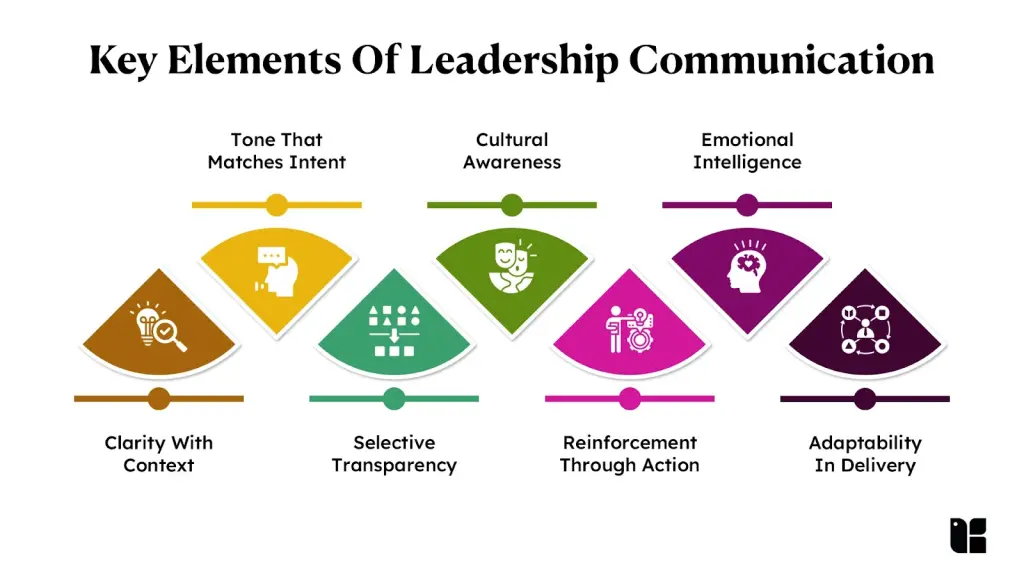
- Clarity with context
Clarity is important, but without context, even the simplest message can fall flat. Leaders who provide the “why” behind their words help their teams connect the dots. It’s not just about what’s said, it’s about ensuring people understand the bigger picture that frames your message. - Tone that matches intent
How you say something can matter more than the words themselves. Leaders who master tone, whether calm in a crisis or energised during a pitch, make their message resonate. The right tone signals confidence, empathy, or urgency, giving your message extra weight. - Selective transparency
Not everything needs to be shared, but offering selective transparency builds trust. When leaders reveal the right amount of information, such as admitting challenges or acknowledging uncertainties, they create an environment of openness that strengthens team loyalty without overwhelming them. - Cultural awareness
A message that works in one region may be misinterpreted in another. Savvy leaders adapt their communication to respect cultural differences within their teams, understanding that small shifts in wording or approach can make or break how a message is received globally. - Reinforcement through action
Words are powerful, but they lose value if they aren’t backed by action. The most effective leaders communicate through what they do just as much as what they say. Following through on your promises or aligning your behaviour with your message reinforces your leadership credibility. - Emotional intelligence
Leaders who are in tune with their own emotions and the emotions of others communicate with greater impact. Recognising when your team feels overwhelmed or uncertain and adjusting your message accordingly makes communication feel human and relatable, rather than mechanical. - Adaptability in delivery
Not every message fits every situation. Leaders who can shift their communication style, whether it’s being direct during a crisis or more collaborative during brainstorming, show flexibility. This adaptability ensures that the message resonates no matter the context or audience.
By mastering these elements, leaders can go beyond simply delivering a message; they can create clarity, inspire action, and build trust across their teams.
“I knew I had to overcome my fear of being judged on how I speak. Kapable’s sessions helped me organise my thoughts and articulate them clearly. I now confidently present ideas and communicate effectively with my team and external partners, creating a remarkable change in my workplace.”
– Anandi Kapoor (Private Label Head At KW)
Which Strategies Help Craft A Compelling Leadership Message?
Creating a compelling leadership message requires clarity and intent. Here are the strategies to ensure your message resonates, drives results, and enhances team engagement.
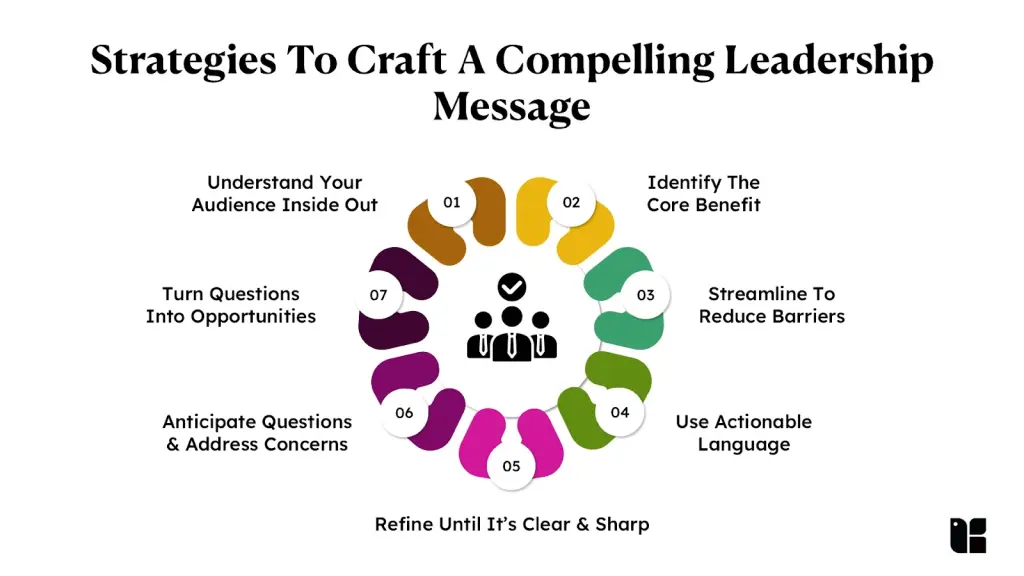
Understand Your Audience Inside Out
Gather insights about your team’s preferences, challenges, and aspirations through surveys or one-on-one conversations. Use this information to tailor your message directly to their interests and needs. When team members feel understood, they are more likely to engage actively with your message. This connection fosters a sense of belonging, making them more receptive to your ideas and initiatives.
Identify The Core Benefit
Before crafting your message, pinpoint the main benefit for your audience. Ask yourself, “What’s in it for them?” Make this benefit the focal point of your communication to ensure it captures attention. By highlighting the core benefit, your team can see the value in your message. This clarity motivates them to take action, knowing how it impacts their work and contributes to overall goals.
Streamline To Reduce Barriers
Eliminate jargon and unnecessary details. Focus on a few key points that are easy to digest. Use bullet points or short sentences to present information clearly, making it more accessible for your audience. A streamlined message minimises confusion and allows your team to grasp key points quickly. This efficiency can lead to quicker decision-making and a sense of empowerment among team members, as they feel equipped to act.
Use Actionable Language
Use clear verbs and phrases that prompt action. Instead of saying, “We should consider improving productivity,” say, “Let’s implement daily check-ins to boost productivity.” This directs your team toward specific steps they can take. When your message is actionable, team members are more likely to take ownership of tasks. Clear direction fosters accountability, leading to increased productivity and a stronger sense of purpose.
Refine Until It’s Clear And Sharp
Review your message multiple times. Read it aloud to catch any awkward phrasing. Ask a colleague for feedback to ensure your message is straightforward and free of ambiguity. A well-refined message shows professionalism and respect for your audience’s time. Team members appreciate clarity and are more inclined to engage deeply with the content when they can easily understand it.
Anticipate Questions And Address Concerns
Think ahead about what questions your audience might have. Include answers directly in your message. For example, if you’re proposing a new initiative, briefly address potential concerns about resources or timelines. By proactively addressing concerns, you demonstrate empathy and foresight. This approach reassures your team that their worries are acknowledged, leading to a more supportive environment.
Turn Questions Into Opportunities
Use questions as a springboard for discussion. Encourage your team to share their thoughts and concerns during meetings. Responding positively to feedback can lead to new insights and foster a collaborative atmosphere. Encouraging dialogue shows that you value your team’s input, boosting morale and ownership. When team members feel heard, they are more likely to contribute ideas and solutions, creating a dynamic and innovative team culture.
By implementing these strategies, you’ll craft messages that not only engage your team but also drive meaningful action and results.
How Can Leaders Create Their Own Compelling Message?
Creating a compelling leadership message goes beyond the basics; it’s about understanding your audience deeply and presenting your ideas in a way that resonates and inspires action. Here are some innovative strategies to help you craft a message that stands out:

Know Your Audience’s Psychographics
Dig deeper than demographics, understand your audience’s values, beliefs, interests, and motivations. Use surveys or informal chats to gather insights about what drives them. Create a simple questionnaire that explores their passions or concerns related to work. Analyse them to tailor your message to their psychological needs. This approach makes your message feel more relevant and personal, enhancing connection and engagement.
Understand Communication Preferences
Identify how your audience prefers to receive information, whether through visuals, stories, or data-driven facts. Observe their reactions in past meetings or use quick polls to find out their preferred styles. Adapt your message accordingly. By aligning your communication style with their preferences, your message will be received more positively and effectively.
Frame The Hero’s Journey
Structure your message like a hero’s journey, where you introduce a relatable challenge and illustrate how it can be overcome. Start with a common challenge your team faces, describe the obstacles, and showcase how working together can lead to success. This narrative style makes your message compelling and encourages your audience to see themselves as part of the solution.
Present Conflict And Resolution
Highlight a specific conflict relevant to your audience, and explain how addressing it can lead to a resolution. Use case studies or hypothetical scenarios that mirror your team’s challenges. Break down the conflict and outline the steps to resolution clearly. This approach not only creates urgency but also engages your audience’s problem-solving instincts, making them more likely to act.
Use Humour Strategically
Incorporate humour to lighten the mood and make your message more memorable. Use it sparingly to avoid distraction. You could share a light-hearted anecdote related to the topic at hand or a funny observation about a common workplace experience. Well-timed humour makes a positive atmosphere and makes your message stick, encouraging your audience to remember your points.
Hold Breakout Sessions
Break your audience into smaller groups to discuss parts of your message or brainstorm ideas. This creates a more interactive experience. After presenting your key points, divide your audience and give them specific questions to discuss. Regroup to share insights. Breakout sessions encourage participation, making your message more dynamic and engaging while also generating valuable feedback.
By implementing these strategies, you’ll develop a sense of collaboration and engagement within your team. Your message will resonate more deeply, leading to stronger connections and inspiring action.
Conclusion
Achieving collaboration through clear communication of your leadership message starts with establishing psychological safety, where team members feel comfortable sharing their ideas without fear of judgment. Leaders can achieve this by actively inviting input from all members, demonstrating genuine interest in their contributions. Additionally, utilising collaborative tools like shared documents and communication platforms can streamline discussions and make information accessible to everyone. Regular check-ins, whether formal or informal, can help maintain momentum and clarity around team goals.
The ability to communicate effectively can shape every stage of your leadership journey. See whether Kapable is the right fit for your professional growth.


