


TL;DR
- Transformation Over Control: Effective corporate leadership has shifted from a top-down focus on financial results to an inclusive, collaborative, and adaptable approach that prioritises empathy and social impact alongside business growth.
- Complex Challenges Ahead: Leaders are grappling with high competition for skilled talent, the rapid pace of technological change, maintaining culture across hybrid workforces, and making critical decisions amidst global economic volatility.
- Emerging Strategic Imperatives: Modern leadership requires a commitment to measurable DEI initiatives, a heightened focus on mental well-being, the ethical integration of AI for informed decision-making, and treating ESG as a core business priority.
- Crucial Skills for Success: The most valuable skills today are strategic execution, proactive problem-solving, situational awareness of market and organisational health, and consistently boosting workforce engagement and operational efficiency.
With the Union Budget 2025 set to shape corporate strategies, businesses are bracing for major shifts in skill development, AI, and sustainability. As industries prepare for new investments in digital infrastructure and green technologies, leaders must rethink how they build agile, future-ready teams. Keeping up is the only way to stay competitive.
What Defines Corporate Leadership In Today’s Business World?
Corporate leadership has undergone a significant transformation over the last few years. In the past, the primary focus for leaders was often on financial results, with a top-down approach that emphasised control and hierarchy. However, today’s corporate environment requires more adaptable leaders. The rise of technology, changing workforce demographics, and an increased focus on sustainability and diversity have reshaped what effective leadership looks like.
Leaders are now expected to drive not only business growth but also innovation with a collaborative work culture and make decisions that benefit both the bottom line and society. Empathy, communication, and agility have become just as important as traditional business acumen, if not more so.
Moreover, leadership today is no longer confined to the C-suite. Middle managers and even team leaders are being asked to step up and take on more responsibility, often without the traditional leadership training. This shift requires a new understanding of leadership, one that is inclusive, transparent, and grounded in continuous learning.
A leader needs the ability to make strong decisions and guide others to success. Insights and experiences shape their approach to be effective and inspiring. As a leader, it’s crucial to do what drives growth and inspires teams. Of all leadership traits, those likely to succeed show genuine interest in development.

What Are The Biggest Challenges Facing Corporate Leaders In 2025?
Corporate leaders today face several pressing issues that are reshaping how they manage teams, operations, and growth. Below are some of the most significant hurdles leaders will face in 2025:
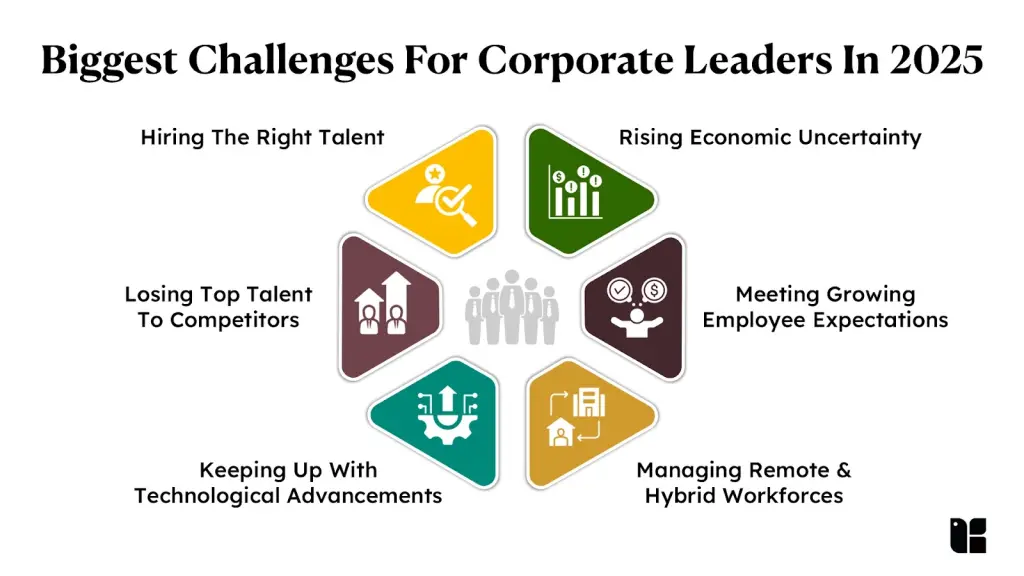
Hiring The Right Talent
Recruiting skilled talent is becoming increasingly difficult. The job market is competitive, with fewer people available for key roles. Companies must work harder to stand out to potential candidates, offering not only attractive salaries but also appealing work cultures. The challenge is in reaching the right talent while competing against other businesses with similar needs.
Losing Top Talent To Competitors
Retention is a major issue. Once talent is brought in, keeping them is not guaranteed. Employees are leaving for better opportunities, higher salaries, or more fulfilling roles elsewhere. The challenge lies in providing an environment where employees feel valued, connected to the company’s mission, and motivated to stay long term.
Keeping Up With Technological Advancements
Technology is changing rapidly, and it’s a challenge for leaders to ensure their teams can adapt. New tools, software, and automation are becoming necessary for competitiveness, but there’s a constant need for training and upskilling. Companies face the challenge of staying ahead while avoiding overwhelm for their employees, who might struggle to keep up with the pace.
Managing Remote And Hybrid Workforces
With remote and hybrid work being the new norm, leaders face challenges in maintaining communication, engagement, and productivity. It’s harder to build team culture when employees aren’t physically present in the office. Managing a workforce across different time zones and ensuring that everyone is on the same page without feeling disconnected is a growing issue for many organisations.
Rising Economic Uncertainty
Unpredictable economic conditions are making it difficult for leaders to plan long-term. Inflation, budget cuts, and market fluctuations create uncertainty that affects decision-making, hiring, and investment. Leaders are faced with the challenge of making tough decisions while keeping the business on track and ensuring profitability in a volatile market.
Meeting Growing Employee Expectations
Employees today expect more from their employers than ever before. They want flexibility, better work-life balance, and greater alignment between personal and corporate values. The challenge for leaders is meeting these expectations while still maintaining company performance. Failing to adapt to these demands could result in losing talented people to competitors.
Addressing these issues effectively will not only keep businesses competitive but will also ensure they remain strong and prepared for what comes next.
“My journey with Kapable has been truly valuable. The sessions helped me gain confidence and handle impromptu speaking and assertiveness. I successfully led high-level meetings, which I used to avoid, and received positive feedback from my director. I now feel confident and empowered.”
– Ruchika Bagga (Senior Manager At Mankind Pharma)
What Key Insights Have Emerged From Modern Corporate Leadership?
Leaders are facing several major shifts that demand specific changes in how they approach leadership. Here’s what you need to know:

Increased Focus On Emotional Intelligence
With a growing focus on mental health and team dynamics, leaders are increasingly expected to make decisions with empathy and awareness of emotional impact. This means leaders are spending more time building trust, managing team emotions, and ensuring their decisions don’t just solve problems but also preserve morale. Teams are looking to their leaders for emotional support, and leaders who can’t provide this will struggle to retain top talent.
Commitment To Diversity, Equity And Inclusion
Corporate leaders are now accountable for the success of DEI initiatives in real, measurable ways. This shift means leaders are not just adjusting their hiring practices but revising company culture, team processes, and leadership behaviours to reflect the importance of inclusion. If diversity and inclusion don’t lead to better decision-making and innovation in your organisation, leaders will be held responsible for not making it a core part of business strategy.
Use Of AI In Decision Making
AI is playing a larger role in business decisions. Leaders are using AI to analyse large sets of data, identify patterns, and predict future trends. This helps leaders make quicker, more informed decisions, but they still need to apply their judgment to ensure the right outcomes. AI and automation are now common tools for corporate leaders, but the challenge isn’t about adopting these technologies, it’s about using them to enhance, not replace, human capabilities. Leaders need to use AI to offload administrative work, streamline operations, and improve decision-making, while still maintaining human oversight.
Remote Work Forces New Leadership Styles
Leaders now face the challenge of managing teams without face-to-face interaction, which makes it harder to monitor productivity, build team culture, and resolve conflicts. Leadership is about creating a remote-first culture using technology to foster collaboration and communication. One of the biggest challenges is creating a sense of belonging and inclusion when employees are scattered across different locations and time zones. Leaders who can’t maintain engagement and connection in remote teams will see productivity drop and turnover rise.
Prioritising Employee Well-being
While many leaders have focused on physical wellness programs, in 2025, mental health is taking centre stage. Leaders are now expected to support their teams’ mental health just as much as their physical well-being. The trend isn’t just offering programs, it’s about creating a culture where mental health is talked about openly and supported actively. Companies that ignore this trend risk high turnover, burnout, and low engagement.
ESG Becomes A Business Priority
Leaders can no longer ignore ESG (Environmental, Social, and Governance) because it directly affects the business. Customers prefer to buy from companies that care about the environment. Investors are putting money into businesses that have strong ethical practices. Employees want to work for companies that treat people fairly and focus on long-term impact. Governments are also making stricter rules around sustainability and transparency. If leaders don’t take ESG seriously, they risk losing trust, facing legal trouble, and falling behind competitors.
Leaders who stay aware of these shifts and act on them will be in a better position to lead their teams successfully.
Discover Kapable’s capability-building framework that enables leaders to convert emerging leadership trends into sustainable organisational transformation.
Which Leadership Skills Are Most Valuable In Today’s Workplace?
Leaders are dealing with new workplace challenges that demand skills beyond traditional management. Here’s what’s becoming crucial:
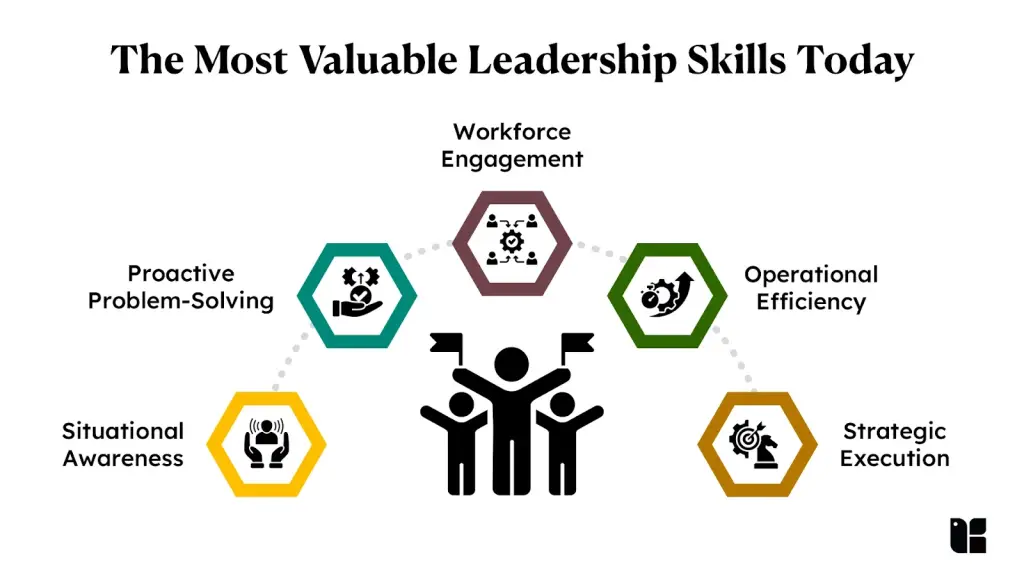
Situational Awareness
Leaders must be fully aware of what’s happening in their organisation, industry, and market. Missing early signs of problems or opportunities can lead to setbacks. Understanding trends, employee concerns, and business shifts helps leaders make informed decisions. Start each day with a 10-minute scan of key updates, check industry news, team reports, and operational data. Set up quick daily check-ins with direct reports to catch early signs of problems before they grow.
Proactive Problem-Solving
Waiting for problems to escalate makes them harder to fix. Leaders who anticipate challenges and address them early prevent bigger disruptions. This applies to managing risks, handling team conflicts, or improving business processes before they cause issues. Run a “pre-mortem” before major decisions, gather your team and list all possible things that could go wrong. Then assign ownership to address each risk before it becomes a real issue.
Workforce Engagement
Keeping employees motivated is a constant challenge. People expect meaningful work, growth opportunities, and recognition. Leaders who actively connect with their teams, communicate clearly and create a positive environment see better productivity and retention. Every week, ask one open-ended question in team meetings like, “What’s one thing that would make your job easier?” Use the insights to remove small but frustrating obstacles for your team.
Operational Efficiency
Wasted time and resources slow businesses down. Leaders must streamline processes, eliminate unnecessary steps, and ensure teams work efficiently. This means making meetings productive, automating repetitive tasks, and focusing on results over routines. Audit recurring meetings and eliminate or shorten any that don’t directly contribute to outcomes. Replace status updates with shared dashboards so people can track progress without unnecessary meetings.
Strategic Execution
Having a vision isn’t enough, leaders must turn plans into action. Many organisations struggle because strategies get stuck in planning. Leaders who set clear priorities, assign responsibilities and track progress ensure goals are actually achieved. Use the “90-day sprint” approach, break large goals into 90-day action plans with clear deadlines and owners. Review progress weekly to ensure execution stays on track.
Each of these skills can be developed through consistent, targeted efforts, but the most effective way to overcome these challenges is through a personalised leadership development program tailored to your specific industry and individual growth needs.
Conclusion
Turn these leadership insights into action by taking what you’ve learned and putting it into practice. It’s about moving from understanding new ideas to making real changes in how you lead. Start by listening to your team, understanding their needs, and using that to make decisions. Encourage a culture where people feel supported and valued, and make sure everyone has the tools and training they need to succeed. Actively embrace change by trying new ways of working, and keep learning to stay ahead. The key is to take small, consistent steps that make a big difference over time.
Organisations looking to turn leadership insights into meaningful business transformation can explore Kapable’s program fit.


