


TL;DR
- Core Components: Emotional Intelligence (EI) is defined by five critical pillars: Self-Awareness, Self-Regulation, Social Awareness, Empathy, and Motivation, which collectively govern how individuals manage their own and others’ emotions.
- Organisational Impact: High EQ strengthens organisational function by supporting effective leadership, improving collaborative teamwork, enhancing customer service, and promoting balanced decision-making and resilience during change management.
- Implementation Challenges: Successful adoption of EI requires overcoming hurdles like cultural differences, balancing emotional sensitivity with prompt analysis, and establishing measurable development practices that have strong executive support.
- Development Pathways: Organisations can develop EI by encouraging personal growth through journaling and active listening, promoting stress reduction techniques like the 478 breathing method, and setting development goals using the SMART framework.
“When dealing with people, remember you are not dealing with creatures of logic, but with creatures of emotion.” – Dale Carnegie
A study published in Oxford University Press found that emotional intelligence (EI) positively correlates with positive organisational behaviours, including organisational commitment, reduced turnover, and organisational citizenship behaviours. EI also appears to be beneficial in dealing with others inside and outside the organisation. Regarding conflict resolution, the research suggests that EI can improve a team’s performance.
This blog will explore emotional intelligence and its importance in the workplace. It refers to the ability to understand and manage emotions, which is just as crucial as IQ. We will discuss key components like self-awareness, empathy, and social skills, and how developing these can improve communication, teamwork, and overall success in organisations.
How Do Emotions Influence Organisational Behaviour?
Emotional intelligence is the individual’s ability to recognise and manage emotions in oneself and others, fostering better relationships, communication, and personal effectiveness.
Emotions are a fundamental aspect of the human experience and have a significant impact at work. They impact decision-making procedures, staff behaviour, and general performance standards. It’s critical to distinguish between feelings, moods, and organisational culture:
- Emotions are intense, short-lived reactions to specific situations.
- Moods are longer-lasting emotional states without a clear trigger.
- Workplace culture comprises shared norms, values, and beliefs that shape the organisation’s emotional environment.

What Are The Five Pillars of Emotional Intelligence?
Daniel Goleman’s model of emotional intelligence identifies five foundational pillars that are crucial for personal and professional success:
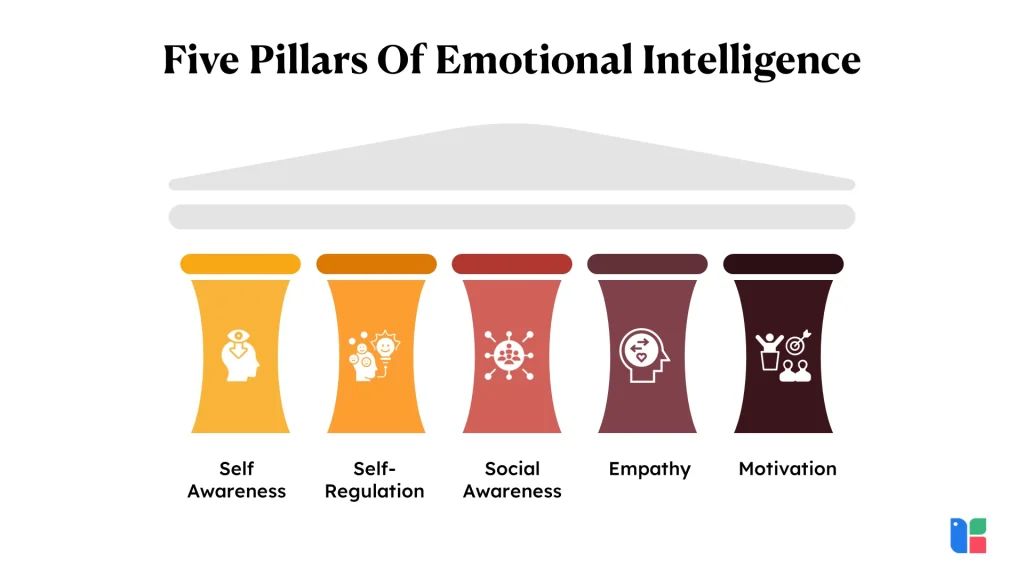
Self Awareness
Recognising and comprehending one’s own emotions and how they impact one’s thoughts, behaviours, and relationships with others are essential components of this pillar. Self-aware people are conscious of their objectives, ideals, and areas of strength and weakness. They can properly evaluate their feelings in various circumstances, which helps in their decision-making and stress management.
Self-Regulation
The ability to control one’s emotions, desires, and behaviours under trying circumstances is known as self-regulation. This involves remaining composed in stressful situations, adjusting to adjustments, and keeping an optimistic mindset. Well-regulated individuals choose responses that are consistent with their values and long-term objectives rather than acting impulsively or emotionally.
Social Awareness
Being socially aware means paying attention to and comprehending other people’s emotions, wants, and worries. Empathy and a sharp sense of social dynamics and signs are required. People with strong social awareness foster good interpersonal interactions and teamwork because they are good at interpreting both verbal and nonverbal cues.
Empathy
It is the ability to feel what others are feeling and react compassionately, which extends beyond simply comprehending their feelings. Being empathetic allows one to place oneself in the other person’s shoes, improving relationships with others, fostering trust, and making communication easier. Effective cooperation, customer interactions, and leadership all depend on empathy.
Motivation
It is the desire to accomplish objectives and keep getting better when it comes to emotional intelligence. It involves managing feelings in order to stay determined, resilient and focused in the face of difficulties. Motivated people take initiative, set ambitious objectives, and motivate others with their passion and willpower. Their motivation comes from a desire to succeed individually and as an organisation.
Together, these five pillars make up the foundation of emotional intelligence, which helps people to successfully control their emotions, negotiate challenging social situations, and accomplish goals in their personal and professional lives.
How Does Emotional Intelligence Impact Organisational Behaviour?
EQ greatly impacts how organisations function by improving team interactions and creating a positive work atmosphere. When employees understand their emotions better, it leads to higher morale and increased productivity.
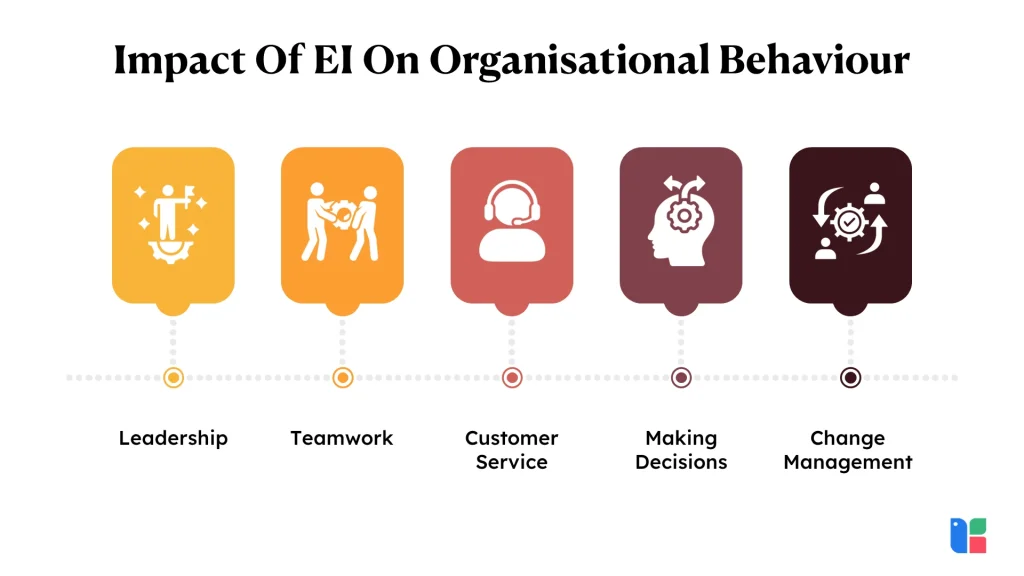
Effective Leadership
Emotionally intelligent leaders know how to build trust, energise groups, and resolve disputes peacefully and diplomatically. By being aware of their own emotions and those of others, they establish a friendly atmosphere that promotes cooperation and boosts performance.
Collaborative Teamwork
High-EQ teams communicate better, work together, and solve problems. Members are more understanding of one another’s feelings and viewpoints, which promotes a productive and respectful environment. Teams that possess this emotional intelligence are better able to overcome obstacles and accomplish common objectives.
Customer Service
EQ is essential to providing excellent customer care service by improving interpersonal skills. Workers with high emotional intelligence comprehend their clients’ requirements, empathise with them, and establish lasting bonds of trust. Increased client happiness and loyalty follow, which benefits the company’s expansion and reputation.
Making Decisions
When making strategic judgments, emotionally intelligent decision-makers incorporate factual analysis and emotional concerns. They make more balanced, more informed decisions and consider the broader influence on stakeholders and organisational culture by balancing emotional sensitivity and logical data.
Change Management
When there is an organisational change, EQ helps people and groups adjust quickly and effectively. People with high emotional intelligence are better able to handle uncertainty, efficiently handle stress, and assist others during changes. They can sympathetically convey change objectives, address concerns, and encourage an optimistic view of the future.
Integrating emotional intelligence into organisational behaviour enhances interpersonal dynamics and decision-making. It strengthens resilience during change, fostering a cohesive and adaptable workplace culture essential for sustained success in today’s dynamic business environment. However, there are also certain challenges associated with applying EI in Organisations that are hindering its development.
Emotional intelligence plays a central role in organisational behaviour because it shapes how people communicate, collaborate, and respond to change. Kapable helps leaders strengthen these behaviours through practical leadership development.
“Kapable transformed my ability to communicate clearly and confidently, helping me transition from a technical role to a leadership position. I can now present ideas and build rapport effectively, enabling me to take on a role with significantly greater responsibility.”
– Satrajit Sengupta (Principal Business Manager At SAP)
What Are The Challenges Of Applying EI In Organisations?
While emotional intelligence (EI) can potentially improve workplace dynamics and individual effectiveness, businesses must overcome obstacles and constraints to achieve the best outcomes. Gaining an understanding of these complexities is essential to utilising Emotional Intelligence (EI) to promote beneficial organisational results.
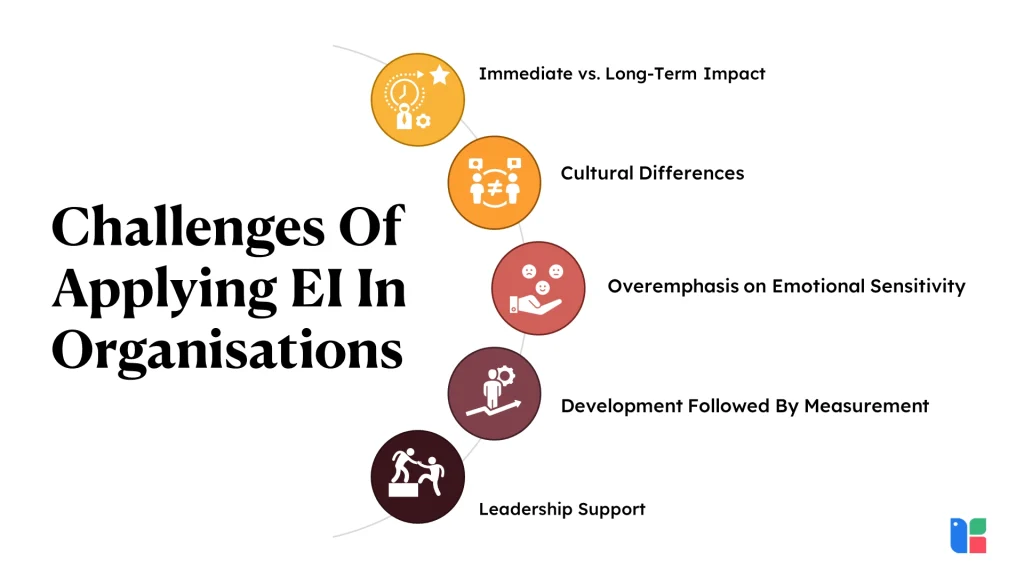
Immediate Vs Long-Term Impact
Although emotional intelligence (EI) improves relationships and communication, it doesn’t necessarily result in quick dispute resolution. For instance, if practical considerations are not matched with emotional reasons during intense disputes, decision-making may be delayed.
Cultural Differences
Cultural differences can affect how effective EI skills are. One culture’s definition of empathy may be quite different from another’s. For example, while candid criticism may be valued in certain cultures, others may view it as confrontational.
Overemphasis On Emotional Sensitivity
An overemphasis on emotional sensitivity alone may ignore the necessity for thorough analysis or prompt decision-making in highly technical or fast-paced settings. In these kinds of situations, striking a balance between EI and other talents becomes essential.
Development Followed By Measurement
Despite the demands of a daily job, it can be challenging to maintain the constant practice and effort needed to develop emotional intelligence (EI) skills. Effectively evaluating emotional intelligence (EI) through tests or feedback systems can also be complicated and subjective.
Leadership Support
Organisational culture and executive support play a major role in the effectiveness of EI programs. Employees may not benefit much from attempts to develop emotional intelligence if leaders do not emphasise it or provide an example of EI practices.
Through addressing these challenges and exchanging useful examples, organisations can gain a deeper comprehension of how to proficiently utilise emotional intelligence while managing its complex aspects.
How Can Organisations Use EI To Improve Behaviour?
Enhancing organisational behaviour through emotional intelligence development involves cultivating a crucial skill set that fosters empathy, collaboration, and effective leadership.
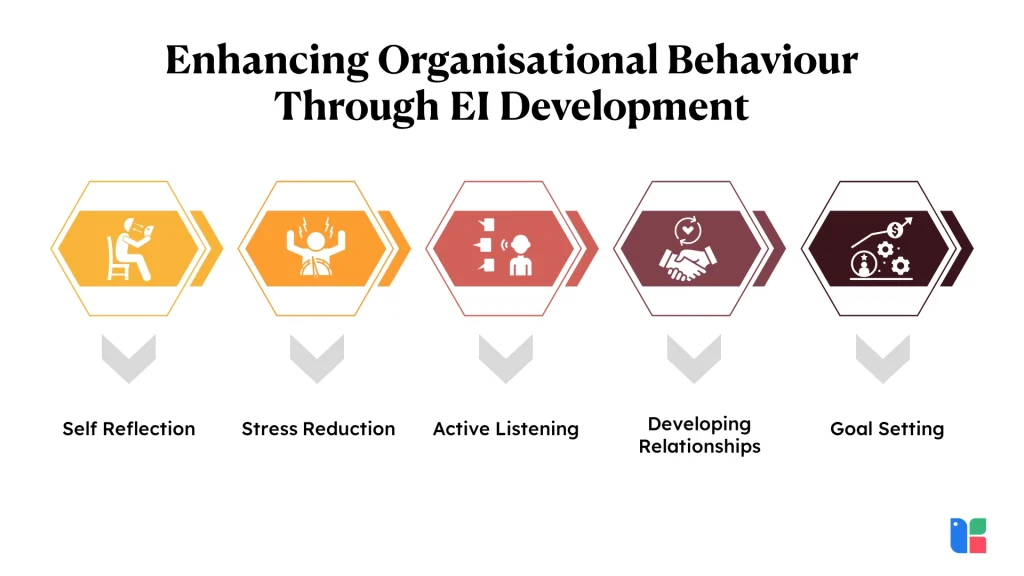
Self Reflection
Self-reflection guides us through our experiences, providing clarity and understanding as we navigate our emotions and reactions. It helps us learn from experiences and develop personally and professionally. It can be done in the following ways:

- Journaling: It involves carving out dedicated time, whether daily or weekly, to privately record your experiences, emotions, and reflections. It’s a personal practice where you explore events that sparked specific emotional responses and behaviours. By capturing these insights on paper, you gain clarity and deepen your understanding of yourself over time. This process not only helps you track personal growth but also serves as a tool for enhancing emotional intelligence by identifying patterns and areas for development.
- Reflective thought sessions: They are intentional moments set aside to contemplate recent interactions or challenges. During these sessions, you engage in deliberate self-inquiry, asking probing questions about your reactions, decisions, and the influence of your emotions on your choices. This practice fosters self-awareness and critical thinking as you analyse the motivations behind your behaviour. By dissecting your responses in a structured manner, you gain valuable insights into your thought processes and emotional triggers, empowering you to make more informed decisions and cultivate personal growth.

Stress Reduction
Reducing stress involves practising mindfulness and achieving work-life balance through prioritisation and regular breaks.
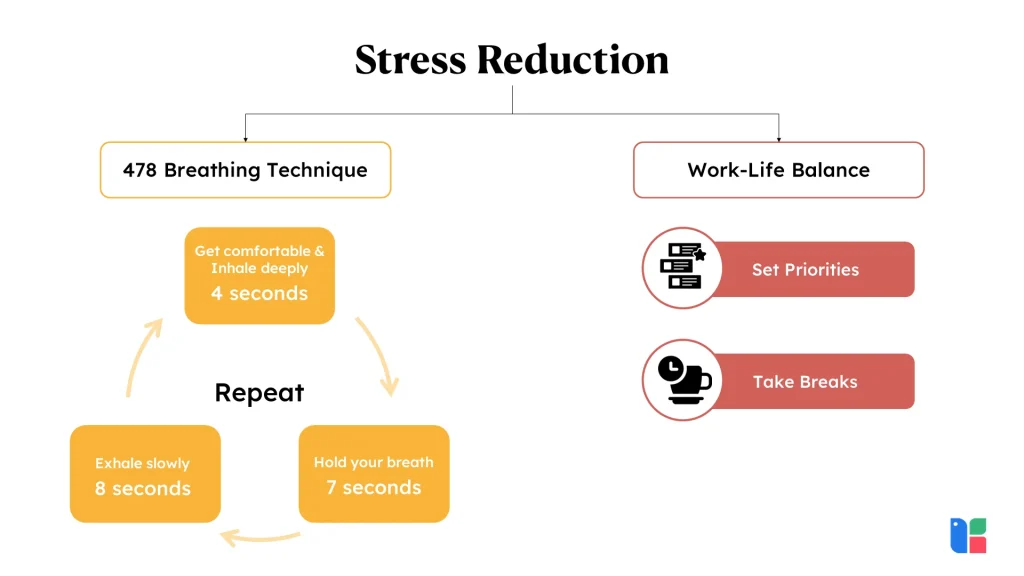
478 breathing technique
478 Breathing helps activate the body’s relaxation response, making it helpful in managing stress and promoting calmness.
- Get comfortable: Find a quiet place to sit or lie down comfortably.
- Inhale deeply: Breathe through your nose for 4 seconds, feeling your abdomen rise.
- Hold your breath: Hold for 7 seconds, focusing on holding comfortably.
- Exhale slowly: Exhale entirely through your mouth for 8 seconds, feeling your abdomen fall.
- Repeat: Do this cycle for several minutes, gradually increasing as you get more comfortable.
Work-life balance
Maintain productivity and well-being by setting priorities and incorporating structured breaks into your workday, which is essential for achieving a balanced and fulfilling professional and personal life.
- Set priorities: Regularly keep track of tasks and prioritise them accordingly to manage workload effectively. Use tools like to-do lists or digital apps to keep track of your tasks. Review and update your list daily to ensure you stay on top of your responsibilities.
- Take breaks: Incorporate short, frequent breaks throughout your workday. The Pomodoro Technique, for example, involves working for 25 minutes and then taking a 5-minute break. After four cycles, take a longer break of 15-30 minutes.
Active Listening
Effective communication fosters deep understanding and genuine connection, fostering strong relationships and mutual understanding.

- Use verbal cues: Encourage the speaker with verbal responses like “I see,” “Go on,” or “Tell me more.” This shows you’re actively listening and encourages them to continue sharing.
- Use nonverbal cues: Nodding, smiling, and facial expressions reflecting understanding or empathy can convey your engagement and support.
- Paraphrasing: Repeat what the speaker said in your own words to confirm understanding. This helps clarify any misunderstandings and shows you’re paying attention.
- Reflect feelings: Acknowledge the speaker’s emotions and perspective. Use phrases like “It sounds like you’re feeling…” or “I understand why you would think that…”
- Ask open-ended questions: Encourage deeper conversation by asking questions that prompt the speaker to elaborate, such as “Can you explain more about…?” or “How did that make you feel?”
Developing Relationships
Creating a supportive and collaborative work environment begins with establishing key practices. Building trust through transparent communication, fostering empathy among team members, and encouraging open dialogue are essential steps towards cultivating a positive workplace culture.
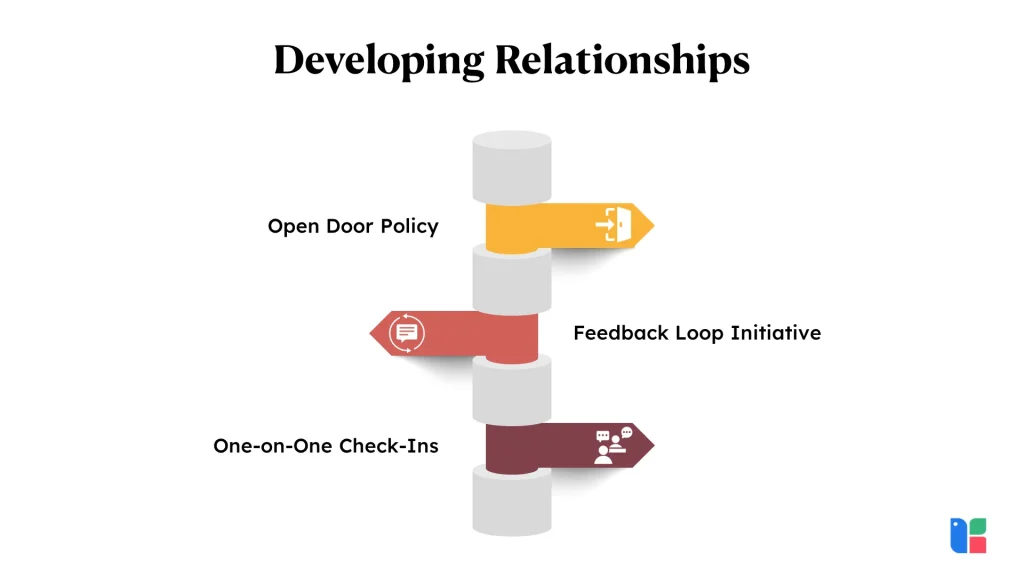
- Open-door policy: Maintain an open-door policy where team members feel comfortable approaching you with questions or concerns.
- Feedback loop initiative: This involves developing systematic processes for gathering and offering constructive feedback from all team members, promoting an open and collaborative work environment that encourages growth and development.
- One-on-one check-ins: Schedule periodic one-on-one meetings to discuss individual goals, challenges, and career development aspirations.
Goal Setting
Set SMART (Specific, Measurable, Achievable, Relevant, Time-bound) objectives for developing your emotional intelligence.

Divide bigger goals into smaller achievable segments, and monitor advancement frequently. Setting goals gives one direction and inspiration for one’s own development. It promotes ongoing education and the growth of emotional intelligence abilities, gradually encouraging positive habits and behaviours.
Applying the SMART technique (Specific, Measurable, Achievable, Relevant, Time-bound) in organisational behaviour involves setting goals and objectives that are:
- Specific: Clearly defining what needs to be achieved, ensuring clarity and understanding among team members.
- Measurable: Establishing criteria for tracking progress and determining when goals are met, allowing for quantifiable assessment.
- Achievable: Setting realistic goals that can be attained with the available resources and capabilities of the organisation or team.
- Relevant: Ensuring that goals align with the broader objectives and strategic priorities of the organisation, contributing meaningfully to its success.
- Time-bound: Assigning a timeframe or deadline for achieving the goals, creating a sense of urgency and focus among team members.
By applying the SMART criteria in organisational behaviour, teams can enhance clarity, motivation, and accountability, ultimately improving performance and achieving desired outcomes effectively. This methodical approach not only provides a structured framework but also ensures that efforts are focused and aligned with personal or professional aspirations, fostering continuous growth in emotional intelligence.
What Is The Influence Of Emotional Intelligence In The Workplace?
According to the ability model of emotional intelligence (EI), a high intelligence quotient is complemented by the capacity to perceive and manage emotional responses. A key aspect of emotional intelligence (EI) in the workplace is being self-aware, which involves recognising one’s own emotions and understanding how one acts in various situations. Intrapersonal intelligence is a significant element of emotional intelligence (EI) in the workplace, where a person is self-aware and understands their emotions, enabling them to manage their emotional responses effectively in professional settings.
Let’s explore emotional intelligence (EI) in the workplace:
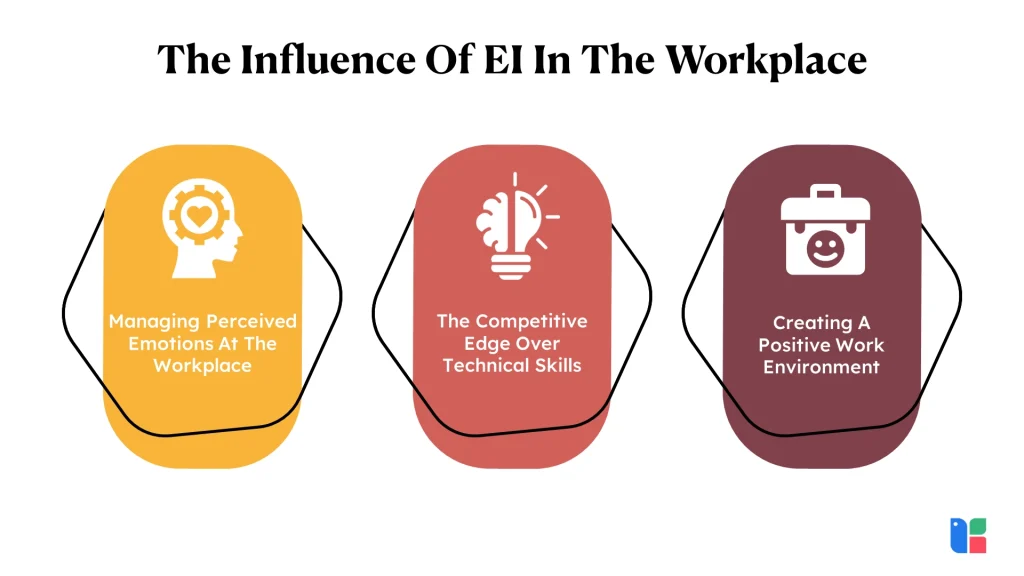
Managing Perceived Emotions At The Workplace
It involves the ability to perceive emotions in oneself and others, which is fundamental to intrapersonal and interpersonal intelligence. Emotional development, characterised by the ability to manage one’s own emotions, self-awareness, and self control, is essential for navigating social interactions and building relationships. High emotional intelligence, as measured by the emotional quotient (EQ), allows individuals to understand and respond to emotional cues, leading to better self-management and a positive impact on job satisfaction and performance.
The Competitive Edge Over Technical Skills
In many scenarios, EI is more significant than technical skills or an individual’s intellectual skills. Employees with high emotional intelligence understand relationship management well and can handle constructive criticism. They can monitor one’s own and others’ emotions, which is particularly important in service jobs. Howard Gardner’s theory of multiple intelligences and the ability model of EI highlight different forms of intelligence, emphasising that one should understand emotions are as crucial as IQ for making good decisions and fostering positive workplace dynamics.
Creating A Positive Work Environment
Positive emotions and the ability to respond appropriately to different emotions are essential for creating a conducive work environment. Leaders and employees benefit from a high degree of emotional intelligence, which helps manage negative feelings and promote positive outcomes. The mixed model of EI, including factors like self-awareness and social skills, is vital for effective interpersonal interactions. Emotional intelligence matters more than IQ in many situations, especially when dealing with complex human emotions and fostering a collaborative work culture. By focusing on emotional development, organisations can improve job satisfaction and performance, ultimately leading to a more productive and harmonious workplace.
How Do Well-Known Leaders Use EI To Shape Organisational Behaviour?
Leadership’s influence on organisational behaviour is profoundly shaped by the application of emotional intelligence, as exemplified by notable business figures.

- PepsiCo CEO Indra Nooyi showed empathy and gratitude by sending thank-you notes to the parents of her staff members. By acknowledging the value of family support in employees’ lives, this initiative promoted a positive corporate culture. Nooyi’s genuine care and gratitude bolstered employee loyalty and morale, helping to create a more encouraging and driven team.
- The creator of Virgin Group, Richard Branson, showed incredible self-awareness and vulnerability by candidly sharing his dyslexia challenges. His readiness to discuss his struggles contributed to the open and accepting culture Virgin Group has fostered. This openness probably made workers feel more at ease talking about their personal struggles and asking for help, which in turn created a more accepting and compassionate work atmosphere.
- Microsoft CEO Satya Nadella has shown on multiple occasions how his emotional intelligence has positively impacted company behaviour. One such instance is Nadella’s focus on empathy and culture change at Microsoft. Under his direction, Microsoft has changed its culture, emphasising empathy as a fundamental leadership quality and moving toward a more welcoming and cooperative environment. Nadella promotes an atmosphere where everyone feels appreciated and respected by encouraging staff members to welcome differences in opinion and experience.
In each instance, the emotional intelligence demonstrated by these leaders, empathy, self-awareness, and empathy, helped to positively impact organisational behaviour by encouraging open communication, trust, and a culture of support where workers feel appreciated and understood. This results in better teamwork, more employee engagement, and eventually improved organisational performance.
Conclusion
Emotional intelligence is not only a highly valued quality but also an essential skill set. As employers realise its value, they are beginning to focus more on EQ development for leaders and staff alike. Raising emotional intelligence can improve interpersonal effectiveness, make more significant contributions to team dynamics, and achieve organisational success. Gaining proficiency in EQ requires constant practice and learning, guaranteeing that it stays vital to future professional development.
If you’re looking to improve the way you lead people, influence culture, and strengthen organisational behaviour, Kapable helps you assess whether its approach matches your development needs.


