


TL;DR
- Broad Application: Applied psychology is a critical tool for solving real-world problems across diverse sectors, including education, public health (e.g., overcoming addiction), sports performance, consumer behaviour, and workplace dynamics.
- Driving Positive Change: The field provides evidence-based techniques like Cognitive Behavioural Therapy (CBT), psychological profiling, and human factor engineering to create effective solutions, influence public policy, and drive positive societal change.
- Future Focus: The future of applied psychology is being shaped by technological advancements, with key trends including the use of Artificial Intelligence (AI) for diagnosis, Virtual Reality (VR) in therapy, addressing mental health in the digital world, and developing personalised behavioural interventions.
Have you ever felt a sudden urge to buy something when you saw a “limited-time offer” or noticed that stock was running low? That impulse isn’t just a fluke, it’s a smart psychological trick at work. Many of us fall for it without even realising why. The study on limited-quantity and limited-time scarcity reveals that these tactics stimulate a heightened sense of urgency and arousal, pushing us toward quicker, sometimes impulsive decisions. Retailers use these insights from consumer behaviour psychology to drive sales, showing just how deeply psychological principles can influence our everyday shopping habits.
In this blog, we’ll explore how applied psychology is making a tangible difference across various sectors, from revolutionising consumer behaviour to enhancing public health and beyond.
What Role Does Psychology Play In Solving Real-World Problems?
Psychology provides essential tools for understanding and solving real-world problems. From enhancing learning experiences to improving workplace dynamics and influencing public policy, its applications are crucial in creating effective solutions and driving positive change.
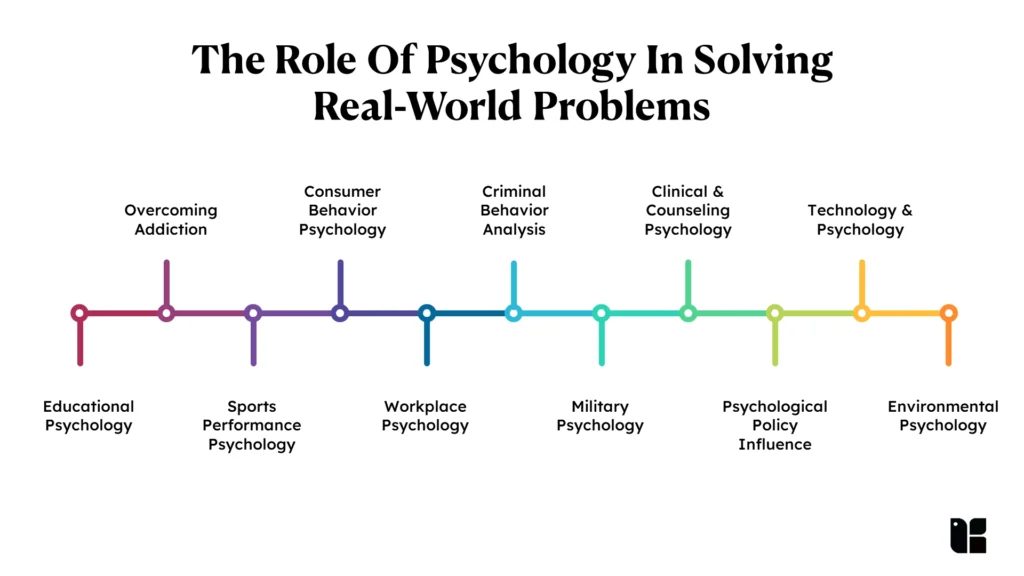
Educational Psychology
Educational psychology has a profound impact on the way we understand and improve learning across various settings. By applying theories of human development, educational psychologists gain insights into how people learn at different stages of life and in diverse environments. This application leads to significant changes in educational practices and outcomes.
Psychologists identify how social, emotional, and cognitive factors affect learning. For example, they develop targeted strategies for different groups, such as children with ADHD or adults learning new skills. This results in personalised teaching methods that address specific needs, making education more effective for each learner.
Understanding cultural differences in processing information allows psychologists to design inclusive educational materials and methods. This helps create a learning environment that acknowledges and accommodates various cultural backgrounds, enhancing the educational experience for all students.
In today’s digital age, educational psychology also addresses the impact of remote learning. Studies reveal that while in-person learning fosters better engagement, specific digital tools, such as interactive platforms and adaptive learning software bridge the gap. Psychologists apply this research to design remote learning experiences that simulate the benefits of in-person education, ensuring that online education remains effective. All of these questions are being tackled in diverse environments to refine education systems worldwide.
Overcoming Addiction
Applied psychology plays a crucial role in overcoming addiction by using evidence-based psychological techniques to address both the mental and behavioural aspects of dependency. Psychological interventions like Cognitive Behavioral Therapy (CBT) are commonly applied to help individuals recognise the thought patterns that trigger addictive behaviours. For example, individuals addicted to substances or behaviours such as drugs, alcohol, or even social media are taught to identify negative thoughts and replace them with healthier coping mechanisms.
In real-world settings like rehab centres and outpatient clinics, psychologists apply CBT and other therapies to treat not just the addiction, but also the co-occurring mental health conditions like anxiety or depression that often accompany it. This holistic approach ensures a more comprehensive recovery, addressing both the psychological triggers and emotional vulnerabilities that sustain addictive behaviours.
Psychologists also work with patients to build resilience and coping strategies that can be applied in everyday life, helping them manage cravings and avoid relapse. In addition to therapy, applied psychological research guides public health policies on addiction prevention and treatment, ensuring that the strategies developed in clinical settings can also be implemented on a broader societal level.
Sports Performance Psychology
The primary goal of sport and performance psychologists is to understand how psychological and biopsychosocial factors influence performance outcomes, whether in competitive sports or day-to-day challenges.
Psychologists play a critical role within sports medicine, especially when addressing athletes’ mental health. These professionals are often the most qualified to handle mental health issues like anxiety, depression, or sleep difficulties, which can significantly impact performance. By working closely with athletes, sports psychologists provide both mental health support and performance enhancement techniques that help athletes recover from injury and maintain psychological well-being during rehab.
Beyond sports, the field has evolved into “sport and exercise psychology,” incorporating insights from exercise science and cognitive neuroscience. For example, exercise psychologists apply techniques to develop expertise in areas such as decision-making, stress management, and maintaining mental resilience. These strategies are now used by professionals in high-pressure environments like surgery, firefighting, and corporate leadership, where peak mental and physical performance is essential.
Performance psychology now examines how people can consistently achieve high performance in various fields by developing mental resilience, managing stress, and enhancing cognitive function. Whether it’s helping athletes return stronger after an injury or enabling professionals to navigate intense work environments, applied psychology continues to provide practical tools to improve performance and overall well-being.
Consumer Behaviour Psychology
Remember how seeing a “limited-time offer” made you rush to buy something? This is where consumer behaviour psychology comes into play. Companies, corporations, political campaigns, and even nonprofits rely heavily on psychological insights to shape their marketing strategies. By understanding how we think and make decisions, they can influence us in ways we often don’t realise. We end up making rash purchases or decisions, not out of need, but because our emotions and anxieties have been manipulated.
Consumer behaviour psychology examines how various psychological factors, such as personality, habits, motives, emotions, and cultural norms, affect purchasing decisions. By studying these elements, companies can craft marketing strategies that resonate on a deeper level with their target audience. For example, a consumer’s emotional connection to a brand or product can be influenced by psychological triggers like nostalgia, status, or a desire for belonging. Research shows that consumer psychology is deeply intertwined with our emotional responses. These insights help marketers create ads and promotions that not only grab attention but also build lasting relationships with consumers.
With the rise of social media, understanding how consumers form opinions through online reviews or influencer endorsements has become essential. Psychological studies can help businesses analyse how trust is built online and how to foster customer loyalty in a highly competitive environment.
Workplace Psychology
Workplace psychology directly impacts how organisations hire, train, and manage their employees. Employee selection uses psychological tests to match candidates with roles that fit their skills and personalities, ensuring better long-term performance. Training programs grounded in psychology are another key aspect. In training and development, psychology shapes programs that enhance skills while keeping employees motivated and satisfied, improving retention.
Research shows that opportunities for ongoing learning can boost job satisfaction and retention rates. Using data-driven approaches, psychologists gather insights into organisational effectiveness and employee happiness, ensuring that leadership makes informed, strategic decisions based on hard evidence.
Performance management applies psychological principles to create fair evaluations, providing constructive feedback and fostering growth. Psychology also enhances workplace culture by promoting open communication and well-being, which boosts morale and productivity. They consider how legal issues, like discrimination in hiring, affect the workplace. Sensitive subjects such as sexual harassment and workplace violence are also examined to ensure safe, supportive environments for everyone.
Criminal Behaviour Analysis
Criminal psychology applies behavioural analysis to help law enforcement understand and predict criminal actions. helps us understand the why behind criminal behaviour, giving us tools to not only catch offenders but also to prevent future crimes. Profiling techniques involve analysing a suspect’s behaviour, environment, and psychological traits to create a detailed profile of their likely characteristics, such as age, lifestyle, or emotional state. This profile helps law enforcement narrow down suspect lists by focusing on individuals who match the behavioural patterns observed at crime scenes. For instance, if a crime involves a methodical approach, the profiler might deduce that the suspect has above-average intelligence or certain personality traits, guiding investigative efforts.
In rehabilitation, psychology is essential for addressing the root causes of criminal behaviour, such as trauma or mental health issues. Psychologists use detailed assessments to identify factors like childhood abuse, socioeconomic pressures, or mental health disorders that might have contributed to criminal activity. They then design personalised rehabilitation programs that target these specific causes. For example, a program might include cognitive-behavioural therapy (CBT) to help offenders manage anger, cope with stress, or change harmful thought patterns. By focusing on these underlying issues, psychologists help reduce the likelihood of reoffending, supporting offenders’ successful reintegration into society.
Military Psychology
When we think about the military, we often focus on physical strength and strategy, but the mental aspect is just as critical. Military psychology shows how applied psychology plays a vital role in situations where mental resilience can mean the difference between success and failure.
Human factor engineering in military settings involves designing tools and systems that align with human cognitive and physical capabilities. For instance, optimising cockpit designs or improving interface usability in advanced military equipment helps enhance operational efficiency and reduce errors. Personality assessments and psychological testing play a crucial role in recruitment and selection. Psychological tests are used to evaluate candidates’ suitability for various roles, ensuring a good fit between the individual and the job demands. These assessments help identify traits such as stress tolerance and leadership abilities, which are critical for military success.
Training and intervention are tailored to address the unique demands of military life. Psychological methods are used to prepare soldiers for the mental and emotional stresses of combat, improve resilience, and facilitate recovery from trauma. This approach not only supports individual well-being but also enhances overall unit cohesion and effectiveness.
Clinical And Counseling Psychology
When people think of psychology, they often picture therapy sessions, and while that’s a core part of clinical and counselling psychology, there’s much more to it. In clinical settings, psychologists create a safe and confidential environment where clients can openly discuss their concerns. This collaborative approach involves active participation from clients, who work alongside their counsellors to explore and address their emotional and psychological challenges. This process might include setting personal goals, developing coping strategies, and working through difficult emotions.
Counselling services extend to various life domains, including vocational, relational, and educational issues. For instance, a counsellor might help an individual navigate career transitions, improve relationships, or tackle academic stress. Through tailored interventions and therapies, psychologists support clients in gaining clarity and building resilience, which leads to more effective problem-solving and personal growth.
Moreover, the focus on evidence-based therapies ensures that the methods used are grounded in scientific research. Techniques like Interpersonal Therapy (IPT) and other talking therapies are employed based on their proven effectiveness in treating specific conditions. This structured approach not only addresses immediate concerns but also fosters long-term mental well-being by promoting self-awareness and personal development.
Psychological Policy Influence
Psychologists aren’t just working with individuals; they’re also making a big impact on a larger scale through psychological policy influence. They advocate for changes that can improve public health, education, and social welfare by participating in professional associations, engaging with policymakers, and working directly with government bodies. Their expertise helps shape policies that affect many people, from setting mental health guidelines to influencing educational reforms.
In policy formulation, psychological research provides a foundation for creating policies that promote well-being and address societal issues. For example, understanding the psychological impacts of poverty and stress can lead to the development of more supportive social programs and economic policies that better address the needs of vulnerable populations.
Moreover, research on organisational behaviour informs policies that enhance productivity and job satisfaction. Psychologists also influence policy through advocacy and collaboration with government agencies. They provide expert testimony, conduct research studies, and contribute to discussions on issues such as mental health care, criminal justice reform, and educational practices. Their work ensures that policies are not only informed by empirical evidence but also consider the psychological well-being of individuals and communities.
Technology And Psychology
Psychology significantly influences technology design, especially in how user experiences impact mental health. UX design goes beyond aesthetics to shape how users interact with technology, affecting their emotional state. For instance, well-designed interfaces can reduce stress and foster a sense of control, while poorly designed ones can lead to frustration. Managing cognitive load by keeping interfaces simple helps prevent overwhelm, and creating interfaces that connect emotionally with users is crucial. This involves using empathetic language, relatable imagery, and enjoyable interactions to foster positive feelings. When users have a pleasant emotional experience with a digital tool, it can support their mental health and overall user satisfaction.
Persuasive Technology applies psychological principles to influence user behaviour. This can be seen in features like notifications or gamification elements that encourage users to adopt healthier habits or complete certain tasks. By understanding motivational drivers and behavioural triggers, developers can design technology that promotes positive changes in behaviour.
Human-Computer Interaction (HCI) is another area where psychology plays a crucial role. HCI research focuses on optimising how people interact with computers and other digital devices. It involves studying how users think, feel, and behave in digital environments to improve device functionality and user satisfaction. Integrating these psychological insights ensures that technology not only performs well but also supports mental well-being.
Environmental Psychology
Environmental psychology explores how our surroundings affect our behaviour and well-being, influencing everything from urban planning to personal spaces. It investigates how different environments, whether natural or built, impact mood, stress, and productivity. For instance, research highlights that exposure to natural elements, such as parks or green roofs, can significantly reduce stress and enhance mental health. This principle is applied in urban planning, where incorporating green spaces and nature in city landscapes aims to improve residents’ quality of life.
Environmental psychology also examines how design features, like lighting, colour, and layout, affect our daily experiences. In residential settings, choosing calming colours and ergonomic furniture can contribute to a more comfortable living environment. In public spaces, thoughtful design can foster social interaction and community cohesion. Furthermore, this field extends to areas like disaster response and climate change, where understanding human behaviour in response to environmental changes helps in developing effective policies and interventions. By applying psychological principles to environmental design, this field aims to create spaces that enhance well-being, safety, and social interaction, ultimately leading to a better quality of life.
By applying psychological principles to practical problems, we not only enhance our understanding of human behaviour but also drive meaningful solutions that improve lives and shape a better future.
Learn how Kapable’s practical learning approach helps professionals apply psychological principles to improve decision-making, workplace relationships, and leadership effectiveness.
What Are The Future Trends In Applied Psychology?
The field of applied psychology is evolving rapidly, driven by technological advancements and a deeper understanding of human behaviour. Here’s a look at some of the key trends shaping its future:
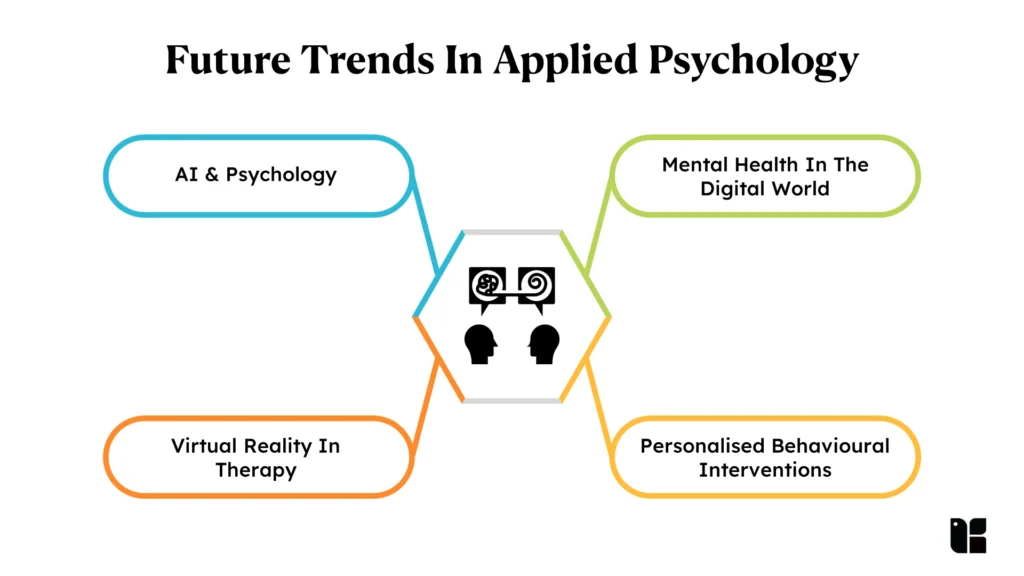
- AI and psychology: Artificial Intelligence (AI) is transforming psychological research and practice, offering new methods for diagnosis and treatment. AI-powered tools can analyse vast amounts of data to identify patterns that might be missed by human analysts, leading to more accurate diagnoses and personalised treatment plans. For example, AI algorithms are increasingly used to detect early signs of mental health issues through analysis of speech patterns or social media activity, enabling timely intervention.
- Virtual reality in therapy: Virtual Reality (VR) is becoming a powerful tool in therapeutic settings. By creating immersive environments, VR helps patients confront and manage their fears in a controlled setting. For instance, VR is used to treat anxiety, phobias, and PTSD by simulating real-world scenarios, allowing patients to practise coping strategies and gradually reduce their symptoms. This technology also aids in skill-building by providing realistic scenarios for practising social skills or stress management.
- Mental health in the digital world: As digital technology increasingly permeates our lives, psychology will play a crucial role in promoting mental health in this new landscape. With the rise of remote work and constant digital connectivity, managing work-life balance and preventing burnout has become essential. Psychologists are developing strategies to help individuals navigate these challenges, ensuring that digital environments support rather than hinder mental well-being.
- Personalised behavioural interventions: Advances in data collection and genetic research are paving the way for personalised behavioural interventions. By analysing individual behavioural data and genetic information, psychologists can tailor treatments to fit each person’s unique profile. This approach ensures that interventions are more effective and directly address the specific needs and characteristics of each individual.
These trends illustrate the dynamic and expanding role of psychology in addressing contemporary challenges and improving our understanding of human behaviour in a rapidly changing world.
“My journey with Kapable has been truly valuable. The sessions helped me gain confidence and handle impromptu speaking and assertiveness. I successfully led high-level meetings, which I used to avoid, and received positive feedback from my director. I now feel confident and empowered.”
– Ruchika Bagga (Senior Manager At Mankind Pharma)
Conclusion
As our understanding of psychology deepens, its applications continue to broaden, influencing a diverse range of fields and everyday experiences. The increasing public awareness of mental health issues reflects psychology’s expanding role in addressing societal challenges. Greater emphasis on mental well-being, supported by psychological research, drives more inclusive and supportive environments in workplaces, schools, and communities. As stigma around mental health continues to diminish, psychology’s role in promoting and supporting mental health gains prominence.
Psychology’s reach is also growing on a global scale, with international collaborations addressing global challenges such as mental health crises, climate change, and social inequality. The field’s ability to provide insights and solutions across diverse contexts demonstrates its vital role in fostering global well-being and progress.
If your goal is to use psychological insights to become a more effective leader and communicator, Kapable’s program compatibility check can help you evaluate whether the program aligns with your goals.


