


TL;DR
- Foundation for Collaboration: Empathy and clarity in communication are not just beneficial but are the essential groundwork for building inclusive workplaces, resolving conflicts, and improving collective problem-solving.
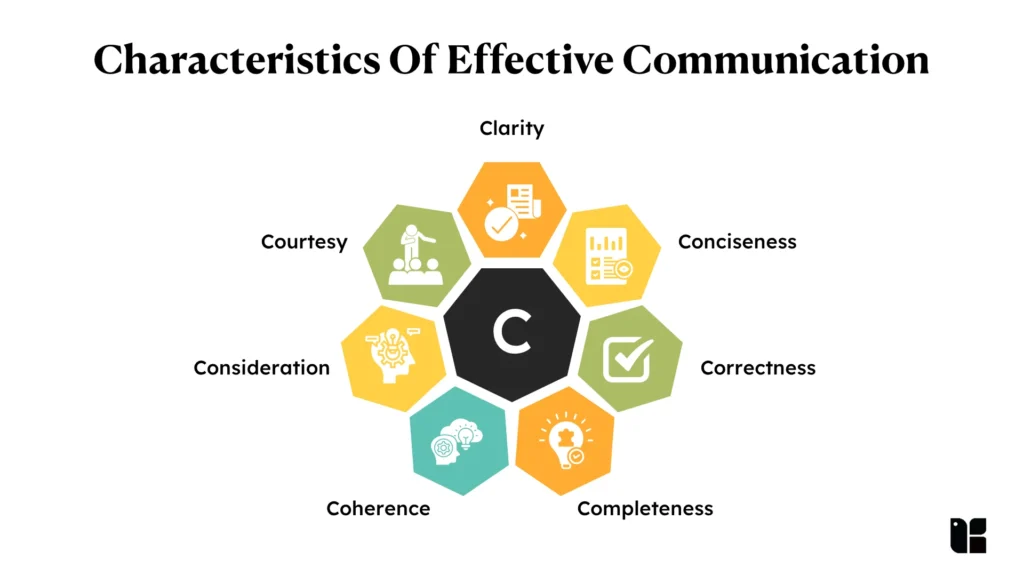
- The Seven C’s of Impact: The core characteristics- Clarity, Conciseness, Correctness, Completeness, Coherence, Consideration, and Courtesy are the non-negotiable principles that ensure your message is respected, understood, and acted upon appropriately.
- Navigating Communication Barriers: Challenges to clear understanding include subtle non-verbal cues, the confusion of information overload, a lack of tonal nuance in digital formats, and misunderstandings from language or cultural disparities.
- Commitment to Improvement: To overcome obstacles, actively focus on adapting your strategies in real-time, learning from communication missteps, and engaging in continuous skill refinement through seeking and applying immediate feedback.
Ever felt your message didn’t quite land during an important discussion? Or struggled to connect with someone due to misunderstandings? Whether you’re tackling high-stakes projects, having important conversations, or simply aiming to strengthen relationships, effective communication is the way to progress. It’s more than just conveying information. It is about mastering the art of clear, empathetic communication that is not just advantageous but essential.
In this blog, we’ll explore that the characteristics of effective communication can enhance your communication skills, empowering you to connect and collaborate more effectively, both personally and professionally.
Why Is Effective Communication Important?
Effective communication is crucial because it directly influences how we connect, collaborate, and grow. It’s about fostering a connection, a common ground where ideas, thoughts, and feelings are exchanged seamlessly. Here’s a deeper look at its significance:
- Encourages inclusivity: Effective communication ensures that all voices are heard and valued. By fostering an environment where everyone can share their ideas and perspectives, it helps build inclusive spaces where diverse opinions are considered, leading to richer discussions and more comprehensive solutions.
- Builds emotional intelligence: Effective communication goes hand in hand with emotional intelligence. It involves not only expressing your thoughts clearly but also understanding and responding to others’ emotions. This leads to more empathetic interactions and stronger interpersonal relationships.
- Aids in conflict resolution: Effective communication is crucial for resolving conflicts constructively. It provides the tools to address misunderstandings openly and work through disagreements in a way that is respectful and solution-focused, minimising tension and fostering harmony.
- Enhances learning and development: In educational and training contexts, clear communication is key to effective teaching and learning. It helps educators convey complex concepts in an understandable way and allows learners to engage with the material more deeply, promoting better educational outcomes.
- Improves problem-solving: When communication is effective, it’s easier to address and solve problems. Clear discussions lead to better understanding of the issues at hand and facilitate finding practical solutions quickly.
- Enhances collaboration: In teamwork and collaboration, effective communication ensures that everyone is on the same page. It helps in coordinating tasks, sharing ideas, and solving problems efficiently, leading to more productive and successful outcomes.

What Are The Characteristics Of Effective Communication?
When we talk about the characteristics of effective communication, the seven C’s of communication serve as the essential characteristics to enhance communication effectiveness and build positive relationships in both professional and personal contexts.
Clarity
Clarity in communication ensures that the message is easily understood by the audience without ambiguity or confusion. When your writing or speech is clear, the reader or listener can grasp your meaning quickly and accurately. Let’s take an example to illustrate how clarity makes difference:
- Before: “We should consider the importance of our project milestones and how they contribute to the overall success of the project, ensuring that everyone is aware of their roles in meeting these milestones and how their performance impacts the project’s success.” This statement is vague and may confuse listeners about what exactly needs to be communicated and who is responsible for what.
- After: “Each team member needs to understand their role in meeting project milestones. For example, make sure you know your specific tasks and deadlines to help us achieve the project’s goals.” In the revised version, the message is clear and specific. It directly addresses the audience, provides a clear example, and avoids unnecessary details, making it easier for listeners to understand their responsibilities.
Clear communication enhances understanding and reduces the chance of misunderstandings. It respects the audience’s time by conveying the information efficiently.
Conciseness
As George Orwell wrote in his essay “Politics and the English Language,” if it is possible to cut a word out, always cut it out. Conciseness in communication means expressing your message clearly and briefly, without unnecessary words. It ensures that you convey your point directly and effectively, respecting the audience’s time and attention span. Let’s take an example to illustrate how conciseness makes difference:
- Before: “We are endeavouring to construct a meticulous proposal to amplify sales.” This statement is clouded with complex words that add nothing except bloat which can obscure the main message.
- After: “We’re creating a plan to increase sales.” This version is direct and efficient. Unnecessary words and phrases are removed, making the message more direct and easier to understand. The main idea is emphasised without distraction.
Concise communication is particularly important in business and professional settings where time is often limited and clarity is crucial.
Correctness
Proper grammar and syntax increase the effectiveness and credibility of your message. Mistakes might affect clarity, create ambiguity, and raise doubts. In addition, the message’s information needs to be accurate. Misinformation can derail productivity in the workplace and compound disorganisation. Let’s take an example to illustrate how correctness makes difference:
- Before: “Their was a lot of problems with the new software update, but they fixed it quickly.” This sentence contains grammatical errors (“Their was” should be “There were”) and lacks clarity about who fixed the problems.
- After: “There were several problems with the new software update, but the team fixed them quickly.” In the revised version, the sentence is grammatically correct and specifies who fixed the problems (“the team”). This enhances clarity and credibility.
Whether in written documents, presentations, or verbal communication, correctness demonstrates professionalism and attention to detail.

Completeness
Effective communication requires the whole picture. Leaving information out can lead to unnecessary guesswork for readers. Comprehensive yet concise messages reduce follow-up questions and prevent delays. You need to make sure there are no questions unanswered. Let’s take an example to illustrate how completeness makes difference:
- Before: “Please review the project proposal and let me know your thoughts.” This sentence is incomplete because it does not specify what aspects of the project proposal the recipient should review or what specific feedback is needed.
- After: “Please review the attached project proposal by Friday and provide feedback on the budget, timeline, and scope.” In the revised version, the message is complete as it specifies exactly what are the needs to be reviewed (project proposal) and what are the feedback required (budget, timeline, and scope).
Completeness is particularly important in professional communication where clarity and thoroughness can impact project outcomes, team coordination, and overall effectiveness.
Coherence
Coherence in communication refers to the logical flow of ideas and information within your message. It ensures that your communication is organised and easy to understand and follow, guiding the receiver through your thoughts in a clear and logical manner. Let’s take an example to illustrate how coherence makes difference:
- Before: “The marketing strategy includes digital campaigns, social media, and TV ads. Sales are expected to increase next quarter.” This example lacks coherence because it jumps between different aspects (marketing strategy and sales forecast) without clearly connecting how they relate to each other.
- After: “The marketing strategy includes digital campaigns, social media outreach, and TV ads. These efforts are expected to drive increased sales in the next quarter.” In the revised version, the sentence is coherent as it explains how the marketing efforts (digital campaigns, social media, and TV ads) are expected to lead to increased sales. The ideas are logically connected, providing a clear flow of information.
Coherence is essential for conveying complex information or discussing multifaceted topics in a way that is accessible and digestible for your audience.
Consideration
Consideration in communication refers to showing empathy and understanding towards your audience’s perspectives, needs, and concerns. It involves tailoring your message to be respectful, inclusive, and sensitive to the audience’s emotions and circumstances. Let’s take an example to illustrate how consideration makes difference:
- Before: “We need everyone to work overtime this week to meet the deadline.” This statement lacks consideration because it is directive without acknowledging the potential impact on employees’ personal lives or workload.
- After: “We understand that working overtime this week may be challenging. Your dedication to meeting the deadline is greatly appreciated.” In the revised version, consideration is shown by acknowledging the potential challenges and expressing appreciation for the employees’ efforts. This approach demonstrates empathy and encourages cooperation rather than simply giving orders.
In professional settings, consideration is crucial for maintaining a supportive and inclusive work environment.
Courtesy
Courtesy in communication refers to being polite, respectful, and considerate towards others. It involves using polite language, showing appreciation, and maintaining a positive tone in your interactions.
- Before: “I need this report ASAP. Get it to me by noon.” This statement lacks courtesy because it is abrupt and does not acknowledge the recipient’s time or workload.
- After: “Could you please prioritise completing the report and send it to me by noon? Your prompt attention to this matter would be greatly appreciated.” In the revised version, courtesy is demonstrated by using polite language (“Could you please”) by the sender of the message expressing appreciation for the recipient’s effort (“Your prompt attention…would be greatly appreciated”). This approach fosters a respectful and collaborative tone.
By incorporating courtesy into your communication, you can create a more pleasant and productive atmosphere, encouraging openness and cooperation among colleagues and stakeholders.
These 7 C’s: Clarity, Conciseness, Correctness, Completeness, Coherence, Consideration, and Courtesy are key characteristics of effective communication that collectively contribute to ensuring messages are understood, respected, and acted upon appropriately. Each C plays a vital role in enhancing communication skills and fostering positive relationships in various settings.
To build these communication characteristics into everyday habits, explore how Kapable structures your learning journey, practice, and feedback for steady improvement.
How To Overcome The Challenges Of Effective Communication?
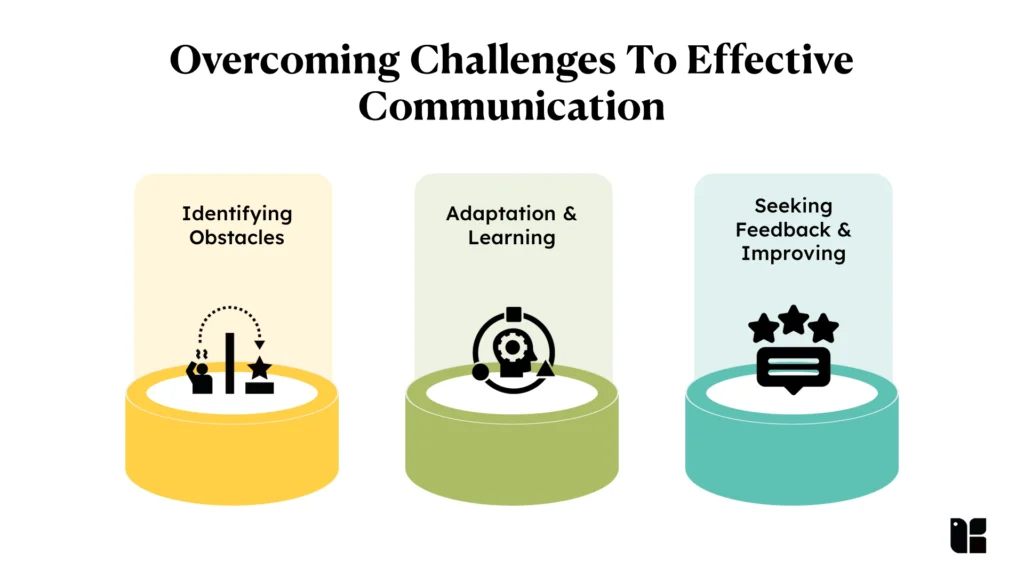
Overcoming challenges is essential for fostering clear and mutual understanding in diverse interactions. This involves identifying obstacles like language differences and cultural disparities, adapting communication strategies, and continually refining skills through feedback and learning.
Identifying Obstacles
Identifying challenges, including language differences, cultural disparities, and technological glitches, is crucial in streamlining communication.
- Nonverbal communication: Sometimes, what we say is overshadowed by our body language. For instance, crossing arms while speaking can signal defensiveness, even if the words are positive. Being aware of how nonverbal cues align with verbal messages is crucial.
- Overloading information: Bombarding someone with too much information at once can overwhelm them. For example, in a meeting, presenting all data at once without breaking it into digestible parts can lead to disengagement and confusion.
- Digital message clarity: Digital formats, like emails or texts, lack tonal nuances. A message that seems straightforward in writing can come off as unclear. Recognising when a face-to-face conversation might be more effective is key.
- Language disparities: Differences in language proficiency can create misunderstandings. For instance, technical jargon or complex vocabulary might confuse non-native speakers. Simplifying language and checking for understanding can bridge this gap.
- Cultural differences: Diverse cultural backgrounds can affect communication styles and expectations. For example, directness might be valued in one culture but seen as rudeness in another. Being aware of these differences and adapting accordingly can improve clarity.
“Kapable has helped me transform my communication skills, enabling me to speak with clarity and assertiveness. I can now handle team dynamics effectively and confidently team members which is a significant improvement from where I started.”
– Shyam Sundar AM (Team Lead At TCS)
Adaptation And Learning
Strategic adaptation to varied communication scenarios and extracting lessons from the past experiences are invaluable in navigating communication barriers.
- Recognising communication triggers: Identify what triggers poor communication in yourself or others. For instance, if heated discussions lead to communication breakdowns, learn techniques for de-escalating before these triggers are hit.
- Adjusting to reactions: Learn how to pivot when responses are not what you expected. For example, if you present an idea and receive resistance, instead of sticking rigidly to your point, adapt your approach to address concerns directly.
- Learning from missteps: Use instances of miscommunication as learning opportunities. If a project failed due to unclear instructions, analyse what is wrong and how you can articulate similar instructions better in the future.
- Continuous learning: Engage in ongoing education to stay updated on effective communication techniques. Attend workshops, read relevant literature, and practise new methods regularly to refine your skills.
- Adaptation in real-time: Be flexible in adjusting your communication style based on immediate feedback or situational changes. For instance, if a meeting is running over time, adapt by summarising key points to keep the discussion on track.
Seeking Feedback And Improving
The pursuit of feedback and a commitment to continuous improvement are fundamental in honing communication skills and surmounting barriers.
- Seek feedback in real-time: Instead of waiting for formal reviews, ask for feedback immediately after key interactions. For instance, after a team meeting, inquire about how clear your instructions were to make adjustments promptly.
- Experiment with implementation: Test different ways of implementing feedback to see what works best. If feedback suggests improving tone, try various techniques like adjusting your speech rate or tone of voice to find the most effective approach.
- Track and reflect: Keep a journal of feedback received and actions taken. Reflect on patterns in the feedback to identify recurring issues and monitor how well you’re addressing them over time.
- Use peer observations: Ask colleagues to observe your communication in various settings and provide feedback. Their external perspective can offer insights into areas you might overlook, leading to more comprehensive improvements.
These tips can help you recognise obstacles, adapt their learning strategies, and apply feedback effectively.
If you’re evaluating how your communication strengths and gaps align with your goals, this quick check from Kapable will help you decide your fit.
Conclusion
Be open to learning from every interaction, whether successful or challenging. Practice active listening, demonstrate good communication skills, and strive to communicate effectively with authenticity and clarity. Each conversation presents an opportunity to connect more deeply, foster good workplace communication, and avoid the pitfalls of ineffective communication that can lead to workplace and compound disorganisation. Whether it’s business communication or external communication, using positive body language and focusing on good communication will positively impact those around you.
As you explore ways to enhance your skills, consider tailored courses designed to support your growth. Business writing and written communication are essential for becoming an effective communicator in any corporate setting. By applying these principles in your personal life and professional life, you can develop a deep understanding of both the sender and receiver’s perspectives, fostering emotional awareness. Whether through social media platforms or a marketing campaign, your communication efforts can pave the way for collaboration, innovation, and meaningful connections. Remember to maintain eye contact to avoid creating an uncomfortable work environment and ensure clarity in all interactions.


