


TL;DR
- Master the Fundamentals: Corporate communication is a holistic skill that’s not just about talking. It involves understanding your audience, adapting your message to various types (verbal, written, nonverbal, and digital), and ensuring clear, effective transmission of your ideas.
- Implement Practical Communication Hacks: Improve your daily workplace interactions by being concise, clearly stating your intent, communicating with empathy, and confidently avoiding filler words like “just” or “sorry.”
- Employ Advanced Persuasion Strategies: For complex situations, use techniques like “I” statements to strengthen collaboration, strategically “frame” messages to influence perception, and limit key information to the memorable “3-Point Message” rule for maximum impact.
- Hone Advanced Skills for Impact: Elevate your professional presence by mastering strategic framing and tone in writing, using storytelling and dynamic body language in presentations, and optimising data visualisation and virtual presence in digital settings.
Corporate communication isn’t as simple as having a conversation with a friend. Also, it is more than just talking or writing emails. It’s about ensuring that your ideas, instructions, or even feedback are understood clearly and effectively by your colleagues, clients, and stakeholders. After all, in the corporate world, it’s not just about what you say, it’s about how well the other person gets it without a follow-up email!
What Are Corporate Communication Skills?
Corporate communication skills are the abilities that help you share information effectively in a professional environment. These skills go beyond just speaking or writing, they include understanding your audience, adapting your message to suit the situation, and using the right tone and medium to get your point across.
For example, explaining a project update to your team requires clarity and detail, but pitching a business idea to a client demands persuasion and confidence. Similarly, giving feedback involves a mix of empathy and directness to ensure your message is constructive, not discouraging. Whether it’s through verbal, written, or nonverbal cues, these skills play a crucial role in how you connect with others at work.
Learn how Kapable’s communication development approach helps professionals communicate with clarity, confidence, and impact across meetings and workplace conversations.
What Are The Key Types Of Corporate Communication?
Corporate communication comes in many forms, depending on the situation and purpose. Here are the main types you’ll commonly deal with in the workplace:
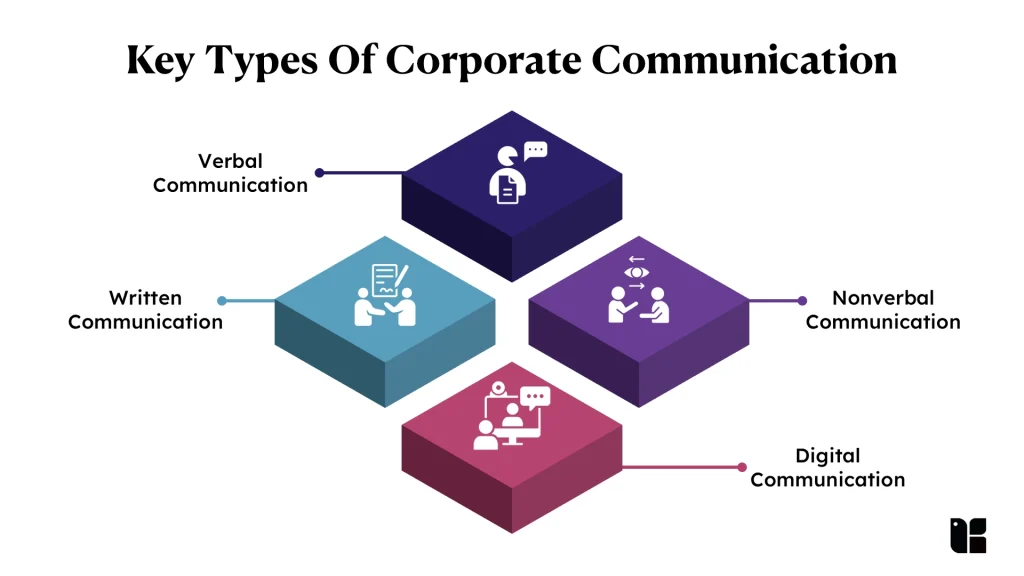
Verbal Communication
This is the go-to method in meetings, one-on-one discussions, or brainstorming sessions. It includes everything you say out loud, whether in person, on a phone call, or during a video conference. The key here is to be clear and concise, avoiding jargon that could confuse the listener.
Written Communication
From emails and reports to Slack messages and proposals, it’s all about structure and clarity, your words should convey the message without requiring extra explanation. How can you ensure clarity? Learn how to structure messages effectively. They are key to success, highlighting the importance of continuous improvement.
Nonverbal Communication
Sometimes, it’s not what you say but how you say it. Body language, facial expressions, gestures, and even your tone of voice fall into this category. For instance, maintaining eye contact during a presentation shows confidence, while crossing your arms might come across as defensive.
Digital Communication
In today’s remote and hybrid work setups, digital communication tools like Zoom, Microsoft Teams, and Slack are indispensable. Knowing how to use these platforms effectively, like muting yourself when not speaking during a meeting, makes a big difference in how you’re perceived. Also, make sure to use social media responsibly in corporate interactions.
By understanding and mastering these types of communication, you’ll be better equipped to handle a variety of workplace scenarios, from casual conversations to formal presentations.

How To Improve Your Communication Skills In The Workplace?
To communicate well at work, it’s not just about saying the right things, it’s about saying them in a way that works. Here’s how to master workplace communication with practical tips:
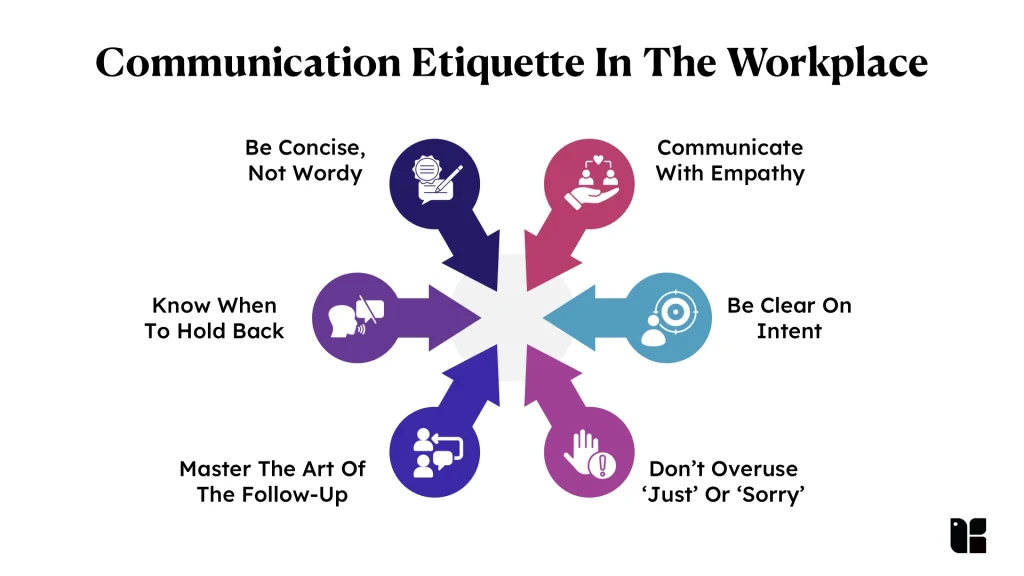
Be Concise, Not Wordy
Cut the fluff. When you’re sending an email or giving an update, aim for brevity. People skim, so get to the point quickly. For instance, instead of writing a long paragraph about a project, start with a one-sentence summary and then add just the details that matter. This saves time and shows you respect others’ attention.
Know When To Hold Back
Sometimes, silence is golden. If you’re unsure about something, wait before responding. In meetings, if you don’t have enough info, don’t just speak to fill the silence. Instead, say, “Let me check on that and get back to you,” and come prepared with a solid answer later. It shows confidence and prevents mistakes from being made.
Master The Art Of The Follow-Up
Don’t let your messages get lost in the shuffle. Instead of nagging, try this: send a short follow-up that adds value. For example, “I wanted to circle back on this, as I have some new data that could help.” This keeps the conversation moving without being annoying.
Communicate With Empathy
Always think about how your message will land. When you need to give feedback, make it a two-way conversation. Ask the other person for their thoughts before jumping in with your own. A simple, “What do you think about the approach so far?” helps them feel heard and opens the door for you to offer constructive feedback. Effective communication is not just about speaking but also understanding. Enhance it through active listening, giving full attention, and asking questions to clarify doubts.
Be Clear On Intent
Before starting any conversation, decide what you want to achieve. If your goal is to inform, give the facts with no fluff. If you want to ask for something, be specific about the request. Don’t leave the other person guessing what you need. For example, instead of “Can we discuss the project?” say, “Could we review the timeline for the project by the end of today?”
Don’t Overuse ‘Just’ Or ‘Sorry’
You don’t have to apologise every time you speak up, and you don’t need to soften your message with words like “just” (e.g., “I just wanted to check in”). Instead, state things confidently: “I need the report by 3 PM” sounds more direct and professional than “I just wanted to remind you…”.
With these hacks, you’ll improve not only how you communicate but how others perceive your professionalism.
“Kapable has played a crucial role in my growth. I joined to overcome challenges with public speaking and impromptu situations, especially in larger settings. The sessions helped me structure my ideas better and shift from reacting impulsively to responding thoughtfully, improving my workplace interactions. The tools and techniques I’ve learned have greatly boosted my confidence and clarity.”
– Jainil Vadhan (Programmatic Solutions Consultant At Amazon)
How Can You Improve Corporate Communication Skills?
Now that you’ve got the etiquette down, it’s time to focus on the ways to improve your communication skills in the corporate world.
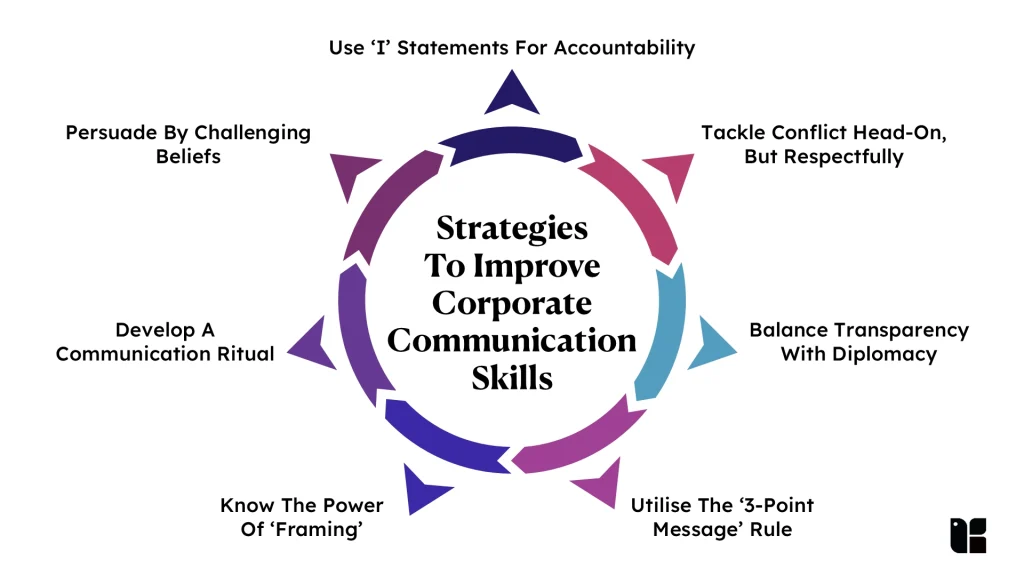
Use ‘I’ Statements For Accountability
In any conversation, especially tough ones, it’s easy to point fingers. “You never sent the report on time,” or “You didn’t follow up with the client.” But doing so can lead to defensiveness. Instead, use “I” statements to take ownership of your feelings or perspective. For instance, say, “I felt concerned when the report was late because it affects our project timeline.” This shifts the conversation from blame to collaboration. It encourages problem-solving rather than a confrontation and helps you keep control of your tone.
Persuade By Challenging Beliefs
Cognitive dissonance happens when people hold two conflicting beliefs or when their actions don’t align with their values. This psychological principle can be used effectively in corporate communication, especially in persuasion. If you want to influence someone, highlight the gap between their current behavior and their stated beliefs or values. For example, if you’re encouraging a colleague to adopt a more efficient process, you might say, “You’ve mentioned before how committed you are to improving team productivity. This new system could really help with that.” This makes them consider how their current actions conflict with their values, prompting them to take action.
Tackle Conflict Head-On, But Respectfully
Corporate environments often shy away from addressing conflict, but that approach can be damaging in the long run. Rather than avoiding disagreements, embrace them as opportunities for growth. The trick is to address the issue directly but respectfully. Start by acknowledging the other person’s perspective before presenting your own. “I understand your point of view on this, and I can see where you’re coming from. However, here’s another angle that might help us find a solution.” This not only shows that you respect the other party but also opens the door to resolution without causing friction.
Know The Power Of ‘Framing’
Framing is a psychological concept that involves presenting information in a way that influences how it’s perceived. In corporate communication, the way you frame your message can drastically alter its impact. Let’s say you need to deliver bad news, like a missed deadline. Instead of saying, “We missed the deadline,” try framing it as “We’re working hard to meet the original deadline, and we’ve encountered some unexpected challenges. Here’s how we plan to address them.” The latter approach not only softens the message but also shows you are taking responsibility and actively working to resolve the issue.
Utilise The ‘3-Point Message’ Rule
When delivering key points, especially in meetings or presentations, limit yourself to three main points. Why three? The human brain can typically retain only 3-5 pieces of information at a time, which is why the best communicators stick to a clear, concise message. Presenting three main points ensures that your message is memorable and digestible. For example, instead of listing ten features of a new product, boil it down to the top three that will most impact your audience. This simplifies the message and helps ensure that it sticks.
Balance Transparency With Diplomacy
Transparency is essential in building trust, but it’s a delicate balance, especially in corporate settings where you may have to communicate sensitive or negative information. The key is to be honest without oversharing or causing unnecessary worry. If your project is delayed, for instance, don’t just say, “We’re behind schedule,” but also provide a solution and timeline: “We encountered some challenges that delayed the project, but we’ve adjusted the timeline, and we’re confident we can deliver by X date.” This shows accountability while giving the listener a sense of control over the situation, rather than simply presenting problems.
Develop A Communication Ritual
Successful communication often comes down to consistency. Establishing a communication ritual can help solidify your message and make it easier for others to understand and follow. This could be something as simple as starting each meeting with a brief recap of the agenda, so everyone knows what to expect. Or, send a weekly summary email to your team outlining key decisions and next steps. By creating these rituals, you set clear expectations and foster a smoother flow of communication within your organisation.
By incorporating these strategies, you’ll see a significant improvement in how you can communicate, whether you’re dealing with conflicts, influencing others, or simply sharing information.
If you’re looking to improve your corporate communication skills and professional presence, Kapable’s program fit can help you decide whether it’s the right next step.
Which Advanced Skills Contribute To Effective Corporate Communication?
To take your business communication to the next level, it’s crucial to hone a diverse set of skills that enhance your ability to connect, persuade, and engage across various mediums and situations.
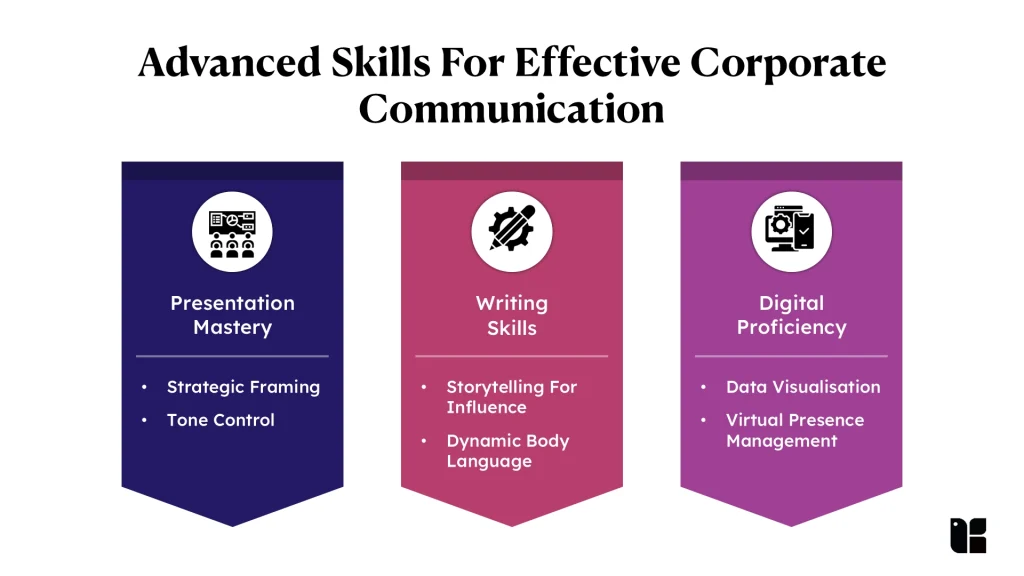
Writing Skills
Mastering writing in a corporate setting goes beyond grammar and spelling. It’s about framing your message strategically and understanding how tone impacts your communication.
- Strategic framing: Every email or report has a goal, whether it’s to inform, persuade, or motivate action. To enhance your writing, always start by identifying the key outcome you want from the message. For example, if you need approval for a project, frame your email or report in a way that emphasises how the project aligns with organisational goals and the benefits it will bring. By positioning your message this way, you’re guiding the reader’s attention towards the most important factors and increasing your chances of a favourable response.
- Tone control: The right tone is essential for achieving the desired reaction from your audience. Before you hit send, ask yourself: Who am I communicating with? What do I want them to feel? For instance, if you’re communicating with a senior executive about a delay, a neutral, solution-focused tone works best. However, if you’re delivering constructive feedback to a colleague, an empathetic tone will ensure the message is received positively. Adjusting your tone to match the relationship and purpose of your message helps build trust and avoid misunderstandings.
Presentation Mastery
Being able to communicate effectively in presentations requires more than just delivering information. It’s about telling a compelling story and engaging the audience with your body language.
- Storytelling for influence: When presenting, frame your message as a story. Start with a problem your audience can relate to, follow with a solution you’re offering, and finish by showing the positive outcome they can expect. There are many ways to refine your communication style, but the ability to adapt is one of the most valuable skills you should develop for a better professional presence. For example, if you’re presenting a new strategy, you might begin by discussing the challenges your team faces, then explain how the new strategy will resolve those issues, and finally highlight the tangible results it will produce. This narrative structure keeps your audience engaged and makes your points more memorable.
- Dynamic body language: In presentations, your body language speaks as loudly as your words. Use deliberate hand gestures to emphasise key points, making sure your gestures match the message you’re conveying. For example, if you’re explaining a complex idea, use your hands to visually break down the concept. Similarly, stand tall with open body language to project confidence and approachability. Avoid crossing your arms, which can seem defensive, and try to maintain eye contact with different members of the audience to create a sense of connection.
Digital Proficiency
In today’s digital world, being effective at virtual communication requires mastering the tools and presence to keep your audience engaged.
- Data visualisation: Instead of overwhelming your audience with a slide full of text and numbers, convert your data into clear visuals. Use charts, graphs, and infographics to make complex data easier to digest. For example, instead of listing a series of statistics in bullet points, create a pie chart that highlights key takeaways. This not only makes the information more accessible but also keeps the audience focused on your main points. By presenting data visually, you help your audience absorb and retain it better.
- Virtual presence management: In virtual meetings, your physical presence still matters. Pay attention to your lighting, ensure your face is well-lit and not shadowed by your surroundings. Set up your camera so you’re at eye level and avoid cluttered backgrounds that distract from your message. In addition to technical details, engage with the camera like you would with a live audience. Maintain eye contact by looking directly into the camera, not at the screen. This makes you appear more present and engaged, even in a digital setting.
Mastering these techniques will make you stand out as a confident, clear, and impactful communicator in the corporate world.
Conclusion
Communication skills are essential in a corporate setting, as they impact collaboration, leadership, and problem-solving. To elevate your corporate communication, use tools like Slack or Microsoft Teams to streamline conversations, and Grammarly or Hemingway to refine your writing. Visual aids such as Canva or PowerPoint can help create impactful presentations. Enrolling in a leadership development program focused on communication, offering practical strategies and real-time feedback, is also crucial. These resources will enhance your communication skills, enabling you to connect more effectively with your team and stakeholders.


