


TL;DR
- Personalised, Long-Term Development: Corporate Leadership Coaching is a highly personalised approach that focuses on helping executives and managers overcome specific, real-world workplace challenges. It is effective because it challenges limiting assumptions, provides honest feedback, and integrates reflection into daily action to build lasting habits and confidence.
- Direct Business Impact: The benefits of coaching are not limited to individual growth, directly strengthening business success. Key impacts include faster and better strategic decision-making, significant reduction in employee turnover, higher team productivity, and improved crisis management capabilities.
- Requires Structured Implementation: For sustained results, organisations must implement coaching effectively by clearly defining objectives, choosing the right style (Executive, Performance, etc.), integrating it into the daily workflow, and tracking measurable progress to build a continuous coaching culture.
77% of executives who worked with a coach saw improvements in at least one of nine business measures, with overall productivity and employee satisfaction seeing the largest increase. But the question remains: How can companies make sure they’re using coaching in the right way to truly drive their business forward? In this blog, we’ll explore how leadership coaching goes beyond just developing skills, shaping leaders who can create lasting change for their organisations.
What Is Corporate Leadership Coaching?
Corporate leadership coaching helps managers and executives become better at handling real workplace challenges. It focuses on improving decision-making, communication, and the ability to guide teams effectively. Unlike training programs that teach general skills, coaching is more personal. Leaders get direct feedback, work on specific areas of improvement, and develop habits that help them manage people and situations more confidently.
The significance of leadership coaching goes beyond individual growth. It directly impacts business success by improving team collaboration, reducing the leadership gaps, and increasing overall efficiency. When leaders are coached effectively, they make better strategic decisions, handle conflicts with more confidence, and create a culture where employees feel valued and motivated. This not only strengthens leadership at all levels but also improves employee retention and business performance in the long run.

What Makes Corporate Leadership Coaching Effective?
Leadership coaching is effective because it gets to the root of leadership challenges. Here’s what makes coaching effective in corporate settings:
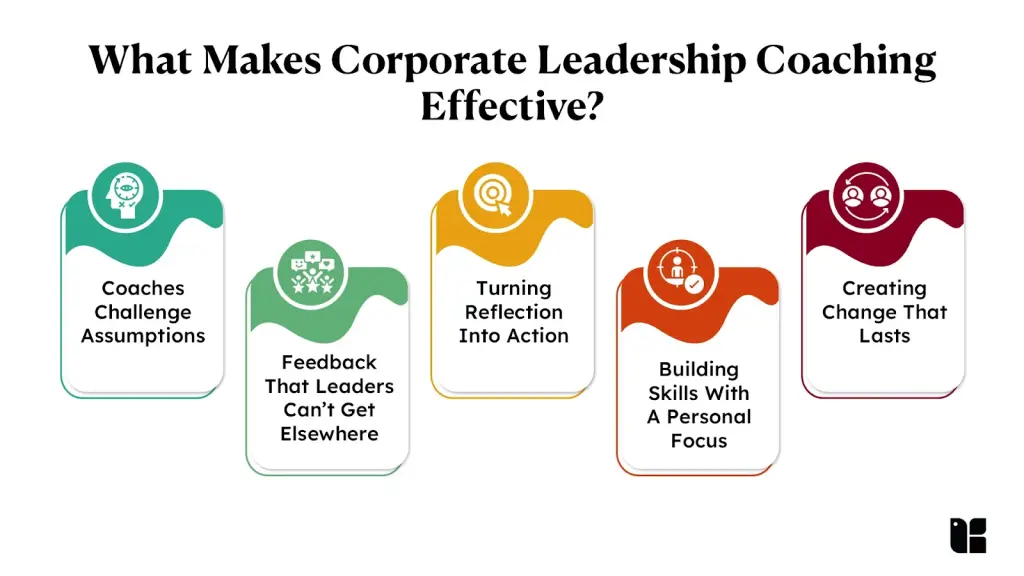
Coaches Challenge Assumptions
Many leaders don’t realise that their thinking patterns limit their effectiveness. A good coach doesn’t just listen; they ask questions that force leaders to rethink their approach. For example, if a leader struggles with delegation, a coach might ask, “What makes you hesitant to let go of control?” This helps uncover underlying fears, whether it’s a lack of trust or the belief that no one else can do the job as well. By addressing these root causes, coaching leads to real change.
Feedback That Leaders Can’t Get Elsewhere
Employees may hesitate to point out a leader’s weaknesses, and peers might not offer direct feedback. A coach provides honest insights that a leader won’t get from their team. For example, if a leader constantly interrupts others in meetings, a coach will highlight this habit and work with them to change it. Without this kind of feedback, many blind spots go unnoticed, preventing growth.
Turning Reflection Into Action
Reading leadership books or attending seminars provides knowledge, but coaching ensures application. A coach doesn’t just discuss concepts, they guide leaders in applying them to daily work. If a leader struggles with conflict resolution, the coach doesn’t just explain techniques. They help the leader prepare for an upcoming difficult conversation, role-play different approaches, and review what worked and what didn’t afterward. This cycle of practice and refinement makes coaching effective.
Building Skills With A Personal Focus
Many leadership programs offer broad advice that may not fit an individual’s needs. Coaching is different because it focuses on the leader’s specific challenges. For example, two managers struggling with low team morale may need completely different solutions, one might need to improve communication, while another needs to address fairness in workload distribution. A coach tailors the approach, ensuring the solutions actually work in the leader’s environment.
Creating Change That Lasts
Workshops and motivational talks may inspire leaders for a short time, but habits don’t change overnight. Coaching provides continuous support, keeping leaders accountable for improvement. If a leader wants to become more approachable, a coach might set weekly challenges, like initiating casual check-ins with employees. Over time, these small changes become natural habits, leading to long-term impact.
When leadership coaching is structured well, it doesn’t just benefit individuals, it improves team collaboration, decision-making, and overall business performance.
Explore Kapable’s coaching methodology for developing leadership capabilities through tailored feedback, accountability, and continuous behavioural improvement.
What Is The Real Impact Of Coaching On Business Success?
Leadership coaching is a game-changer for businesses because its real impact goes beyond just improving individual performance.
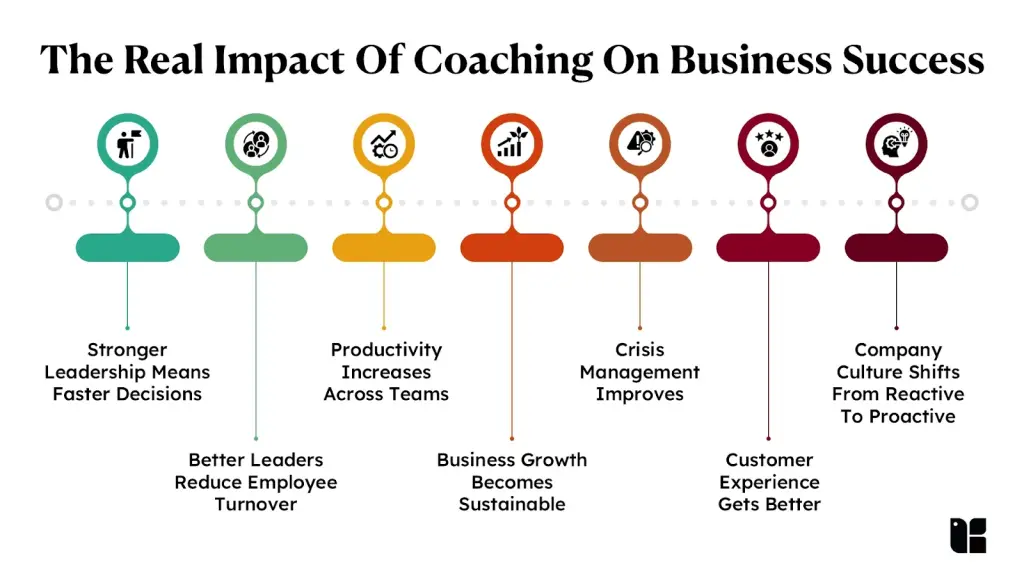
Stronger Leadership Means Faster Decisions
In many companies, decisions get stuck at the top because leaders hesitate, second-guess themselves, or fear making mistakes. Coaching helps leaders trust their judgment, process information faster, and take action without unnecessary delays. When decisions move faster, projects don’t stall, market opportunities aren’t missed, and businesses stay ahead of competitors.
Better Leaders Reduce Employee Turnover
Poor leadership is one of the biggest reasons employees leave. Leaders who micromanage, fail to communicate, or don’t recognise their team’s efforts create a toxic environment. Coaching teaches leaders how to support employees, give meaningful feedback, and build trust. When employees feel valued and understood, they are more likely to stay, reducing recruitment costs and keeping institutional knowledge within the company.
Productivity Increases Across Teams
A company’s efficiency depends on how well its teams work together. Coaching helps leaders learn how to delegate effectively, remove obstacles, and streamline decision-making within their teams. Instead of employees waiting for unclear instructions or fixing leadership mistakes, they can focus on productive work. This leads to faster project completions, fewer bottlenecks, and better overall output.
Business Growth Becomes Sustainable
Many companies experience rapid growth but struggle to maintain it because their leaders aren’t prepared for the next stage. Without strong leadership, scaling a business can lead to poor coordination, inefficiency, and burnout. Coaching ensures leaders develop the skills needed to handle expansion, whether that’s managing larger teams, making high-stakes financial decisions, or maintaining company culture during rapid changes.
Crisis Management Improves
Businesses face unexpected challenges all the time, economic downturns, PR crises, leadership changes. Companies that rely on leaders who panic or act impulsively often suffer long-term damage. Coaching helps leaders stay calm under pressure, assess situations logically, and make well-thought-out decisions. Instead of reacting emotionally or blaming others, coached leaders take control, communicate effectively, and steer the company in the right direction during tough times.
Customer Experience Gets Better
Leadership doesn’t just affect employees, it affects customers, too. Poor leadership leads to disengaged employees, which results in poor customer service. Coached leaders create a positive work environment where employees are motivated to deliver better service. Happy employees engage better with customers, resolve issues more efficiently, and build stronger client relationships. This directly improves customer satisfaction, brand loyalty, and ultimately, revenue.
Company Culture Shifts From Reactive To Proactive
Many businesses operate in survival mode, only addressing problems when they become urgent. Coaching shifts this mindset by helping leaders anticipate challenges, identify risks early, and implement solutions before problems escalate. Instead of always playing catch-up, companies with well-coached leaders build a proactive culture that fosters innovation, strategic planning, and long-term stability.
When leaders grow, businesses grow, and that’s exactly how coaching makes a tangible difference to success.
“Kapable has helped me transform my communication skills, enabling me to speak with clarity and assertiveness. I can now handle team dynamics effectively and confidently team members which is a significant improvement from where I started.”
– Shyam Sundar AM (Team Lead At TCS)
Which Coaching Styles Best Resonate With Corporate Leaders?
Different leaders face different challenges, and coaching styles need to match those needs. Here’s how each coaching style works and why it fits specific types of corporate leaders.
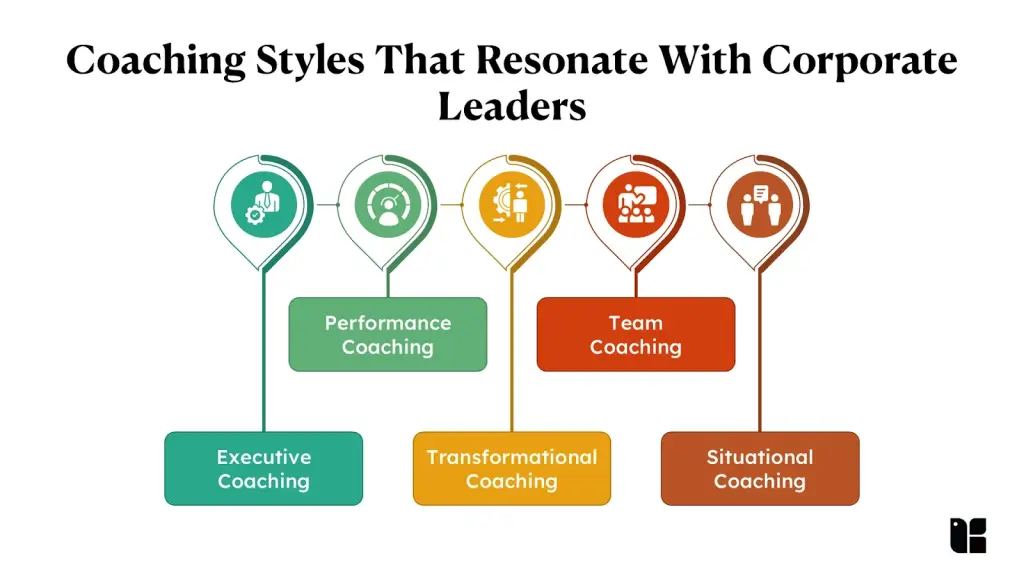
Executive Coaching
Executive leadership coaching is designed for CEOs, senior executives, and high-level managers who deal with company-wide strategies, stakeholder management, and complex decision-making. These leaders often don’t get honest feedback from their teams, and this coaching provides a space where they can discuss challenges openly. It helps them refine their leadership style, handle boardroom pressure, and think strategically while staying grounded in reality. It also focuses on building self-awareness and enhancing emotional intelligence, which are crucial in leadership roles. Senior leaders need an unbiased perspective to challenge their thinking, provide clarity, and help them balance long-term vision with day-to-day responsibilities.
Performance Coaching
This coaching is for managers and leaders who are technically strong but need to improve areas like communication, delegation, or decision-making. It’s practical and focused on measurable improvements, using feedback, role-playing, and direct action plans. Some leaders struggle with team dynamics or effective delegation despite having industry expertise. Performance coaching helps them work on these gaps in real time, ensuring they see immediate improvements in their leadership approach.
Transformational Coaching
When organisations are restructuring, launching new initiatives, or going through cultural shifts, leaders need to inspire and guide teams through uncertainty. Transformational coaching focuses on mindset shifts, helping leaders become more adaptable, resilient, and open to change. It pushes them to break old habits and develop a leadership style that aligns with the company’s needs. Change is uncomfortable. Leaders who resist change can hold a company back. This coaching style helps them embrace uncertainty, think beyond their past experiences, and lead teams with confidence during major transitions.
Team Coaching
A leadership team might have skilled individuals, but if they don’t work well together, the company suffers. Executive coaches provide a highly personalised approach for leaders who want to grow and achieve more with their teams. Team coaching helps department heads, executive teams, and cross-functional leaders improve communication, align on shared goals, and resolve conflicts that impact business outcomes. Many leadership teams operate in silos, which creates misalignment and inefficiencies. This coaching ensures leaders collaborate effectively, so the entire company moves forward with a shared vision.
Situational Coaching
Some leadership challenges don’t require long-term coaching but urgent, situation-specific guidance. Whether it’s managing a company crisis, stepping into a new role, or handling a sudden team conflict, situational coaching helps leaders navigate high-pressure moments effectively. Leaders don’t always have the luxury of time to reflect and adjust. This coaching style provides immediate, actionable insights to help them make critical decisions with confidence.
Each of these coaching styles addresses specific leadership challenges. Companies often use a combination of them, ensuring leaders at all levels get the right kind of support based on their unique needs.
How To Implement Executive Leadership Coaching In Organisations?
Introducing leadership coaching in a company requires a structured approach to make sure it actually benefits leaders and the organisation. Here’s how companies can implement leadership coaching effectively.
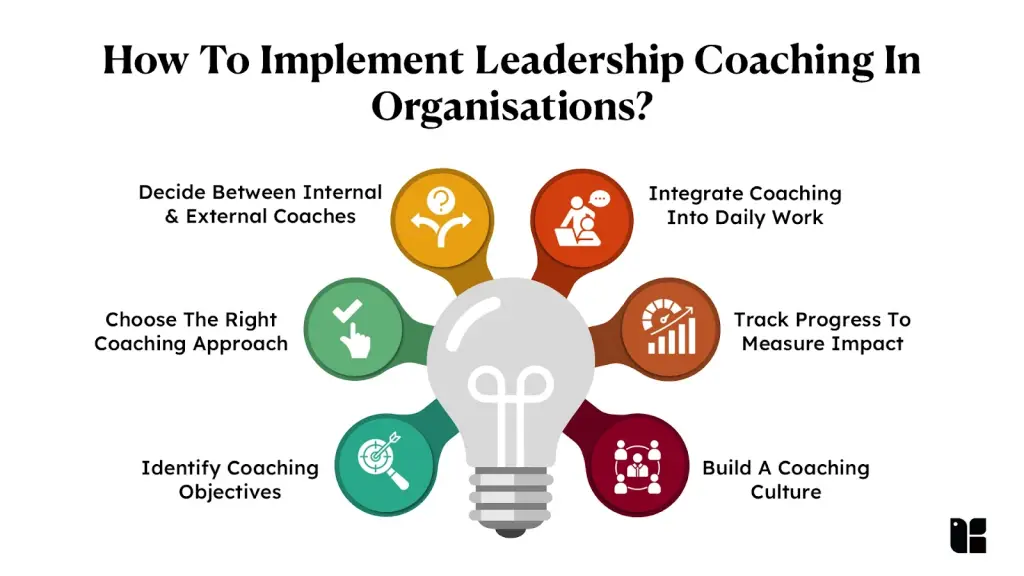
Identify Coaching Objectives
Before launching a coaching program, companies need to be clear on why they’re doing it. Are managers struggling with communication? Do executives need support with decision-making? Is teamwork weak across departments? Understanding these gaps helps set clear goals. For example, if middle managers struggle with delegation, the focus should be on helping them trust and empower their teams. If senior leaders need to improve stakeholder management, coaching should be designed for that. Clarity at the start ensures the program delivers real results.
Choose The Right Coaching Approach
Leadership coaching isn’t one-size-fits-all. Senior executives may need strategic guidance, while mid-level managers might need help with communication or conflict resolution. Some leaders may need coaching for big transitions, while others may need support in managing company-wide changes. The key is to align the coaching approach with the organisation’s specific needs rather than giving everyone generic advice.
Decide Between Internal And External Coaches
Companies can either train senior leaders to coach internally or bring in external professionals. Internal coaches understand company culture better but may not always be objective. External coaches bring expertise and fresh insights but come at a higher cost. Many companies use both, external coaches for top executives and internal coaching programs for middle managers. The right balance depends on the company’s needs and budget.
Integrate Coaching Into Daily Work
Coaching should feel like a natural part of leadership development, not just another initiative. Managers should regularly use coaching techniques in their conversations, and leaders should have ongoing coaching-style check-ins with their teams. Creating peer coaching opportunities and incorporating coaching into performance reviews also helps. When coaching is built into daily work, leaders improve continuously instead of seeing it as a one-time exercise.
Track Progress To Measure Impact
Leadership coaching only works if it leads to real improvements. Companies need to track whether leaders are communicating better, making faster decisions, or resolving conflicts more effectively. Leadership assessments before and after coaching can help measure progress. Business outcomes like employee engagement, team productivity, and retention rates also show whether coaching is making a difference. Without tracking results, coaching becomes just another leadership program with no clear impact.
Build A Coaching Culture
For leadership coaching to be effective long-term, companies need to make coaching a part of their culture. Senior leaders should lead by example by actively participating in coaching. Coaching should be seen as a tool for continuous improvement, not just something leaders do when there’s a problem. Recognising and rewarding leaders who develop their teams through coaching helps reinforce this mindset. A strong coaching culture ensures leadership growth becomes a regular part of how the company operates.
Implementing leadership coaching isn’t about bringing in coaches and hoping for results. It requires a structured approach. When done right, leadership coaching helps organisations build stronger, more capable leaders who drive business success.
How Can Organisations Overcome Common Barriers To Coaching Success?
Even with leadership coaching in place, many leaders don’t see real improvement. This happens because of certain barriers that block progress. Here’s what they are and how to solve them effectively.

Discomfort With Feedback And Change
Some leaders avoid coaching because it forces them to face uncomfortable truths about their leadership style. Others may listen to feedback but resist making real changes. Instead of pointing out flaws, coaching should focus on growth. Reframing feedback as a way to improve rather than a criticism helps leaders be more open. Creating a culture where regular feedback is normal also makes leaders less defensive.
Poor Match Between Coach And Leader
An executive coach works one on one with leaders to create the best personalised development strategies. If a leader doesn’t connect with their coach, the coaching process feels forced and ineffective. A mismatch in communication style or coaching approach can prevent real progress. Leaders should have the option to choose a coach they feel comfortable with. A short introductory session before committing to a coach helps determine compatibility. Organisations should also offer different coaching styles to suit various leadership needs.
No Real Accountability
Some leaders attend coaching sessions but don’t apply what they learn. Without follow-up, they slip back into old habits, making coaching ineffective. Every coaching session should end with clear action points that are reviewed in the next session. Leaders should also involve their teams, asking for feedback from employees helps keep them accountable. Setting measurable goals, like improving delegation by assigning specific tasks weekly, ensures visible progress.
Expecting Quick Results
Organisations sometimes expect immediate leadership transformation from coaching. When they don’t see instant results, they lose faith in the process and abandon it too soon. Coaching should be seen as a long-term investment. It works best when combined with ongoing leadership programs, mentorship, and structured follow-ups. Encouraging leaders to document their progress over time also helps them see gradual improvements.
Lack Of Time Due To Heavy Workload
Leaders often struggle to find time for coaching amid meetings, deadlines, and daily responsibilities. When it feels like extra work, they do not prioritise it. Instead of treating coaching as a separate task, organisations should integrate it into daily work. Shorter, more frequent coaching sessions biweekly would work better than long, irregular sessions. Embedding coaching into daily interactions, such as post-meeting reflections, also makes it more practical.
No Clear Measurement Of Progress
Many organisations don’t track whether coaching is leading to real improvements. Without data, it’s hard to prove its impact. Leadership growth should be measured through tangible metrics. Tracking engagement scores, employee feedback, or changes in team performance can show whether coaching is working. Leaders should also set personal milestones and reflect on their progress over time.
Overcoming these barriers requires making coaching a structured, integrated, and measurable part of leadership development. When leaders see its value, receive the right support, and are held accountable, coaching becomes a powerful tool for growth.
Conclusion
As organisations look to the future, leadership coaching will become even more important, especially for mid-level managers and emerging leaders. Our executive coaching program helps leaders develop skills and insights they need for executives to excel. It is a tailored approach that addresses the individual needs of leaders, ensuring they are able to navigate challenges effectively. When leaders are equipped with the tools to manage both their personal growth and the well-being of their teams, it leads to a healthier, more engaged workforce.
If you’re ready to invest in long-term leadership development through executive coaching, Kapable’s eligibility guide can help you determine whether the program is right for you.


