


TL;DR
- Scope of Influence: Teacher leadership is an essential, multifaceted force that extends into the wider school ecosystem, encompassing critical functions like advocacy, professional development, and school improvement initiatives.
- Situational Styles: Educational leaders utilise varied approaches, including authoritative, affiliative, democratic, coaching, and pacesetting styles, blending them to suit specific organisational needs and goals.
- Core Competencies: Effective teacher leaders possess a vital mix of skills such as emotional intelligence, a clear vision, and a commitment to best practices, which they enact through strategies like mentoring and differentiated instruction.
- Systemic Impact: Empowering teachers as leaders significantly enhances professional autonomy, facilitates successful change management, strengthens interdisciplinary collaboration, and plays a crucial role in shaping educational policy.
Teacher leadership, as underscored by the National Education Association, is a potent yet often underutilised force within schools. Many institutions restrict teacher leadership to specific roles and tasks. However, respected colleagues still have a significant and broad impact on school culture and initiatives.
Today, more than ever, the need for effective teacher leadership is clear. This role is essential in shaping educational outcomes, fostering collaborative environments, and driving positive change. Here, we look into the essential skills that empower teachers to assume leadership roles and make a lasting impact on their educational communities.
What Is The Concept Of Teacher Leadership?
Teacher leadership is a multifaceted role that extends far beyond traditional classroom teaching. It includes various forms of leadership within educational settings, where teachers play pivotal roles in shaping school culture and driving improvement initiatives.

Advocacy
Teachers advocate by voicing the needs and concerns of their students and colleagues. This often involves highlighting areas that require attention and working to bring about positive change.
Professional Development
Teachers lead professional development by sharing their expertise and facilitating learning among peers. This not only enhances the skills of individual teachers but also raises the overall teaching quality within the school.
Curriculum Instruction
Teacher leaders contribute to curriculum instruction by developing and refining educational materials, ensuring they meet students’ needs and align with educational standards. This role involves framing a new curriculum, gathering feedback, and making necessary adjustments.
School Improvement
Teacher leaders participate in committees and task forces aimed at addressing school-wide issues, demonstrating their commitment to continuous improvement. By analysing data and implementing targeted interventions, they help create a more supportive school environment.
Community Engagement
Teachers engage with the community by building partnerships with parents, local businesses, and organisations. This engagement supports student learning and a sense of shared responsibility for student success.
The strongest teacher leaders create lasting impact by shaping how people think, learn, and grow over time. Developing this approach to leadership is an important focus of Kapable.
How Many Leadership Styles Are Used In The Field Of Education?
In education, leadership styles vary to accommodate diverse organisational needs and contexts. Here are some of the prominent leadership styles:
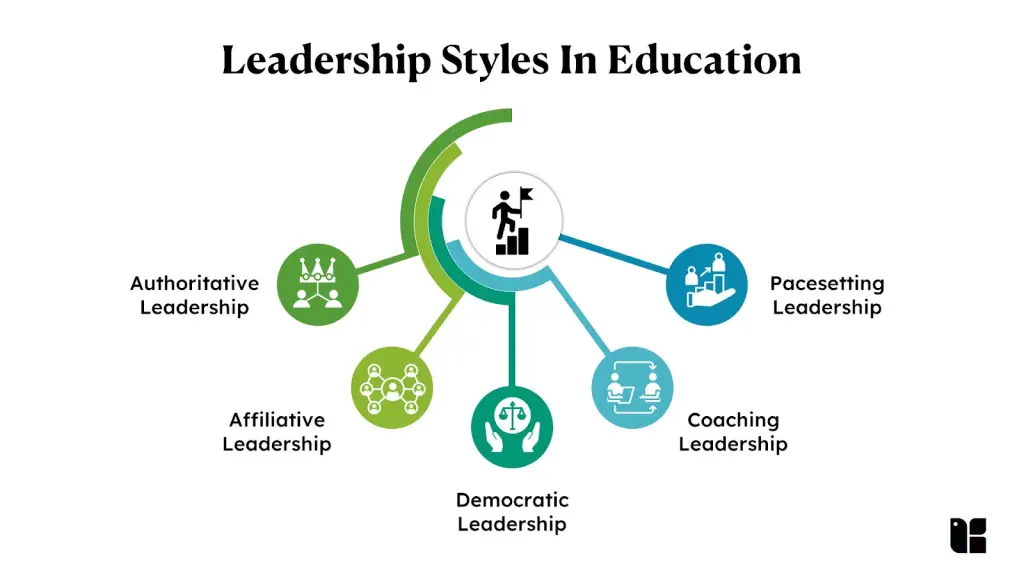
Authoritative Leadership
Authoritative leaders set a clear vision and direction for their schools, making decisions confidently while providing a strong sense of purpose. This style is particularly effective in situations requiring a new direction or when a school needs to improve performance. For example, a principal implementing a new school-wide literacy program may use an authoritative approach to ensure everyone understands the goals and expectations. This involves outlining the steps, providing necessary resources, and monitoring progress closely to ensure the initiative’s success.
Affiliative Leadership
Affiliative leaders prioritise building strong relationships and creating a harmonious school environment. This style is useful during times of stress or when rebuilding trust is necessary. For instance, after a challenging period, such as a school merger or a significant policy change, a principal might focus on team-building activities, open communication, and providing emotional support to staff and students. This helps to restore morale and foster a sense of community within the school.
Democratic Leadership
Democratic leaders value input from all stakeholders, fostering a sense of ownership and collaboration in decision-making processes. This approach is beneficial when seeking innovative solutions or making changes that affect the entire school community. For example, when developing a new school policy on technology use, a principal might hold forums and workshops to gather ideas from teachers, students, and parents. By involving everyone in the process, the final policy is more likely to be well-received and effectively implemented.
Coaching Leadership
Coaching leaders focus on developing the skills and abilities of their team members, providing guidance and feedback to help them grow professionally. This style is effective for long-term development and building a culture of continuous improvement. For instance, a principal might work individually with teachers to help them refine their instructional techniques, offering regular observations and constructive feedback. This not only enhances teaching quality but also boosts teachers’ confidence and job satisfaction.
Pacesetting Leadership
Pacesetting leaders set high standards and lead by example, expecting excellence from themselves and their team. This approach works well in high-performing schools or when striving to achieve specific, short-term goals. For example, during an important accreditation process, a principal might adopt a pacesetting style to ensure all documentation is prepared meticulously and deadlines are met. While this can drive significant achievements, it’s important to balance it with support to avoid burnout among staff.
Each leadership style has its strengths and can be effective depending on the organisational context and goals. Effective educational leaders often blend these styles based on situational needs to maximise impact and promote a positive school culture conducive to student success.

What Are The Key Qualities Of Effective Teacher Leadership?
Effective teacher leaders possess a unique blend of skills and qualities that enable them to succeed in their roles:

Building Community
Teachers who excel in building a strong community create an inclusive and supportive environment for both students and colleagues. This quality impacts students by fostering a sense of belonging and promoting collaboration. One way to do this is by implementing a buddy system where older students mentor younger ones and can help build connections across different age groups. Additionally, organising regular community-building activities, such as group projects or classroom meetings, ensures that students feel part of a cohesive unit. Community-building strategies such as peer mentoring programs or collaborative projects encourage students to support each other, enhancing their social skills and academic performance.
Empowering Teachers As Leaders
Empowering other teachers as leaders within the school not only enhances their professional growth but also positively impacts students by bringing innovative teaching practices into the classroom. Teacher leaders often mentor their peers, share effective teaching strategies, and lead professional development sessions. Creating teacher leadership teams where selected teachers take on roles such as curriculum coordinators or professional development leaders. These teams can lead workshops, mentor new teachers, and spearhead instructional initiatives, ensuring that the latest educational strategies are implemented school-wide.
Utilising Resources
Teacher leaders are skilled at analysing data to inform instructional practices and decision-making. They analyse assessment data and educational research to identify strengths and areas for improvement in student learning. Based on this analysis, they collaborate with colleagues to develop targeted teaching strategies. They can form partnerships with community organisations to provide additional learning materials and opportunities. For instance, teachers might use technology to access online educational platforms, collaborate with local libraries for additional reading materials, or invite guest speakers to provide real-world insights. By utilising these resources, teachers can offer diverse and engaging learning experiences that cater to different learning styles.
Having A Vision
Having a clear vision for educational goals and outcomes is crucial for teacher leaders. This vision guides their actions and decisions, inspiring both students and colleagues to strive for excellence. Develop a collaborative vision statement for the classroom or school. Determine the fundamental values and principles that will guide the educational approach. These might include inclusivity, innovation, critical thinking, and lifelong learning. Based on the input collected, draft a vision statement that clearly articulates the shared goals and aspirations. Ensure it is concise, inspirational, and reflective of the community’s collective input.
Inclusive Learning Environments
Creating an inclusive learning environment ensures that all students, regardless of their background or abilities, feel valued and supported. One strategy is using differentiated instruction plans, where lessons are tailored to meet the diverse needs of students. Teachers can use varied teaching methods such as small group work, individualised learning plans, and flexible seating arrangements to cater to different learning styles and needs. Teachers might use diverse teaching materials that reflect students’ cultural backgrounds and encourage collaborative learning activities where students learn from each other’s perspectives. This approach helps all students to grow academically and socially.
Emotional Intelligence
Teacher leaders demonstrate emotional intelligence by understanding and responding to the needs and perspectives of others. They build strong relationships on trust, empathy, and effective communication skills with colleagues, students, and parents. Social-Emotional Learning (SEL) Programs can be implemented where students learn about emotions, empathy, and relationship skills. Regularly incorporating activities like reflective journaling, emotion check-ins, and role-playing scenarios can help students and teachers practise and develop their emotional intelligence.
Honouring Best Practices
Teacher leaders who honour best practices in education stay updated with the latest research and continuously seek to improve their teaching methods. Professional learning communities are formed where teachers meet regularly to discuss and share effective teaching strategies, review educational research, and collaboratively solve instructional challenges. They prioritise student-centred approaches that personalise learning experiences and empower students to achieve their full potential. This collective effort ensures that best practices are consistently applied and refined.
These skills and qualities empower teacher leaders to make a significant impact on educational outcomes and contribute to a thriving school community.
“This 3-month journey has been enlightening, as I transitioned from an ambitious manager to an inspiring leader. Applying Kapable’s techniques, I confidently delivered a 30-minute speech at our Annual Planning Session, receiving positive feedback from my team. Kapable has been instrumental in helping me reach my full potential.”
– Sailesh Gadalay (Sr Account Director – Enterprise Sales At Linkedin)
Why Teacher Leadership Matters?
Teacher leadership plays a pivotal role in shaping educational outcomes and fostering a supportive learning environment. Here are key reasons why teacher leadership is crucial:

Encouraging Professional Autonomy
Teacher leaders help to foster an environment where educators have the freedom to make decisions about their teaching practices. This autonomy can boost teacher morale and effectiveness, as it allows teachers to tailor their methods to best meet the needs of their students. A teacher leader developing a flexible framework for lesson planning that allows teachers to incorporate their own innovative techniques and approaches is an example of professional autonomy. This autonomy helps teachers feel more invested in their work and enhances their ability to engage students in meaningful ways.
Facilitating Change Management
Teacher leaders are skilled in managing and implementing changes within schools. They help navigate transitions by communicating effectively, addressing concerns, and ensuring that changes align with the school’s goals and values. When a new educational technology is introduced, a teacher leader leads training sessions for their colleagues and provides ongoing support. This approach helps ease the transition and ensures that the technology is integrated smoothly into the curriculum, facilitating effective change management.
Strengthening Interdisciplinary Collaboration
Teacher leaders promote interdisciplinary collaboration, encouraging teachers from different subject areas to work together on projects and initiatives. This collaboration enriches the educational experience and helps students make connections between different fields of study. For example, they might organise interdisciplinary workshops where teachers from science, maths, and language arts collaborate on integrated lesson plans. This approach not only enhances students’ understanding of complex concepts but also helps create a cohesive school community that is united in its commitment to student success.
Enhancing Teacher Retention
Effective teacher leadership contributes to a positive work environment, which can significantly impact teacher retention and job satisfaction. By providing support, recognition, and opportunities for professional growth, teacher leaders help create a more fulfilling and sustainable career experience for their colleagues. A teacher leader initiates mentorship programs that pair new teachers with experienced mentors. This support network not only helps new teachers feel more connected and supported but also contributes to higher job satisfaction and reduced turnover rates.
Shaping Educational Policies
Teacher leaders play a crucial role in shaping and influencing educational policies by providing valuable insights and feedback based on their classroom experiences. Their on-the-ground perspective helps ensure that policies are practical, effective, and aligned with the needs of students and educators. Teacher leaders advocate for policies that are equitable, inclusive, and aligned with the school’s mission and values. They participate in policy-making processes at the school, district, and sometimes even at the state or national levels, ensuring that the voices of educators and students are heard and considered.
Teacher leadership empowers educators to lead from within, making significant contributions to student achievement, school improvement, collaborative culture, and the development of effective educational policies and practices.
Conclusion
As we reflect on the significance of teacher leadership, let us recognise its profound impact on student achievement, school culture, and educational excellence. Whether as instructional specialists, mentors, or advocates for policy reform, teacher leaders play a crucial role in shaping the future of education. By honing skills like effective communication, empathy, and collaboration, teachers can greatly influence their students’ learning and their colleagues’ growth. Developing these leadership qualities not only enhances teachers’ careers but also helps create a supportive and innovative school environment.
The qualities that help teachers guide others also help professionals build stronger teams and workplaces. Kapable gives you an opportunity to evaluate whether its approach aligns with your aspirations.


