


TL;DR
- AI and EI Foundational Roles: Artificial Intelligence excels at data processing and automation with core functions like machine learning, while Emotional Intelligence provides the human ability to manage emotions and build meaningful relationships.
- Distinct Capabilities and Applications: AI’s objective, data-driven decision-making, transforms industries like finance and healthcare, whereas EI’s self-awareness, empathy, and social skills are vital for leadership, conflict resolution, and effective human interaction.
- Emergence of Artificial Emotional Intelligence: AEI integrates emotion recognition technologies such as voice tone and facial analysis into AI systems to support empathetic customer service, personalised learning, and mental health support applications.
- Enduring Human Superiority and Ethical Oversight: Despite AI advancements, human emotional depth, creativity, and moral judgment remain indispensable, underscoring the need for human-centric design and ethical consideration to manage biases and protect user data in the evolving AI ecosystem.
“Technology is best when it brings people together.” – Matt Mullenweg
In a world where technology is constantly evolving, this sentiment rings truer than ever. As Artificial Intelligence (AI) continues to revolutionise industries with its ability to process data and automate tasks, another crucial aspect of human experience remains just as vital: Emotional Intelligence (EI). While AI excels in analysing patterns and making predictions, EI focuses on understanding and managing emotions, fostering empathy, and nurturing meaningful relationships. Together, they’re shaping a future where technology not only understands data but also connects with us on an emotional level. Let’s explore how these two forces converge and complement each other, paving the way for a more interconnected and empathetic society.
What Is Artificial Intelligence?
Artificial Intelligence (AI) refers to the simulation of human intelligence in machines, enabling them to perform tasks that typically require human intelligence, such as visual perception, speech recognition, decision-making, and language translation.
Core Functions Of AI
AI is transforming industries by automating complex processes. Understanding its core functions is crucial for utilising its potential effectively. Here’s a closer look at the fundamental roles AI plays across various domains.
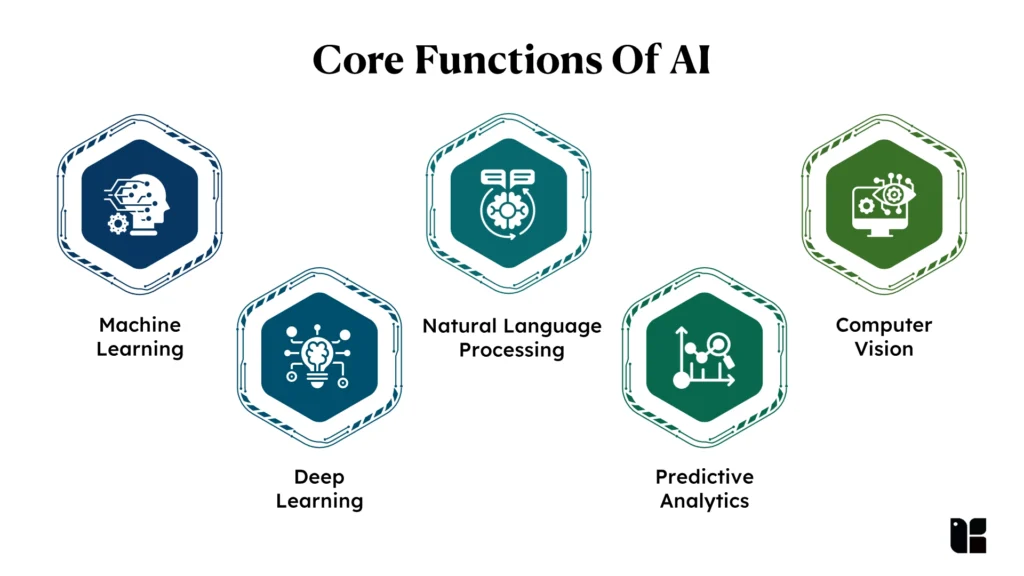
- Machine Learning: Algorithms that learn from data and improve over time without explicit programming. This enables AI systems to recognise patterns and make predictions.
- Deep Learning: A subset of machine learning where artificial neural networks learn from large amounts of data. Deep learning is particularly effective in tasks such as image and speech recognition.
- Natural Language Processing: AI’s ability to understand, interpret, and generate human language, enabling applications like chatbots and language translation services.
- Predictive Analytics: AI uses data analysis and machine learning techniques to forecast future outcomes based on historical data. This capability is used extensively in fields like finance for stock market predictions.
- Computer Vision: AI enables machines to interpret and understand visual information from the world, similar to how humans perceive and process images. This capability is crucial for tasks such as facial recognition, autonomous driving, and quality control in manufacturing.
Applications Of AI
From healthcare to finance, its applications are broad and impactful. Let’s explore how AI is being used to drive advancements and shape the future in various fields.
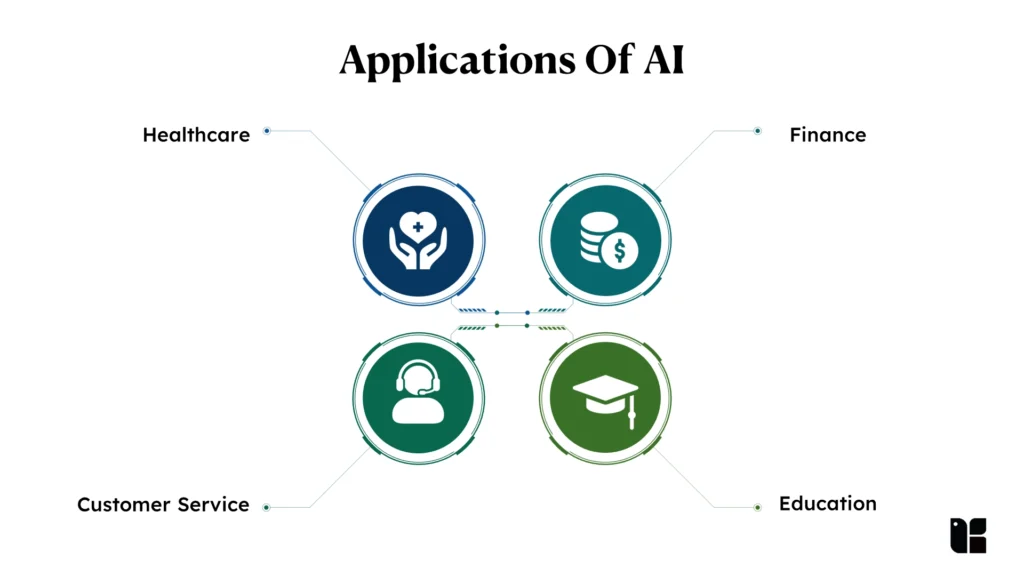
- Healthcare: From diagnostics to personalised treatment plans, AI enhances medical decision-making and patient care.
- Finance: AI powers fraud detection, algorithmic trading, and personalised financial advice.
- Customer service: Chatbots and virtual assistants improve customer experience and streamline support services.
- Education: AI-driven platforms enable personalised learning experiences and adaptive tutoring.
AI’s integration into industries is transforming workflows and operational models. By automating routine tasks and decision-making processes, AI enhances efficiency and scalability. However, this automation also raises concerns about job displacement and the need for workforce adaptation.

How Can We Define The Concept Of Emotional Intelligence?
Emotional Intelligence (EI) is a critical aspect of human behaviour that involves the ability to recognise, understand, and manage emotions effectively, both in oneself and others. In today’s increasingly digital and interconnected world, Emotional Intelligence remains as important as ever, influencing personal relationships, professional interactions, and overall well-being. Let’s look at the components of Emotional intelligence.
Components Of Emotional Intelligence
Emotional Intelligence comprises key components that collectively empower individuals to navigate emotions effectively and foster meaningful connections:
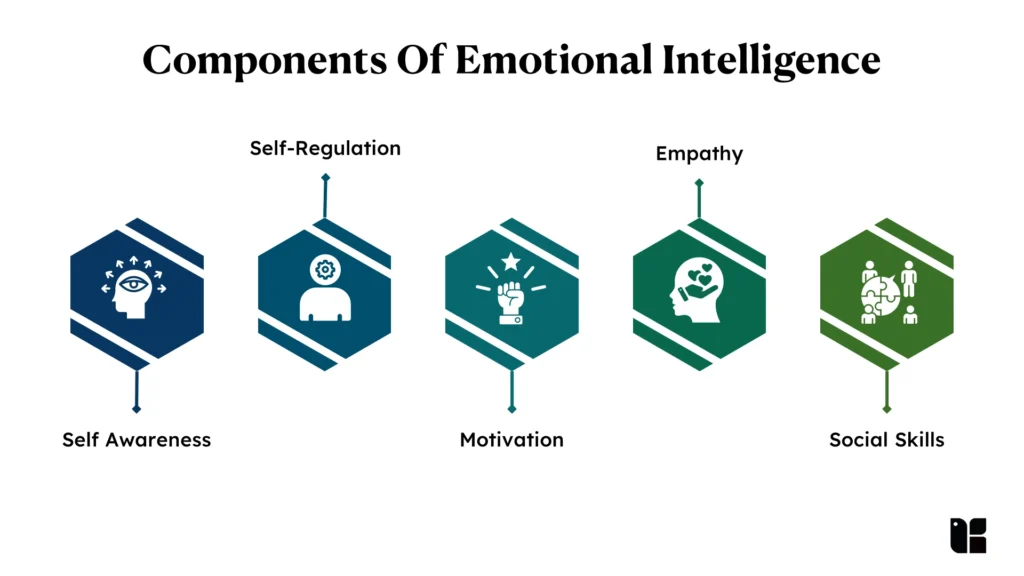
- Self-awareness: This foundational component of EI involves being aware of one’s own emotions, understanding their triggers, and recognising how they affect thoughts and behaviour. Self-aware individuals are better equipped to manage stress, adapt to change, and make decisions aligned with their values and goals.
- Self-regulation: This component entails managing one’s emotions in constructive ways. It involves techniques for controlling impulses, adapting to changing circumstances, and maintaining composure under stress. Self-regulation allows individuals to avoid disruptive outbursts and make reasoned decisions even in challenging situations.
- Empathy: Empathy is the ability to recognise and understand the emotions, perspectives, and concerns of others. It goes beyond sympathy (feeling sorry for someone) to actively putting oneself in another person’s shoes. Empathetic individuals are proficient at listening attentively, validating emotions, and responding with sensitivity, which fosters trust and strengthens relationships.
- Motivation: Motivation within the context of EI refers to the drive to achieve personal and professional goals, guided by optimism and resilience. Motivated individuals set high standards for themselves, persist in the face of setbacks, and inspire others through their enthusiasm and commitment. This intrinsic motivation fuels continuous growth and achievement.
- Social Skills: Effective social skills are crucial for building and maintaining relationships. This component of EI includes communication skills, such as clear and concise expression of ideas, active listening, and nonverbal communication (e.g., body language). Additionally, it encompasses skills in conflict resolution, negotiation, and collaboration, which are essential in both personal and professional contexts.
Importance Of EI In Human Interaction
Strong EI enhances personal relationships by fostering empathy, effective communication, and mutual understanding. Individuals with high EI are better able to express their emotions constructively, resolve conflicts peacefully, and build meaningful connections based on trust and respect.
In the workplace, EI is a valuable asset that contributes to leadership effectiveness, team cohesion, and overall organisational success. Leaders with high EI inspire and motivate their teams, navigate challenges with resilience, and create supportive work environments where individuals feel valued and understood. EI also plays a crucial role in decision-making, as it enables leaders to consider both rational factors and emotional implications when making choices that impact their teams and stakeholders.
In the digital era, where interactions often occur through screens and virtual platforms, EI skills are particularly important. Virtual communication lacks the nonverbal cues present in face-to-face interactions, making it challenging to accurately interpret emotions and establish rapport. Individuals with strong EI can navigate these challenges by leveraging their emotional awareness, empathy, and social skills to build trust and foster collaborative relationships in virtual settings.
AI can process information in seconds, but understanding people still requires emotional intelligence. Kapable focuses on helping leaders strengthen the human capabilities that technology cannot replace.
What Are The Key Differences Between AI And Emotional Intelligence?
Understanding the distinctions between Artificial Intelligence and Emotional Intelligence is crucial in appreciating their unique roles and contributions in today’s technological and human landscapes.
Nature Of Intelligence
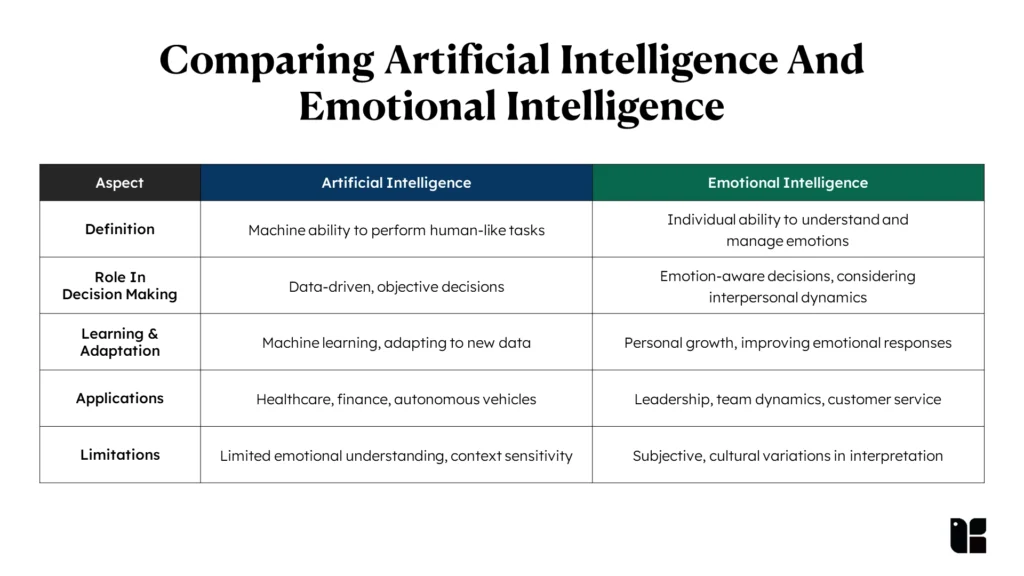
- AI: Artificial Intelligence refers to the ability of machines to perform tasks that typically require human intelligence, such as reasoning, problem-solving, and learning from data.
- EI: Emotional Intelligence, on the other hand, refers to the ability of individuals to recognise, understand, manage, and express their own emotions, as well as to recognise, understand, and influence the emotions of others.
Role In Decision Making
- AI: AI excels in making decisions based on data analysis and predefined rules. It can process vast amounts of information quickly and objectively, leading to efficient decision-making in various domains.
- EI: Emotional Intelligence plays a crucial role in decision-making by considering emotions and interpersonal dynamics. Individuals with high EI can make decisions that consider their own emotions and the emotions of others, leading to better interpersonal relationships and more effective leadership.
Learning And Adaptation
- AI: AI systems learn and improve over time through techniques such as machine learning and deep learning. They can adapt to new data and environments, continually enhancing their performance.
- EI: Emotional Intelligence also involves learning and adaptation, but on a personal level. Individuals can develop their EI through self-awareness, self-regulation, empathy, and social skills, improving their emotional responses and interactions with others.
Applications
- AI: AI is widely used in various applications such as healthcare diagnostics, autonomous vehicles, natural language processing, and recommendation systems.
- EI: Emotional Intelligence finds application in leadership development, team building, conflict resolution, customer service, and personal development.
Limitations
- AI: AI may struggle with understanding nuanced human emotions and context, which can limit its effectiveness in tasks requiring emotional understanding and empathy.
- EI: Emotional Intelligence, while critical for interpersonal interactions, may be subjective and can vary in interpretation and application across different cultural and social contexts.
Understanding these distinctions helps in appreciating how AI enhances efficiency through automation while EI enriches human interaction and emotional awareness.
How Can Artificial Emotional Intelligence Be Understood?
Artificial Emotional Intelligence (AEI) represents a groundbreaking frontier in AI technology, focusing on enabling machines to detect, interpret, and respond to human emotions.
Technological Capabilities Of AEI
Let’s explore the key technological features of AEI and see how they’re changing the way we interact with technology.
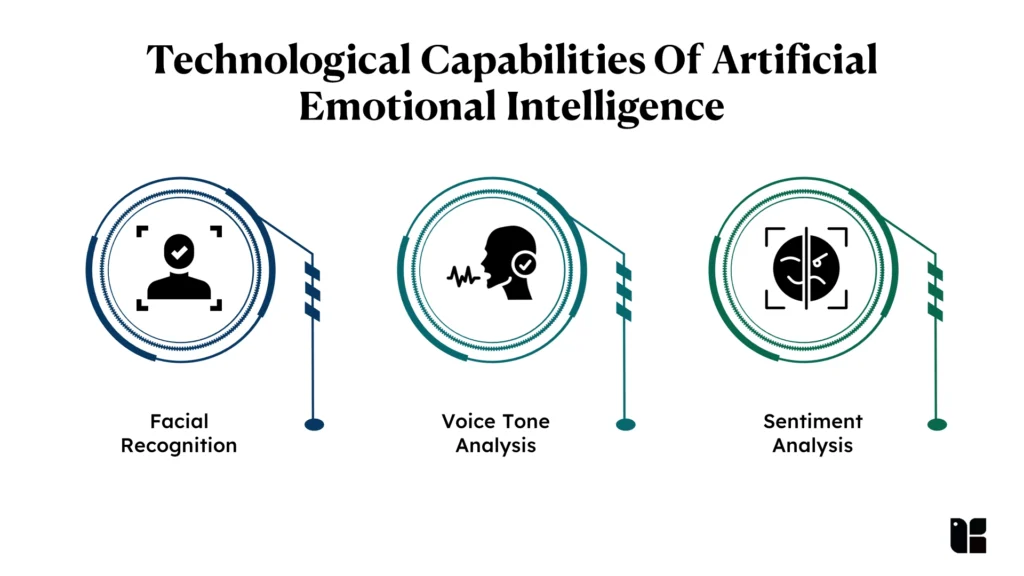
- Facial Recognition: Advanced algorithms analyse facial expressions to discern emotions such as happiness, sadness, or frustration.
- Voice Tone Analysis: AI algorithms interpret variations in tone, pitch, and cadence to gauge emotional states conveyed through speech.
- Sentiment Analysis: Natural language processing techniques analyse text to detect emotional tones and sentiments expressed in written communication.
These capabilities enable AI systems to perceive and interpret human emotions with increasing accuracy, mimicking aspects of human emotional intelligence.
Common Uses Of AEI
Let’s look at how AEI is commonly used in various applications to enhance our daily interactions and experiences.
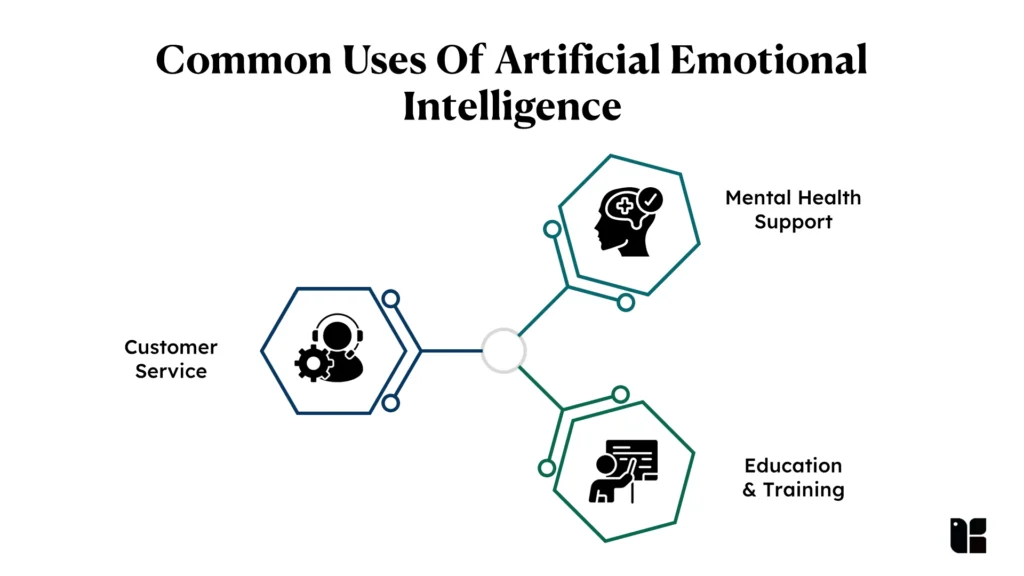
- Customer Service: AI-powered chatbots and virtual assistants equipped with AEI can engage in empathetic interactions with customers, understanding their emotions and responding appropriately to provide personalised assistance.
- Mental Health Support: AEI tools assist in mental health diagnostics and therapy sessions by monitoring emotional cues and providing tailored interventions to support individuals’ emotional well-being.
- Education and Training: AEI can enhance learning environments by providing personalised feedback and adapting educational content based on students’ emotional responses, thereby optimising learning outcomes.
These applications demonstrate AEI’s potential to revolutionise sectors ranging from healthcare and customer service to education by embedding emotional awareness into AI-driven interactions.
By bridging the gap between human emotions and AI capabilities, AEI not only enhances user experiences but also raises ethical considerations regarding privacy, data security, and the responsible use of emotional data in AI development.
Benefits And Challenges
Challenges and benefits arise when integrating Emotional Intelligence (EI) with Artificial Intelligence (AI), influencing technological advancements and human interaction.
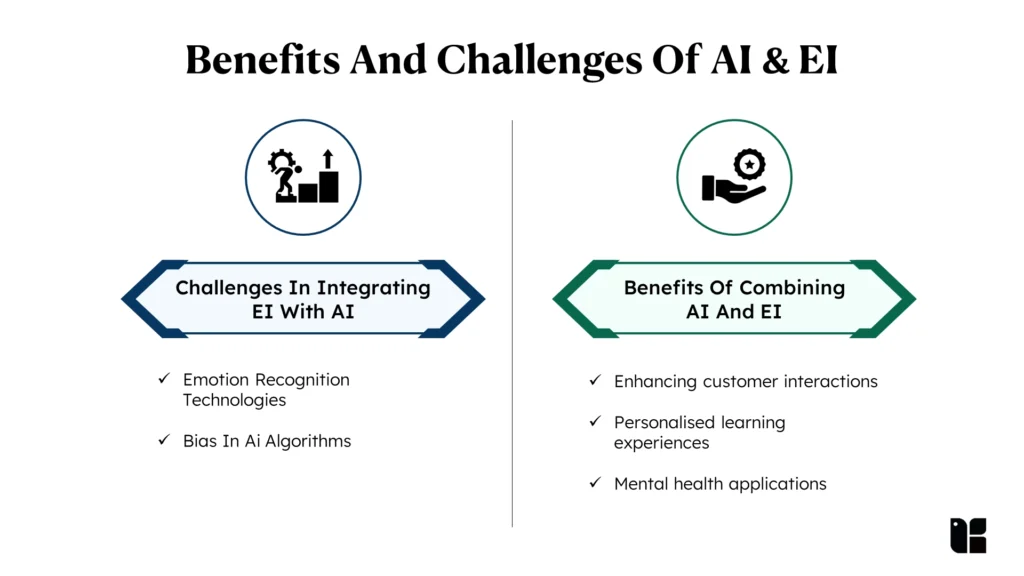
Challenges In Integrating EI With AI
There are certain challenges which need careful consideration:
- Emotion recognition technologies: AI’s ability to accurately interpret human emotions through facial recognition and voice tone analysis poses technical challenges, including variability in emotional expressions and cultural nuances.
- Bias in AI algorithms: The risk of bias in AI systems, stemming from skewed data sets or algorithmic design, can affect the fairness and accuracy of emotional interpretations, raising ethical concerns.
Benefits Of Combining AI And EI
There are also benefits of the emotionally aware technologies when used skillfully:
- Enhancing customer interactions: AEI-equipped systems can provide empathetic responses and personalised support in customer service interactions, improving user satisfaction and loyalty.
- Personalised learning experiences: Integrating EI principles into AI-driven educational platforms enables personalised tutoring and emotional support, enhancing student engagement and learning outcomes.
- Mental health applications: AEI tools support mental health diagnostics and therapy by monitoring emotional states and delivering timely interventions tailored to individuals’ emotional needs.
Navigating these challenges and harnessing the benefits of AI-EI integration holds promise for creating more intuitive and socially aware AI systems that enhance human-machine interactions across various domains.
How Can Artificial Emotional Intelligence Be Applied?
Integrating Emotional Intelligence principles into Artificial Intelligence systems enhances user interactions, personalises experiences, and improves decision-making processes across various industries. Here are real-world examples illustrating these applications:
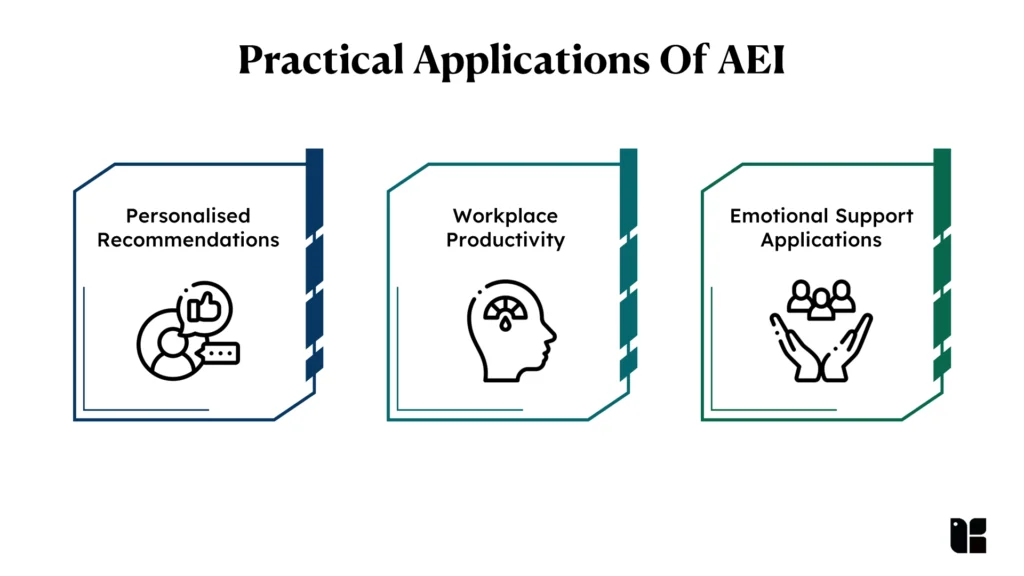
Personalised Recommendations
AI algorithms are transforming user engagement by delivering personalised experiences tailored to individual preferences and emotional cues. Services like Netflix and Spotify analyse user behaviour, preferences, and emotional responses to recommend movies, shows, or music that align with their tastes. By understanding user moods and preferences, these platforms enhance satisfaction and retention.
Workplace Productivity
AI tools that incorporate EI principles contribute to creating a supportive and productive work environment. Companies use AI-powered platforms like Humu’s “Nudge Engine” to analyse employee feedback and emotional cues, providing personalised recommendations to improve workplace satisfaction and productivity. These tools suggest actionable insights to enhance morale and team collaboration.
Emotional Support Applications
In the healthcare and wellness sectors, AI-enabled applications provide emotional support and enhance user well-being. Tools like Woebot utilise AI to deliver personalised mental health support through cognitive-behavioural therapy techniques. These apps analyse user input and emotional cues to provide responsive and empathetic interactions, offering accessible mental health resources.
The continued exploration and development of these synergies hold promise for further enhancing user experiences across digital platforms and transforming how organisations interact with their audiences.
What Are The Ethical Considerations To Be Aware Of?
Exploring emerging trends and advancements in the integration of AI and Emotional Intelligence to enhance technological capabilities and human interaction needs attention to ethical considerations:
Future AI systems could evolve to consider situational factors and historical data, enhancing personalised emotional responses. As AI technology advances, addressing ethical concerns becomes paramount:
- Privacy and data security: Safeguarding emotional data and ensuring transparent data practices to protect user privacy.
- Bias and fairness: Mitigating biases in AI algorithms to ensure equitable outcomes in emotional analysis and decision-making processes.
- Human-Centric design: Prioritising ethical principles and human well-being in the development and deployment of AEI technologies to build trust and acceptance.
Which Human Skills Surpass Artificial Intelligence?
“Emotional intelligence is the real X-factor in our digital age.” – Dalai Lama
While machines excel in data processing and automation, humans possess unique strengths and capabilities that are indispensable in various aspects of life and work. These advantages highlight the intrinsic qualities that distinguish human intelligence from artificial systems.
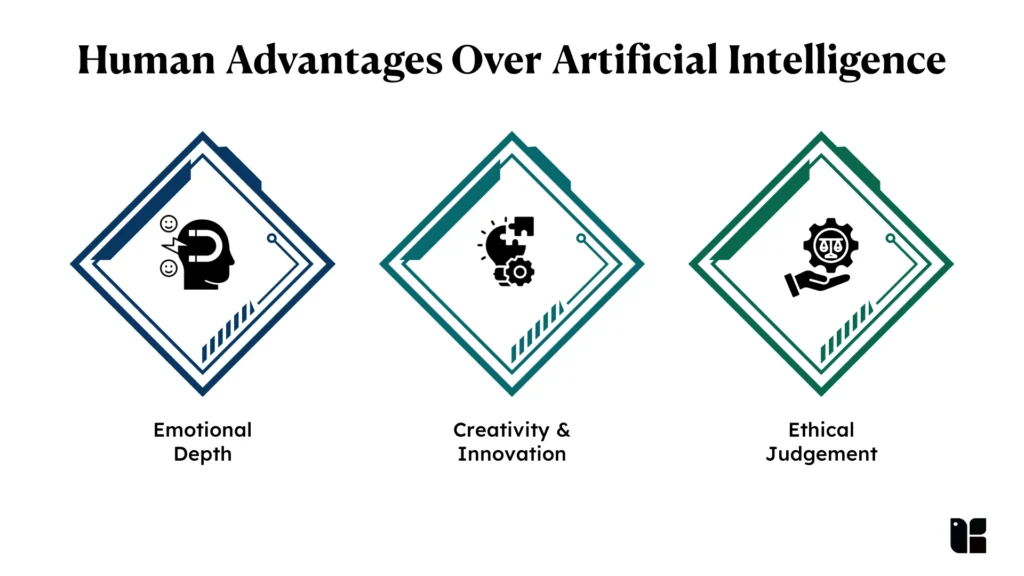
Emotional Depth
One of the most significant advantages humans have over AI lies in emotional intelligence. Humans possess a deep understanding of emotions, empathy, and complex social interactions that are challenging for machines to replicate authentically. This emotional depth enables humans to connect on a profound level, understand nuanced emotions, and navigate interpersonal relationships effectively.
Creativity and Innovation
Human creativity is another area where humans outshine AI. Creativity involves the ability to think divergently, generate novel ideas, and solve complex problems creatively. It drives innovation across fields such as art, science, and technology, pushing the boundaries of what is possible and driving progress in society.
Ethical Judgement
Ethical reasoning and moral judgement are fundamental human traits that guide decision-making in complex and ambiguous situations. Humans possess the capacity to consider ethical implications, weigh moral principles, and make decisions that align with societal values and norms. This ethical judgement ensures responsible use of technology and addresses ethical dilemmas that arise in AI development and deployment.
“My journey with Kapable has been truly valuable. The sessions helped me gain confidence and handle impromptu speaking and assertiveness. I successfully led high-level meetings, which I used to avoid, and received positive feedback from my director. I now feel confident and empowered.”
– Ruchika Bagga (Senior Manager At Mankind Pharma)
Conclusion
While AI continues to advance in its capabilities, harnessing data-driven insights and automating tasks, humans remain indispensable for their emotional intelligence, creativity, and ethical reasoning. Integrating these human strengths with AI technologies promises to enhance technological innovation while upholding human values and ethical standards.
By recognising and leveraging these human advantages, we can shape a future where AI complements human abilities, enhances productivity, and fosters a more compassionate and ethical society.
If AI is changing the demands of your role, it may also be the right time to reconsider how you develop as a leader. Kapable helps you assess whether its learning philosophy matches those changing expectations.


