

TL;DR
- Underestimated Threat: Toxic leadership is a destructive, consistent pattern of behaviour that silently weakens organisational health by trading long-term loyalty for short-term, fear-driven compliance.
- Organisational Vulnerabilities: The toxic environment is fundamentally enabled by a deficit in leadership talent, a failure of accountability systems, and a culture that ignores poor behaviour when it delivers short-term results.
- Core Behaviours: Toxic leaders rely on authoritarian control to shut down dialogue, display a profound lack of empathy for their teams, and stifle organisational progress by actively resisting innovation and change.
- Crippling Cost: The direct fallout is a sharp decline in employee mental health, marked by daily stress and burnout, which results in massive financial losses through constant, voluntary talent turnover.
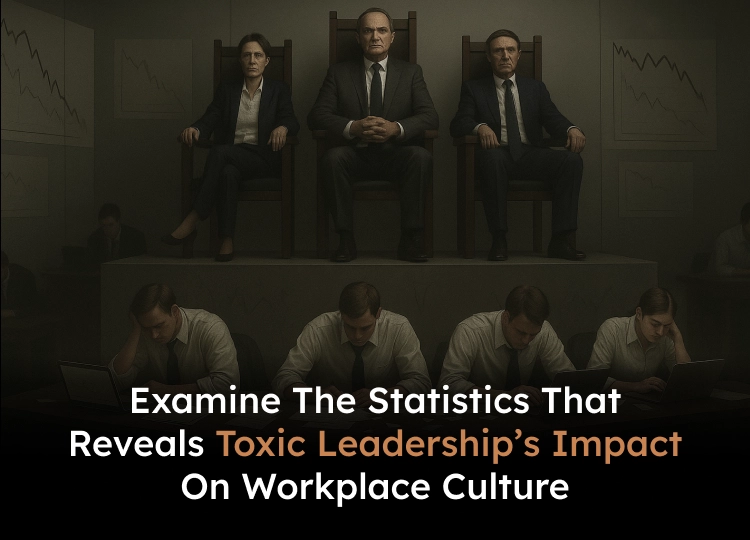
What if the real barrier to workplace performance stems less from competition or technology, and more from those leading the team? The deadlines and the workload don’t drain you as much as knowing that whatever you bring to the table will be met with criticism or silence. Ideas are dismissed before they’re heard, decisions are reversed without reason, and recognition for your work finds its way to someone else. For 73% of employees, working for toxic organisational leaders becomes a turning point that changes how they see themselves and their careers. The damage goes deeper than missed promotions; it leaves lasting scars on confidence and leadership potential. This blog explores the human and business costs of toxic leadership, using data to show why the need to address toxic leadership is a cultural priority and a critical element of strategic necessity for every organisation.
What Is Toxic Leadership?
Toxic leadership, often referred to as destructive leadership, is one of the most damaging yet underestimated threats to an organisation’s health and success. Unlike occasional mistakes or differences in management style, it is defined by a consistent pattern of toxic behaviours that undermine trust and create a toxic environment for employees. This can take many forms, from open hostility and subtle manipulation to emotional volatility or a complete lack of empathy, but the common thread is the negative impact it causes to people and performance. High-potential employees may disengage or develop turnover intention, while those who remain see their employee job satisfaction steadily decline. In contrast, satisfied employees under strong leadership are more loyal and creative.
What makes toxic leadership particularly dangerous is its ability to continue unnoticed or unaddressed, especially in environments where results are valued more than relationships. Short-term gains can easily mask the long-term harm, allowing leaders who rely on fear or pressure to be perceived as effective in the moment. However, over time, this approach weakens the talent pipeline and creates instability that may take years to repair. The result is an organisation that may look successful from the outside but is quietly losing its culture and its capacity to grow.
Understanding the traits of toxic leadership gives us clarity; however, it’s not enough. In the next section, we explore figures showing how widespread and damaging this leadership style has become.
What Is The Broader Reality Of Toxic Leadership In Workplaces?
Toxic leadership cultivates negativity and undermines careers, often long before its true consequences surface. Crossing industries and borders, it has become not only an immediate workplace reality but also a global organisational challenge.

Current Reality Of Toxic Leadership
Toxic leadership is prevalent across modern organisations, where employees face behaviours that weaken productivity and drive disengagement. From CEOs to frontline managers, toxic patterns dictate daily work environments and create an urgent organisational challenge.
- 56% of employees work for a toxic CEO, meaning harmful behaviour is often modelled from the very top, setting the cultural tone and making toxicity feel acceptable throughout the organisation.
- 71% of workers have had a toxic boss at some point, showing how frequently employees encounter toxic behaviours, often leaving behind stress and damaged confidence.
- 31% are currently working with a toxic boss, which signals that employees face this problem daily, reducing motivation and weakening team productivity.
- 1 in 3 workers report having a toxic boss, underscoring the fact that this remains a current reality driving disengagement and attrition.
- 61% believe their workplaces have toxic leaders, revealing a broader perception problem that undermines engagement and damages organisational culture, even when not every leader is toxic.
Global Reality Of Toxic Leadership
Toxic leadership, often visible in daily workplace challenges, scales into a global pattern that spans industries and economies. The behaviours that weaken productivity and engagement within organisations are mirrored across the world, amplifying their impact.
- 90% of UK workers have experienced or witnessed bad boss behaviour, making toxicity nearly universal in that market, with negative ripple effects on morale and workplace well-being.
- 58% of U.S. employees have worked for a bad boss, demonstrating that exposure to poor leadership is widespread in one of the world’s largest economies, costing billions in productivity and retention.
- 80% of Canadian employees have had a bad boss, showing that toxic leadership extends past local contexts into a global trend affecting workforce health and organisational resilience.
- 5-10% of employees in Germany display toxic traits, placing a significant minority in roles capable of spreading harmful influence across team dynamics.
- 87% of professionals globally have had at least one toxic boss in their careers, and 30% have faced multiple, showing that toxic leadership is a widespread career experience.
Having established that toxic leadership is a current and pressing challenge, we now explore the ways it becomes visible. The following section examines insights into the deeper causes behind this leadership failure.

What Are The Key Causes Behind The Rise Of Toxic Leadership?
Toxic leadership often arises from personal shortcomings and poor organisational safeguards that enable damaging behaviour. The following six causes are among the most common and well-documented drivers behind toxic leadership.

- Inexperienced leaders: Leaders promoted without the right skills may resort to blame-shifting and power politics to hide gaps. Research shows that only 1 in 10 managers has natural leadership talent, highlighting how underprepared leaders contribute directly to dysfunction.
- Rigid attitude: Leaders who resist adapting to new market realities risk becoming disconnected from their teams. Nearly 82% of employees say their managers are uninspiring, underscoring how inflexible leadership weakens motivation and commitment. Rigid behaviours are amplified in a masculinity contest culture, where leaders feel pressure to appear strong rather than supportive.
- Corrupt practices: Corrupt practices destroy organisational justice, as unethical leaders use intimidation and manipulation to shield themselves. This culture of fear suppresses accountability and allows misconduct to thrive. Almost half of employees don’t share feedback because leaders never ask, showing how corruption thrives because of employee silence.
- Unhealthy work environment: A toxic leader, especially in senior positions, can set the tone for the entire organisation. Over time, this behaviour spreads, creating a toxic work environment that pushes talent away. With 82% of employees saying their boss lacks leadership skills, workplace-wide toxicity becomes the inevitable result of weak role models at the top.
- No accountability systems: Without strong accountability, toxic leadership can grow unchecked. Ineffective reporting systems or a human resources department that lacks authority make it harder to hold leaders accountable. The empathy gap adds to this, while 92% of managers believe they’re empathetic, only 50% of employees agree, showing how self-perceptions often go unchallenged.
- Rewarding bad behaviour: Some companies retain toxic leaders for short-term results, signalling that harmful behaviour is acceptable if targets are met. The result is disengagement; only 33% of employees feel engaged, and 69% say they’d work harder if better recognised, proving that over-indexing on results while ignoring culture is a costly trade-off.
The causes explain the conditions that give rise to toxic leadership, while the traits reveal the signs that make it visible. What follows is a shift from theory to practice through a mapping of these traits.
These statistics reveal the root causes behind toxic leadership. Explore Kapable’s learning process to see how coaching and practical application help leaders build healthier workplace behaviours.
What Are The Core Traits Of Toxic Leaders That Trigger Organisational Risk?
Defined toxic leadership includes behaviours that may vary in intensity and visibility but ultimately cause the steady breakdown of morale and team collaboration. Understanding its key characteristics helps organisations recognise early warning signs and address them before they escalate.

Authoritarian Control
Authoritarian leaders operate through dominance rather than dialogue, creating an environment where decision-making is closed and employee contributions are sidelined. This approach creates fear-based compliance instead of employee engagement. Evidence of this is clear, as 68% of employees with a toxic boss have heard phrases like “What I say is final because I am the boss”, signalling a culture where collaboration is absent and ideas are dismissed without consideration.
Lack Of Empathy
An empathy deficit is a defining feature of toxic leadership. Leaders who fail to understand or acknowledge the challenges faced by their teams create an emotionally unsafe environment. While 96% of employees say empathy from management would make them want to stay, only 50% feel their leaders demonstrate it. This disconnect leads to emotional exhaustion, resulting in disengagement and reduced employee performance.
Poor Communication
Toxic leaders frequently fail to establish clear and consistent communication. When expectations are vague and feedback is absent, confusion spreads quickly. 69% of managers admit to being uncomfortable communicating with employees. This lack of dialogue not only reduces clarity but also silences valuable perspectives.
Lack Of Recognition
Recognition plays a critical role in motivation and retention, yet toxic leaders often overlook or downplay the contributions of their teams. The result is a steady decline in morale and commitment. Recognition lowers voluntary turnover by 45%, meaning that when employees feel valued and appreciated by management and the organisation, they are much less likely to leave.
Resistance To Innovation
In workplaces led by toxic leaders, change is often met with resistance. Clinging to outdated methods, these leaders create cultures where experimentation is discouraged and creative thinking is suppressed. This mindset is reflected in the 41% of employees who say their management doesn’t value innovation and the 67% who report hearing “that’s the way we’ve always done it.”
Identifying how toxic leaders display their traits is essential, but equally important is understanding how these behaviours take root. The next section explores how toxic leadership becomes rooted in the workplace.
How Do Toxic Leaders Damage Employee Well-Being?
Toxic leadership leaves a measurable imprint on employee mental health and well-being. The following data illustrates the scale and seriousness of its impact, highlighting how damaging toxic leadership behaviours translate into stress and long-term psychological strain.

Stress Becoming A Daily Burden
A workplace should be a space where employees can focus on meaningful work and grow professionally. However, when the leader becomes the biggest source of stress, it disrupts this balance entirely.
- 75% of employees say their boss is the leading source of work-related stress, indicating that leadership behaviour often outweighs all other workplace pressures in affecting morale and satisfaction.
- 72% experience daily stress because their leader shows how persistent this pressure is, with ongoing effects on focus and long-term productivity.
Anxiety Disrupting Personal Recovery
Weekends are meant to be a time to relax, yet for many employees, they become a countdown to stress. The stress of the workweek extends into personal time, making it difficult to recharge.
- 71% of employees experience anxiety on weekends about returning to work, highlighting how poor leadership creates stress that lingers outside office hours and disrupts mental downtime.
- 53% have nightmares about their toxic bosses, showing the depth of the psychological impact, where stress infiltrates even sleep, preventing full rest and recovery.
Lasting Damage To Mental Health
The damage caused by toxic leadership doesn’t end when the workday is over; its effects can last for years. For some employees, the emotional strain becomes so severe that it demands professional intervention.
- 41% have sought therapy because of a toxic boss, reflecting the extreme mental and emotional burden that poor leadership can place on individuals.
- 60% report ongoing psychological effects from workplace stress, showing how harmful leadership can leave lasting scars, affecting confidence, mental health, and overall quality of life.
Burnout Draining Emotional Resilience
A supportive workplace should empower employees to stay resilient. Yet under toxic leadership, this resilience is steadily worn down, leaving individuals emotionally exhausted and unable to recover fully.
- In 2024, 56% of leaders reported experiencing burnout, a trend that reflects more than personal exhaustion; it signals how toxic pressures at the top steadily weaken resilience and destabilise the organisational culture.
- By 2025, burnout had soared to 77%, marking a crisis that extends to the deterioration of leadership effectiveness and overall organisational performance.
Organisational Strength Deteriorating Rapidly
Toxic leadership inflicts both financial and cultural damage on organisations. It strains resources and cultivates a climate where talent is difficult to retain.
- 56% higher mental health claims in workplaces with toxic bosses, indicating the significant organisational cost of stress-related illnesses and the toll on employee well-being.
- 66% of employees have heard dismissive remarks like, “You’re lucky to have a job in today’s economy”, revealing a culture that discourages open dialogue and reinforces fear-based compliance.
The fallout on mental health is severe, but its ripple effect is even broader. The next section examines how toxic leadership not only harms individuals but also accelerates employee exits across industries.
“As I advanced to working with C-suite leaders, I often felt nervous and struggled to structure my thoughts. Kapable’s hands-on approach, with practical exercises and personalised techniques, helped me build clarity and balance assertiveness with empathy. I can now confidently influence and engage leaders and teams, and both my growth and confidence are clear to those around me.”
– Marwa Mahgoub (Senior HR Business Partner At Al Tayar Insignia)
How Do Employee Turnover Trends Reflect The Impact Of Toxic Leaders?
Toxic leaders fail to recognise contributions, and the cost is measured in lost talent and recruitment challenges. The following data shows how poor leadership behaviour, if unaddressed by human resource management, triggers voluntary exits and influences the mindset of those who stay.

Leadership Gaps Raising Attrition
When leadership becomes a source of frustration rather than support, it directly impacts retention. Poor management lowers morale and actively drives people to the exit.
- 57% of employees have left a job because of their leader, showing that leadership behaviour affects more than morale, serving as a direct cause of attrition.
- 32% have considered leaving due to poor management, indicating that dissatisfaction often starts long before an actual resignation, reducing engagement and productivity in the meantime.
Lost Trust Forcing Resignations
When trust in leadership fades, employees begin to lose confidence in the organisation’s future. A lack of transparency and accountability creates uncertainty that drives talent to look elsewhere.
- Distrust is one of the strongest predictors of turnover under destructive leadership. 40% have quit due to distrust in their leader’s ability to act fairly, further highlighting how trust issues drive disengagement and resignations.
- 70% say they don’t trust their company’s leaders to keep their promises, underscoring how leadership failures threaten commitment and morale.
Low Recognition Triggering Exits
A lack of recognition and growth opportunities can be just as damaging as overtly poor treatment. When employees feel undervalued or stuck, their connection to the organisation weakens.
- 79% quit due to a lack of appreciation, directly linking recognition to employee satisfaction, highlighting how undervaluing contributions leads to turnover.
- 33% left due to boredom or lack of challenges, showing that career stagnation is as harmful as poor treatment in driving exits.
Reputation Damage Hurting Retention
Even when employees stay, toxic leadership fuels job dissatisfaction and weakens commitment. It pushes people to quietly seek alternatives while damaging the organisation’s ability to attract top talent.
- 68% of women employees who are with a toxic boss are actively job hunting, revealing that dissatisfaction is high even if people remain employed.
- 84% of job seekers consider company reputation before applying, showing that leadership behaviour influences not just current employees but also the organisation’s ability to attract top talent.
Burnout Driving Employee Exit
Toxic leadership gradually wears employees down, undermining mental health and fuelling a downward spiral of stress, dropped performance, and eventual exit.
- 76% of employees say workplace stress affects their mental health, with poor leadership among the leading causes.
- 51% have considered leaving a job to protect their wellbeing, with many citing the risk of worsening mental health issues as a primary reason for exit, showing how leadership behaviour can turn health concerns into a clear trigger for attrition.
The human toll becomes clear in turnover, but the organisational toll is revealed in balance sheets. The next section presents data showing how toxic leadership hurts financial performance.
How Does Toxic Leadership Drive Financial Losses?
Toxic leadership drains resources through higher turnover and damaged profitability. The following figures show how leadership behaviour directly converts into financial losses that few companies can afford to ignore.

Escalating Turnover Costs
When employees leave due to toxic leadership behaviours, the cost far exceeds recruitment. It includes lost institutional knowledge and onboarding expenses while new hires ramp up.
- $630B anually is lost in the U.S. to employee turnover, a significant share linked to poor leadership practices. This figure reflects the cumulative cost of recruitment and training.
- Replacing a worker costs 6-9 months of their salary, meaning a single resignation triggered by a leadership issue can set a company back months in both budget and performance recovery.
Management-Driven Losses
Ineffective leadership decisions create inefficiencies that ripple through teams and departments, multiplying costs across the organisation.
- $500B annually is lost to poor management, showing how ineffective decision-making slows growth and inflates costs across the board.
- $360B annually is lost to bad bosses, highlighting that even a relatively small group of toxic leaders can have a billion-dollar impact on the economy.
Profit Decline From Disengagement
Toxic leadership often triggers disengagement, which lowers effort and reduces the quality of output, all of which directly affect profitability.
- $550B annually is the cost of disengagement to U.S. companies, representing billions in wasted payroll and delayed projects, as well as missed opportunities. Organisations that score higher on the toxic leadership scale face higher costs tied to disengagement.
- Companies with engaged employees are 22% more profitable, proving that effective leadership is a cultural strength and a measurable driver of revenue growth.
High-Cost Employee Turnover
Losing senior or highly skilled talent due to poor leadership is one of the most expensive and avoidable business expenses.
- Replacing a mid-level manager costs $30K–$45K, straining budgets and slowing strategic initiatives.
- Losing an employee due to a bad boss can cost up to 213% of their annual salary, making toxic leadership one of the most expensive, yet addressable, causes of turnover.
Surging Healthcare Expenses
Toxic leadership drives up healthcare costs by fueling stress and burnout. When employees are consistently exposed to abusive leadership and poor management, the financial impact shows up in medical claims, insurance premiums, and long-term health risks.
- Workplace stress, caused by toxic leaders, carries devastating consequences and is estimated to cost between $125 billion-$190 billion annually, representing about 5–8% of national healthcare spending in the U.S., a huge burden for employers and the broader economy.
- Stress-driven workplaces report up to 50% higher medical claims, creating ongoing costs that hit organisational budgets as hard as turnover or disengagement.
Financial losses make the risks of toxic leadership undeniable. But data alone won’t solve the problem. The next section turns from impact to action, outlining six research-driven approaches to handling toxic leaders effectively.
What Practical Approaches Can Help Handle Toxic Leaders Effectively?
Dealing with a toxic leader requires adopting a coping strategy that balances both tactical actions and long-term strategies. Previous research shows that employees who adopt intentional coping mechanisms are far more likely to protect their careers and even influence leadership behaviour.

Reinforcing Workplace Boundaries
When a manager consistently assigns last-minute tasks at the end of the day, employees often feel forced to sacrifice personal time to meet unrealistic expectations. The most effective response is to set professional boundaries immediately. This means defining limits on workload and availability and communicating them respectfully.
Practical approaches:
- Tools: Use Google Calendar or calendar-blocking to allocate focused work slots and limit after-hours demands. Set up Gmail autoreplies to manage expectations (“I’ll respond during office hours”). For tracking workload, use Trello or Asana dashboards to make task priorities transparent to both you and your boss.
- Techniques: Apply assertive communication scripts such as, “I can finish Task A today, but Task B will require tomorrow’s bandwidth.” Use the Eisenhower Matrix to categorise urgent vs. important tasks and share it with your boss during prioritisation discussions. Implement time-boxing by allocating fixed periods (e.g., two 90-minute deep work sessions per day) and visibly protecting them in your calendar.
Outcomes: Setting boundaries reduces overwork and burnout, improves work-life balance, and establishes professional credibility. It also signals to the boss that the employee is structured and reliable, not resistant. Existing research shows that 68% of employees who assert boundaries experience higher job satisfaction, and long-term, this practice increases retention and performance consistency.
Document Every Interaction
Imagine being blamed for missing a deadline because your manager changed priorities mid-week, but you have no written record of the original instructions. This is where documentation becomes critical. Keeping a clear, factual log of meetings, directives, and incidents creates a defensible record that protects against shifting blame or denial.
Practical approaches:
- Tools: Use Microsoft OneNote to create dated sections for each meeting, Notion to build a searchable incident log with tags (e.g., “missed deadline,” “changed directive”), or Excel/Google Sheets to maintain a simple chronological tracker of instructions and outcomes. For email trails, tools like Outlook folders or Gmail labels can archive key communications by project or topic.
- Techniques: Write post-meeting summaries and share them via email (“To confirm, here are the next steps we discussed…”). Forward confirmation emails to yourself or a private folder for records. Add timestamped notes after verbal instructions, noting date, time, and wording. This makes it harder for managers to deny what was said later.
Outcomes: When employees document consistently, they strengthen their credibility in disputes, improve the chances of HR acting decisively, and create a clearer path to corrective action. Organisations that track and structure such records see more effective HR outcomes, yet studies show only 50% track substantiation rates, leaving room for stronger safeguards.
Strengthen Peer Support Networks
Picture an employee isolated by a toxic boss who micromanages and criticises them publicly. Without allies, the individual feels singled out and powerless. Building peer networks counters this by creating solidarity, validation, and mutual protection. Even informal check-ins with colleagues can provide psychological safety and reduce the sense of isolation.
Practical approaches:
- Tools: Use Slack to create private channels for trusted peers, or Microsoft Teams to set up group chats dedicated to support and collaboration. For more structured discussions, use Zoom or Google Meet for regular peer check-ins and collaborative docs in Google Drive or Notion to share notes and strategies.
- Techniques: Schedule weekly peer debriefs (e.g., a 30-minute Friday wrap-up to share challenges and solutions). Form buddy systems by pairing colleagues for daily check-ins and accountability. Encourage constructive feedback exchanges where team members highlight one strength and one growth point for each other, helping to balance support with actionable improvement.
Outcomes: Peer support reduces stress, prevents isolation, and boosts engagement. Employees with at least one collaborative relationship at work are 29% more likely to plan to stay with their company over the next year, and 42% more likely to intend to remain for their entire career.
Use Feedback Loops
If a manager often interrupts or dismisses team members in meetings, it can hurt confidence and lower productivity. Instead of staying silent, employees can use feedback loops to address the behaviour. This means giving structured, upward feedback that highlights what happened and how it affects the team. By focusing on behaviour and impact, feedback loops provide a safer way to address toxic patterns.
Practical approaches:
- Tools: Use HR feedback templates, often available in HR portals or performance management software, to structure input. Journaling apps like Day One or Notion can be used to record incidents and practice phrasing feedback before delivering it. For live delivery, Google Docs or Word templates can help employees script responses clearly.
- Techniques: Apply the SBI model by stating the event, describing the observed action, and explaining the consequence (e.g., “In Monday’s meeting (Situation), when my update was interrupted (Behaviour), it limited my ability to present progress (Impact).”). Use “I” statements to reduce defensiveness (“I felt my input was overlooked” instead of “You ignored me”). Finally, schedule feedback during one-on-one sessions rather than in group settings to keep the conversation professional and private.
Outcomes: Thoughtful feedback can correct misunderstandings, influence behaviour, and build respect. Zenger Folkman reports that 72% of professionals believe their performance would have improved significantly with more managerial feedback.
Report Workplace Misconduct
When employees face repeated public humiliation or discriminatory remarks from a manager, informal coping tactics are no longer enough. At this point, raising the issue with HR or senior leadership becomes essential. Approaching the process with clear evidence and a focus on business impact increases the likelihood of meaningful resolution.
Practical approaches:
- Tools: Use HR portals like BambooHR to file formal complaints, or company-provided anonymous hotlines for sensitive issues. Independent whistleblower platforms such as EthicsPoint also allow secure reporting outside direct management. For tracking, maintain digital logs in Excel, OneNote, or Notion to store incidents with dates and evidence.
- Techniques: Compile a detailed incident log that includes dates, times, and outcomes to establish patterns. Frame complaints around business impact, e.g., “These behaviours are contributing to higher turnover in my team” or “Productivity has dropped since expectations became unclear.” When escalating, request specific corrective actions such as mediation, leadership training, or role reassignment, rather than vague resolutions.
Outcomes: Formal reporting enforces organisational accountability and protects employees from further harm.. Research from HR Acuity shows that when HR investigates and resolves reported concerns, employee advocacy jumps from 7% to 56%, revealing how structured complaint processes strengthen trust and protect the organisation from risk.
Invest In Self-Development
Employees working under a boss who withholds recognition may feel invisible and stuck. Investing in self-development helps regain control and build independence from the manager’s influence. By focusing on growth, whether through training, coaching, or skill development, the employees create new pathways for advancement.
Practical Approaches:
- Tools: Use LinkedIn Learning or Coursera to build technical and leadership skills, or enrol in executive coaching programs for personalised guidance. Platforms like Udemy and edX provide targeted modules on communication, resilience, and conflict management. For mental well-being, apps such as Headspace and Calm support mindfulness and stress management.
- Techniques: Incorporate mindfulness training by practising short daily meditations to regulate stress. Attend resilience workshops that use role-play and scenario-based learning to handle pressure effectively. Proactively seek mentors outside the team or organisation who can provide neutral advice, broaden perspective, and create career opportunities independent of the current boss’s influence.
Outcomes: Self-development buffers the emotional toll of toxic leadership, strengthens career prospects, and restores a sense of agency. Organisations that promote a culture of continuous learning are 46% more likely to be first to market and experience a 37% increase in employee productivity.
Research-driven approaches equip us to handle toxic individuals. But to prevent relapse, culture must change too. The next section focuses on five proven organisational shifts to achieve exactly that.
How Can Organisations Overcome a Toxic Leadership Culture?
A toxic workplace requires structural interventions that redefine behaviour and accountability at scale. The following six organisational shifts, proven through research and practice, demonstrate how companies can systematically reduce toxicity and build resilient cultures that support both people and performance.

Evaluate Workplace Culture
Every transformation begins with a clear picture of reality. Without measurement, organisations risk fixing the wrong problems or overlooking toxic hotspots. Evaluating culture requires shifting from anecdotal feedback to evidence-based insights that reveal leadership blind spots and systemic risks.
Practical approaches:
- Organisations can evaluate culture by combining structured measurement tools with analytical techniques. This includes running annual culture surveys alongside quarterly pulse checks, using AI-driven sentiment analysis of Slack or Teams communication, and aggregating exit interview data through platforms like Qualtrics or Perceptyx.
- To gain deeper insights, culture KPIs such as recognition and stress can be benchmarked against industry standards, with dashboards used to segment scores by team, department, or manager. Finally, comparing engagement results with exit data helps reveal recurring toxic patterns, providing a clear baseline for targeted cultural improvements.
Outcomes: A reliable cultural baseline reveals where toxicity is concentrated. Organisations that conduct structured diagnostics once or twice a year are better positioned to track trends and drive meaningful culture improvements.
Define Clear Standards
Clarity reduces confusion. Once the diagnosis is complete, organisations must codify explicit behavioural standards and leadership expectations.
Practical approaches:
- Organisations can embed culture into daily operations by using behavioural competency frameworks tied to OKRs and a culture playbook integrated into hiring, onboarding, and performance reviews, supported by HR platforms such as Workday or SuccessFactors.
- This approach translates abstract values into concrete, measurable actions (e.g., “Respect = no interruptions in meetings”), while ensuring leadership promotions and rewards are directly linked to consistent demonstrations of desired behaviours. In addition, auditing job descriptions and KPIs reinforces cultural expectations, creating alignment across talent processes and performance systems.
Outcomes: A shared organisational language and consistency across all levels. Statistically significant research shows that toxic culture is 10.4x more predictive of attrition than compensation.
Equip Leaders Effectively
Once standards are defined, leaders must be trained and equipped to live them. Organisations should institute mandatory leadership development programs that focus on emotional intelligence, conflict management, feedback delivery, and accountability.
Practical approaches:
- Leadership development can be strengthened through 360° assessments and scorecards, supported by coaching platforms such as BetterUp, Korn Ferry, and Hogan Assessments, alongside EI and accountability workshops or scenario-based simulations.
- Organisations can run quarterly 360° reviews with coaching follow-ups, build leadership scorecards that blend business results with culture impact, and integrate culture-fit assessments into succession planning and promotion criteria. This ensures leadership growth is measured, reinforced, and aligned with both performance outcomes and cultural expectations.
Outcomes: Leaders become credible role models who strengthen trust and psychological safety. A recent study noted that when leaders demonstrate strong emotional intelligence, companies can experience a 25% rise in engagement.
Redesign Work Structures
Toxicity often hides in the way work is structured, not just in individual behaviours. Organisations should analyse workflows to reduce burnout triggers, clarify decision rights to prevent political power struggles, and simplify reporting hierarchies to reduce bottlenecks.
Practical approaches:
- Operational efficiency can be improved through workflow management tools like Asana, Jira, or Trello, supported by RACI matrices that clarify decision rights and ownership, as well as escalation maps and workload dashboards.
- Organisations can introduce no-meeting days and “focus time” policies to complement these systems, publish clear escalation and decision paths to minimise political conflict, and use dashboards to distribute workload fairly across teams. Together, these practices reduce friction and promote healthier team dynamics.
Outcomes: Redesigned work structures reduce burnout, provide clearer role ownership, and create space for meaningful productivity. For example, Slack introduced “Focus Fridays,” no-meeting days that 84% of employees reported as beneficial, improving their ability to concentrate and innovate.
Strengthen Cultural Safeguards
A culture repair initiative is incomplete without credible safeguards. Organisations must build robust systems that allow employees to report toxic leadership behaviour without fear.
Practical approaches:
- Organisations can deploy anonymous reporting platforms such as Navex Global or Ethena to provide safe, confidential channels; implement SLA-driven HR case management systems like ServiceNow or Workday to track response and resolution times.
- These tools must be reinforced by a strict zero-tolerance policy with visible disciplinary consequences, the use of analytics dashboards like Tableau or Power BI to systematically monitor and publish resolution timelines, and the regular publication of anonymised case outcomes and cultural health reports to demonstrate transparency, fairness, and that issues are taken seriously and acted upon.
Outcomes: Employees feel safe and protected, toxic behaviours are caught early, and organisational trust grows. Research shows 40% of employees stay silent about toxic leaders due to fear; safeguards directly close this gap.
Establish Culture Metrics
What gets measured gets managed, and culture is no exception. Without clear metrics, values risk becoming slogans rather than daily practice. For culture change to last, it must be tracked with the same rigour and visibility as financial results.
Practical approaches:
- Organisations can strengthen governance by using HR analytics dashboards to monitor attrition, engagement, and turnover, alongside ESG-linked reporting systems that provide board-level oversight and quarterly “Culture Health Reports.”
- These tools should be paired with techniques such as reviewing cultural KPIs alongside financial performance at the board level, tying leadership bonuses to engagement and inclusion scores, and conducting annual cultural audits to identify systemic risks. Together, this ensures culture is not only measured but integrated into governance and accountability at the highest level.
Outcomes: Accountability and transparency at the highest levels. Research shows companies that track culture metrics are 5x more likely to sustain long-term improvements.
Reforming workplace culture requires structural change, yet personal accountability is just as important. The following section explores practical steps for leaders who realise they may be contributing to toxicity themselves.
How To Improve If You Are A Toxic Leader?
It is often easier to recognise toxic behaviour in others than in ourselves. Many leaders unintentionally fall into toxic patterns, especially under the pressure of delivering results or navigating uncertainty. As author Suzanne Weyn quoted, “You become the monster you fear the worst, so the monster won’t overtake you.” When leaders realise they may have become that “monster,” the path forward lies in taking responsibility and committing to change.

- Own the pattern: The first step is admitting that the issue exists. Leaders often defend themselves by saying they “didn’t mean it that way,” but intent does not erase impact. If your entire team feels silenced, dismissed, or overlooked, that is their lived reality. Owning this truth is uncomfortable, but it’s the foundation for change. A staggering 86% of HR and business leaders agree that greater organisational transparency increases workforce trust.
- Build awareness: Toxic habits often develop gradually, so you may not notice them until someone else points them out. Make it a practice to reflect after meetings or conversations: Did I listen fully? Did I give recognition where it was due? Did I shut someone down unintentionally? Over time, patterns will emerge that show where you need to improve. Leaders who engage in regular self-reflection improve their effectiveness dramatically by up to 76%.
- Pause before reacting: Many toxic behaviours are born in moments of stress and impatience. A harsh email, a sharp comment in a meeting, or a decision made in anger can do lasting damage. Train yourself to pause before reacting. Even a few seconds of reflection can be enough to choose a more measured response. Research shows that leaders who practice deliberate pauses before decisions drive teams to achieve 38% better long-term outcomes and higher retention compared to reactive leaders.
- Admit mistakes: Leaders sometimes think apologising makes them look weak, but the opposite is true. A simple, sincere apology, “I was unfair in that meeting” or “I should have listened better”, shows accountability and humanity, and it signals to your team that you are willing to learn. In an era where 68% of employees distrust leaders, admitting missteps becomes essential to rebuilding confidence and integrity
- Share control: Trust your team’s expertise instead of dictating every detail. Delegate decisions, invite quieter voices to speak in meetings, and acknowledge good ideas publicly to build ownership and commitment. Leaders who share control through effective delegation see a 28% boost in team productivity, showing how trust and empowerment directly strengthen performance.
- Show transparency: Pretending you already “have it all figured out” creates distance. Instead, be open about your journey: “I’ve realised I need to improve how I lead, and I want your feedback.” This humility builds trust and respect. Companies that embrace transparent leadership report up to 30% greater employee trust and a 15% boost in productivity, proving that openness delivers measurable business gains.
- Celebrate progress: Toxic leaders often focus only on mistakes, leaving teams unappreciated. Balance this by recognising progress, no matter how small. Thank someone for extra effort, highlight creativity, and make sure contributions are seen. Nearly 78% of employees say their productivity would improve if recognition were given more often.
Exploring how toxic leaders can improve provides a pathway toward change. To understand why such improvement is critical, the next section examines case studies on the real impact of toxic leadership in organisations.
If these statistics have helped you recognise toxic leadership patterns, Kapable’s suitability guide can help you decide if the program is right for you.
Which Case Studies Highlight The Organisational Impact Of Toxic Leadership?
Toxic leaders prioritise personal power or short-term gains over ethics and employee well-being, leading to low morale, legal challenges, and reputational harm. Real-world examples reveal the serious organisational consequences and highlight the need for accountability and cultural reform.

Uber
In 2017, Uber came under global scrutiny when CEO Travis Kalanick was accused of promoting a toxic, hyper-aggressive workplace culture. The turning point came when Susan Fowler, a former Uber engineer, published a viral blog post detailing her experiences of sexism, harassment, and systemic neglect by HR. She described being propositioned by her manager, reporting it to HR, and being told that because he was a “high performer,” no action would be taken. Fowler’s account revealed a pattern of bullying, retaliation against whistleblowers, and a culture where misconduct was excused if it served company growth. Her post not only galvanised internal investigations but also sparked global conversations in the workplace. Data showed Uber had a 20% higher turnover rate than the industry average, faced dozens of lawsuits, and lost key executives during the fallout. Eventually, mounting public backlash and investor pressure forced Kalanick to resign. Susan Fowler’s courage was instrumental in exposing how unchecked toxic leadership can destabilise even the fastest-growing companies, making her a symbol of resistance against corporate toxicity.
Boeing
Boeing’s 737 MAX disaster (2018–2019) revealed how toxic leadership rooted in profit-driven pressure can lead to catastrophic consequences. Engineers repeatedly raised concerns about the flawed MCAS safety system, but leadership prioritised meeting deadlines and beating Airbus in the commercial jet market. Internal communications later showed employees admitting they had “unknowingly lied to regulators” and describing the planes as “designed by clowns supervised by monkeys.” This culture of fear and silencing whistleblowers contributed to two fatal crashes that killed 346 people. Beyond the human tragedy, Boeing faced over $20 billion in losses, lawsuits, and long-term trust erosion. The crisis exposed how toxic leadership that values speed and profit over transparency and safety can destabilise even the most respected companies.
WeWork
WeWork’s meteoric rise and collapse illustrate the dangers of charismatic yet toxic leadership. CEO Adam Neumann cultivated a cult-like culture where questioning his vision was discouraged, while lavish spending and erratic decisions shaped company strategy. Reports revealed that Neumann frequently indulged in self-serving behaviours, such as trademarking the word “We” and selling it back to the company for $5.9 million, while employees worked under extreme pressure in a chaotic environment. At its peak in 2019, WeWork was valued at $47 billion, but the toxic leadership style fueled reckless expansion without profitability. When preparing for IPO, disclosures exposed financial instability, leading to a failed public offering, mass layoffs, and billions in losses for investors. Neumann was forced to step down, and his leadership became a case study in how unchecked ego and poor governance can collapse a global brand.
By looking at outcomes across different organisations, one truth becomes clear: toxic leadership manifests in measurable ways, from cultural decline to financial loss. These examples serve as a warning of the price organisations pay when destructive leadership is left unchallenged.
Conclusion
Toxic leadership is a business risk that weakens performance and drives long-term costs that organisations can no longer afford to ignore. The evidence supported by internally consistent research shows that employees under toxic leaders experience declining self-esteem, lower job satisfaction, and lasting damage to their well-being, while companies face higher turnover costs and reputational decline. The path forward requires more than surface-level fixes. It demands structured cultural diagnostics, leadership accountability, redesigned workflows, strong safeguards, and measurable culture metrics. When these shifts are implemented, organisations move from reactive firefighting to building a resilient culture that strengthens both people and performance. Addressing toxic leadership and fostering healthy leadership is about harnessing the workforce’s true capacity. Companies that act decisively will not only protect their talent but also rebuild organisational commitment and create the conditions for sustainable growth.


