


TL;DR
- The Goal of Negotiation: True negotiation success is a “win-win,” where both parties achieve mutual satisfaction and build positive, long-term relationships, prioritising trust over getting the upper hand.
- Qualities of a Successful Negotiator: Effective negotiators combine communication, adaptability, and high emotional intelligence with comprehensive preparation and a clear strategy to navigate discussions and make informed decisions.
- The 7-Step Negotiation Roadmap: Successful negotiations follow a seven-step roadmap, emphasising goal clarity (SMART), thorough knowledge gathering (SWOT), establishing trust (mirroring), and assertive communication (DESC) to resolve challenges and close the deal.
- Different Negotiation Strategies: The five fundamental strategies, Competitive, Collaborative, Avoidance, Accommodation, and Compromise, offer distinct blueprints for negotiation, balancing value-claiming with joint value-creation to guide discussions toward agreement.
Negotiation is the art of reaching agreements through communication and compromise. It is a fundamental skill in different aspects of our lives. Whether in business dealings, interpersonal relationships, or even everyday decision-making, negotiating successfully is key to achieving favourable outcomes.
In this blog, we’ll dive into the intricacies of successful negotiations, exploring the essential components that contribute to favourable results.
What Is Success In Negotiation?
Success in negotiation is not a one-size-fits-all concept. It varies based on the goals, interests, and needs of the parties involved. At its core, achieving success in negotiation means reaching an agreement that satisfies the interests of both parties involved. It’s about finding common ground, where each side feels they’ve gained something valuable from the interaction.
In negotiation, success is often synonymous with a “win-win” outcome. This means that the negotiated agreement benefits all parties, fostering a sense of mutual satisfaction. For example, if you and your sibling are deciding on what movie to watch, a successful negotiation would be picking a movie that you both find exciting and enjoyable. It’s not just about getting what you want but ensuring that the other party also walks away feeling content with the arrangement.
Unlike winning a game where you might get a prize, success in negotiation isn’t just measured by monetary gains or getting the upper hand. It extends to building and maintaining positive relationships. A successful negotiator understands the importance of trust and rapport, recognising that these elements contribute to long-term success beyond a single negotiation.

Who Is A Successful Negotiator?
A successful negotiator is not defined by a rigid set of characteristics but rather by a combination of skills, traits, and behaviours that contribute to achieving positive negotiation outcomes. Here are some key attributes that often define a successful negotiator:
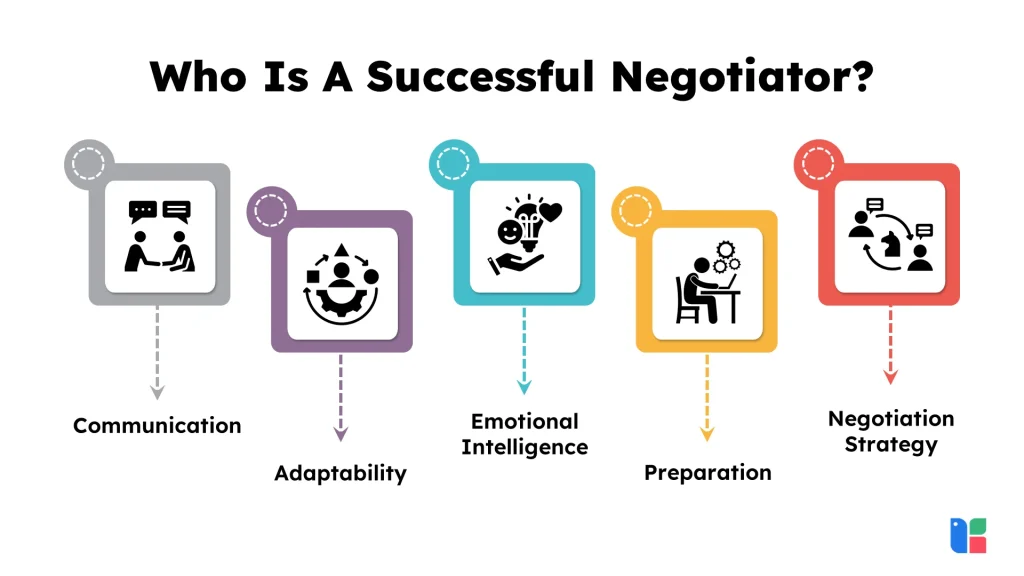
Communication Skills
A skilled negotiator possesses the ability to articulate their thoughts clearly and concisely. This involves not only expressing their ideas but also actively listening to the perspectives of others. A negotiator can ensure that all parties feel heard and understood by fostering a communicative environment that encourages openness.
Adaptability
Negotiations involve being open to adjusting strategies based on the evolving circumstances of the negotiation. Unexpected challenges may arise, and an adaptable negotiator can navigate these hurdles with poise. Whether it’s a sudden change in the terms or an unforeseen obstacle, flexibility allows negotiators to respond effectively, increasing the likelihood of achieving a favourable outcome.
Emotional Intelligence
A negotiator with high emotional intelligence understands their emotions and can manage them effectively. Additionally, they demonstrate empathy towards the emotions and perspectives of others involved in the negotiation. This awareness creates a more constructive and empathetic negotiation environment, paving the way for smoother communication and collaboration.
Preparation
A successful negotiator invests time in understanding the subject matter, the parties involved, and potential challenges that may arise. This comprehensive preparation instils confidence and positions the negotiator to make informed decisions during the negotiation process. Being well-prepared enables a negotiator to anticipate issues, propose creative solutions, and ultimately steer the negotiation towards a positive outcome.
Negotiation Strategy
A strategic negotiator understands when to stand firm on certain points and when to seek common ground. By approaching negotiations with a clear plan and understanding the desired goals, a negotiator can guide the conversation purposefully, increasing the chances of reaching a mutually beneficial agreement. The ability to adapt the strategy based on the nuances of the negotiation further enhances its effectiveness.
The most successful negotiators know when to persuade, when to listen, and when to adapt their approach. Kapable helps professionals build this judgment through structured development.
What Are The Steps To A Successful Negotiation?
Negotiation success is not a stroke of luck; it results from a well-defined process that involves strategic planning, effective communication, and adaptability. The following seven steps provide a roadmap for navigating negotiations successfully:
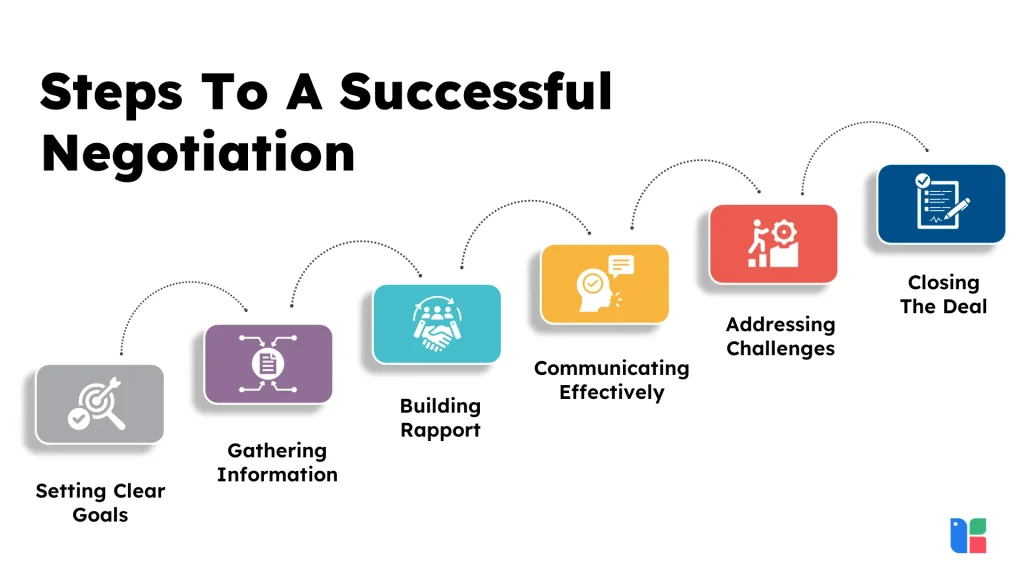
Setting Clear Goals
Successful negotiations begin with a clear understanding of what you aim to achieve. Define your goals and objectives, outlining the specific outcomes you desire. This clarity guides your approach and helps you communicate your intentions effectively to the other party.
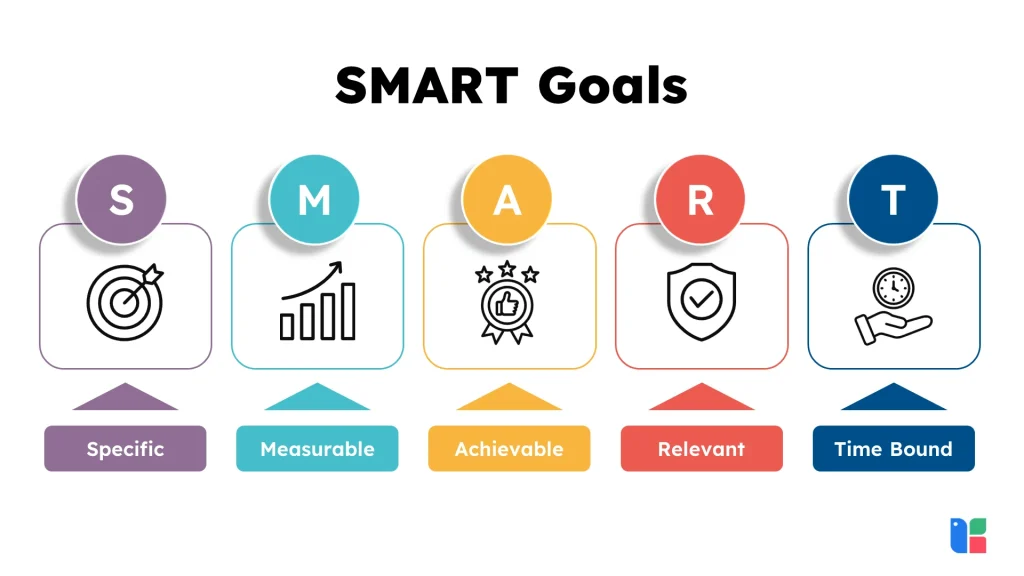
To define clear and precise goals, use the SMART criteria—Specific, Measurable, Achievable, Relevant, and Time-bound. This framework ensures that your objectives are well-defined and practical, setting the stage for a focused negotiation strategy.
Gathering Information
Knowledge is power in negotiations. Thoroughly research the subject matter, the parties involved, and any relevant background information. This groundwork ensures that you enter the negotiation room well-informed, giving you a strategic advantage in discussions.
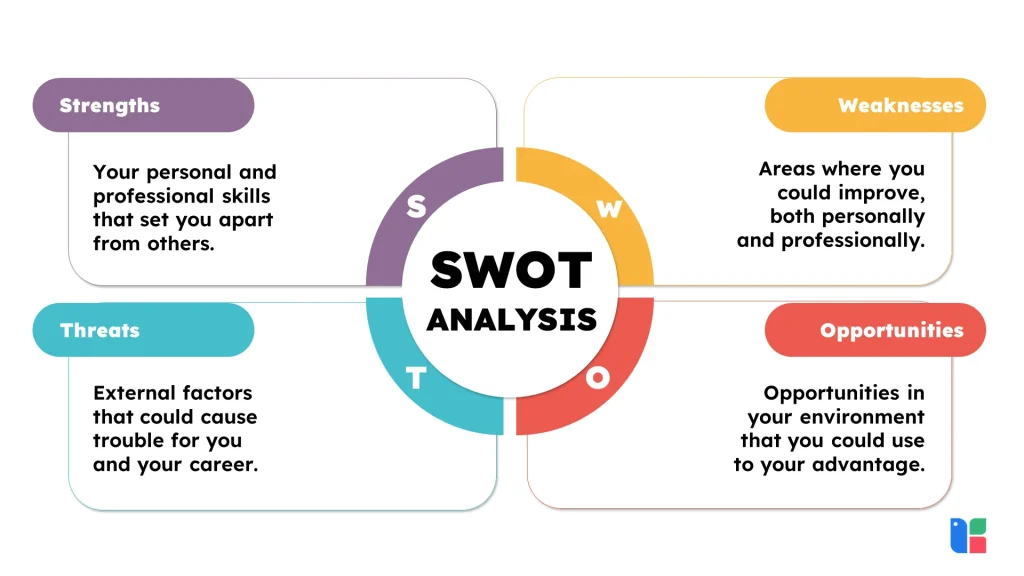
SWOT Analysis (Strengths, Weaknesses, Opportunities, Threats) helps assess your position and the other party’s, providing a comprehensive understanding. This technique enhances your preparedness by identifying potential advantages and challenges.
Building Rapport
Establishing a positive and collaborative atmosphere is crucial. Building rapport and trust with the other party creates a foundation for open communication. A trusting relationship contributes to a more cooperative negotiation process, fostering a conducive environment for finding common ground.
The mirroring technique subtly reflects the other party’s body language and communication style. This builds a sense of connection and rapport, fostering a more positive and trusting negotiation environment.
Communicating Effectively
Communication is a two-way street. Practise active listening to understand the perspectives of others and articulate your thoughts clearly. Utilise effective communication strategies like asking open-ended questions or clarifying what you understood to convey your points persuasively while being receptive to the concerns and ideas presented by the other party.

The DESC model (Describe, Express, Specify, Consequences) helps articulate your concerns clearly and assertively. By following this structure, you enhance the clarity of your communication, reducing the chances of misunderstandings.
Addressing Challenges
Anticipate potential challenges and obstacles that may arise during negotiations. Proactively identifying issues allows you to formulate strategies for addressing them constructively. Whether conflicting interests or unexpected roadblocks, a successful negotiator navigates challenges with resilience and adaptability.
The pre-mortem technique involves envisioning potential challenges and failures before the negotiation begins. This proactive approach allows you to effectively develop strategies to mitigate risks and navigate unforeseen obstacles.
Closing The Deal
Recognising the signs of agreement and summarising key points are crucial in the closing stages of negotiation. Ensure the agreement is formalised appropriately and all parties are content with the outcome. Strive for a win-win situation where both parties feel they have gained value from the negotiation.
The “Yes, But” technique involves acknowledging the other party’s concerns before presenting your counterproposal. This approach fosters cooperation and increases the likelihood of reaching a consensus that benefits both parties.
“Kapable helped me overcome my fear of spontaneous speaking and taught me to balance diplomacy with assertiveness, ensuring my voice is heard. I now communicate with confidence and clarity, a transformation that has made a remarkable difference in my journey.”
– Anupam Bajaj (Design Head At SAMSUNG)
What Are The Different Negotiation Strategies?
Negotiation strategies are the blueprints that guide how individuals approach and navigate discussions to achieve their goals. You can also understand more about these strategies through a leadership development program. Here are five fundamental negotiation strategies, each with its distinct approach:
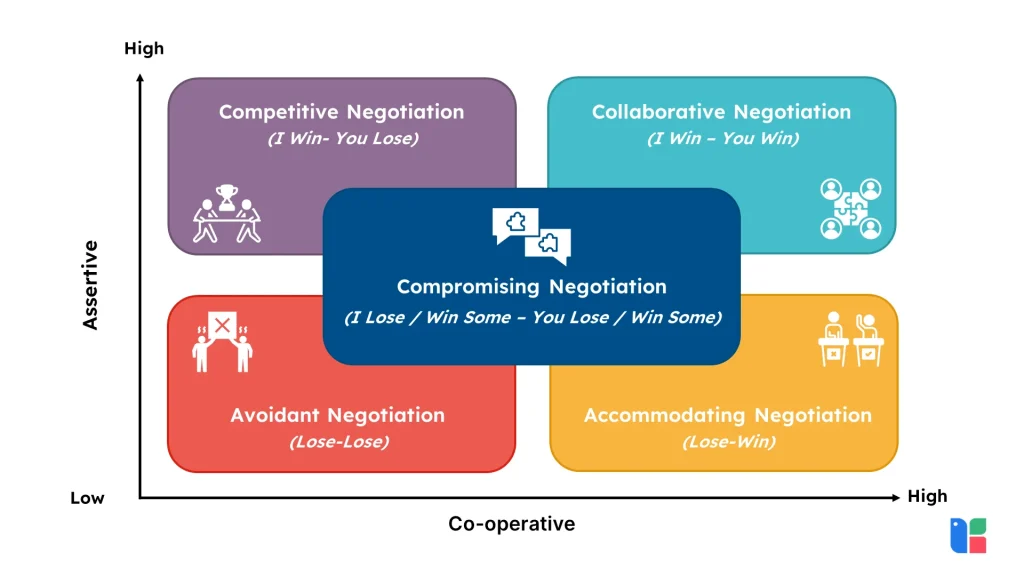
Competitive Negotiation
In competitive negotiations, the focus is on claiming value rather than creating it jointly. Parties perceive the negotiation as a win-lose situation, where one side’s gain is the other’s loss. This strategy is often employed in fixed-resource situations, such as price negotiations. An example could be negotiating the purchase price of a property where both buyer and seller vie for the best possible deal.
Collaborative Negotiation
In contrast to competitive negotiations, collaborative negotiations aim to create value for all parties involved. This strategy involves exploring shared interests and finding creative solutions that satisfy everyone’s needs. An example could be a business partnership negotiation where both parties work together to create a mutually beneficial arrangement, maximising the overall value of the agreement.
Avoidance Strategy
The avoidance strategy is characterised by a desire to delay or sidestep the negotiation process. This may be employed when the issue is not immediately pressing or when emotions are running high, making productive discussion challenging. However, while avoidance may temporarily mitigate conflict, it may not lead to a resolution and can sometimes exacerbate the underlying issues.

Accommodation Strategy
Accommodation involves prioritising the needs and concerns of the other party over one’s own. This strategy may build goodwill, maintain relationships, or concede on less critical issues to secure agreement on more significant matters. For instance, a business leader might accommodate a client’s request for a modified service to strengthen the long-term partnership.
Compromise Strategy
Compromise strikes a balance between competing interests, with both parties making concessions to reach an agreement. This strategy often involves finding a middle ground to resolve disputes. In a team setting, compromise could manifest in adjusting project timelines or resource allocations to meet the needs of various team members.
What Are The Best Free Resources To Improve Negotiation Skills?
Many free resources are available that can provide valuable insights and strategies. Here are some recommended free resources to help you sharpen your negotiation skills:

Books
- Getting to Yes by Roger Fisher and William Ury: A classic in the field of negotiation, this book provides principles for principled negotiation and creative problem-solving.
- Never Split the Difference by Chris Voss: Written by a former FBI hostage negotiator, this book offers tactical negotiation techniques applicable in various situations.
YouTube Channels
- Harvard Law School(PON): PON’s YouTube channel features lectures, interviews, and discussions with negotiation experts, offering valuable insights into different aspects of negotiation.
- TED Talks-Negotiation Playlist: TED Talks often feature experts sharing their experiences and strategies. The negotiation playlist includes talks on effective communication, problem-solving, and building rapport.
Podcasts
- The Negotiation Academy: Hosted by Kwame Christian, this podcast explores negotiation strategies, communication techniques, and real-world negotiation scenarios.
- The HBR IdeaCast: HBR IdeaCast occasionally features episodes focusing on negotiation skills, with insights from renowned experts in the field.
Conclusion
Success in negotiation is defined by how both sides walk away. When preparation meets empathy, and clarity meets adaptability, conversations turn into meaningful agreements instead of power struggles. Keep refining your skills, stay curious about how others negotiate, and use every discussion as practice. With time, you’ll realise that great negotiators don’t just close deals, they build trust, shape partnerships, and create outcomes that last.
If you’re aiming to negotiate with greater confidence and consistency, consider whether Kapable supports the way you want to build those capabilities.


