


TL;DR
- Negotiation Fundamentals: It is the art of reaching agreements between parties, including win-win and win-lose types, and requires preparation, effective communication, flexibility, and problem-solving skills.
- Communication’s Role: Communication is central, building rapport and trust, establishing empathy, clarifying understanding, and managing resistance to ultimately generate creative, mutually beneficial solutions.
- Essential Techniques: Key communication techniques to master include using open-ended questions to uncover interests, employing mirroring and paraphrasing for active listening, and utilising positive language for a constructive tone.
- Strategic Workplace Approach: Effective strategies involve thorough preparation and planning, setting clear objectives, maintaining flexibility, effectively managing emotions, and strategically utilising silences for reflection and tactical advantage.
Have you ever found yourself bargaining over a car’s price or debating which restaurant to visit with your family? Congratulations, you’ve already dipped your toes into the ocean of negotiation! Negotiation skills are the tools and techniques to navigate discussions and agreements with others, often to achieve mutually beneficial outcomes. These skills are essential in various aspects of life, including business transactions, personal life, and everyday decision-making.
Communication lies at the heart of negotiation skills, serving as the primary means through which parties exchange information, express their interests, and work towards finding common ground. Effective communication fosters understanding, builds trust, and facilitates collaboration, vital elements in successful negotiation strategies.
Throughout this blog, we will explore the intricacies of negotiation skills, focusing on the essential role of communication. From understanding different types of negotiations to mastering key skills such as conflict resolution in complex situations, we will provide insights and practical strategies to help you enhance your negotiation skills. So, let’s dive into the world of negotiation and discover how effective communication can be your most powerful asset. This journey will equip you with the influencing skills necessary to achieve success and expand your negotiation toolkit, enabling you to effectively reach agreements in various scenarios.
What Is Negotiation?
Negotiation, in its essence, is the art of reaching agreements between parties with differing interests. It’s a dynamic process that involves communication, compromise, and collaboration. To navigate negotiations successfully, it’s essential to grasp the various types of negotiations and the key components that drive them.

What Are The Different Types Of Negotiations?
Negotiations take many shapes based on goals, relationships, and context. Understanding the different types helps you navigate each situation with clarity and confidence. Here are the main ones to know.

- Win-Win Negotiations: Also known as integrative negotiations, win-win negotiations aim to create value for all parties involved. In these negotiations, the focus is on finding solutions that satisfy the interests of both sides, fostering long-term relationships and seeking mutual benefit.
- Win-Lose Negotiations: Conversely, win-lose negotiations, or distributive negotiations, involve a more competitive approach. Here, one party’s gain comes at the expense of the other party, leading to a zero-sum outcome where one side wins while the other loses.
- Multi-Party Negotiations: Multi-party negotiations involve more than two parties with varying interests and agendas. These negotiations can be complex, requiring careful coordination, communication, and consensus-building among multiple stakeholders to help people settle differences.
- Internal Negotiations: Not all negotiations occur between external parties. Internal negotiations occur within organisations, involving discussions and decision-making among departments, teams, or individuals within the same entity.
What Are The Key Components Of Successful Negotiations?
Every negotiation follows its own rhythm and purpose from collaborative discussions to competitive deals. Knowing the types helps you choose the right approach. Here are some key examples.

- Preparation: Thorough preparation is crucial for effective negotiations. This includes understanding your objectives and researching the other party’s interests, priorities, and potential alternatives.
- Communication: Effective communication is the cornerstone of successful negotiations. Clear and concise communication helps parties convey their interests, understand each other’s perspectives, and explore potential solutions collaboratively.
- Flexibility: Negotiations often require adaptability and flexibility. Being open to creative solutions, willing to explore alternatives, and adjusting strategies based on evolving circumstances can help parties navigate impasses and reach mutually beneficial negotiated agreements.
- Problem-Solving Skills: Negotiations often involve identifying and resolving underlying issues or conflicts. Strong problem-solving skills enable parties to address challenges effectively, brainstorm innovative solutions, and overcome obstacles to reaching agreements, essential for resolving conflicts.
- Relationship Building: Building rapport and trust is essential for fostering productive negotiations. Establishing a positive relationship with the other party, demonstrating mutual respect, and showing respect for their perspectives can create a conducive environment for collaboration and compromise. Effective rapport building and fostering collaboration are further enhanced when negotiators manage emotions effectively during discussions.
“This journey transformed my confidence and communication skills, enabling me to deliver impactful presentations, including a town hall for 500 people and a compelling business pitch to a senior stakeholder. Kapable has been a game-changer in my professional growth.”
– Ajay Deshmukh (Director At JPMorgan Chase)
How Can You Enhance Negotiation Skills With Emotional Intelligence?
Negotiations differ in structure, tone, and intent, depending on what each party aims to achieve. Recognising these distinctions builds your strategic edge. Here are the primary types.
- Interpersonal Skills: Effective negotiators leverage their interpersonal skills to build trust and rapport with the other party. These skills are crucial in everyday life and professional settings alike, from salary negotiations to securing a business deal.
- Emotional Intelligence: The ability to understand and manage one’s own emotions and those of others is vital. High emotional intelligence helps negotiators identify areas of concern, resolve conflicts, and maintain calm under pressure, which is key to navigating complex negotiations and achieving successful outcomes.
By integrating these principles and enhancing your negotiation capabilities through continuous learning and practice, you can excel in various negotiation scenarios, from simple everyday life interactions to complex business deals.
What Is The Role Of Communication In Negotiation?
Communication shapes the dynamics, outcomes, and relationships between parties. In this section, we’ll explore the essential role that communication plays in negotiation and dive into the various aspects of communication that contribute to achieving successful outcomes.
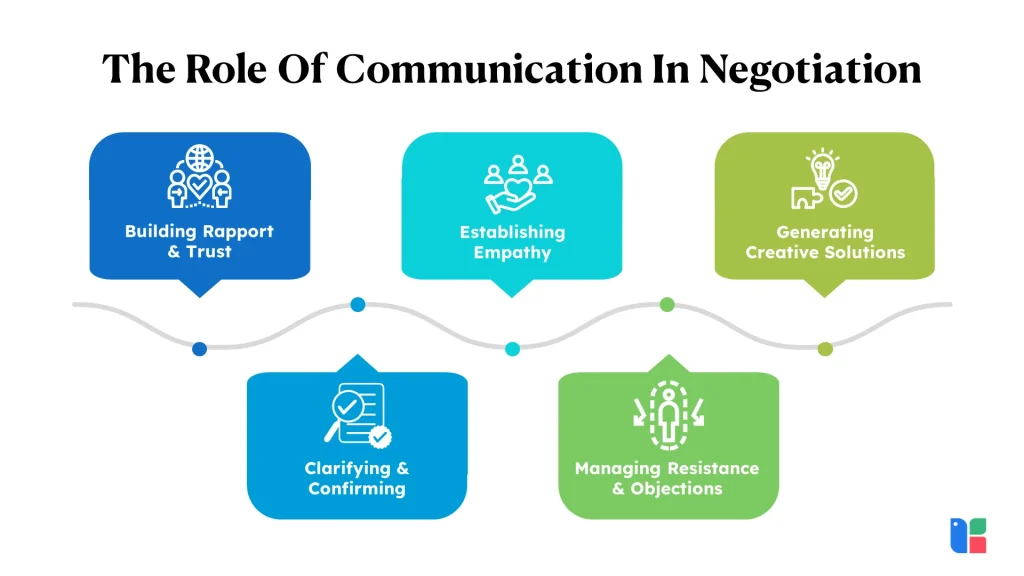
Building Rapport And Trust
Effective communication lays the groundwork for building rapport and trust between negotiating parties. By establishing open and transparent lines of communication, parties can create a conducive environment where they feel comfortable expressing their interests, concerns, and aspirations. Building trust fosters cooperation, enhances credibility, and increases the likelihood of reaching mutually satisfactory agreements. The structured approach to rapport building and the ability to effectively communicate through both verbal communication and non-verbal communication like body language are critical.
Clarifying And Confirming
Clear and accurate communication is essential for ensuring mutual understanding and alignment between negotiating parties. Effective questioning and confirming understanding involve paraphrasing, summarising, and seeking clarification to ensure that both parties are on the same page regarding key issues, interests, and agreements. By confirming understanding, negotiators minimise misunderstandings, clarify expectations, and lay the groundwork for successful collaboration.
Establishing Empathy
Empathy, a cornerstone of emotional intelligence, is a powerful tool in negotiation, allowing parties to understand and appreciate each other’s perspectives, emotions, and concerns. Effective communication fosters empathy by practising active listening, acknowledging emotions, and demonstrating genuine interest in the other party’s needs and aspirations. By cultivating empathy, negotiators build rapport, trust, and goodwill, paving the way for constructive dialogue and mutually beneficial agreements.
Managing Resistance And Objections
Negotiations often involve navigating resistance, objections, or pushback from the other party. Effective communication helps manage resistance by addressing concerns, addressing objections, and reframing perspectives to find common ground. Actively listen to and validate the other party’s concerns while articulating persuasive arguments and alternatives, helping negotiators overcome barriers and move towards resolution. This process is enhanced by influencing skills that negotiators develop through experience and practice.
Generating Creative Solutions
Creative problem-solving is a hallmark of successful negotiation, enabling parties to explore innovative solutions that meet their underlying interests and objectives. Effective communication fosters creativity by encouraging brainstorming, exploring diverse perspectives, and challenging conventional thinking. By fostering a collaborative environment where ideas are freely exchanged and evaluated, negotiators can unlock new possibilities and reach novel solutions that satisfy both parties’ needs. Negotiators should also seek feedback to continuously improve their communication strategies and adapt to different negotiation scenarios.
By mastering these communication techniques and applying them strategically in various negotiation scenarios, negotiators can effectively convey their interests, build rapport, and ultimately achieve favourable outcomes.
Every negotiation is ultimately a communication challenge, requiring professionals to listen carefully, respond thoughtfully, and build agreement. These are the capabilities strengthened through Kapable.
What Are The Essential Communication Techniques In Negotiation?
In negotiation, mastering essential communication techniques can make all the difference between reaching a favourable agreement and hitting an impasse. In this section, we’ll explore key communication techniques that empower negotiators to navigate discussions effectively and achieve mutually beneficial outcomes.

Asking Open-Ended Questions
Open-ended questions are a powerful tool for eliciting information, encouraging dialogue, and uncovering underlying interests in negotiation. Unlike closed-ended questions that prompt simple yes or no responses, open-ended questions invite the other party to share their thoughts, feelings, and perspectives more freely.
For example:
Instead of asking, “Are you satisfied with the proposed terms?” try asking, “What aspects of the proposed terms are most important to you?”
By asking open-ended questions, negotiators can gain deeper insights into the other party’s priorities, preferences, and concerns, paving the way for more meaningful discussions and creative solutions.
Mirroring and Paraphrasing
Mirroring and paraphrasing are techniques used to demonstrate active listening and show understanding of the other party’s perspective. Mirroring involves repeating or reflecting back the other party’s words or emotions, signalling empathy and validation.
For example:
When the other party expresses frustration, you can mirror their emotion by saying, “It sounds like you’re feeling frustrated about the delay in the project.”
For paraphrasing, you might say, “If I understand correctly, you’re concerned about the potential impact on the project timeline due to the delay.”
Paraphrasing, on the other hand, involves restating the other party’s ideas or concerns in your own words, clarifying understanding and reinforcing rapport. By employing mirroring and paraphrasing, negotiators can build trust, foster rapport, and enhance communication effectiveness.
Using Positive Language
The words we choose in negotiation can have a significant impact on the tone, direction, and outcome of the discussion. Using positive language that conveys optimism, collaboration, and cooperation can help create a constructive atmosphere and foster goodwill between parties.
For example:
Instead of saying, “We can’t make any concessions on price,” you can reframe it positively by saying, “Let’s explore ways we can find common ground on price that work for both parties.”
Positive language focuses on solutions rather than problems, acknowledges common ground, and encourages a forward-thinking mindset. By framing messages positively and avoiding negative or confrontational language, negotiators can enhance rapport, minimise resistance, and increase the likelihood of reaching an agreement.
What Are The Strategies For Effective Communication In Negotiation?
Effective communication is essential in the workplace, driving collaboration, understanding, and alignment among team members. Let’s explore strategic approaches to communication within a workplace context, focusing on a scenario where a team is negotiating project timelines and resource allocation.
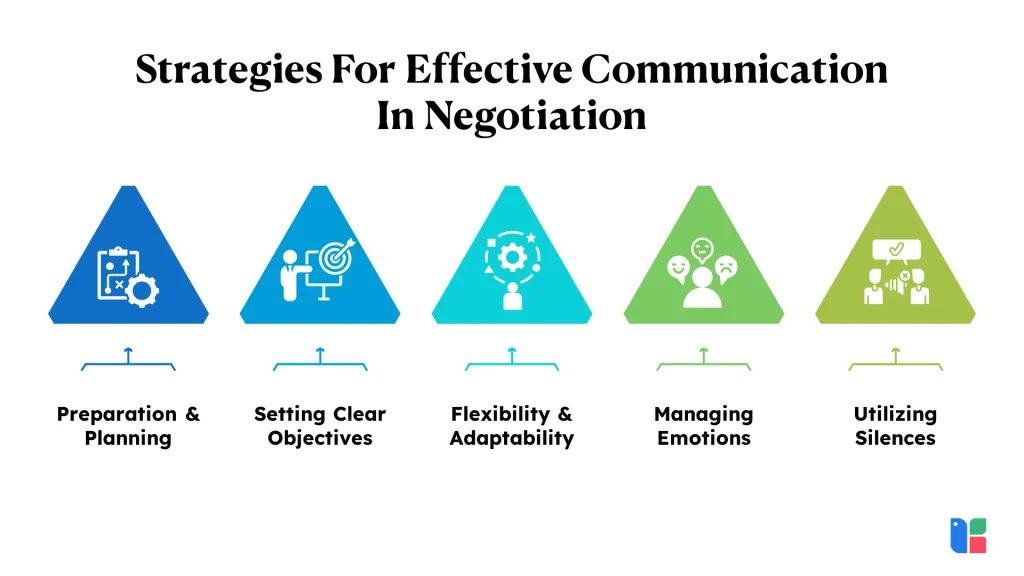
1. Preparation And Planning
Effective negotiation in the workplace begins long before the actual discussion takes place. It starts with thorough preparation and strategic planning. Imagine a scenario where a project team is gearing up to negotiate project timelines and resource allocation with stakeholders. Here’s how they can prepare:
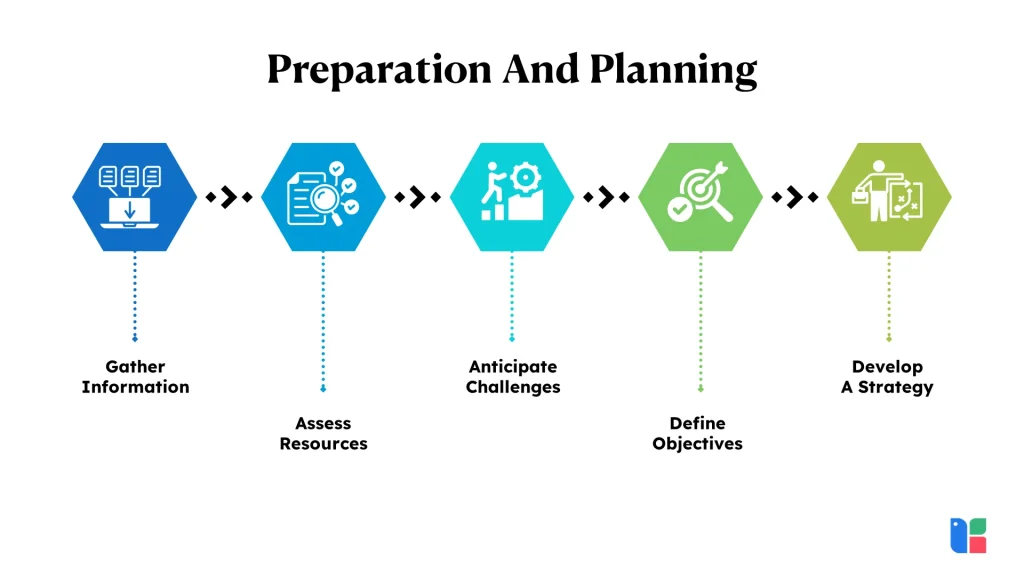
Step 1: Gather Information
The project team starts by collecting all relevant data about the project. This includes understanding the requirements, objectives, and constraints by reviewing the project plans, scopes, and any associated documentation. This step ensures the team has a clear grasp of the project’s scope and deliverables.
Step 2: Assess Resources
Next, the team evaluates the available resources such as personnel, budget, and materials. They analyse their capacity to complete the project within the proposed timeline and identify any potential constraints or limitations that could affect the negotiation.
Step 3: Anticipate Challenges
The team then considers possible challenges or obstacles that might emerge during the negotiation, like conflicting priorities or stakeholder expectations. They brainstorm solutions or alternatives to address these issues to facilitate a smooth negotiation process.
Step 4: Define Objectives
Based on their research and assessments, the team establishes clear negotiation objectives. These objectives include securing necessary resources to meet deadlines while balancing stakeholder expectations and maintaining quality. Specific goals, priorities, and desired outcomes are clearly defined.
Step 5: Develop a Strategy
Finally, the team devises a comprehensive negotiation strategy. This strategy outlines their approach, tactics, and key messages for the negotiation meeting. They plan potential negotiation techniques such as highlighting the project’s value proposition, using data to support their arguments, and aiming to build consensus among stakeholders.
2. Setting Clear Objectives
Once the project team has completed their preparation and planning, the next step is to set clear objectives for the negotiation. In the context of negotiating project timelines and resource allocation, setting clear objectives ensures that all team members are aligned and focused on achieving common goals. Here’s how the team can establish clear objectives:

Step 1: Identify Key Priorities
The project team starts by pinpointing the most crucial priorities for the project. This includes meeting client deadlines, ensuring the quality of deliverables, and optimising the use of resources. These priorities are ranked based on their importance to the success of the project and how well they align with stakeholder expectations.
Step 2: Clarify Resource Needs
Next, the team details their specific needs for resources, covering personnel, budget, and equipment. They specify what is required for each phase of the project and arrange these needs in order of importance to critical project milestones and deliverables.
Step 3: Establish Negotiation Boundaries
The team sets clear boundaries and limits for the negotiation, which may include the minimum resources needed, the maximum budget available, and non-negotiable project deadlines. Establishing these boundaries upfront provides a solid framework for decision-making during the negotiation.
Step 4: Align Stakeholder Expectations
It’s crucial for the team to ensure that all key stakeholders—like clients, sponsors, and senior management—have a common understanding of the project’s objectives, constraints, and priorities. This involves communicating effectively to align expectations before the negotiation begins.
Step 5: Document Objectives
Finally, the team documents their negotiation objectives in a clear and concise communication, possibly in a negotiation brief or an agenda. This document will act as a reference during the negotiation meeting, helping to guide discussions and decisions based on the established objectives.
3. Flexibility And Adaptability
Flexibility and adaptability are essential qualities for effective communication in negotiation, particularly in the ever-changing landscape of project management. Here’s how the project team can incorporate flexibility and adaptability into their negotiation approach:

Step 1: Prepare for Changes
The team acknowledges that unexpected changes and contingencies are a normal part of negotiations. They proactively prepare by anticipating potential challenges, such as shifting stakeholder priorities or resource constraints. Developing contingency plans for these possibilities ensures they can adapt quickly and effectively.
Step 2: Embrace Alternative Solutions
During negotiations, the team remains open to exploring alternative solutions and compromises. They approach discussions with a mindset that values different perspectives and options, understanding that flexibility is crucial for discovering mutually beneficial solutions that align with the project’s objectives.
Step 3: Monitor and Adjust Tactics
As the negotiation progresses, the team actively monitors the dynamics of the discussion and adjusts their communication strategies and tactics as needed. If certain approaches are not effective, they are prepared to pivot to alternative methods to maintain momentum and advance towards their goals.
Step 4: Seek Collaborative Outcomes
Adopting a collaborative mindset, the team aims for a win-win outcome that benefits all parties. They continually look for opportunities to create value and build consensus, even when interests may seem divergent initially.
Step 5: Focus on Common Goals
Throughout the negotiation process, the team remains focused on their shared goals and the broader interests of the project. They prioritise maintaining positive relationships with all stakeholders and fostering a spirit of cooperation and collaboration, which is crucial for managing disagreements and challenges constructively.

4. Managing Emotions
Emotions can run high in negotiations, potentially impacting communication and decision-making. Effectively managing emotions is crucial for maintaining a constructive and productive negotiation environment. Here’s how the project team can navigate emotions during negotiations:
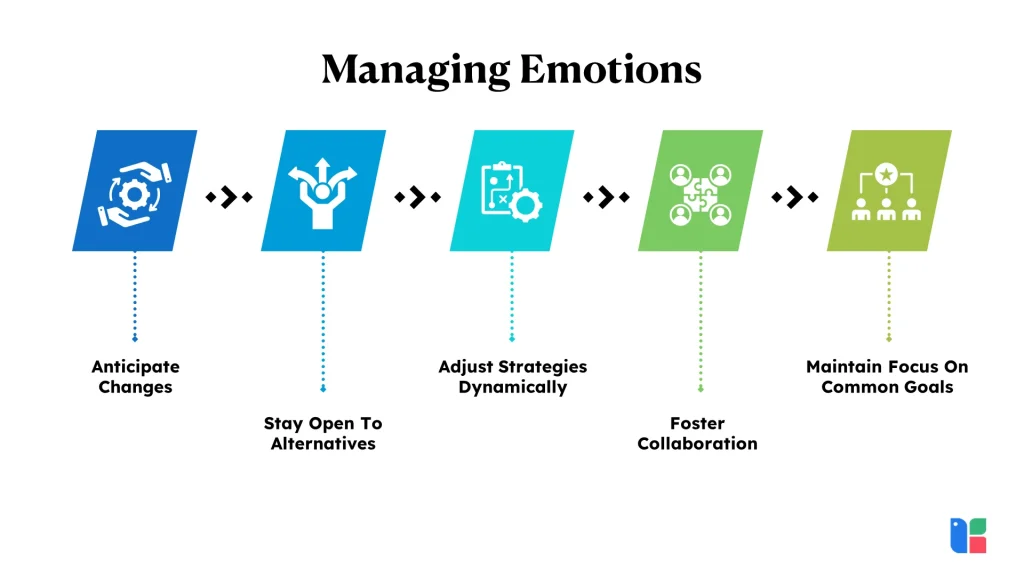
Step 1: Anticipate Changes
The team understands that unexpected changes and issues may occur during negotiations. They proactively anticipate potential challenges, such as shifting stakeholder priorities or resource constraints, and develop contingency plans to address them. This preparation ensures they are not caught off guard by changes and can adapt their strategies effectively.
Step 2: Stay Open to Alternatives
During negotiations, the team remains open to exploring alternative solutions and compromises. They recognise that flexibility is crucial for aligning with the project’s objectives and achieving mutually beneficial outcomes. This approach involves considering different perspectives and remaining adaptable to new information and ideas.
Step 3: Adjust Strategies Dynamically
As the negotiation progresses, the team continuously assesses the effectiveness of their tactics. If certain approaches aren’t producing the desired outcomes, they are ready to pivot and try different methods. This adaptability helps maintain momentum and ensures progress towards their goals.
Step 4: Foster Collaboration
The team adopts a collaborative mindset, prioritising win-win solutions that benefit all involved parties. They actively seek opportunities to create value and build consensus, even when interests might initially appear divergent. This focus on collaboration helps overcome obstacles and find agreeable solutions.
Step 5: Maintain Focus on Common Goals
Throughout the negotiation, the team keeps their common goals and shared interests at the forefront. They prioritise maintaining positive relationships with stakeholders and fostering a spirit of cooperation and collaboration. Even in the face of disagreements or challenges, they strive to keep interactions constructive and focused on achieving the project’s objectives.
5. Utilising Silences
Silence can be a powerful tool in negotiation, offering opportunities for reflection, clarification, and strategic communication. Here’s how the project team can effectively utilise silences during negotiations:
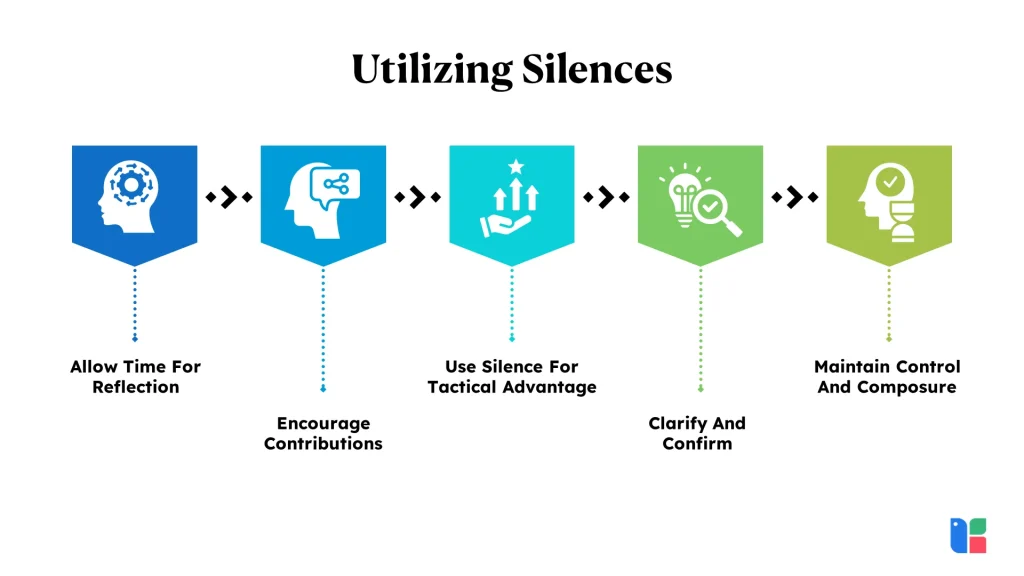
Step 1: Allow Time for Reflection
Team members recognise the value of silence for providing time to reflect and process information. They strategically incorporate pauses into their communication, giving both parties the opportunity to digest discussion points and prepare thoughtful responses.
Step 2: Encourage Contributions
Silence can encourage the other party to share their insights, which can be crucial for understanding their perspectives, priorities, and concerns. Team members use silence as a subtle cue to prompt the other party to express their thoughts, feelings, and proposals, making the negotiation process more inclusive and collaborative.
Step 3: Use Silence for Tactical Advantage
Strategic use of silence can be particularly effective when concessions or compromises are on the table. Team members might pause deliberately after making a proposal or counteroffer, allowing the other party time to consider the offer and possibly make concessions of their own.
Step 4: Clarify and Confirm
Silence can also be used to ensure clarity and agreement. After summarising key discussion points or reaching tentative agreements, team members may pause to let both parties confirm their understanding and verify that they are in alignment before proceeding.
Step 5: Maintain Control and Composure
In high-pressure or contentious situations, using silence can help team members maintain control and composure. By staying composed and allowing moments of silence, they convey confidence, assertiveness, and professionalism, which can significantly enhance their effectiveness in negotiations.
Every workplace conversation presents an opportunity to negotiate, influence, or build alignment. Consider whether Kapable supports the way you want to strengthen these capabilities.
Conclusion
Effective communication is the cornerstone of successful negotiation in the workplace, driving collaboration, understanding, and consensus-building among team members and stakeholders.
As organisations continue to navigate complex challenges and opportunities, mastering the art of communication in negotiation becomes increasingly essential. By having good communication skills and adopting strategic approaches to negotiation, teams can enhance their effectiveness, build stronger relationships, and achieve successful project outcomes that meet the needs of all stakeholders involved.
In conclusion, effective communication is not only a skill but also a mindset—a commitment to understanding, empathy, and collaboration. By prioritising effective communication in negotiations, organisations can unlock new possibilities, overcome obstacles, and drive sustainable success in the ever-evolving workplace.


