


TL;DR
- Adaptation and Value: Cross-cultural leadership is essential for guiding geographically dispersed teams by valuing diverse perspectives and adapting to varied communication and work styles, which drives innovation.
- Cultural Inclusion: Successful leadership builds a strong, inclusive company culture that creates a sense of belonging among global employees, which is necessary to attract and manage teams effectively across regions.
- Navigating Complexity: Global teams face hurdles such as conflicting communication and work styles, divergent attitudes towards authority, and different approaches to resolving conflict, which leaders must proactively address.
- Actionable Framework: Leaders must implement clear work policies, respect cultural norms, and adopt flexible styles like transformational leadership, complementing these efforts with thoughtful, adaptable communication techniques.
A recent study shows that 89% of white-collar workers are now part of global virtual teams, highlighting a key trend in today’s workforce. Geographically and culturally dispersed teams have become the norm rather than the exception. Thanks to advancements in technology and the globalisation of markets, teams now span continents, bringing together talent from various cultural, linguistic, and time zone backgrounds. This shift offers businesses a wealth of opportunities, access to a broader talent pool, diverse perspectives, and innovative ideas. However, it also presents unique challenges. As businesses expand internationally, the need for effective cross-cultural leadership becomes increasingly critical. This blog offers a comprehensive guide to managing global teams effectively, providing insights and strategies for leading diverse, geographically dispersed groups to achieve cohesive collaboration and success in a connected world.
What Is Cross-Cultural Leadership?
In today’s world, businesses often have teams spread across multiple countries. This means leaders must know how to work with people from different cultural backgrounds, each with unique ways of thinking, communicating, and working. Cross-cultural leadership is about guiding and managing people from various cultures effectively. It’s more than just knowing another language or understanding basic cultural customs; it’s about recognising and valuing the differences that each person brings to the table.
As companies expand globally, leaders need to understand how to bring out the best in people, no matter where they are from. McKinsey’s research has shown that companies with executive teams in the top quartile for ethnic and cultural diversity are 33% more likely to achieve industry-leading profitability. This shows that leadership isn’t just a nice-to-have skill. Effective cross-cultural leadership can lead to more innovative ideas, better decision-making, and stronger team cohesion. Without it, misunderstandings can occur, conflicts may arise, and productivity can suffer.
Unlike traditional leadership, which might focus on one specific way of working, cross-cultural leadership requires flexibility and adaptability. A good cross-cultural leader is aware of their own cultural biases and understands that different cultures have different approaches.
For example, in some cultures like the United States, it’s common to speak very directly and express opinions openly. In contrast, cultures such as Japan often prefer a more indirect communication style to avoid conflict and show respect for others’ feelings. Understanding these differences is key to communicating effectively and building trust.
How Does Effective Leadership Impact Global Team Management?
In 2016, Airbnb topped Glassdoor’s ranking of the best workplaces, based on anonymous employee reviews. Remarkably, 90% of Airbnb employees said they would recommend the company to others. This positive sentiment is reflected in the company’s ability to attract talent, with 180,000 applicants for just 900 positions in a single year. These statistics highlight the strong, inclusive culture that Airbnb has built, which is crucial for managing teams across different cultures and regions.
What started with just three visitors sleeping on air mattresses has grown into a global powerhouse, valued at $25.5 billion, with operations in 191 countries and over 2 million listings. Despite facing some controversies over its business model, Airbnb’s workplace culture has become a model for companies worldwide.
The secret behind Airbnb’s success goes beyond just being at the right place at the right time. It is rooted in a well-thought-out mission and strategy, where the focus is on building a strong company culture. Airbnb has created a sense of belonging among its employees, fostering a welcoming culture where people feel included and valued. This is particularly important for global teams, where cultural differences can easily lead to misunderstandings or feelings of exclusion.
In a global setting, leaders must be more than just managers; they need to be cultural connectors who can navigate the complexities of diverse workforces. It encourages team members to embrace different viewpoints and learn from one another, which is vital in today’s rapidly changing global market. When leaders are attuned to the cultural nuances and dynamics within their teams, they can better guide their teams to work effectively across borders and drive the company’s global strategy forward.
As businesses look to expand internationally, focusing on effective cross-cultural leadership is crucial. It’s time to act and build a strong, inclusive culture to enhance global reputation and growth. However, this approach comes with significant challenges that need to be tackled to achieve successful global expansion.

How To Navigate Challenges In Cross-Cultural Leadership?
Managing global teams involves several specific challenges that can impact leadership and employee interactions. Here’s how these challenges play out and what leaders can do to address them:
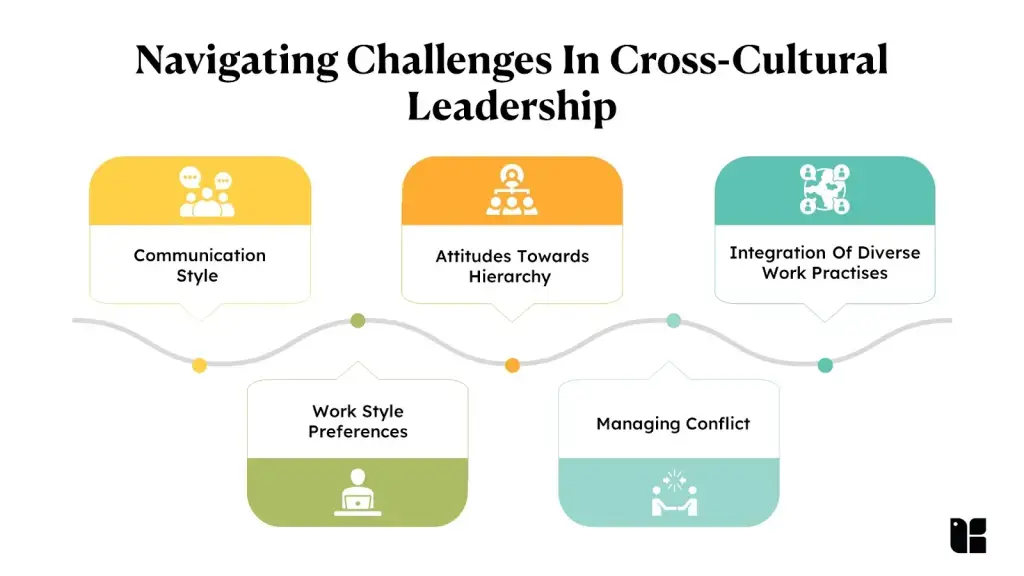
Communication Style
Different cultures have distinct communication styles, which can lead to misunderstandings. For example, in the U.S., people often speak directly, while in many East Asian cultures, communication tends to be more indirect to avoid conflict. This difference can lead to confusion and frustration if not managed properly. Leaders should encourage open dialogue and provide training on effective communication techniques to bridge these gaps, ensuring clarity and mutual understanding.
Work Style Preferences
Work habits can vary significantly between cultures. For instance, some cultures value a structured, punctual approach, while others prioritise flexibility and relationship-building before getting down to business. These differing expectations can lead to conflicts over deadlines and work processes. Leaders need to establish clear guidelines that accommodate diverse work styles while maintaining productivity and respect for various approaches.
Attitudes Towards Hierarchy
Different cultures have varying views on authority and hierarchy. In some cultures, employees expect to receive instructions from top leaders and follow them without question, while in others, a more collaborative approach is preferred, where input from all levels is encouraged. This divergence can create tension in decision-making and problem-solving. Leaders should clearly define their leadership approach and involve team members in decision-making processes to balance respect for hierarchy with collaborative input.
Managing Conflict
Approaches to conflict resolution differ across cultures. For example, some cultures prefer to address conflicts directly and openly, while others may avoid confrontation and handle issues more subtly. This can lead to unresolved issues and hidden tensions within the team. Leaders should implement conflict resolution strategies that are sensitive to these cultural differences, promoting a respectful and effective approach to managing and resolving conflicts.
Integration Of Diverse Work Practises
Cultural differences can lead to varying work practices that may not always align smoothly. For instance, some cultures might emphasise team collaboration, while others focus on individual achievements. This disparity can affect team cohesion and project outcomes. Leaders should foster a culture of integration by aligning diverse practices with the team’s goals and creating systems that support collaboration while respecting individual contributions.
It’s essential to act on these issues now to expand your organisation’s global reach and reputation, while being prepared to navigate the complex challenges that come with leading diverse teams.
“Kapable helped me overcome my fear of spontaneous speaking and taught me to balance diplomacy with assertiveness, ensuring my voice is heard. I now communicate with confidence and clarity, a transformation that has made a remarkable difference in my journey.”
– Anupam Bajaj (Design Head At SAMSUNG)
Which Strategies Work Best For Leading Across Cultures?
Leading a global team effectively requires more than just understanding cultural differences; it involves actively adapting strategies to manage these differences. Here are practical strategies for leaders to successfully navigate cross-cultural challenges:
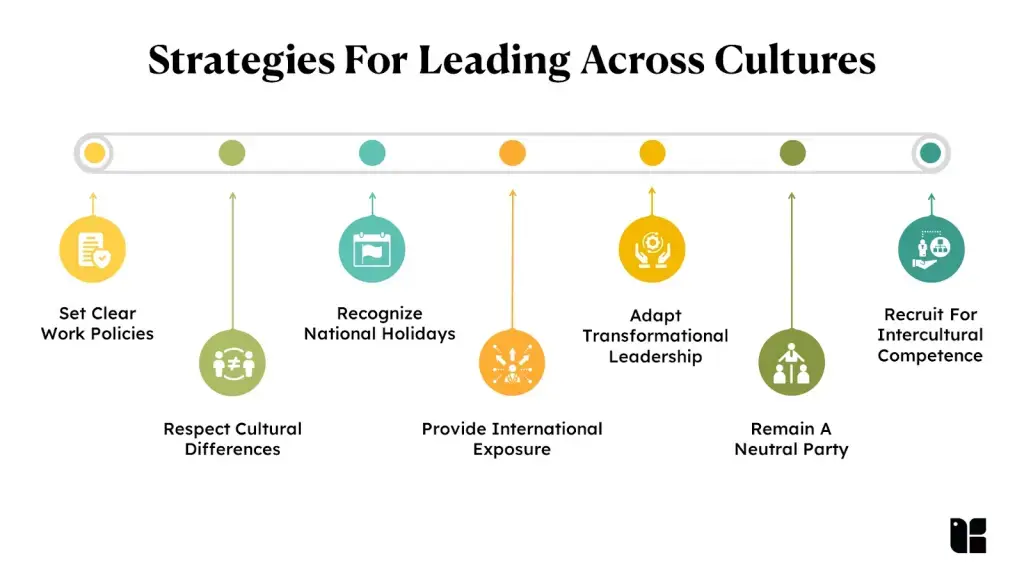
Set Clear Work Policies
Develop and distribute a detailed handbook outlining work policies, including communication protocols, decision-making processes, and conflict resolution methods. Ensure that these policies are communicated clearly and are accessible to all team members. Clear work policies reduce confusion and ensure consistent practices, leading to smoother operations and fewer conflicts among team members.
Respect Cultural Differences
Educate yourself and your team about different cultural practices and norms through cultural sensitivity training and open discussions. Encourage team members to share their cultural backgrounds and practices to foster mutual understanding. Respecting cultural differences enhances team cohesion and fosters a sense of inclusion, leading to improved collaboration and job satisfaction.
Recognise National Holidays
Create a calendar of important religious and national holidays for your team and offer flexible work arrangements around these dates. Consider including holiday observances in team celebrations to show appreciation for diverse traditions. Recognising these holidays demonstrates respect and appreciation, boosting team morale and creating a more supportive work atmosphere.
Provide International Exposure
Offer team members opportunities to participate in international projects or rotations by setting up a program for cross-border assignments. Encourage employees to take on roles that involve working with global partners to enhance their cultural understanding. Providing international exposure helps employees build cultural competence, leading to more effective global collaboration and innovative problem-solving.
Adapt Transformational Leadership
Adopt a transformational leadership style that values cultural perspectives on authority while fostering a collaborative environment. This approach involves actively including team members in decision-making, respecting their contributions, and adapting leadership practices to diverse cultural expectations. By doing so, you build trust and engagement, encouraging a more cohesive team and leveraging a range of perspectives to enhance overall effectiveness.
Remain A Neutral Party
Handle conflicts and cultural differences with impartiality by listening to all sides of an issue before making decisions. Maintain transparency in your decision-making process and ensure that your actions are fair and unbiased. Remaining neutral fosters a sense of fairness and respect, which helps in resolving conflicts effectively and maintaining team harmony.
Recruit For Intercultural Competence
Include intercultural skills and experience as key criteria in your recruitment process by designing interview questions that assess cultural awareness and adaptability. Offer training and development programs to further enhance these skills in new hires. Recruiting for intercultural competence ensures that team members are better skilled to work in diverse settings, leading to improved team dynamics and better performance in global markets.
By implementing these strategies, leaders can effectively manage and harness the strengths of a global team, driving success and fostering a collaborative work environment across cultures.
Cultural differences can become a leadership advantage when they are understood and embraced. Through Kapable, professionals learn to navigate diverse teams with greater confidence.
What Tips Help Improve Cross-Cultural Communication?
When working with people from different cultures, clear and thoughtful communication is key. To make sure everyone feels heard and understood, it’s important to adapt how you communicate to fit the diverse backgrounds of your team.

Do Your Research
Before engaging in conversation with someone from another culture, take the time to learn about their communication norms, values, and customs. Understand their typical ways of expressing themselves, whether they prefer direct or indirect communication, and any cultural sensitivities. For instance, knowing that some cultures value politeness and indirectness can help you avoid misunderstandings and engage more effectively.
Let The Other Person Take The Lead
When interacting with people from different cultures, allow them to set the tone and pace of the conversation. This means following their cues on how formal or informal the communication should be and respecting their preferred style of interaction. If someone from a hierarchical culture takes a more reserved approach, match their style to show respect and create a comfortable dialogue.
Choose The Simplest Structure
Opt for clear, straightforward language when communicating across cultures. Avoid using complex phrases, jargon, or idiomatic expressions that may not be easily understood. For instance, replacing technical terms with plain language ensures that your message is accessible to everyone, regardless of their language proficiency or cultural background.
Favour Formality
When in doubt about how formal or informal to be, lean towards a more formal approach. Start with polite and professional language, and use titles and formal greetings until you’re invited to adopt a more relaxed tone. This approach shows respect and can help you avoid unintentionally offending someone, especially in cultures where formal communication is highly valued.
Ask Respectful Questions
If you’re unsure about cultural practices or communication preferences, ask questions in a respectful manner. Frame your questions to show your interest in understanding their culture rather than making assumptions. For instance, you might say, “I’m interested in learning more about how things are done in your culture. Could you share some insights with me?” This demonstrates openness and a willingness to learn.
Reflect On Your Own Culture
Be mindful of how your own cultural background influences your communication style. Recognise any biases or assumptions you may have and how they might affect your interactions. For instance, if your culture values directness, understand that this might be perceived differently in cultures that prioritise indirect communication. Adjust your style to be more in tune with the other person’s preferences.
Mirror And Match
Adjust your communication style to align with the person you’re interacting with. This involves subtly reflecting their tone, pace, and level of formality. By matching their style, you build rapport and show empathy, making the conversation smoother and more effective. If they speak slowly and formally, try to adapt your style accordingly to enhance mutual understanding.
Be Careful With Humor
Avoid using humour that may not translate well across cultures or could be misunderstood. Cultural differences can affect how humour is perceived, and jokes based on cultural references might not be received as intended. Stick to neutral and universally understood forms of communication to ensure that your interactions remain respectful and inclusive.
Using these tips can make a big difference in how well you connect with your global team. By adjusting your communication style, you’ll help build stronger relationships and create a more collaborative and understanding work environment.
Conclusion
Leading across cultures isn’t just about managing teams; it’s about truly connecting with people from diverse backgrounds. This blog has outlined key strategies to help you navigate these differences and build stronger, more inclusive relationships. As you take these insights on board, think of them as tools for creating a more understanding and collaborative environment. The real impact comes when you apply these ideas in your daily interactions, making your global leadership both effective and empathetic. Embracing these changes will set you up for better teamwork and more successful cross-cultural partnerships.
Working across cultures calls for leaders who can adapt without compromising their values. Kapable helps professionals evaluate whether its approach supports that growth.


