


TL;DR
- Defining Intelligence Beyond IQ: Emotional intelligence (EI) is the critical capacity to recognise, understand, and manage one’s own and others’ emotions, acting as the unique intersection of ‘heart and head’ that accounts for a majority of life success.
- Self-Awareness and Management: True emotional mastery lies in the ability to regulate emotional responses, such as expressing anger in the right way, choosing positive thoughts to combat stress, and utilising criticism for personal growth.
- The Power of Empathy: Successful interaction and communication are driven by emotion, requiring empathy, the act of finding echoes of another person in yourself, to build genuine connections and ensure mutual understanding.
- EI as the Leadership Differentiator: Amid a pool of technically skilled professionals, soft skills like empathy, drive, and discipline are the ‘discriminating competency’ that predicts outstanding leaders and are increasingly vital in a world adopting artificial intelligence.
How often do we pause to consider the role emotions play in our daily decisions and relationships?
In a world where achievements and productivity often take centre stage, the significance of emotional intelligence can sometimes be overlooked. Yet, understanding our own emotions and empathising with others lies at the heart of meaningful connections and effective communication.
Throughout history, wise minds have recognised the power of emotional intelligence. Let’s look into some of their insightful quotes to explore the true meaning and impact of this essential skill.
This article will explore the wisdom captured in various quotes from renowned thinkers and leaders. These insights will shed light on the different facets of emotional intelligence, offering practical guidance on navigating our emotions effectively and building stronger relationships. So, get ready to unlock the power of your emotional intelligence – let’s see what these wise words have to teach us!
What Is Emotional Intelligence?
In our evolving understanding of intelligence, the concept of Emotional Intelligence expands upon the traditional emphasis solely on IQ as a measure of cognitive ability. Experts increasingly recognise the pivotal role emotions play alongside analytical skills, suggesting that intelligence encompasses diverse facets, including the ability to understand and manage emotions effectively.
In fact, research suggests emotional intelligence may be just as important, or even more important, than IQ in determining success in various aspects of life. This highlights the need to consider the emotional side of intelligence when evaluating someone’s potential and overall well-being. Mastering emotional intelligence begins with understanding and managing one’s emotions. Let’s pave the way with some insightful quotes defining the concept of emotional intelligence from renowned authors, which will clarify the idea and provide a foundation for our exploration.
Which Quotes Define Emotional Intelligence Effectively?
Quotes highlight the specific skills that make up emotional intelligence, focusing on the emotional abilities to perceive, understand, and manage emotions effectively.
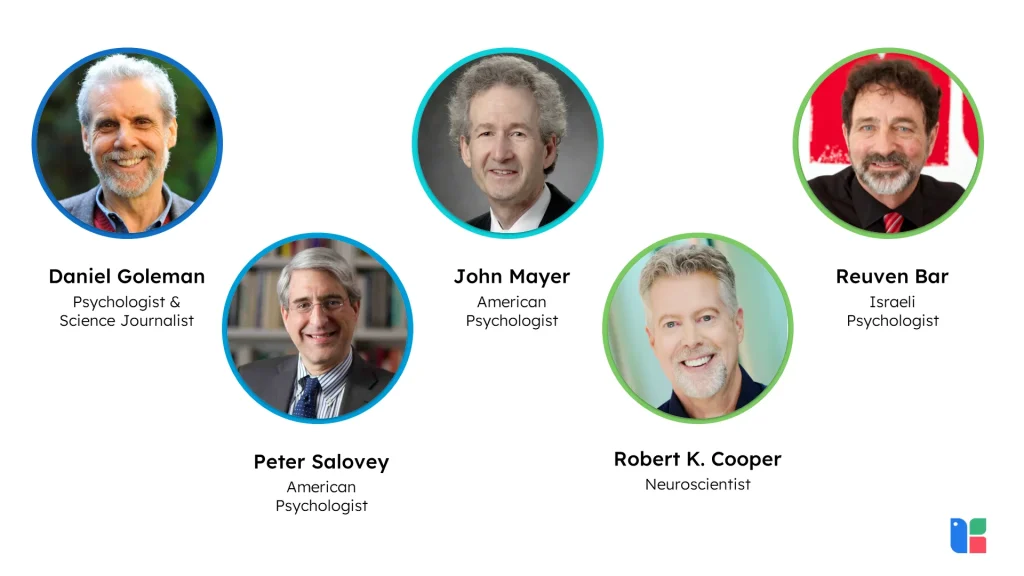
“Emotional intelligence is the capacity for recognising our own feelings and those of others, for motivating ourselves and for managing emotions in ourselves and in our relationships.” – Daniel Goleman.
“We define emotional intelligence as the subset of social intelligence that involves the ability to monitor one’s own and other’s feelings and emotions, to discriminate among them and to use this information to guide one’s thinking and actions.” – Salovey & Mayer.
“Emotional intelligence is the ability to sense, understand, and effectively apply the power and acumen of emotions as a source of human energy, information, connection, and influence.” – Robert K. Cooper.
“It is very important to understand that emotional intelligence is not the opposite of intelligence, it is not the triumph of heart over head — it is the unique intersection of both.” – Reuven Bar.
“Emotional intelligence is involved in the capacity to perceive emotions, assimilate emotion-related feelings, understand the information of those emotions, and manage them.” – John Mayer, David Caruso, & Peter Salovey.
The lessons behind these emotional intelligence quotes become meaningful when they shape how leaders communicate, respond, and make decisions. Kapable helps turn those insights into lasting habits.
What Insights Do Quotes Offer On Emotional Intelligence?
The following quotes will shed light on the different aspects of emotional intelligence, offering insights from prominent figures on how to navigate our emotions effectively. By looking into these words, we can better understand this crucial aspect of human intelligence and its impact on our lives.
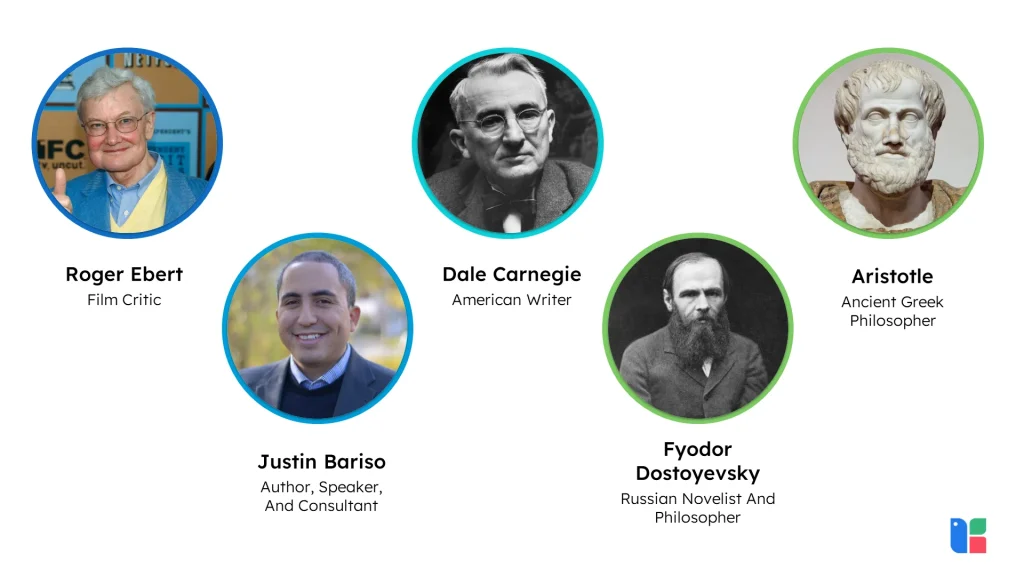
“Your intellect may be confused, but your emotions will never lie to you” – Roger Ebert.
Roger Ebert, a renowned film critic whose words often resonated beyond the silver screen, once said this quote that suggests that while our thoughts can be clouded by confusion which makes a biassed picture, our emotions can provide a more honest reflection of a situation. Even if we can’t fully understand something intellectually, our emotional mind might give us a more accurate sense of whether it’s positive or negative emotions for us.
“Emotional intelligence is the ability to make emotions work for you, instead of against you.” – Justin Bariso.
Justin Bariso, an author, speaker, consultant, and expert in emotional intelligence and leadership, captures its essence with clarity. Emotional intelligence isn’t about suppressing emotions, but rather understanding and using them effectively. This quote means you can leverage your emotions to guide your decisions and actions in a positive way, rather than letting them control you.
“When dealing with people, remember you are not dealing with creatures of logic, but with creatures of emotion.” – Dale Carnegie.
This quote, attributed to Dale Carnegie, an American writer who is a pioneer in self-improvement and interpersonal skills, highlights the importance of considering emotions in interactions with others. While logic is essential, it might be the wrong approach to making decisions in many cases. Our choices and behaviours are often driven more by our feelings than by pure reason. By understanding this, you can approach situations with more empathy and tailor your communication to resonate with people’s emotions, leading to better outcomes. Carnegie’s wisdom encourages us to approach interactions with sensitivity to emotions, fostering understanding and mutual respect in all our dealings.
“It takes something more than intelligence to act intelligently.” – Fyodor Dostoyevsky.
Fyodor Dostoyevsky, the renowned Russian novelist and philosopher, once reflected on this quote, which perfectly complements the theme of emotional intelligence. While being smart is valuable, acting wisely requires more. Emotional intelligence allows you to use your intelligence alongside self-awareness, empathy, and sound judgement to make choices that benefit yourself and those around you. This quote prompts us to explore the broader dimensions of intelligence beyond mere cognitive abilities, highlighting the importance of emotional intelligence and ethical reasoning in our daily lives.
“As I advanced to working with C-suite leaders, I often felt nervous and struggled to structure my thoughts. Kapable’s hands-on approach, with practical exercises and personalised techniques, helped me build clarity and balance assertiveness with empathy. I can now confidently influence and engage leaders and teams, and both my growth and confidence are clear to those around me.”
– Marwa Mahgoub (Senior HR Business Partner At Al Tayar Insignia)
“In a very real sense, we have two minds – one that thinks and one that feels.” – Daniel Goleman
Daniel Goleman, a psychologist and science journalist renowned for his work on emotional intelligence, once noted this quote, which captures the idea that humans have two distinct but interconnected mental processes. One is the rational part of our brain, which is responsible for logic, analysis, planning, and problem-solving. The other is the emotional part of our brain that processes and interprets emotions. It influences our motivations, social interactions, and gut feelings. It helps us connect with others on a deeper level and navigate social situations. The quote suggests that these two minds work together to create a complete human experience.
“Anyone can become angry-that is easy. But to be angry with the right person, to the right degree, at the right time, for the right purpose, and in the right way- that is not easy” – Aristotle.
Aristotle, the ancient Greek philosopher and thinker, delves into the complexities of anger with a profound insight. He suggests that while it’s a natural inherent tendency to experience anger and react emotionally, the true challenge lies in its appropriate expression. This entails directing anger towards the correct individual, in the proper measure, at the appropriate moment, for justified reasons, and in a constructive rather than destructive manner. Aristotle’s observation highlights the importance of emotional intelligence in managing emotions like anger effectively.
“In other words, what matters is a different way of being smart.” – Daniel Goleman.
Daniel Goleman challenges the traditional view of intelligence by suggesting “a different way of being smart.” He argues that emotional intelligence (EQ) is just as important as traditional intelligence (IQ). Emotional intelligence focuses on understanding and managing emotions, both your own and those of others. This ability to navigate emotions effectively is crucial for success in life, building strong relationships, and making sound decisions, making EQ a valuable form of intelligence in its own right.
“At best, IQ contributes about 20 percent to the factors that determine life success, which leaves 80 percent to other forces.” – Daniel Goleman
This quote from Goleman’s book highlights that raw intelligence (IQ) is just one piece of the success puzzle. While being smart is helpful, the majority of success hinges on other factors like self-awareness, motivation, and social skills – all areas where developing emotional intelligence plays a major role. Goleman’s assertion underscores the significance of non-cognitive factors to consider a broader perspective on success.
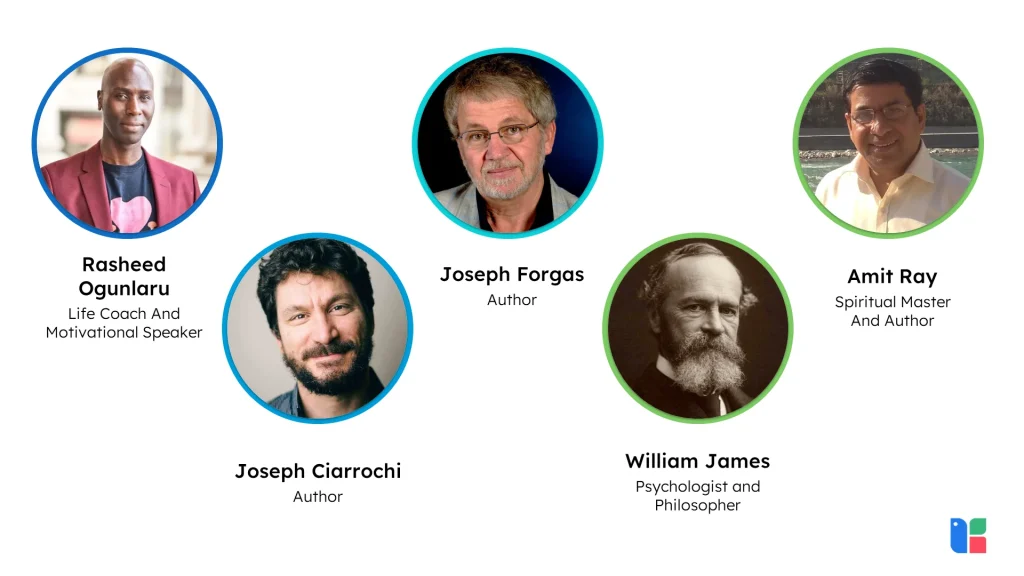
“The only way to change someone’s mind is to connect with them from the heart.” – Rasheed Ogunlaru.
Rasheed Ogunlaru, a life coach and motivational speaker, offers a profound perspective on persuasion and empathy. This quote specifically suggests that logic and arguments alone might not win someone over. Ogunlaru proposes that building a genuine connection, a heart-to-heart understanding, is critical to truly changing someone’s mind. Businesses prioritising emotional intelligence often attract narcissistic types but also attract the most devoted customers, who appreciate authentic connections and empathy. We should approach communication and persuasion with authentic feelings and compassion, emphasising the importance of building trust and rapport as foundations for effective persuasion and mutual understanding. Understanding how the human brain switches between emotional and intellectual energy by its very nature is key to mastering emotional intelligence.
“The concept of emotional intelligence suggests that intelligence may understand emotion, and that emotion may facilitate intelligence.” – Joseph Ciarrochi, Joseph Forgas and John Mayer.
In their exploration of emotional intelligence, the authors propose a thought-provoking idea, using this quote to summarise the core idea of emotional intelligence. Their perspective invites us to consider how our emotions can inform and enrich our thinking processes, leading to more nuanced decision-making and interpersonal interactions. This quote encourages us to explore the interconnected nature of intelligence and emotion, highlighting the potential for emotional intelligence to enhance our overall cognitive functioning and personal growth. Emotional intelligence allows you to leverage both your thinking and feeling sides for better outcomes.
“The greatest weapon against stress is our ability to choose one thought over another.” – William James.
William James, a pioneering psychologist and philosopher, offers this profound insight into managing stress. His insight highlights how our perception of situations is crucial to how stressed we feel. By consciously choosing positive or calming thoughts over negative ones, we can significantly reduce distressing emotions and improve our emotional well-being. This aligns perfectly with emotional intelligence, as it equips us with the self-awareness and self-management skills to make these empowering choices. This quote encourages us to cultivate mindfulness and self-control, empowering us to redirect our thoughts away from stress-inducing patterns towards more empowering and adaptive mental frameworks.
“EI abilities rather than IQ or technical skills emerge as the “discriminating” competency that best predicts who among a group of very smart people will lead most ably.” – Daniel Goleman.
This quote highlights the growing importance of emotional intelligence in leadership roles. Even among intelligent and technically skilled individuals, Goleman argues that emotional intelligence represents exceptional leaders. They know when to let emotions subordinate to rational thinking in decision-making processes.
While IQ and technical skills are certainly valuable in the process, they don’t guarantee psychological skills which are needed when stress rises in any manner. Leaders who lack emotional intelligence need to build the ability to understand and manage their own emotions and those of others. It’s the very fabric of critical and emotional thinking, the important personal qualities in today’s unsatisfactory team leadership landscape.
Emotional intelligence is the “discriminating competency” that separates good leaders from great ones.
“As more and more artificial intelligence is entering into the world, more and more emotional intelligence must enter into leadership.” – Amit Ray.
Amit Ray, a spiritual master and author, emphasises the evolving leadership landscape in the face of advancing technology. His quote emphasises the growing importance of emotional intelligence in leadership as the world embraces artificial intelligence (AI). While AI can automate tasks and provide data-driven insights, it can’t replace the human ability to build trust, inspire creativity, and manage emotions effectively. As AI becomes more prevalent, Ray suggests that emotional intelligence will be an even more crucial skill for leaders, allowing them to navigate the human aspects of work and ensure a prosperous future for their teams.

“In a high-IQ job pool, soft skills like discipline, drive, and empathy mark those who emerge as outstanding.” – Daniel Goleman.
Daniel Goleman emphasises the significance of soft skills in achieving excellence within a pool of knowledgeable individuals. While a high IQ is undoubtedly valuable, Goleman argues that soft skills like discipline, drive, and empathy become the key differentiators between good and outstanding performers. These soft skills come under emotional intelligence. In a competitive environment, emotional intelligence empowers people to excel by regulating their emotions, motivating themselves and others, and building strong connections.
“When anger rises, think of the consequences.” – Confucius.
Confucius, the ancient Chinese philosopher, offers timeless wisdom on managing anger. This quote perfectly represents an essential aspect of emotional intelligence: self-management. When we take a step back by pausing and reflecting on the potential outcomes of our anger, we can choose a more measured response before acting on the temporary emotions. This lets us express our anger constructively, minimising damage to relationships and situations. This aligns with emotional intelligence because it equips us with the skills to recognise our rising outrage, take a moment for self-reflection, and ultimately choose a response that aligns with our long-term goals and well-being.
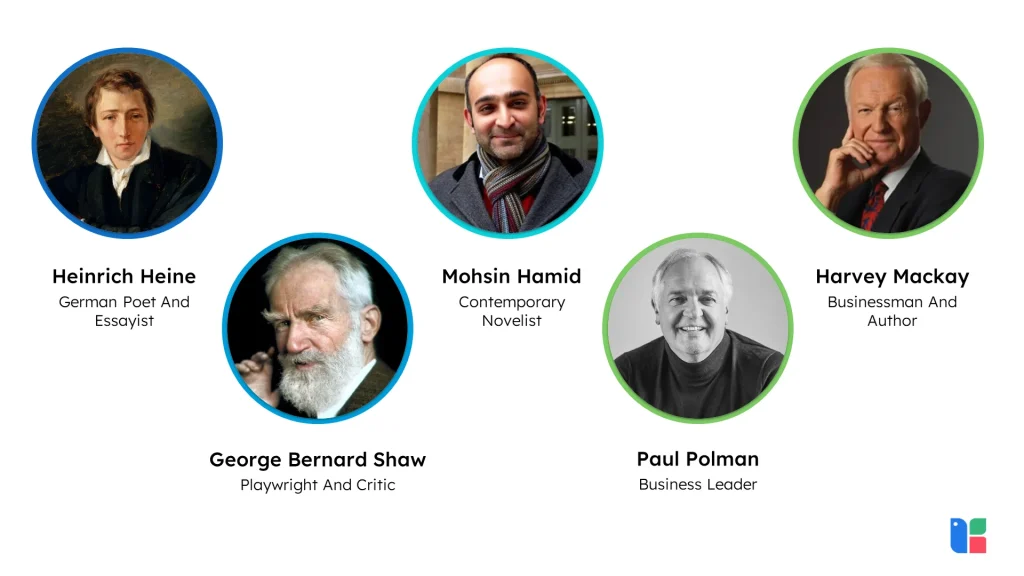
“He only profits from praise who values criticism.” – Heinrich Heine.
Heinrich Heine, a German poet and essayist, implies that those who welcome criticism with an open mind and use it as a tool for improvement are the ones who genuinely benefit from praise. While praise can feel good, it’s often criticism that offers the most valuable lessons for growth, even if it stings. Emotional intelligence allows us to move beyond simply feeling defensive when criticised. Instead, we can view it as an opportunity to gain a different perspective and identify areas for improvement. By taking criticism seriously and analysing its validity, we can refine our skills, adjust our approach, and ultimately become better versions of ourselves.
“The single biggest problem in communication is the illusion that it has taken place.” – George Bernard Shaw.
George Bernard Shaw, the renowned playwright and critic, identifies a common communication challenge. We often assume our message has been clearly received and understood simply because the words were spoken or the email was sent. Emotional intelligence goes beyond just sending a message; it involves ensuring the message is received and interpreted as intended. Emotional intelligence equips us with skills like active listening and effective communication through verbal and nonverbal cues, which carry emotional messages, address any misunderstandings, and ensure genuine two-way communication. This quote serves as a reminder of the importance of clarity, empathy, and feedback in fostering effective communication and preventing misunderstandings.
“Empathy is about finding echoes of another person in yourself.” – Mohsin Hamid.
Mohsin Hamid, a contemporary novelist known for his insightful observations on human beings, defines empathy beautifully with this quote. Emotional intelligence isn’t just about acknowledging someone’s feelings; it’s about truly understanding them. By drawing on our own experiences and emotions, we can find those relatable moments – the “echoes” – that allow us to connect with the person on a deeper level by being a kind and sensitive person. It’s about developing emotional competencies like empathy, self-esteem, and emotional skills to foster a humane world and strengthen family relationships. This deeper connection makes an emotionally competent person capable of building stronger relationships, more effective communication, and the ability to navigate conflict productively.
“Leadership is not about giving energy; it is unleashing other people’s energy” – Paul Polman.
Paul Polman is a prominent business leader. Polman suggests that true leaders create environments where individuals feel motivated, valued, and empowered to bring their ideas and strengths to fruition. This approach contrasts with traditional views of leadership solely as a directive force; instead, emotional intelligence highlights the importance of fostering collaboration, creativity, and initiative among team members. Effective leaders don’t simply motivate through their own enthusiasm; they understand and tap into the potential and passions of their team members. This approach fosters a more engaged and motivated workforce. When people feel their energy is valued effectively, they are more likely to go the extra mile, leading to greater innovation, productivity, and overall success.
“Emotional intelligence is the real secret to getting and keeping a job, getting and keeping a promotion, and making the most money.” – Harvey Mackay.
Harvey Mackay is a renowned businessman and author. His quote emphasises the critical role of emotional intelligence (EI) in professional success across various aspects of career advancement. In today’s competitive job market, technical skills are often considered the baseline requirement. However, EI sets candidates apart by enabling them to navigate interpersonal relationships effectively. They excel in handling difficult situations with emotional maturity and making decisions that consider both rational and emotional aspects. This ability enhances their effectiveness and increases their suitability for higher-level responsibilities.
Conclusion
So, there you have it! The wisdom captured in various quotes on emotional intelligence from some of the brightest minds on emotional intelligence, its essence in emotional awareness and the art of nurturing strong relationships. As you reflect on these perspectives, consider them not as endpoints but as starting points for your own journey. Embrace the wisdom they offer to better understand yourself and others and cultivate your emotional intelligence. With this foundation, you can navigate challenges more effectively, foster meaningful connections, and continue to grow personally and professionally. Here’s to your journey of emotional growth!
Reflecting on emotional intelligence quotes naturally leads to thinking about personal growth, and Kapable helps you assess whether its approach aligns with your leadership aspirations.


